宋氏波鱼
概要
| 字段 | 值 |
|---|---|
| 类别 | 鱼 |
| 学名 | Trigonostigma somphongsi |
| 别名 | 宋氏波魚 |
| 分类 | 鲤形目 Cypriniformes › 鲤科 Cyprinidae › Trigonostigma |
| 水体 | 淡水 |
| 原产地 | 泰国 |
| 成体体长 | 3 cm |
| 饲养难度 | 中等 |
| 最小水体 | 54 L |
| 最小缸长 | 60 cm |
| 群居方式 | 群游 |
| 外部数据 | seriouslyfish trigonostigma-somphongsi;fishbase 6096 |
| 繁殖方式 | 产卵 |
水质参数
| 参数 | 耐受范围 | 最适范围 | 单位 |
|---|---|---|---|
| 水温 | 22–26 | — | °C |
| pH | 5–7 | — | — |
| 总硬度 | 1–8 | — | dGH |
概述
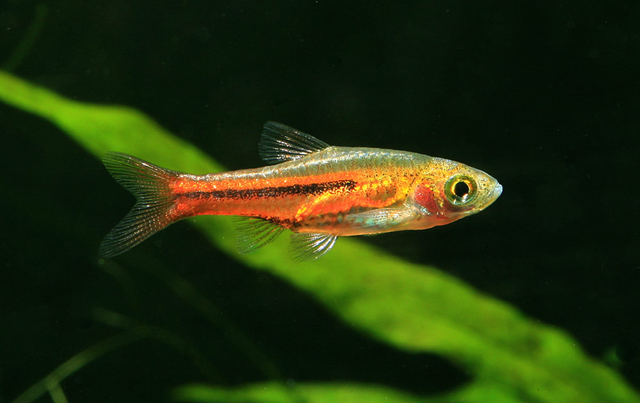
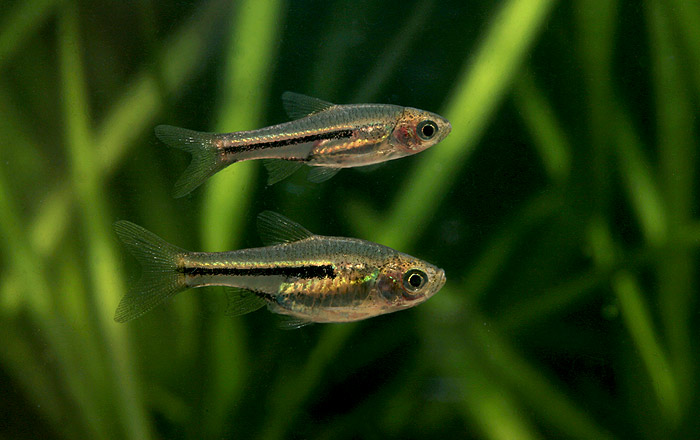
宋氏波鱼(Trigonostigma somphongsi)身体较修长,体侧的深色标记呈一条较粗的黑纹,而非宽大的三角斑。它曾长期罕见,圈养繁殖对于维持种群特别有意义,适合以单种群养和繁殖为重点。
分布与栖息地
可能原生于泰国西部,有夜功河流域及叻丕府的记录说法,但确切地点仍不清楚。野外栖地尚未充分确认;同属其他鱼多见于缓流、密植的林间溪流,水较软、微酸至中性,有落叶和木枝遮蔽,这只能作为环境设计的参考,不能当作本种已经确认的实地记录。
饲养环境
可用深色底床、软砂、密植水草和沉木营造安静的遮阴环境,浮水植物能进一步减弱光线。落叶提供遮蔽,其表面的微生物可成为鱼苗的补充食物。采用适应弱光的水草,比单纯追求明亮展示更符合这种布置思路。
食性与喂食
野外可能捕食小昆虫、蠕虫、甲壳类及其他浮游动物。缸中一般容易接受适口干粮,但规律补充红虫、水蚤、丰年虾等活饵和冷冻饵料,更有利于亲鱼的体况与发色。
习性与混养
具有群居习性,获得多个个体时宜成群保存。以繁殖和维持圈养种群为目标,单种缸更合适;对普通混养缸的适应性只是较乐观的推测,不宜当成已经充分验证的结论。
雌雄区分
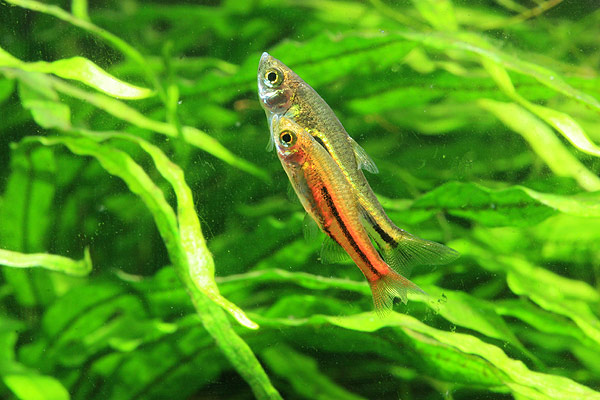
成熟雌鱼明显较大、身体更高厚,体色偏黄;稳定适应后,雄鱼会呈现铜橙色。
繁殖
已有人成功繁殖,据报道过程并不特别困难,但每次产卵量往往很少。卵粘在宽叶等表面,亲鱼不照顾后代。成熟密植缸里可能自然出现少数鱼苗;专门繁殖可用弱光缸、宽叶植物或人工替代物、小型海绵过滤和软酸水,底部隔网保护落下的卵。也有使用裸底缸、单株人工植物及调酸反渗透水的成功案例。
提前用少量多次的活饵和冷冻饵料养好亲鱼,状态成熟后可用较凉水换约四至五成,数小时后傍晚移入一两对。次晨常见求偶,鱼对可倒转贴近叶背,分批产卵。若三四天未见卵,换回原群并另选亲鱼。产后立即隔开亲鱼和卵,避免吞食;卵通常一至两天孵化,约一周后鱼苗自由游动。先喂草履虫等微小食物,长大后再给微虫及丰年虾无节幼体。
补充说明
在长期缺乏记录后,二〇〇六年有三条混在其他小鱼中到达德国,此后繁殖个体被分配给多地养殖者。野外放归并不是饲养者可据此直接开展的步骤,原生地点与衰退原因仍需厘清。
图片
图片来自 SeriouslyFish,版权归各摄影者所有。
English
Overview
An elongated body and a thick dark lateral stripe distinguish Trigonostigma somphongsi from its broadly marked relatives. It has been exceptionally scarce, making maintenance of breeding groups particularly valuable. A dedicated aquarium is the most appropriate focus.
Distribution & habitat
It probably originates in western Thailand, with suggested records in the Mae Klong basin and Ratchaburi Province, but exact sites remain uncertain. Its natural habitat has not been firmly established. Other members of the genus inhabit shaded, gently flowing forest streams with dense plants, soft slightly acidic to neutral water, leaves, and wood. That comparison can guide an aquarium arrangement without becoming a confirmed habitat record for this fish.
Aquarium setup
Dark substrate, soft sand, dense plants, and wood provide a sheltered display. Floating growth helps soften the light. Leaf litter adds cover and supports microscopic organisms useful as supplementary fry food. Use plants that tolerate subdued illumination.
Diet & feeding
Small insects, worms, crustaceans, and other zooplankton probably form the wild diet. Suitable dry foods are generally accepted, with regular live or frozen bloodworms, Daphnia, and Artemia helping condition adults.
Behaviour & compatibility
Maintain a group when several individuals are available. A species aquarium supports the priority of captive reproduction. Its potential as a general community fish remains a favorable expectation rather than a well-established conclusion.
Sexual dimorphism
Mature females are noticeably larger and deeper-bodied, retaining a yellowish color. Settled males develop copper-orange tones.
Breeding
Captive reproduction has succeeded and is reportedly not especially difficult, though egg numbers are often small. Eggs attach to broad leaves or other surfaces without parental care. A planted mature tank may yield occasional fry. A dim separate setup with broad leaves or substitutes, soft acidic water, and a small sponge filter allows more control; mesh can protect fallen eggs. Bare tanks with a single artificial plant and adjusted reverse-osmosis water have also been used successfully.
Condition breeders with frequent small live and frozen meals. Once ready, a cooler change of roughly forty to fifty percent can precede introduction of one or two pairs that evening. Morning courtship may lead to inverted spawning beneath a leaf in several batches. Return unsuccessful pairs after three or four days and try others. Separate adults and eggs promptly. Hatching commonly takes one to two days, with free swimming around a week. Offer microscopic starter food before progressing to microworms and Artemia nauplii.
Notes
After a long period without records, three fish reached Germany among other small fishes in 2006. Breeding descendants were subsequently distributed among aquarists. Reintroduction requires better understanding of native sites and the causes of decline.
来源
- https://www.seriouslyfish.com/species/trigonostigma-somphongsi(抓取于 2026-10-10)
trigonostigma-somphongsi · 文件: data/species/trigonostigma-somphongsi.md · 状态: 草稿