亨氏波鱼
概要
| 字段 | 值 |
|---|---|
| 类别 | 鱼 |
| 学名 | Trigonostigma hengeli |
| 别名 | 亨氏波魚 |
| 分类 | 鲤形目 Cypriniformes › 鲤科 Cyprinidae › Trigonostigma |
| 水体 | 淡水 |
| 原产地 | 印度尼西亚 |
| 成体体长 | 3 cm |
| 饲养难度 | 入门 |
| 最小水体 | 54 L |
| 最小缸长 | 60 cm |
| 群居方式 | 群游 |
| 性情 | 温和 |
| 外部数据 | seriouslyfish trigonostigma-hengeli;fishbase 12182 |
| 繁殖方式 | 产卵 |
水质参数
| 参数 | 耐受范围 | 最适范围 | 单位 |
|---|---|---|---|
| 水温 | 23–28 | — | °C |
| pH | 5–7.5 | — | — |
| 总硬度 | 1–10 | — | dGH |
概述
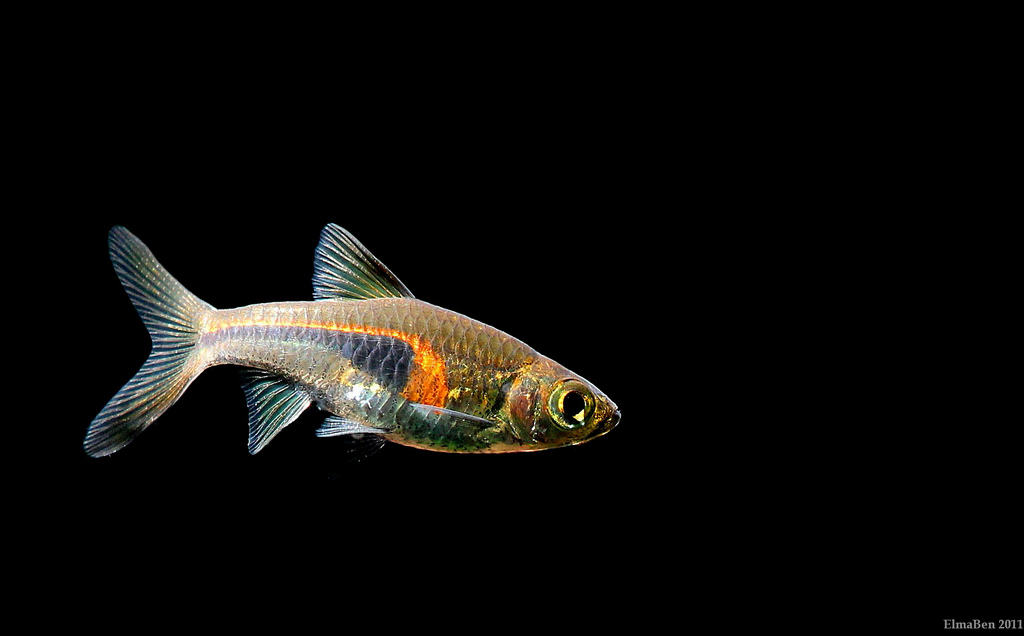
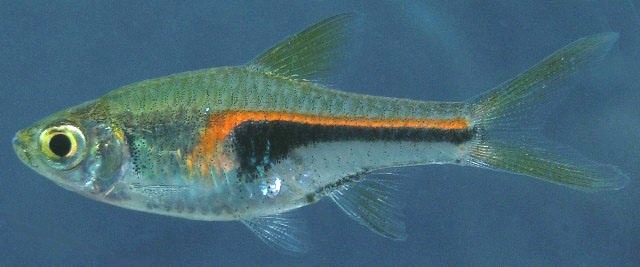
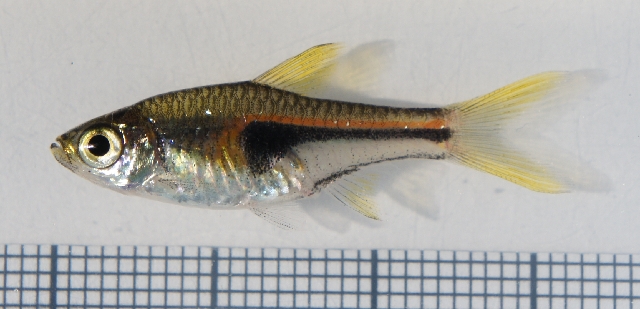
亨氏波鱼(Trigonostigma hengeli)的身体偏灰或近透明,体侧黑色斑纹的前缘与上缘有鲜明橙色亮线。它比一些外形相似的三角波鱼显得更纤小,适合在安静的水草缸中成群观赏,不能只凭混用的商品名辨种。
分布与栖息地
确定来自大巽他群岛,苏门答腊占碑省有采集记录,模式标本来自巴当哈里河支流;婆罗洲西加里曼丹的记录尚缺乏充分确认。主要利用流速温和的林间溪流和支流,沉水植物繁茂,水较软、微酸至中性,落叶和木枝散布底部,林冠及岸边植物使光线较弱。
饲养环境
深色底床、充足水草和沉木阴影有助于展现橙色亮纹。软砂、树根及枝条能提供躲藏处,落叶既增添黑水环境的自然感,也为微生物提供生长条件,鱼苗可从中获得补充食物。照明不宜太强,可配浮水植物与耐阴水草。
食性与喂食
野外可能以微小昆虫、蠕虫、甲壳类和其他浮游动物为食。缸中一般容易接受细颗粒或薄片,但仍应常给水蚤、丰年虾、红虫等合适大小的活饵或冷冻饵料,维持体况和发色。
习性与混养
温和,适合与同样小型、需求相符的伙伴混养。建议至少八至十条,充足数量能减轻紧张并鼓励自然展示。选择其他鱼时要考虑它的小体型,不能仅因双方都属常见观赏鱼就默认合适。
雌雄区分
成年雌鱼通常略大、身体更高厚;雄鱼较纤细,颜色更浓。
繁殖
它将卵粘在宽叶或其他物体的背面,产后不照顾后代。密植成熟缸可能出现零星鱼苗;希望获得更多鱼苗时,应准备弱光繁殖缸,放入宽叶植物或人工产卵面,底部隔网保护脱落的卵,使用软酸水及温和充氧。
繁殖前用少量多次的活饵和冷冻饵料养好亲鱼。雌鱼饱满、雄鱼展示明显时,可换入约四至五成较凉水,数小时后在傍晚移入一两对。产卵前可能反复试探产卵面,随后倒转身体贴在叶背,分批排卵与受精。三四天无卵可换亲鱼;产后立即隔开亲鱼与卵。卵常在一至两天孵化,约一周后鱼苗自由游动,开口食物应为草履虫等微小饵料,再逐步过渡到微虫及丰年虾无节幼体。
补充说明
“发光波鱼”之类商品名还会用于其他种,灰淡底色与黑斑边缘的橙色亮线更值得观察。近缘种中较老亲鱼可能更易繁殖的经验,不能当作本种必须达到某一年龄的规定。
图片
图片来自 SeriouslyFish,版权归各摄影者所有。
English
Overview
Trigonostigma hengeli carries a vivid orange highlight around the front and upper edge of its dark flank marking, set against a grayish or nearly clear body. A quiet planted group display shows this small fish well. Shared trade names can conceal differences from similar rasboras.
Distribution & habitat
It belongs to the Greater Sunda Islands, with confirmed collections in Jambi, Sumatra, including the Batang Hari drainage. Suggested records from West Kalimantan on Borneo remain less certain. Typical sites are gentle forest streams with dense submerged plants, soft slightly acidic to neutral water, fallen branches, and leaf litter under shaded banks.
Aquarium setup
Use dark substrate, abundant planting, and wood shade to emphasize the orange markings. Soft sand, roots, and branches provide cover. Leaf litter supports microorganisms that may supplement fry food and contributes to a natural blackwater appearance. Floating plants and shade-tolerant planting work with subdued illumination.
Diet & feeding
Tiny insects, worms, crustaceans, and other zooplankton are probable natural foods. Fine prepared foods are generally accepted, but regular live or frozen Daphnia, Artemia, and suitably small bloodworms improve dietary variety.
Behaviour & compatibility
Its peaceful nature allows appropriately small companions with matching needs. Keep at least eight to ten individuals to reduce nervousness and encourage displays. The modest adult size remains an important constraint when choosing tankmates.
Sexual dimorphism
Adult females are usually slightly larger and deeper-bodied. Males are slimmer and more intensely colored.
Breeding
Adhesive eggs are placed beneath broad leaves or other surfaces without subsequent care. Occasional fry can survive in mature planted tanks. For greater yield, arrange a dim separate aquarium with broad leaves or substitutes, mesh below for fallen eggs, soft acidic water, and gentle aeration.
Condition adults using frequent small live and frozen meals. When females are full and males display, replace roughly forty to fifty percent with cooler water and introduce one or two pairs a few hours later, preferably that evening. Repeated practice movements may precede spawning; pairs eventually invert beneath a leaf and release eggs and sperm in batches. Change pairs if no eggs appear within three or four days. Separate eggs and adults promptly afterward. Eggs commonly hatch within one to two days, and fry swim freely around a week. Begin with microscopic foods such as Paramecium, then progress to microworms and Artemia nauplii.
Notes
The label “glowlight rasbora” is also used for other fish. The pale body and orange border of the dark marking are more useful clues. Reports favoring older breeders concern related species and do not establish a mandatory breeding age here.
来源
- https://www.seriouslyfish.com/species/trigonostigma-hengeli(抓取于 2026-10-10)
trigonostigma-hengeli · 文件: data/species/trigonostigma-hengeli.md · 状态: 草稿