伊氏波鱼 · Lambchop Rasbora
概要
| 字段 | 值 |
|---|---|
| 类别 | 鱼 |
| 学名 | Trigonostigma espei |
| 别名 | 伊氏波魚 |
| 分类 | 鲤形目 Cypriniformes › 鲤科 Cyprinidae › Trigonostigma |
| 水体 | 淡水 |
| 原产地 | 泰国 |
| 成体体长 | 3 cm |
| 饲养难度 | 入门 |
| 最小水体 | 54 L |
| 最小缸长 | 60 cm |
| 群居方式 | 群游 |
| 性情 | 温和 |
| 外部数据 | seriouslyfish trigonostigma-espei;fishbase 27073 |
| 繁殖方式 | 产卵 |
水质参数
| 参数 | 耐受范围 | 最适范围 | 单位 |
|---|---|---|---|
| 水温 | 23–28 | — | °C |
| pH | 5.5–7.5 | — | — |
| 总硬度 | 1–10 | — | dGH |
概述
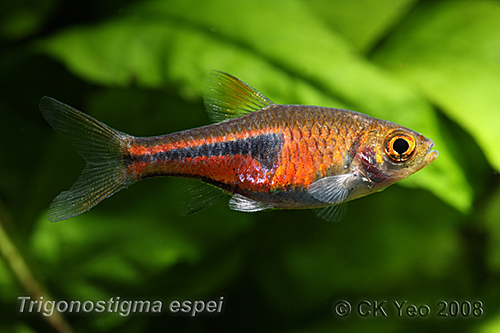
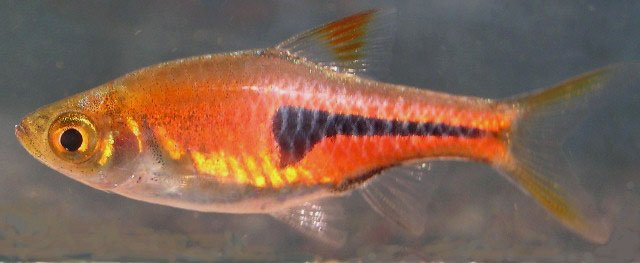
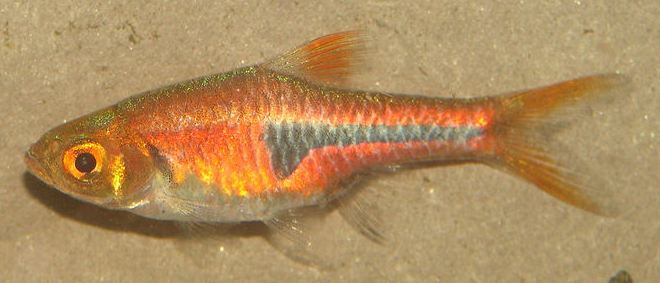
伊氏波鱼(Trigonostigma espei)体色偏鲜亮的铜红,体侧黑斑前部较宽、向后收细,轮廓像细长的小斧。它温和而适合群养,但与外形相似的三角波鱼类常被混淆,辨认时应结合体色、体高和黑斑形状。
分布与栖息地
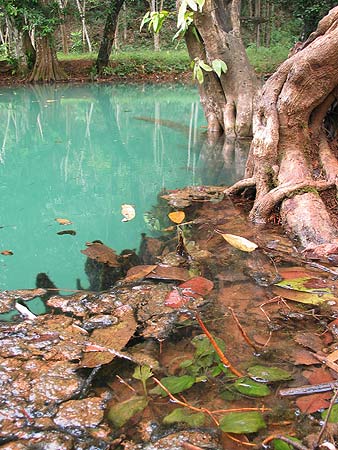
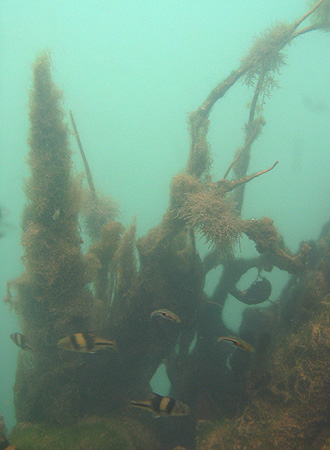
主要种群位于泰国西南部及东南部,分布也延伸至柬埔寨西南部,越南富国岛另有发现;老挝记录可能属于误认。常见于水草茂密、缓缓流动的林间溪流,水质通常软、微酸至中性,林冠与岸边植被遮光。不过,泰国甲米的部分种群生活在清澈的石灰岩泉池与溢流沟中,水质可达中性至弱碱,不能把所有产地都概括为强酸黑水。
饲养环境
采用深色底床和较丰富的水草、沉木,形成阴影与躲藏空间。软砂和落叶可营造自然感,落叶分解形成的微生物还能给鱼苗补充食物。较弱照明、耐阴水草和浮水植物更有利于呈现状态。
食性与喂食
野外可能捕食小昆虫、蠕虫、甲壳类及其他浮游动物。人工饲养一般容易开口,用适口的薄片、细颗粒配合红虫、水蚤、丰年虾等活饵或冷冻饵料,避免长期只喂干粮。
习性与混养
性情温和,可与体型及水质需求匹配的小型鱼共养;选择伙伴时仍须考虑它成年后也很小。至少八至十条更合适,能降低紧张,雄鱼之间的展示也更明显。
雌雄区分
成熟雌鱼腹部较圆,通常略大;雄鱼较细、颜色较浓,体侧黑斑的边界往往更锐利,雌鱼黑斑轮廓则较圆。
繁殖
卵会粘在宽叶背面或其他物体表面,亲鱼不护卵。密植成熟缸中可能自然出现少量鱼苗;专门繁殖时可设弱光缸,放宽叶植物或替代产卵面,底部加隔网保护没有粘牢的卵。用软酸水和温和气动过滤,温度靠近日常适温的较高端。
提前数周每天少量多次投喂活饵与冷冻饵料,待雌鱼饱满、雄鱼积极展示,可用较凉水进行约四至五成换水,数小时后傍晚放入一两对。求偶常在次晨进行,鱼对会倒转贴近叶背,分批产卵。三四天仍未见卵便换一组亲鱼;产后及时移开亲鱼或卵,避免被吃。通常一至两天孵化,约一周自由游动,先喂草履虫等微小食物,再过渡到微虫和丰年虾无节幼体。
补充说明
近缘种繁殖经验认为较年长的亲鱼可能更容易成功,但这一点不应当作本种已经验证的年龄门槛。不同产地的红色深浅也可能不同。
图片
图片来自 SeriouslyFish,版权归各摄影者所有。
English
Overview
A bright copper-red body and a narrow, tapering dark flank patch distinguish Trigonostigma espei. This peaceful group fish is often confused with similar rasboras; overall color, body depth, and the outline of the marking should be considered together.
Distribution & habitat
Principal populations occur in southwestern and southeastern Thailand, with records extending into southwestern Cambodia and to Vietnam's Phu Quoc Island. Reports from Laos may be misidentifications. Many sites are shaded, gently flowing forest streams with dense plants and soft, slightly acidic to neutral water. Some Krabi populations instead occupy clear limestone pools and their overflow channels in neutral to mildly alkaline conditions.
Aquarium setup
Provide dark substrate, planting, and wood that creates shaded retreats. Soft sand and leaves offer a natural arrangement; microbial growth on decomposing litter can supplement fry food. Subdued lighting, floating cover, and shade-tolerant plants suit the display.
Diet & feeding
Its probable wild prey includes small insects, worms, crustaceans, and other zooplankton. Suitable flakes and fine granules are readily accepted, with regular live or frozen bloodworms, Daphnia, and Artemia providing variety.
Behaviour & compatibility
Peaceful companions of appropriate size and compatible water needs can share the aquarium. Its small adult size must still guide selection. Keep eight to ten or more to reduce nervousness and encourage male displays.
Sexual dimorphism
Females tend to be slightly larger and rounder through the abdomen. Males are slimmer and more colorful, with a sharper outline to the dark patch; the female marking is often more rounded.
Breeding
Eggs adhere beneath broad leaves or to other surfaces, and receive no parental care. A mature planted aquarium may yield occasional fry. For controlled breeding, prepare a dim tank with broad leaves or artificial substitutes and mesh below to protect unattached eggs. Use soft acidic water, gentle sponge filtration, and temperatures toward the upper end of its normal range.
Condition adults for several weeks with small live and frozen meals several times daily. Once females are full and males display strongly, a cooler change of roughly forty to fifty percent can precede introduction of one or two pairs that evening. Courtship often begins the next morning; pairs turn upside down beneath a leaf and lay eggs in batches. Replace unsuccessful pairs after three or four days. Separate eggs from adults promptly after spawning. Hatching usually takes one to two days, with free swimming around a week. Start fry on Paramecium-sized food, then introduce microworms and Artemia nauplii.
Notes
Experience with related species suggests older breeders may be more productive, but does not establish a fixed age threshold for this species. Red coloration also varies between localities.
来源
- https://www.seriouslyfish.com/species/trigonostigma-espei(抓取于 2026-10-10)
trigonostigma-espei · 文件: data/species/trigonostigma-espei.md · 状态: 草稿