Tanichthys sp. 'Vietnam'
概要
| 字段 | 值 |
|---|---|
| 类别 | 鱼 |
| 学名 | Tanichthys sp. 'Vietnam' |
| 分类 | 鲤形目 Cypriniformes › 鲤科 Cyprinidae › Tanichthys |
| 水体 | 淡水 |
| 原产地 | 越南 |
| 成体体长 | 3 cm |
| 饲养难度 | 入门 |
| 最小水体 | 41 L |
| 最小缸长 | 45 cm |
| 群居方式 | 群游 |
| 性情 | 温和 |
| 外部数据 | seriouslyfish tanichthys-sp-vietnam |
| 繁殖方式 | 散卵 |
水质参数
| 参数 | 耐受范围 | 最适范围 | 单位 |
|---|---|---|---|
| 水温 | 18–25 | — | °C |
| pH | 6–7.5 | — | — |
| 总硬度 | 2–10 | — | dGH |
概述
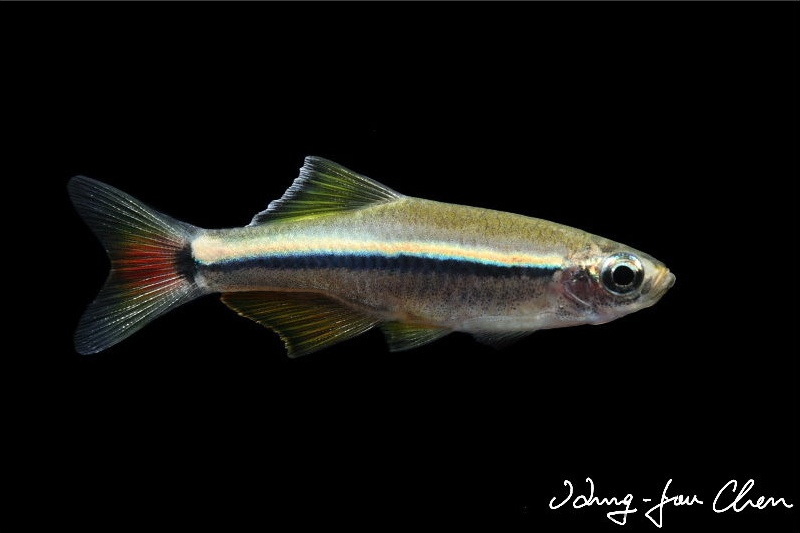
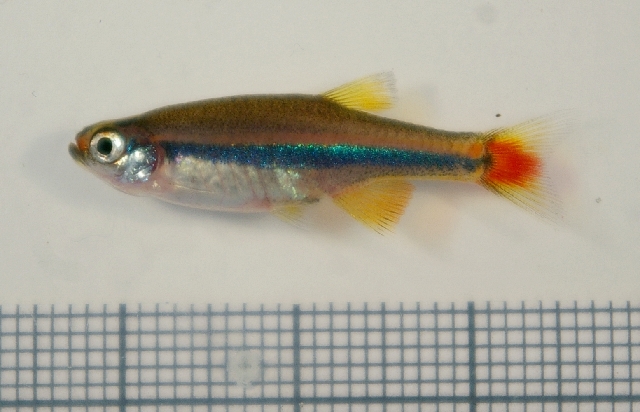
Tanichthys sp. 'Vietnam' 是以暂定名称记录的越南小型群游鱼,腹鳍和臀鳍鲜黄,常被称作“柠檬”或“黄白云”。商品名不等于正式种名,不能把它直接改作外形相近的其他唐鱼。
分布与栖息地
已知来自越南中部岘港区域。生境照片显示为清水流过大小不一小石块的溪流,水草似乎不多,但岸边草本与其他植被茂盛。
饲养环境
缸底至少约 45 × 30 cm,密植、深色底床可表现更好体色。浮水植物、沉木根、枝条和落叶能增加结构、分散照明。
过滤不需很强,适度水流即可,也可在溪流式布景中饲养,不宜用过强流速覆盖全部活动区。
食性与喂食
自然食物可能为小昆虫、虫、甲壳类及其他浮游动物,仍属推测。缸内易喂,可搭配活或冷冻红虫、水蚤、丰年虾和优质薄片、颗粒,部分干粮宜含植物或藻类成分。
习性与混养
非常温和,较大或强势闹腾的鱼并不适合。至少十条同养更能减轻紧张,雄鱼在相互展示、求偶时颜色更好。
雌雄区分
幼鱼不好区分,成熟雌鱼通常腹部较圆、略大。雄鱼繁殖状态或争斗展示时更显色,背鳍和臀鳍也可能随年龄延长。
繁殖
为持续散卵型,不护卵。成熟密植的单种缸或户外容器中,常可能自然留下少量鱼苗。
专门繁殖可用暗光小缸,底网、塑料草垫或玻璃弹珠保护卵,也可多放细叶草或产卵拖把。水微酸至中性,温度用现有适宜范围的较高一端,以气石或气动海绵过滤供氧。
放入一至两对养壮亲鱼,或在较大繁殖缸放入雌雄各约六条,通常次晨产卵。亲鱼有机会可能吃卵,最迟 2~3 天后移出。孵化约需 48~72 小时,自由游动后先视口径提供草履虫等微饵,长大后转丰年虾无节幼体。
补充说明
它曾被误认作越南更北方的 Tanichthys thacbaensis。与越南白云金丝(Tanichthys micagemmae)相比,本鱼腹鳍和臀鳍鲜黄而不是红色;两者又都比白云金丝(Tanichthys albonubes)小,且缺少其红褐体色。
暂定名称和采集背景应一起保留,不能因为出现新商品名就自行认定为已经正式描述的物种。
图片
图片来自 SeriouslyFish,版权归各摄影者所有。
English
Overview
Tanichthys sp. 'Vietnam' is a small schooling fish retained under a provisional name. Bright yellow pelvic and anal fins explain lemon and yellow-white-cloud trade labels. Those labels are not formal names and should not be used to assign it to a different similar species.
Distribution & habitat
It is known from the Da Nang area of central Vietnam. Habitat photographs show a clear stream over mixed small stones. Aquatic plants appear scarce, while grasses and other bankside vegetation are well developed.
Aquarium setup
Allow a footprint of at least around 45 × 30 cm. Dense planting over a dark substrate improves color, with floating plants, roots, branches, and leaves adding cover and diffusing light.
Powerful filtration currents are unnecessary. Modest circulation is sufficient, including in a stream-style arrangement without strong flow dominating every available area.
Diet & feeding
Small insects, worms, crustaceans, and other plankton are suggested natural foods. It feeds easily in captivity. Combine live or frozen bloodworms, Daphnia, and brine shrimp with quality flakes or granules, including some plant- or algae-containing preparations.
Behaviour & compatibility
Very peaceful behavior makes larger or strongly boisterous companions unsuitable. Ten or more conspecifics reduce nervousness and allow males to show color during courtship and rival displays.
Sexual dimorphism
Young fish are difficult to sex. Mature females usually have rounder bellies and slightly greater size. Males brighten during reproductive condition or display, and dorsal and anal fins may become extended with age.
Breeding
Eggs are scattered repeatedly without parental care. A mature planted species aquarium or outdoor container may retain a few young without intervention.
For dedicated breeding, use a dim container with mesh, plastic grass, marbles, fine plants, or spawning mops protecting eggs. Mildly acidic to neutral water toward the warmer end of the established suitable range, with an air stone or air-driven sponge filter, is appropriate.
Introduce one or two conditioned pairs, or about six of each sex in a larger enclosure. Spawning usually follows the next morning. Adults may eat eggs and should be removed within two or three days. Incubation takes roughly 48–72 hours. Free-swimming young may need Paramecium or similar microscopic food before they can take brine shrimp nauplii.
Notes
It has been mistaken for Tanichthys thacbaensis, which occurs farther north in Vietnam. Its yellow pelvic and anal fins differ from the red ones in Tanichthys micagemmae. Both are smaller than Tanichthys albonubes and lack its overall reddish-brown coloration.
Preserve the provisional name and collection context rather than treating a new sales label as evidence of formal scientific description.
来源
- https://www.seriouslyfish.com/species/tanichthys-sp-vietnam(抓取于 2026-10-10)
tanichthys-sp-vietnam · 文件: data/species/tanichthys-sp-vietnam.md · 状态: 草稿