越南白云金丝
概要
| 字段 | 值 |
|---|---|
| 类别 | 鱼 |
| 学名 | Tanichthys micagemmae |
| 分类 | 鲤形目 Cypriniformes › 鲤科 Cyprinidae › Tanichthys |
| 水体 | 淡水 |
| 原产地 | 越南 |
| 成体体长 | 3 cm |
| 饲养难度 | 入门 |
| 最小水体 | 41 L |
| 最小缸长 | 45 cm |
| 群居方式 | 群游 |
| 性情 | 温和 |
| 外部数据 | seriouslyfish tanichthys-micagemmae;fishbase 58712 |
| 繁殖方式 | 散卵 |
| 别名 | Tanichthys micagemmae |
水质参数
| 参数 | 耐受范围 | 最适范围 | 单位 |
|---|---|---|---|
| 水温 | 18–23 | — | °C |
| pH | 6.5–7.5 | — | — |
| 总硬度 | 2–8 | — | dGH |
概述
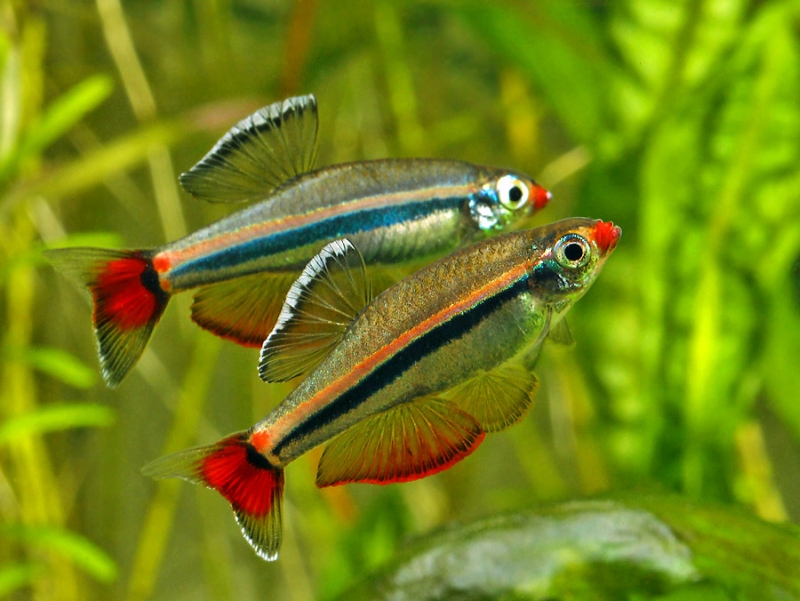
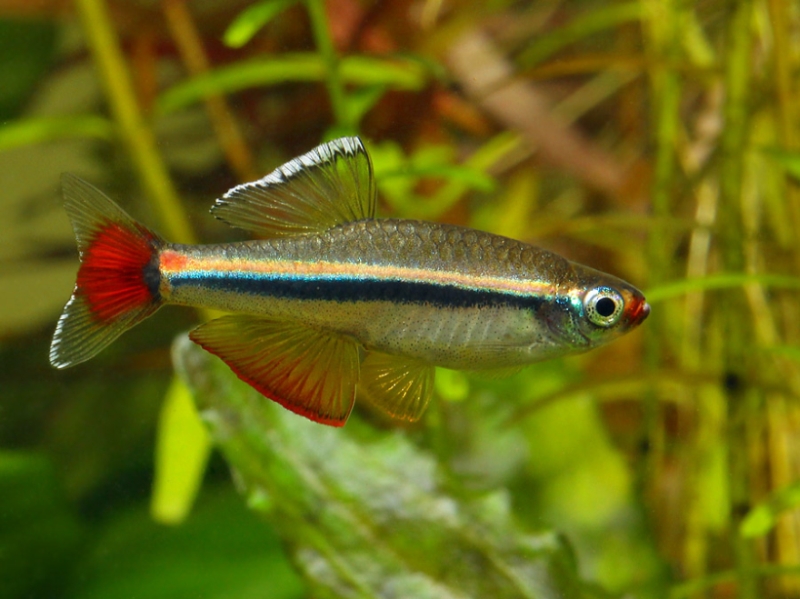
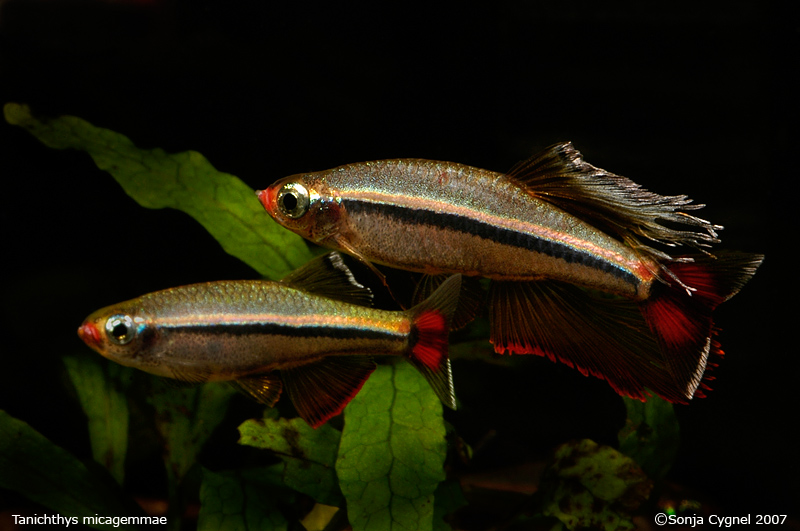
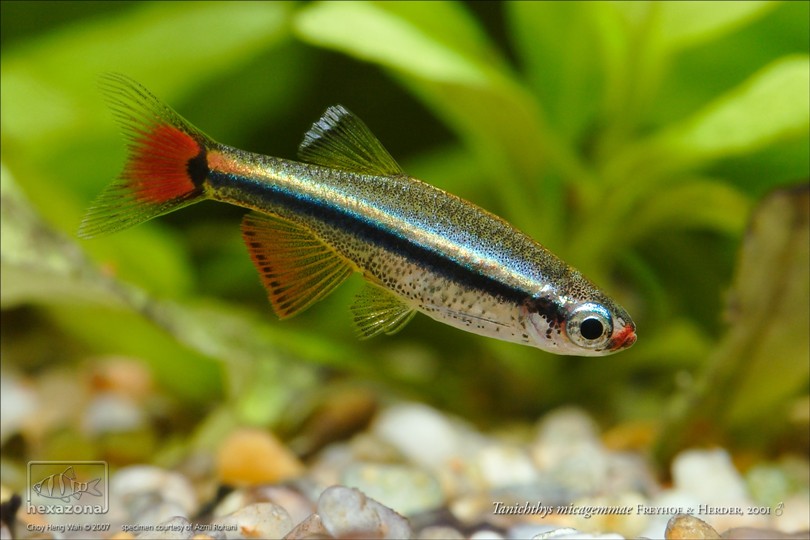
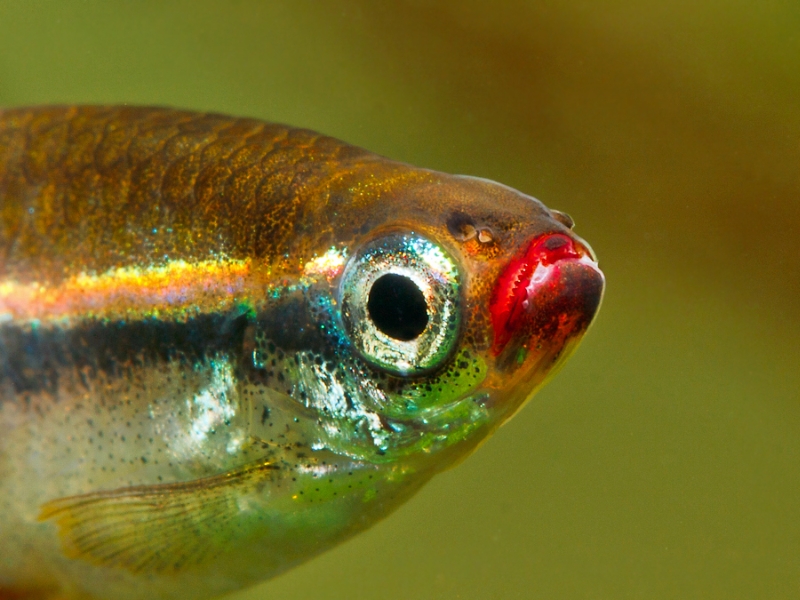
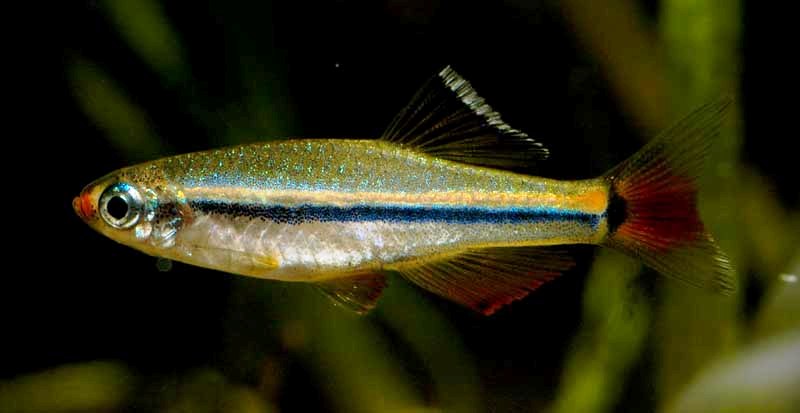
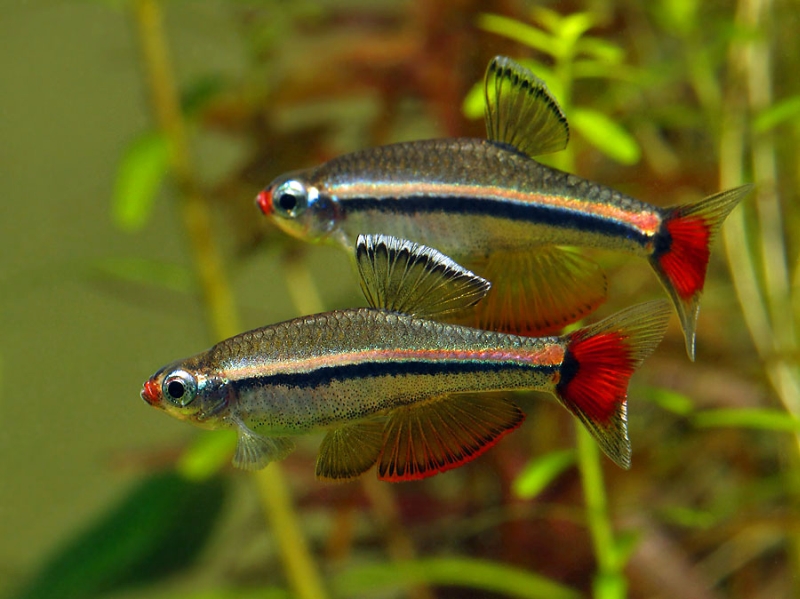
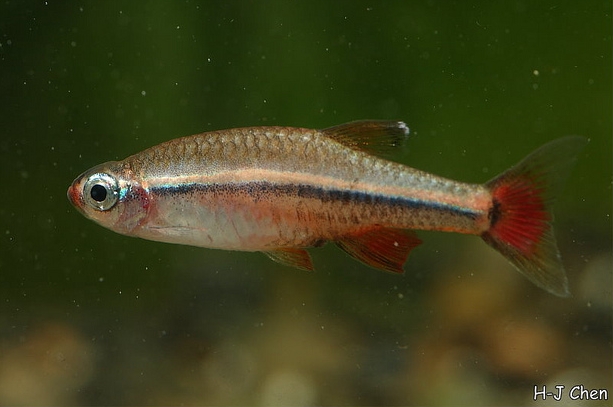
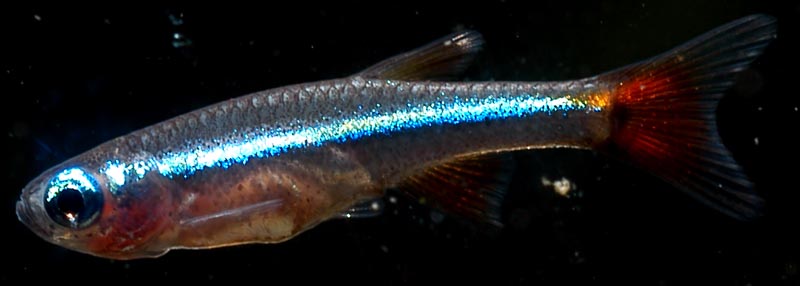
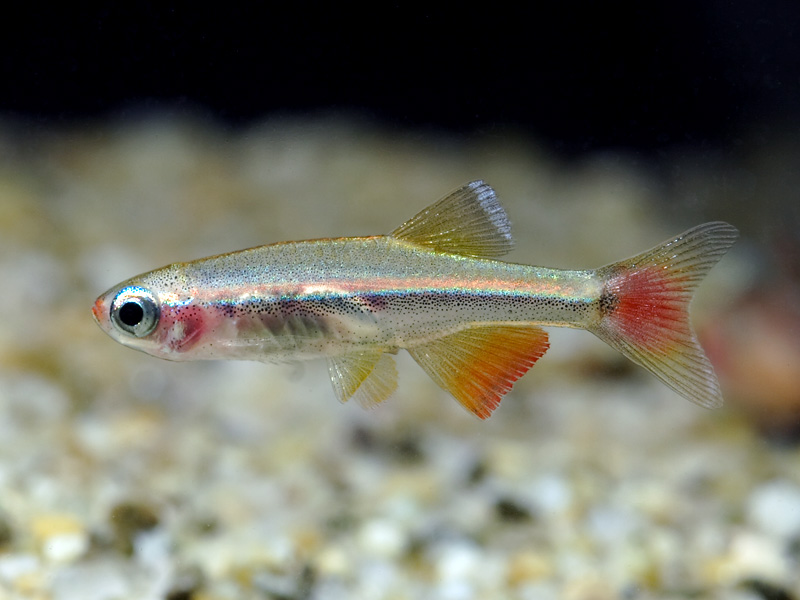
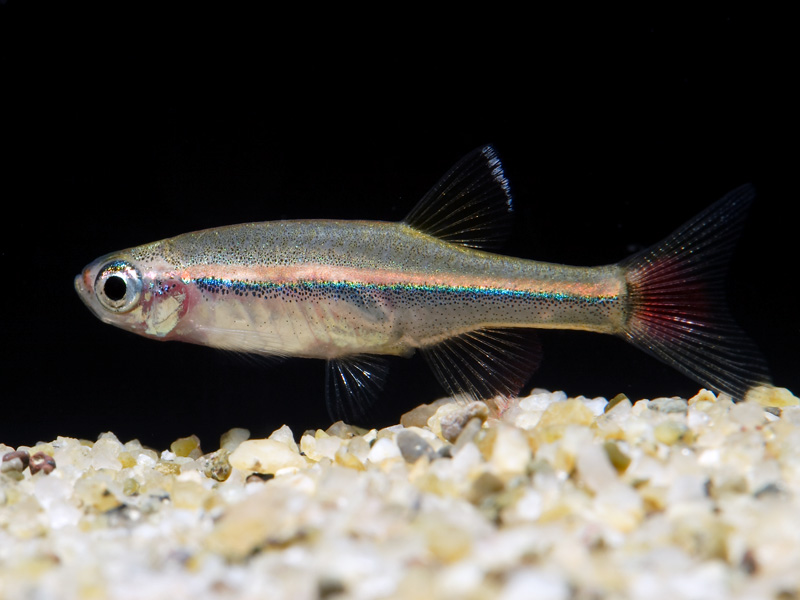
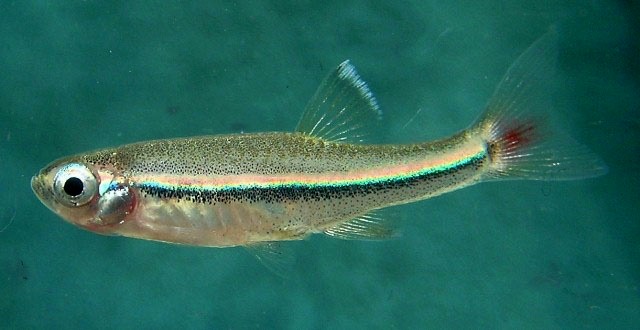
越南白云金丝(Tanichthys micagemmae)是小型、温和的群游鱼,腹鳍和臀鳍偏红。它比白云金丝(Tanichthys albonubes)小,身体也没有近亲整体的红褐底色,不能仅因外形相似就混作同一物种。
分布与栖息地
已知来自越南中北部滨海河水系,主要在广治一带,模式系列采于广平省的支流。
采集溪流清澈、浅,底部为砂,主流流速较快,但本种只在水流显著减弱的岸边被采到。周边流域多用于稻作,而该溪段穿过近海沙丘。
饲养环境
缸底至少约 45 × 30 cm,密植和深色底床有助于显色。可加浮水植物、沉木根、枝条与落叶形成结构。
过滤不必很强,保留适度流动即可;布置溪流缸时仍应让鱼能使用缓和区域,不能只看到产地“急流溪”便让全缸水流过猛。
食性与喂食
自然可能捕食微小昆虫、虫、甲壳类和其他浮游动物。缸内通常容易喂养,定期给红虫、水蚤、丰年虾等活或冷冻饵,搭配优质薄片、颗粒,其中部分宜含植物或藻类成分。
习性与混养
非常温和,不宜与明显更大或过于闹腾的鱼搭配。至少十条同养较合适,可减少紧张,雄鱼争取雌鱼注意时也更显色。
雌雄区分
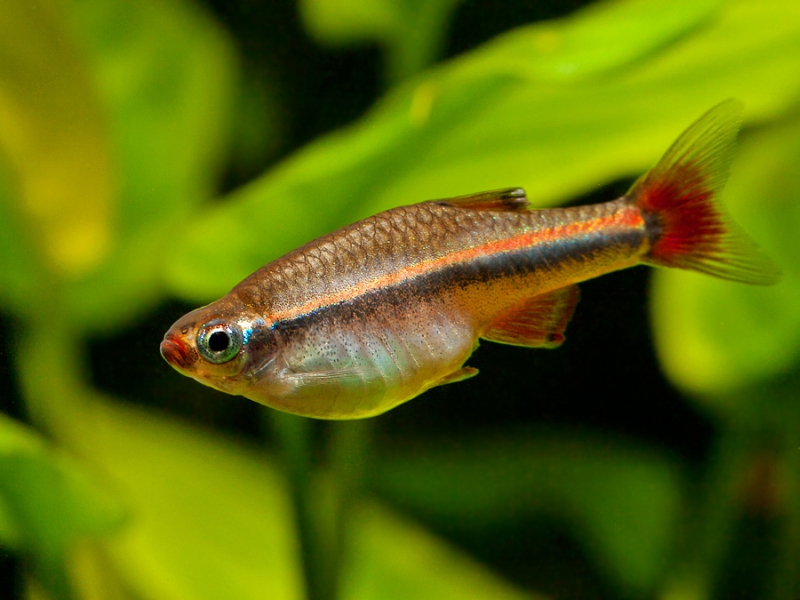
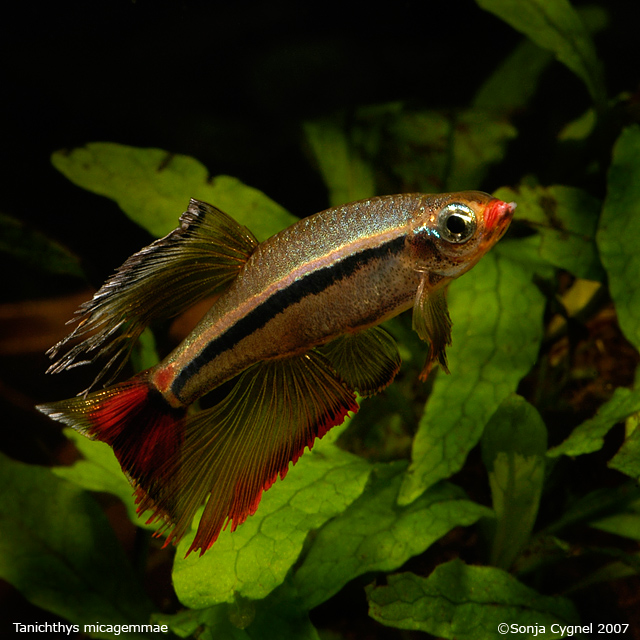
幼鱼难分,成熟雌鱼腹部通常更圆,常略大。雄鱼繁殖或与对手展示时颜色加强,随着年龄增长,背鳍和臀鳍可能延长。
繁殖
持续散卵、不照护卵。在成熟密植的单种缸或户外容器中,少量幼鱼可能自然留下。
提高数量可另备暗光小缸,底部用网、塑料草垫或玻璃弹珠保护卵,或填充细叶草、产卵拖把。水微酸至中性,温度处于现有适宜范围较高一端,用气动海绵过滤或气石供氧。
放入一至两对养壮亲鱼,或在更大空间用雌雄各约六条群体,通常次晨产卵。亲鱼有机会可能吃卵,最迟 2~3 天移出。卵约 48~72 小时孵化,自由游动初期可能需草履虫等微饵,长大能吞下后再给丰年虾无节幼体。
补充说明
本种腹鳍、臀鳍红色,而 Tanichthys sp. 'Vietnam' 相应鳍鲜黄;与白云金丝(Tanichthys albonubes)相比,又体形更小、缺少红褐体色,黑色体侧带较宽。
极长鳍个体究竟是变异还是老龄雄鱼特征仍有不确定性,不能凭长鳍独自确定身份。
图片
图片来自 SeriouslyFish,版权归各摄影者所有。
English
Overview
Tanichthys micagemmae is a small, peaceful schooling fish with reddish pelvic and anal fins. It is smaller than the familiar white cloud mountain minnow, Tanichthys albonubes, and lacks that relative's overall reddish-brown body tone. Similar appearance should not erase the distinction between species.
Distribution & habitat
Known records come from the Ben Hai system of north-central Vietnam, mainly associated with Quang Tri, with the type series collected from a tributary in Quang Binh.
The clear, shallow, sandy stream carried fast water, but this fish was collected only along margins where the current weakened markedly. Much of the surrounding drainage supports rice cultivation, while the particular stream passes through coastal dunes.
Aquarium setup
Provide a footprint of at least about 45 × 30 cm. Dense planting and a dark bottom bring out color. Floating plants, roots, branches, and leaves add structure.
Strong currents are unnecessary; modest circulation is sufficient. Even a stream-style aquarium should provide calmer areas. The fast main flow at the collection site is not a reason to force the fish into powerful water throughout the enclosure.
Diet & feeding
Tiny insects, worms, crustaceans, and other plankton are considered likely natural prey. Aquarium feeding is straightforward. Regular live or frozen bloodworms, Daphnia, and brine shrimp can accompany quality flakes or granules, with some plant- or algae-containing preparations.
Behaviour & compatibility
It is very peaceful and poorly suited to much larger or boisterous companions. Ten or more conspecifics reduce nervousness and allow males to display better courtship color.
Sexual dimorphism
Juveniles are difficult to sex. Mature females usually have rounder bellies and are often slightly larger. Male colors strengthen during courtship or rival displays, and dorsal and anal fins may lengthen with age.
Breeding
It scatters eggs repeatedly without subsequent care. Small numbers of young may survive in a mature planted species tank or outdoor container.
For greater yield, prepare a dim breeding aquarium with mesh, plastic grass, marbles, fine plants, or spawning mops protecting eggs. Use mildly acidic to neutral water toward the warmer part of the established suitable range, with an air-driven sponge filter or air stone for oxygenation.
Introduce one or two conditioned pairs, or roughly six of each sex in a larger group setup. Spawning usually follows the next morning. Adults may eat accessible eggs and should be removed within two or three days. Eggs hatch in about 48–72 hours. Free-swimming fry may initially need Paramecium or comparable microscopic food before taking brine shrimp nauplii.
Notes
Reddish pelvic and anal fins separate it from Tanichthys sp. 'Vietnam', whose corresponding fins are bright yellow. Compared with Tanichthys albonubes, it is smaller, lacks the reddish-brown body, and carries a broader dark flank stripe.
Exceptionally long fins may reflect a variant or older males; that feature alone does not settle identity.
来源
- https://www.seriouslyfish.com/species/tanichthys-micagemmae(抓取于 2026-10-10)
tanichthys-micagemmae · 文件: data/species/tanichthys-micagemmae.md · 状态: 草稿