Systomus orphoides
概要
| 字段 | 值 |
|---|---|
| 类别 | 鱼 |
| 学名 | Systomus orphoides |
| 别名 | Barbus orphoides、Puntius orphoides、Barbus caudimarginatus、Puntius simus |
| 分类 | 鲤形目 Cypriniformes › 鲤科 Cyprinidae › Systomus |
| 水体 | 淡水 |
| 原产地 | 柬埔寨、印度尼西亚、老挝、马来西亚、缅甸、泰国、越南 |
| 成体体长 | 25 cm |
| 饲养难度 | 中等 |
| 最小水体 | 720 L |
| 最小缸长 | 200 cm |
| 群居方式 | 群游 |
| 领地性 | 是 |
| 外部数据 | seriouslyfish systomus-orphoides;fishbase 68207 |
| 繁殖方式 | 散卵 |
水质参数
| 参数 | 耐受范围 | 最适范围 | 单位 |
|---|---|---|---|
| 水温 | 18–26 | — | °C |
| pH | 6–8 | — | — |
| 总硬度 | 2–20 | — | dGH |
概述
Systomus orphoides 是体形较大、活动强烈的鲤科鱼,成年空间和水质要求不能按幼鱼判断。它进食时尤其闹腾,柔弱伙伴容易受压,适合宽敞的强健河流鱼群落。
分布与栖息地
广布于东南亚多地,包括缅甸、泰国、老挝、柬埔寨、越南,经马来半岛至婆罗洲、苏门答腊和爪哇。印度也有记录,但南部新记录是原生扩展还是引入仍未明确。
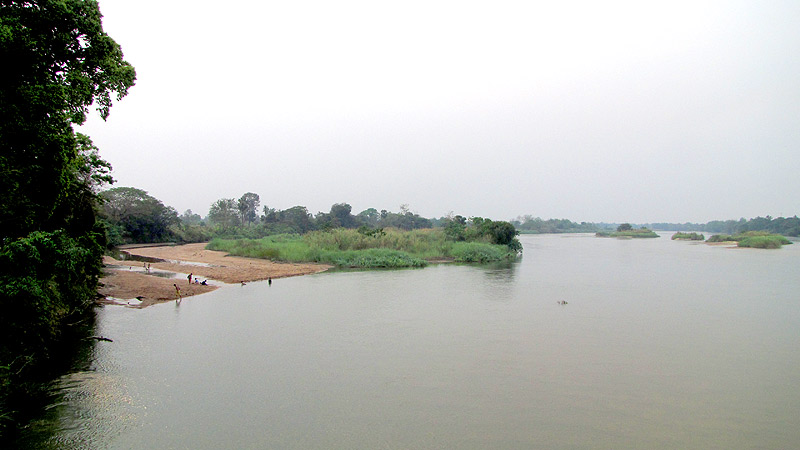
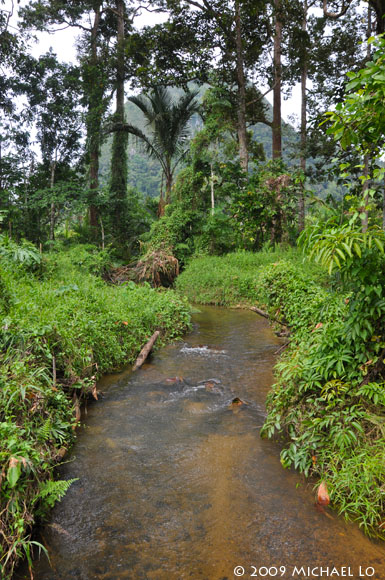
主要生活在流水支流、大溪流与周边洪泛地,也见于部分大河和常年水体。雨季进入淹水农田、森林取食和繁殖,水退后返回河道。
饲养环境
长期设施至少约 200 × 60 × 60 cm,保持开阔活动区,可用磨圆石块、砂、细砾和沉木模拟河道。软叶水草可能被吃,附生在布景上的耐受型水草更适合尝试。
需要持续洁净水质,不能容许有机污染物累积;高溶氧和中等水流有利,不必制造激流。
食性与喂食
野外可能摄取硅藻、其他藻类、有机碎屑、小虫、甲壳类等,仍属推测性食物组成。缸内一般好喂,可将活或冷冻红虫、水蚤、丰年虾与优质薄片或颗粒搭配,部分干粮宜含植物或藻类成分。
习性与混养
体形和活跃抢食容易让柔弱鱼退缩,伙伴宜同样强健、大小相近,并有足够空间。至少六条同种可减少惊慌,群内等级互动往往能分散对其他鱼的攻击,但不能把这当成任何组合都安全。
雌雄区分
成年雄鱼颜色更浓,繁殖期头部珠星明显;雌鱼通常稍大、较厚实,体色较淡。
繁殖
家养缸成功记录尚不明确,原产地有食用养殖。属于散卵型,不照护后代,单次繁殖一只雌鱼可能释放数千卵。
若尝试繁殖,需有隔卵方法、大型专用繁殖缸,以及后续大量幼鱼的空间安排,不能只考虑能否产卵而忽视长成后的承载需求。
补充说明
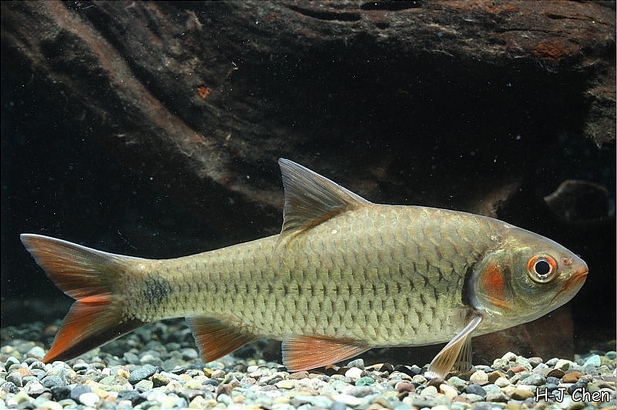
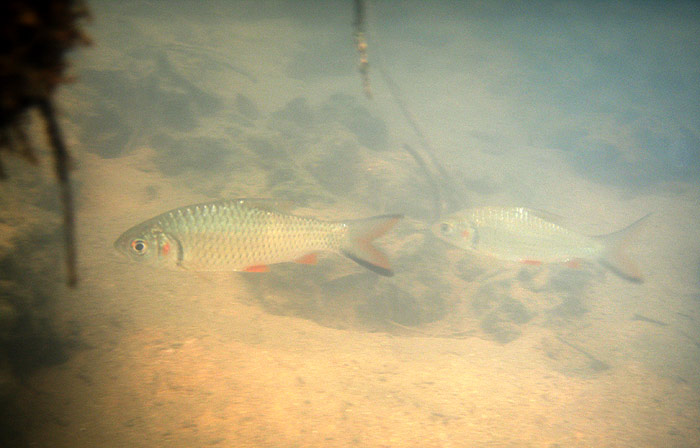
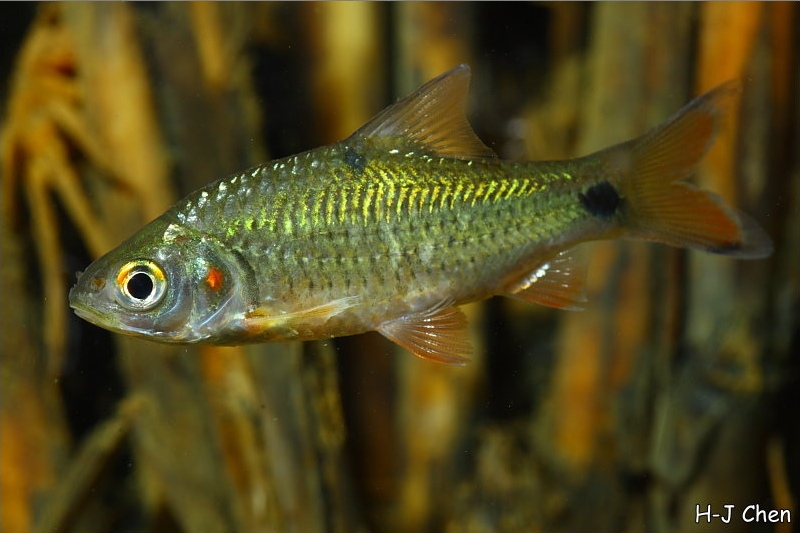
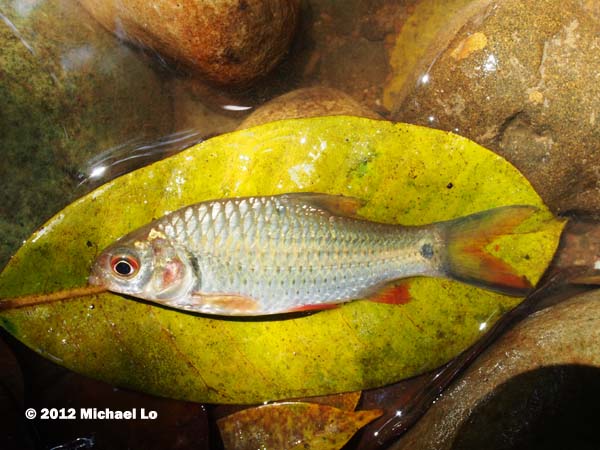
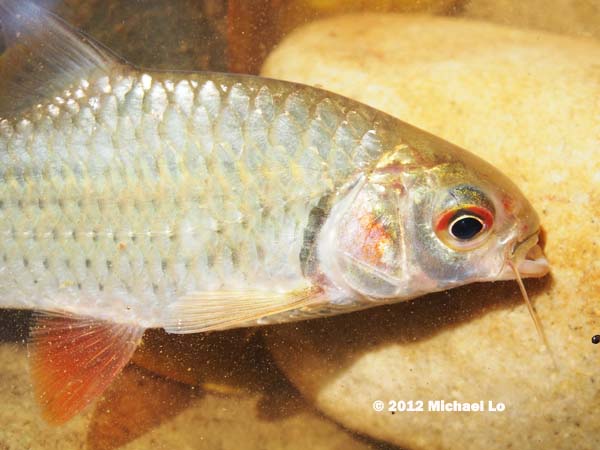
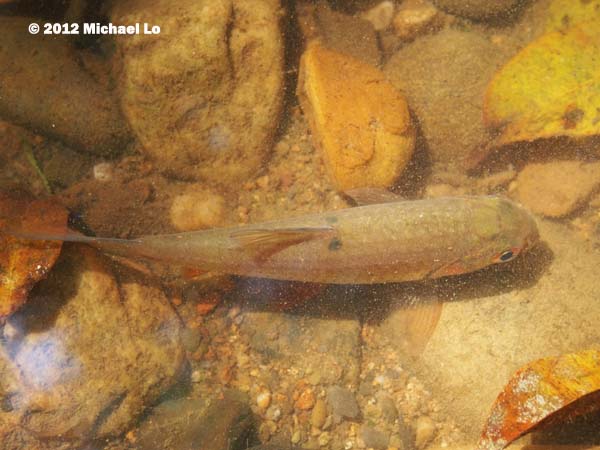
两对须、尾柄黑斑、背鳍起点下小竖黑斑、橙红尾鳍上的宽黑边及多数种群的纵向黑点列,组成常用辨识线索。不同产地鳍红色程度可以变化,不宜把每种颜色都当成独立种。
图片
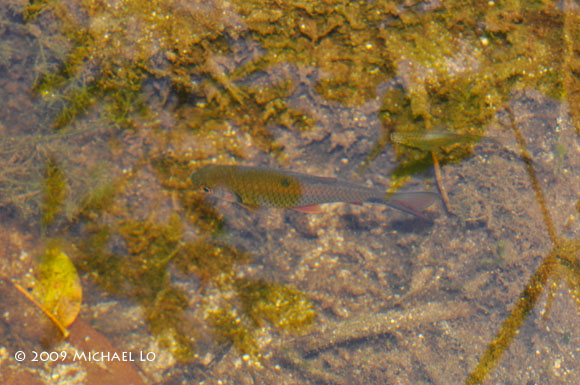
图片来自 SeriouslyFish,版权归各摄影者所有。
English
Overview
Systomus orphoides is a substantial, energetic cyprinid whose adult needs cannot be judged from juveniles. Especially vigorous feeding can intimidate delicate companions. A spacious assembly of robust river fishes is more appropriate than a quiet small-fish community.
Distribution & habitat
It ranges widely across Southeast Asia, from Myanmar through Thailand, Laos, Cambodia, and Vietnam, south through the Malay Peninsula to Borneo, Sumatra, and Java. Indian records also exist, but whether the southern occurrence is native or introduced remains unresolved.
Flowing tributaries, large streams, and adjacent floodplains are typical, with some major rivers and permanent waters also occupied. Fish enter inundated farmland and forest to feed and reproduce during the wet season, returning to channels as water retreats.
Aquarium setup
Long-term facilities should be at least around 200 × 60 × 60 cm. Preserve open movement space while using rounded rock, sand, fine gravel, and wood for a river layout. Soft-leaved plants may be eaten; tougher attached plants are more suitable candidates.
Consistently clean water is essential. Prevent organic pollution, provide abundant oxygen, and maintain moderate movement without requiring torrent-like current.
Diet & feeding
Diatoms, algae, detritus, small insects, worms, and crustaceans are suggested natural foods, rather than a fully established dietary classification. Captive fish feed readily. Combine live or frozen bloodworms, Daphnia, and brine shrimp with quality flakes or granules, including plant- or algae-containing preparations.
Behaviour & compatibility
Size and energetic competition can overwhelm less robust fishes. Choose similarly substantial, sturdy companions and sufficient room. Six or more conspecifics reduce nervousness and usually direct much aggression into maintaining ranks within the group. This is not a guarantee for every combination.
Sexual dimorphism
Adult males become more intensely colored and show prominent head tubercles in breeding condition. Females tend to be slightly larger, heavier, and less colorful.
Breeding
Home-aquarium success remains uncertain, although it is farmed as a food fish. It scatters eggs without care, and one female can release thousands during an event.
A serious attempt requires protection against egg predation, a large dedicated breeding installation, and facilities for substantial numbers of growing juveniles. Producing eggs is only part of the commitment.
Notes
Two barbel pairs, a caudal-peduncle blotch, a small vertical mark below the dorsal origin, broad dark borders on an orange-red tail, and rows of flank spots in many populations provide recognition clues. Fin redness varies geographically; every color form should not automatically be treated as a separate species.
来源
- https://www.seriouslyfish.com/species/systomus-orphoides(抓取于 2026-10-10)
systomus-orphoides · 文件: data/species/systomus-orphoides.md · 状态: 草稿