污斑波鱼 · Dwarf Scissortail Rasbora
概要
| 字段 | 值 |
|---|---|
| 类别 | 鱼 |
| 学名 | Rasbosoma spilocerca |
| 别名 | 污斑波魚 |
| 分类 | 鲤形目 Cypriniformes › 鲤科 Cyprinidae › Rasbosoma |
| 水体 | 淡水 |
| 成体体长 | 3 cm |
| 饲养难度 | 中等 |
| 最小水体 | 41 L |
| 最小缸长 | 45 cm |
| 群居方式 | 群游 |
| 性情 | 温和 |
| 水流偏好 | 低 |
| 特征 | 会跳缸: 是 |
| 外部数据 | seriouslyfish rasbosoma-spilocerca;fishbase 27081 |
| 原产地 | 老挝、泰国、柬埔寨 |
| 食性 | 肉食 |
| 繁殖方式 | 散卵 |
水质参数
| 参数 | 耐受范围 | 最适范围 | 单位 |
|---|---|---|---|
| 水温 | 22–26 | — | °C |
| 总硬度 | 2–10 | — | dGH |
概述
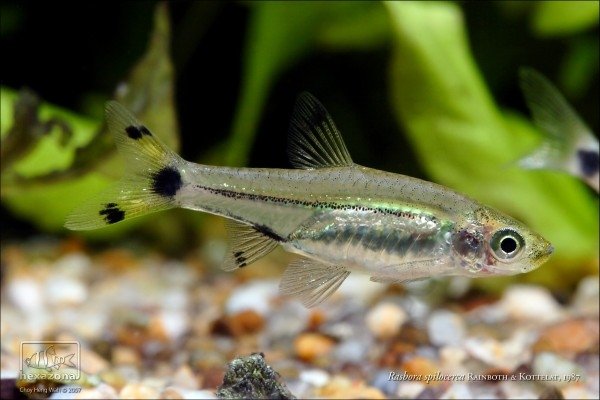
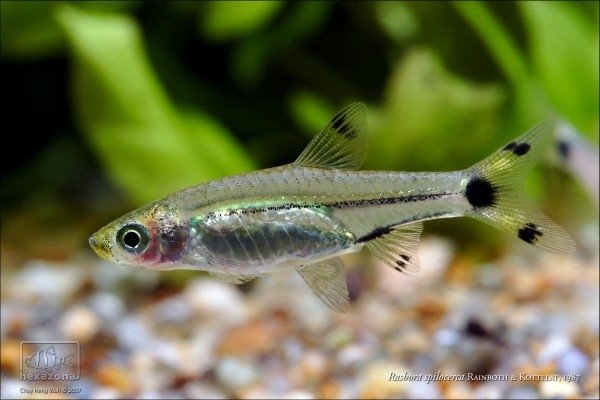
污斑波鱼(Rasbosoma spilocerca)外形像缩小的剪尾波鱼,但成鱼仍很小,性格胆怯。它更适合成熟的密植小鱼缸,足够数量、低竞争环境才能展现细腻体色和求偶行为。
分布与栖息地
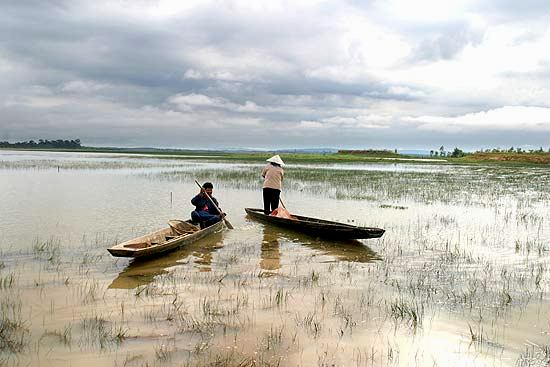
原产老挝、泰国和柬埔寨湄公河下游水系,包括水库、湖泊、沼泽与洪泛地。偏爱清浅且沉水植物繁茂的水域,雨季也进入临时淹水区;流水中偶有记录,但数量不多。
饲养环境
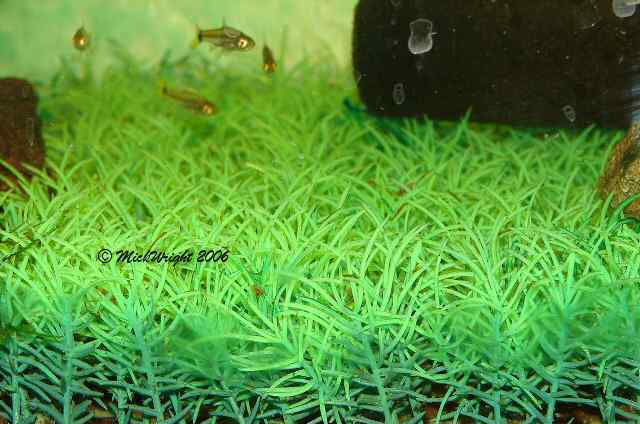
小群至少可从 45 × 30 × 30 厘米起步,深色底砂和丰富水草有助展示,浮水植物与沉木柔化光照。保持弱流和成熟稳定水质,不放新缸;虽小却能跳,缸盖仍须严密。
食性与喂食
主要捕食微型昆虫、蠕虫、甲壳类和其他浮游动物。可用大小合适的干粮搭配每天小份活饵或冷冻饵料,尤其注意颗粒是否能入口。
习性与混养
至少 8~10 条同养。性情很温和却不适合多数热闹混养缸,宜单独群养或只配其他微型温和鱼,防止因体型差距和胆怯而失去食物与活动空间。
雌雄区分
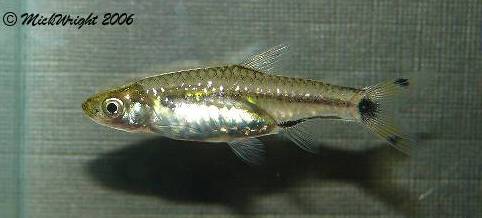
雄鱼更小、更瘦且颜色更浓,繁殖状态下身体带粉红色,鳍泛黄色。
繁殖
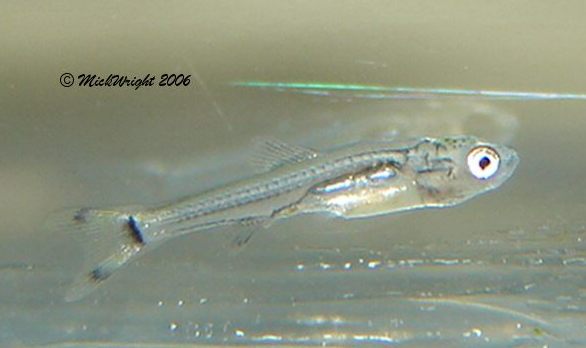
散卵、不护卵。可设弱光繁殖缸,隔卵网或塑料草垫保护卵,轻缓海绵过滤避免吸入幼鱼。有成功案例使用酸碱度 7.0、硬度 4 度、23.5 °C,底部半细沙半塑料草并加少量莫丝,亲鱼群体在晨光初现时于草垫上产卵。通常约 24~36 小时孵化,约三天内开始平游;初期用微型食物,长大后换微虫或丰年虾无节幼体。条件合适时生长较快,约 12 周可呈现成鱼外形。
补充说明
幼小外形不能用来认定是三线波鱼的幼体,两者成鱼尺寸差异很大;正确确认物种关系到空间和混养安排。
图片
图片来自 SeriouslyFish,版权归各摄影者所有。
English
Overview
A miniature scissortail look-alike, Rasbosoma spilocerca remains tiny as an adult. Its timid nature suits an established planted aquarium with little competition. A proper group can reveal more color and social activity than isolated specimens suggest.
Distribution & habitat
Native waters lie in the lower Mekong basin of Laos, Thailand and Cambodia. Shallow lakes, reservoirs and wetlands with abundant submerged growth are typical. Seasonal flooded habitats are also used, while records from flowing water are comparatively sparse.
Aquarium setup
A small group can be housed from 45 by 30 by 30 cm. Planting, a dark base and floating shade create useful cover. Keep circulation gentle and introduce the fish only after biological maturation. A tight cover remains essential even for such a small jumper.
Diet & feeding
Tiny animal prey dominates the diet. Offer appropriately small dry foods together with daily live or frozen portions, taking mouth size into account.
Behaviour & compatibility
Keep eight to ten or more, either as a dedicated group or with other diminutive peaceful species. Its small size and timidity make many conventional community companions unsuitable.
Sexual dimorphism
Males are smaller, slimmer and more colorful; breeding individuals develop pinkish bodies and yellow-toned fins.
Breeding
Provide a dim breeding tank with protected eggs and gentle sponge filtration. One successful keeper used pH 7.0, hardness four degrees and 23.5 °C, with a bottom divided between fine sand and plastic spawning material plus a little moss. Group spawning occurred at first light over the artificial plants. Incubation is usually around twenty-four to thirty-six hours, and swimming young appear within about three days. Begin with microscopic foods, then larger live fry foods. Well-raised juveniles may resemble adults after roughly twelve weeks.
Notes
Do not assume these fish are juvenile scissortail rasboras of the larger species. Correct identification changes both space planning and companion selection.
来源
- https://www.seriouslyfish.com/species/rasbosoma-spilocerca(抓取于 2026-10-10)
rasbosoma-spilocerca · 文件: data/species/rasbosoma-spilocerca.md · 状态: 草稿