珠点波鱼 · Fire Rasbora
概要
| 字段 | 值 |
|---|---|
| 类别 | 鱼 |
| 学名 | Rasboroides vaterifloris |
| 别名 | 珠點波魚 |
| 分类 | 鲤形目 Cypriniformes › 鲤科 Cyprinidae › Rasboroides |
| 水体 | 淡水 |
| 原产地 | 斯里兰卡 |
| 成体体长 | 4 cm |
| 饲养难度 | 入门 |
| 最小水体 | 54 L |
| 最小缸长 | 60 cm |
| 群居方式 | 群游 |
| 水流偏好 | 低 |
| 外部数据 | seriouslyfish rasboroides-vaterifloris;fishbase 6148 |
| 食性 | 肉食 |
| 繁殖方式 | 散卵 |
水质参数
| 参数 | 耐受范围 | 最适范围 | 单位 |
|---|---|---|---|
| 水温 | 23–27 | — | °C |
| pH | 5.5–7 | — | — |
| 总硬度 | 1–8 | — | dGH |
概述
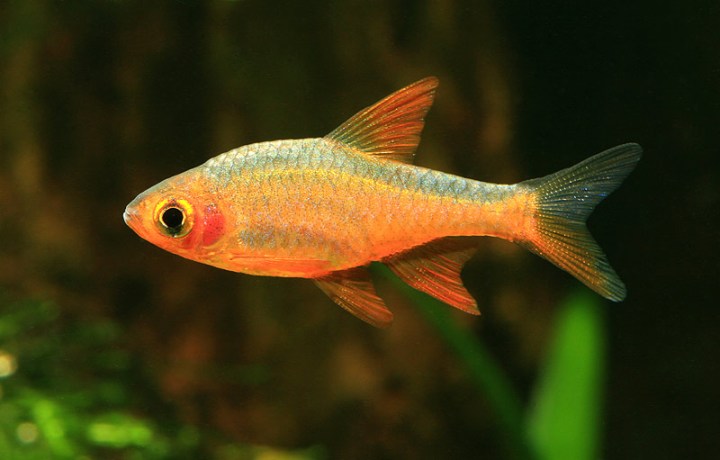
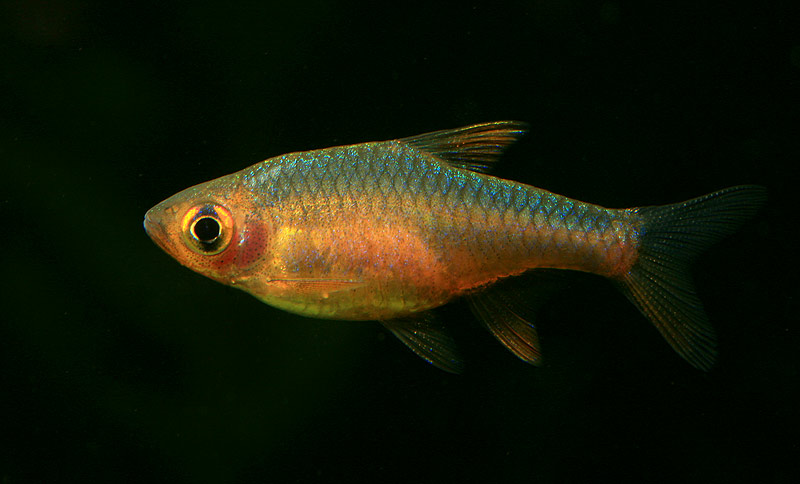
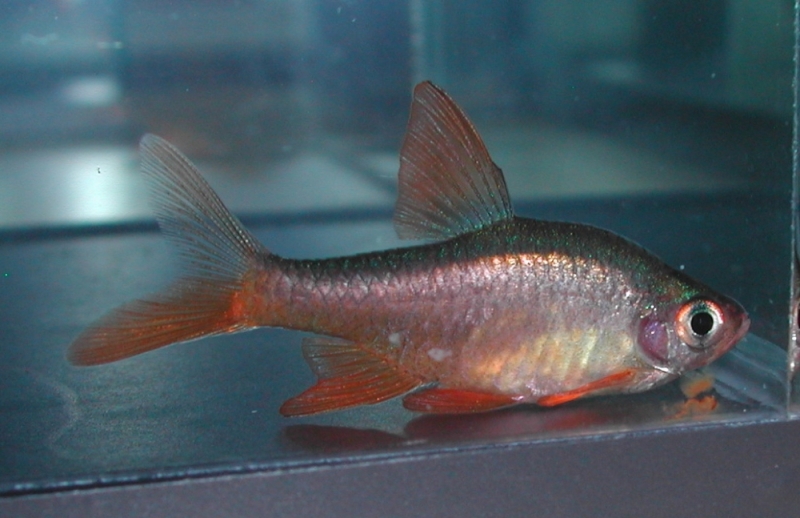
珠点波鱼(Rasboroides vaterifloris)体色随地域而变,可见红、橙、黄鳍型。它胆怯且对运输与水质变化较敏感,较适合成熟的安静小鱼缸,而不是抢食激烈的普通混养缸。
分布与栖息地
斯里兰卡西南湿润区特有,限于卡卢、班托塔、金河和尼尔瓦拉河流域。当地低地雨林破碎化、水质和栖地退化影响原生鱼类;水域通常林荫浓密、偏软且微酸,落叶和岸边根系丰富。
饲养环境
底面至少 60 × 30 厘米,密植水草配深色底砂,浮水植物、沉木和落叶提供遮荫。过滤轻缓,强流会令它吃力。新购鱼常需仔细适应,不能放进未成熟缸;宜小量而规律换水,每次约缸容的 10%,减少水化学波动。
食性与喂食
主要摄食小型无脊椎动物,也会摄入有机碎屑。优质适口薄片、颗粒搭配红虫、水蚤、丰年虾等小型活饵或冷冻食物,兼顾它较慢、较谨慎的进食。
习性与混养
至少 6~10 条群养可减轻紧张。大型、活泼或抢食强的鱼容易压制它,宜搭配体型小、温和的波鱼类或合适的小型鳅类,保持安静的喂食环境。
雌雄区分
雄鱼更小、更修长,颜色更鲜明,繁殖期尤为明显。
繁殖
散卵且不护卵,成熟缸可能自然留下少量幼鱼。专门繁殖可放细叶植物并用极轻缓海绵过滤;常见方法是放入充分调养的 5~6 对亲鱼,留 4~5 天后移走。每轮约 20 粒,可多轮产卵,有繁殖者随后把水位降到约 10 厘米。通常 24~48 小时孵化,约 3~5 天开始平游。先用微型食物,逐步转喂微虫或丰年虾幼体;据报道生长较慢,需数月成熟。
补充说明
旧贸易名称可能仍用 Rasbora。地域色型及历史亚种处理存在分歧,不宜仅靠鳍色认定不同种。选择性采集可能改变野外种群的色型构成,运输损耗也曾很高。
图片
图片来自 SeriouslyFish,版权归各摄影者所有。
English
Overview
Regional forms of Rasboroides vaterifloris show red, orange or yellow fins and differing body tones. Delicate during transport and sensitive to changing water conditions, it suits an established quiet small-fish aquarium where food competition is limited.
Distribution & habitat
Endemic to southwestern Sri Lanka, it is restricted to four wet-zone river basins: Kalu, Bentota, Gin and Nilwala. Forest fragmentation and degraded water quality affect native habitats. The regional forest waters are shaded, soft and mildly acidic, with leaf litter and bankside roots.
Aquarium setup
Allow at least a 60 by 30 cm footprint. Dense planting, a dark base and overhead shade support a sheltered display. Use gentle filtration. Newly acquired fish may arrive weakened, making careful acclimation important. Avoid immature aquaria and favor small regular water changes of around ten percent to limit chemical fluctuations.
Diet & feeding
Wild feeding is primarily on tiny invertebrates, with organic detritus also ingested. Offer suitable prepared foods together with small live or frozen meals, ensuring this retiring fish actually receives its share.
Behaviour & compatibility
Keep six to ten or more. Large or boisterous companions may intimidate it or monopolize food. Small peaceful cyprinids and suitable quiet loaches are more appropriate companions.
Sexual dimorphism
Males are smaller and slimmer, with stronger coloration that becomes particularly evident in breeding condition.
Breeding
Egg scattering occurs without brood care. For higher fry recovery, use fine plants and very gentle sponge filtration. A commonly reported approach introduces five or six conditioned pairs and removes them after four to five days of repeated small spawning bouts. Some breeders then lower the water to around ten centimeters. Eggs generally hatch within one to two days, with swimming young reported after three to five days. Begin with microscopic food and increase prey size gradually. Growth is reported to be slow, requiring several months to maturity.
Notes
Older trade usage may retain the genus name Rasbora. Regional color forms and historical subspecies have received differing interpretations, so fin color alone should not decide identity. Selective collecting may have altered wild color-form representation, and transport losses have historically been substantial.
来源
- https://www.seriouslyfish.com/species/rasboroides-vaterifloris(抓取于 2026-10-10)
rasboroides-vaterifloris · 文件: data/species/rasboroides-vaterifloris.md · 状态: 草稿