Rasbora vulcanus
概要
| 字段 | 值 |
|---|---|
| 类别 | 鱼 |
| 学名 | Rasbora vulcanus |
| 分类 | 鲤形目 Cypriniformes › 鲤科 Cyprinidae › Rasbora |
| 水体 | 淡水 |
| 成体体长 | 4 cm |
| 饲养难度 | 中等 |
| 最小水体 | 68 L |
| 最小缸长 | 60 cm |
| 群居方式 | 群游 |
| 性情 | 温和 |
| 特征 | 会跳缸: 是 |
| 外部数据 | seriouslyfish rasbora-vulcanus;fishbase 60412 |
| 原产地 | 印度尼西亚西苏门答腊派南附近 Batang Si Joontour 河区域 |
| 繁殖方式 | 散卵 |
水质参数
| 参数 | 耐受范围 | 最适范围 | 单位 |
|---|---|---|---|
| 水温 | 23–26 | — | °C |
| 总硬度 | 2–15 | — | dGH |
概述
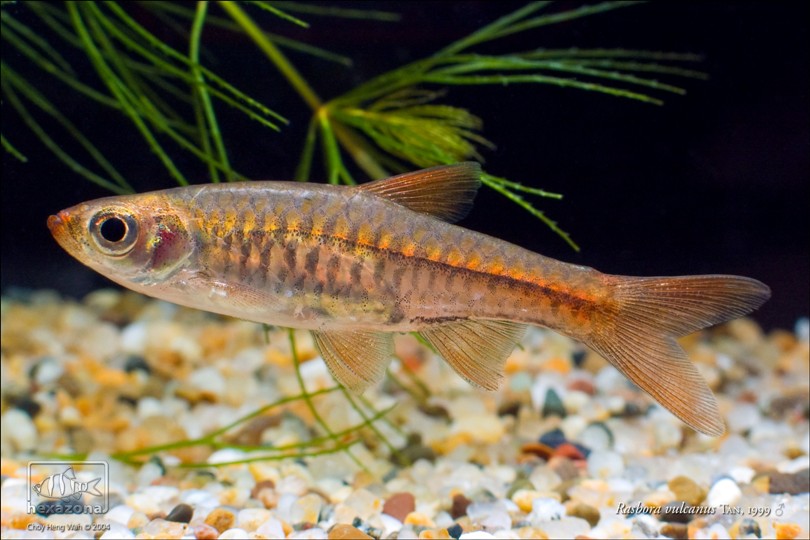
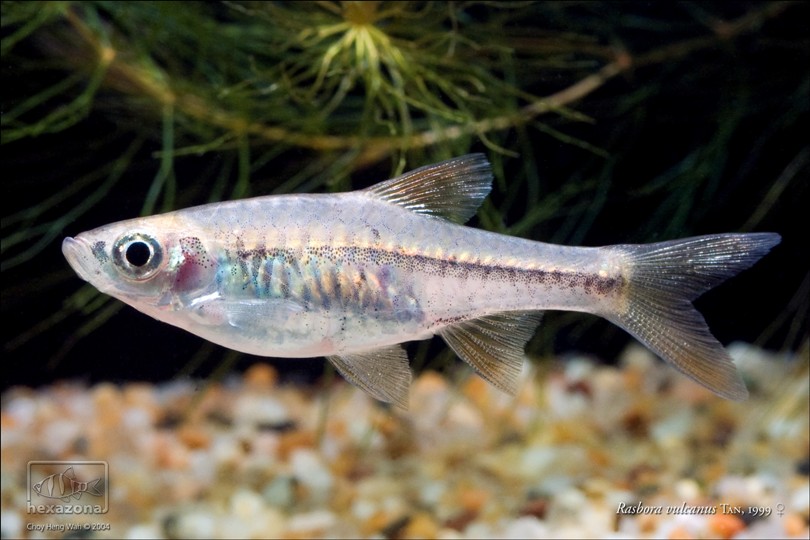
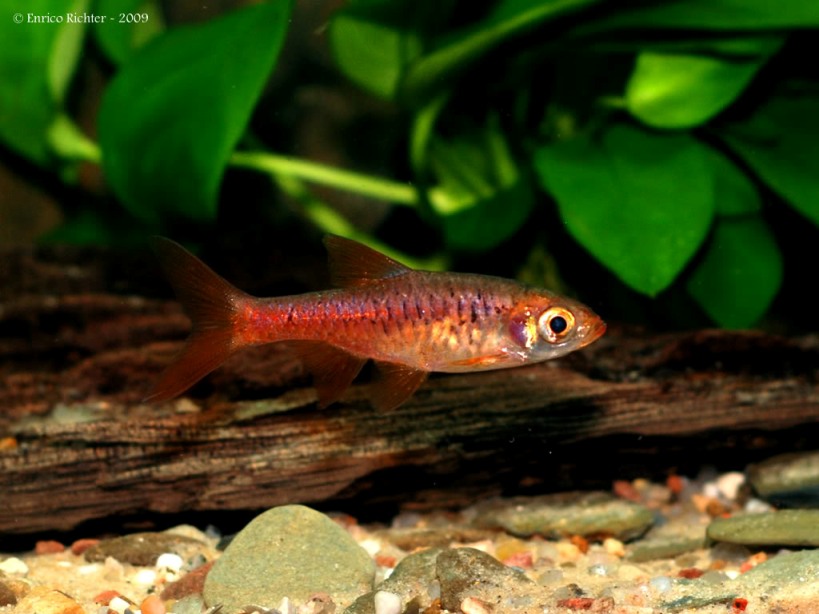
Rasbora vulcanus 是西苏门答腊的小型波鱼,雄鱼橙红,雌鱼浅黄,同种雌雄外观差异很大。只按鲜红个体挑选,可能买到全雄群体,不能把颜色淡的雌鱼当成劣质或不同种。
分布与栖息地
确认地点在印度尼西亚西苏门答腊派南附近的 Batang Si Joontour 河,是否仅限当地仍不确定。似乎采自清澈流水溪流。
名称与雄鱼红色有关,不是因产自塔兰火山山麓而得名,不能凭“火山波鱼”的标签推断生活在温泉。
饲养环境
已有最低缸规格可供一群活动,密植、深色底床更利于显色,浮水植物和沉木根、枝条可柔化照明。
不要放入未成熟的新缸,它对水质波动可能敏感。缸盖应紧密,防止跳出。
食性与喂食
自然可能捕食微小昆虫、虫、甲壳类和其他浮游动物,不能据此当成已确定的专食分类。缸内接受适口干粮,同时每日搭配水蚤、丰年虾等小型活饵或冷冻饵,更利于保持状态。
习性与混养
非常和平,适合经体形和需求筛选的伙伴。至少 8~10 条群养可减少紧张,雄鱼求偶竞争时更显红色。
雌雄区分
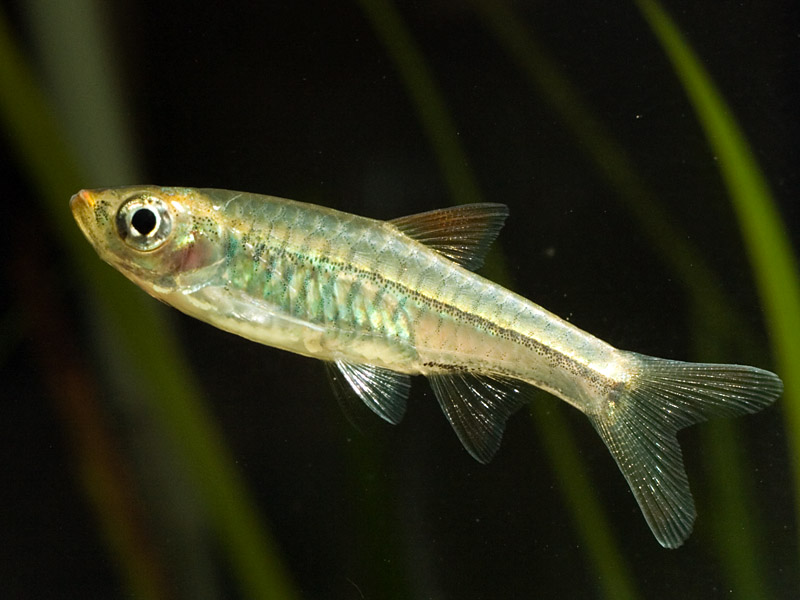
雄鱼身体有橙红色,优势雄鱼尤其浓;雌鱼浅黄,仅不成对鳍稍带红,成熟后通常较厚实、略大。贸易常偏重较鲜艳雄鱼,组建繁殖群时须实际确认雌鱼。
繁殖
为持续散卵型,不护卵。提高数量可另备暗光、长浅容器,先半缸水,以底网或塑料草垫隔开卵与成鱼,采用微酸水及既有适温范围较高一端。
初期小型动力过滤沿缸长送水,放入一至两对养壮亲鱼,每隔数小时少量补较凉水逐渐加满,并少量喂活或冷冻饵。通常早晨产卵,一只雌鱼会分多次排卵。
几天后移出亲鱼,将动力过滤换成成熟海绵过滤以免吸入鱼苗。卵通常 18~48 小时孵化,再过 24~48 小时自由游动,初期喂草履虫等微饵,能吞下后再转丰年虾无节幼体和微虫。
补充说明
常被误用 Rasbora reticulata 的名称,真正近似种来自尼亚斯岛,身体较高且没有本种雄鱼的红色。两者都有深色鳞缘,不能只靠网纹判断身份。
图片
图片来自 SeriouslyFish,版权归各摄影者所有。
English
Overview
Rasbora vulcanus is a small western Sumatran rasbora with striking sexual color differences. Males are orange-red and females pale yellow. Selecting only brilliant red individuals can produce an all-male group; pale females should not be dismissed as inferior fish or automatically assigned to another species.
Distribution & habitat
Confirmed locality information points to the Batang Si Joontour near Painan in West Sumatra, Indonesia. Regional endemism remains possible rather than proven. Collections apparently came from clear flowing streams.
The name refers to male redness, not a discovery beneath Mount Talang. A volcano trade label does not indicate a hot-spring habitat.
Aquarium setup
The listed minimum accommodation can house a group. Dense planting over a dark bottom improves the display, with floating plants, roots, and branches softening the light.
Avoid biologically immature systems because fluctuations in water conditions may cause problems. Fit a closely secured lid against jumping.
Diet & feeding
Minute insects, worms, crustaceans, and other plankton are considered likely natural prey rather than a confirmed specialized diet. Appropriate dry foods are accepted, but daily small live or frozen items such as Daphnia and brine shrimp support better condition.
Behaviour & compatibility
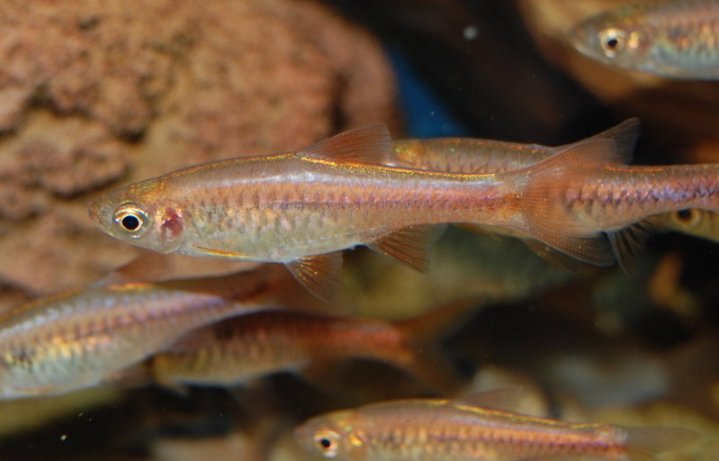
It is very peaceful with companions selected for appropriate size and requirements. Groups of eight to ten or more reduce nervousness and allow males to show stronger red during courtship competition.
Sexual dimorphism
Males carry orange-red pigment, strongest in dominant individuals. Females are pale yellow with only slight red in unpaired fins and usually become fuller and a little larger. Trade selection often favors colorful males, so verify the presence of females when forming a breeding group.
Breeding
It scatters eggs repeatedly and provides no care. For increased yield, use a dim, long, shallow container initially half-filled, with mesh or plastic grass separating eggs from the parents. Mildly acidic water toward the warmer end of the established suitable range is appropriate.
A small initial power filter can direct water along the container. Introduce one or two conditioned pairs, gradually top up with small additions of cooler water every few hours, and offer modest live or frozen feeds. Spawning usually occurs in the morning through several egg releases.
After a few days, remove adults and exchange powered filtration for a mature sponge unit to protect fry. Incubation generally lasts 18–48 hours, followed by another 24–48 hours to free swimming. Start with Paramecium or similar microscopic foods, then introduce brine shrimp nauplii and microworms as size permits.
Notes
It is often mislabeled Rasbora reticulata. That similar species comes from Nias, is deeper-bodied, and lacks the male red coloration. Both have dark scale margins, so a net-like pattern alone does not resolve identity.
来源
- https://www.seriouslyfish.com/species/rasbora-vulcanus(抓取于 2026-10-10)
rasbora-vulcanus · 文件: data/species/rasbora-vulcanus.md · 状态: 草稿