Rasbora rubrodorsalis
概要
| 字段 | 值 |
|---|---|
| 类别 | 鱼 |
| 学名 | Rasbora rubrodorsalis |
| 分类 | 鲤形目 Cypriniformes › 鲤科 Cyprinidae › Rasbora |
| 水体 | 淡水 |
| 成体体长 | 3 cm |
| 饲养难度 | 入门 |
| 最小水体 | 41 L |
| 最小缸长 | 45 cm |
| 群居方式 | 群游 |
| 性情 | 温和 |
| 水流偏好 | 低 |
| 外部数据 | seriouslyfish rasbora-rubrodorsalis;fishbase 60206 |
| 原产地 | 泰国,确认记录主要位于东北部湄公河下游流域 |
| 繁殖方式 | 散卵 |
水质参数
| 参数 | 耐受范围 | 最适范围 | 单位 |
|---|---|---|---|
| 水温 | 24–28 | — | °C |
| 总硬度 | 2–10 | — | dGH |
概述
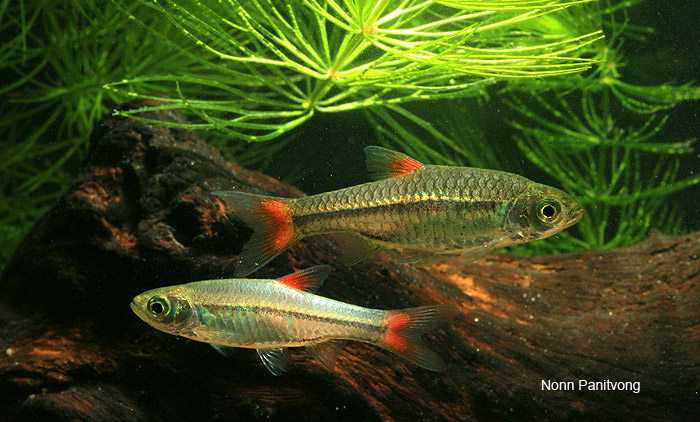
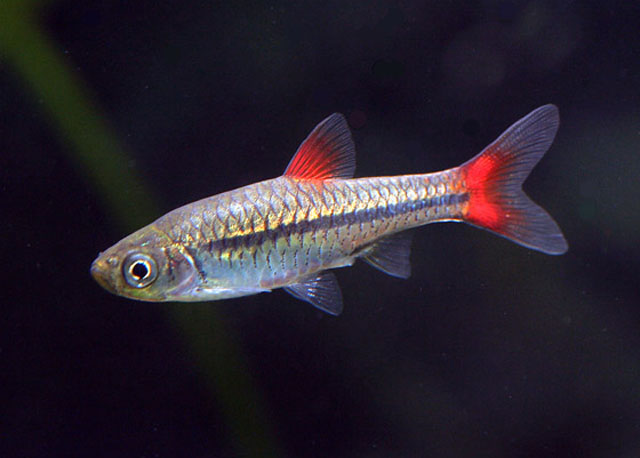
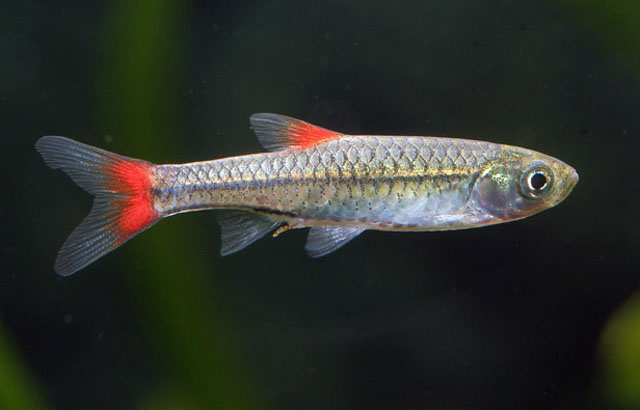
Rasbora rubrodorsalis 是背鳍有鲜红斑块的小型波鱼,性情温和,适合缓流、密植并有同种群体的环境。它与背鳍无色的近似种容易混淆,鲜红背斑是重要识别线索。
分布与栖息地
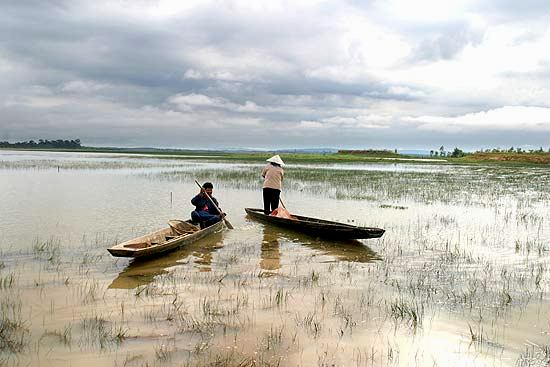
确认记录主要在泰国东北部湄公河下游区域,包括廊开一带湿地。泰国中部及境外更广分布的说法仍缺少明确地点证据,不能一概写入原生范围。
生活于沼泽、水库、洪泛地等静水或慢流环境的浅水岸边,似乎喜欢清水和细叶草,雨季会进入暂时淹水地。
饲养环境
缸底至少约 45 × 30 cm 可供小群活动,密植和深色底床更利于显色。浮水植物、沉木根与枝条可分散光线。
保持温和过滤,强水流可能使它游动吃力,不能照搬急流鱼的造流方式。
食性与喂食
自然食性可能与相近波鱼相似,捕食微小虫和甲壳类等,但尚带推测。缸内可吃适口干粮,并应每天搭配水蚤、丰年虾等细小活饵或冷冻饵。
习性与混养
非常和平,混养要选不会吞食或持续压制这种小鱼的伙伴。至少 8~10 条同养较合适,既减少紧张,也让雄鱼表现求偶时的体色。
雌雄区分
雄鱼明显较小、较纤细,尤其繁殖时颜色更鲜明。
繁殖
持续散卵、不护卵,状态良好时可能经常繁殖。成熟草缸中有时能自然出现少量幼鱼,若要提高数量,可另备暗光小缸,用底网或塑料草垫把卵与成鱼隔开。
有成功繁殖经验采用较软酸水,选择两雄一雌,清晨产卵,单只雌鱼可能达到约 250 粒。一般波鱼育苗可参考约一天孵化、其后三天自由游动,时间仍受温度等因素影响。
初食用草履虫等微小饵料,待鱼苗能吞下后再给丰年虾无节幼体或微虫,不能直接以成鱼颗粒代替。
补充说明
本种背鳍红斑明显,而近似的 Rasbora borapetensis 背鳍透明,红色主要在尾鳍基部。也曾被错误标作 Rasbora beauforti,因此采购时应核对活体特征,而不是只认标签。
图片
图片来自 SeriouslyFish,版权归各摄影者所有。
English
Overview
Rasbora rubrodorsalis is a tiny, peaceful rasbora with a vivid red dorsal-fin patch. Gentle flow, planting, and company suit it. The dorsal mark is especially useful in separating it from a similar fish with a clear dorsal fin.
Distribution & habitat
Confirmed records center on northeastern Thailand's lower Mekong region, including wetlands around Nong Khai. Claims of broader central Thai or cross-border distribution lack equally definite locality support and should remain qualified.
It occupies shallow margins of still or slowly moving swamps, reservoirs, and floodplain waters. Clear water with fine vegetation appears preferred, with movement into temporarily flooded areas during the rains.
Aquarium setup
A footprint of at least around 45 × 30 cm accommodates a small group. Dense plants and a dark substrate improve the display, while floating vegetation, roots, and branches diffuse the light.
Keep filtration gentle. Strong current can overwhelm this fish, so a torrent-style circulation scheme is inappropriate.
Diet & feeding
Natural feeding is presumed similar to related rasboras, involving minute worms, crustaceans, and other animal prey. In captivity, use suitably small dry foods alongside daily live or frozen Daphnia, brine shrimp, and comparable items.
Behaviour & compatibility
Its very peaceful nature requires companions that will not swallow or continually dominate it. Maintain eight to ten or more to reduce anxiety and allow males to display courtship color.
Sexual dimorphism
Males are noticeably smaller and slimmer, with stronger color especially during breeding.
Breeding
It repeatedly scatters eggs without parental care. Some fry may appear in an established planted tank, but a separate dim breeding container with mesh or plastic grass separating eggs from adults can improve yield.
A successful approach used softer acidic water and two males with one female. Spawning took place in the morning, and a female may produce about 250 eggs. General rasbora nursery guidance suggests roughly a day to hatch and three further days before free swimming, with timing affected by temperature and other conditions.
Offer Paramecium or equivalent microscopic food first. Introduce brine shrimp nauplii or microworms only once the fry can swallow them; adult pellets are not a direct substitute.
Notes
The red dorsal patch distinguishes it from Rasbora borapetensis, which has a clear dorsal fin and red mainly at the tail base. It has also been mislabeled Rasbora beauforti, making examination of living fish more useful than the label alone.
来源
- https://www.seriouslyfish.com/species/rasbora-rubrodorsalis(抓取于 2026-10-10)
rasbora-rubrodorsalis · 文件: data/species/rasbora-rubrodorsalis.md · 状态: 草稿