Rasbora lacrimula · Red Cherry Rasbora
概要
| 字段 | 值 |
|---|---|
| 类别 | 鱼 |
| 学名 | Rasbora lacrimula |
| 分类 | 鲤形目 Cypriniformes › 鲤科 Cyprinidae › Rasbora |
| 水体 | 淡水 |
| 成体体长 | 3.1 cm |
| 饲养难度 | 入门 |
| 最小水体 | 41 L |
| 最小缸长 | 45 cm |
| 群居方式 | 群游 |
| 性情 | 温和 |
| 外部数据 | seriouslyfish rasbora-lacrimula;fishbase 65094 |
| 原产地 | 印度尼西亚婆罗洲东加里曼丹贝拉扬河流域(马哈坎河下游水系) |
| 繁殖方式 | 散卵 |
水质参数
| 参数 | 耐受范围 | 最适范围 | 单位 |
|---|---|---|---|
| 水温 | 22.2–25.6 | — | °C |
| 总硬度 | 1–12 | — | dGH |
概述
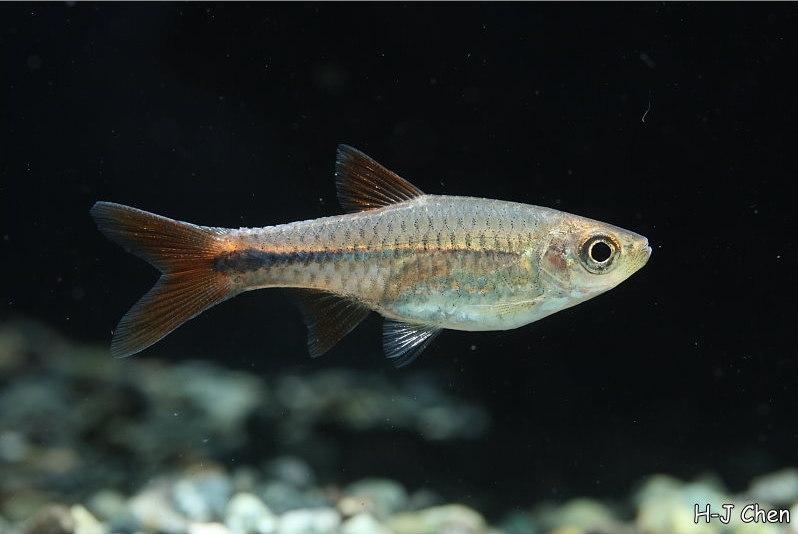
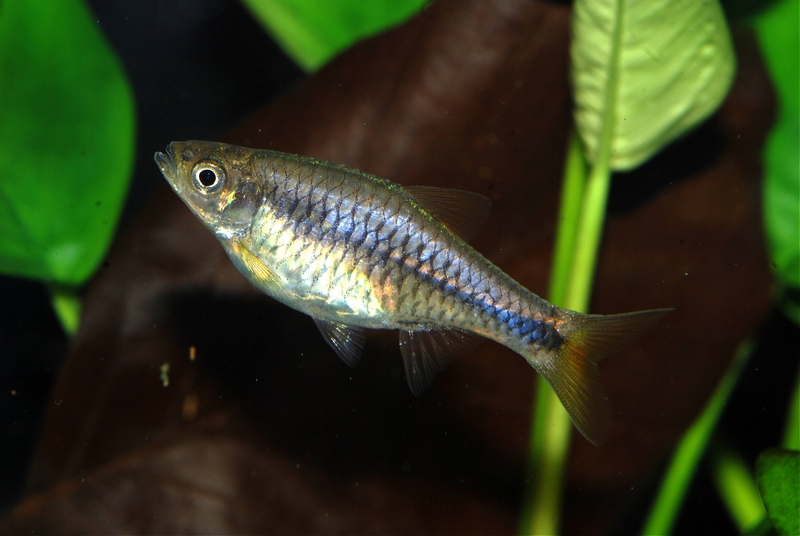
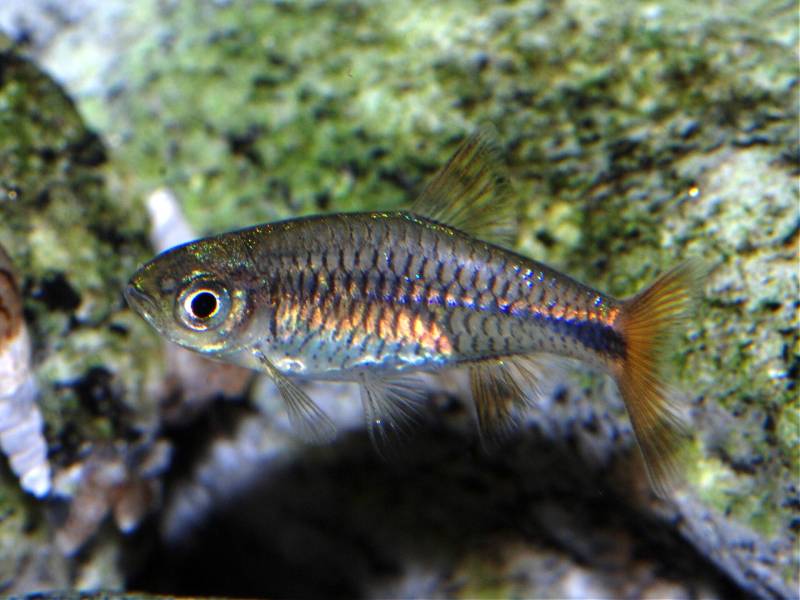
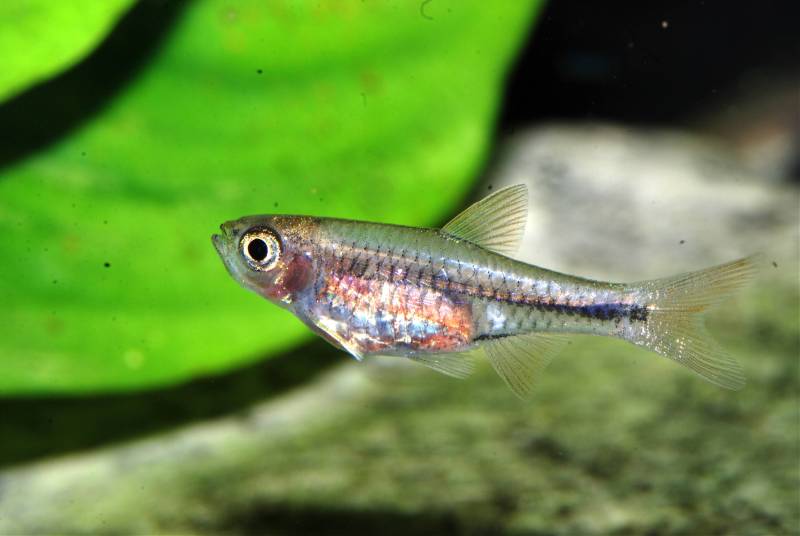
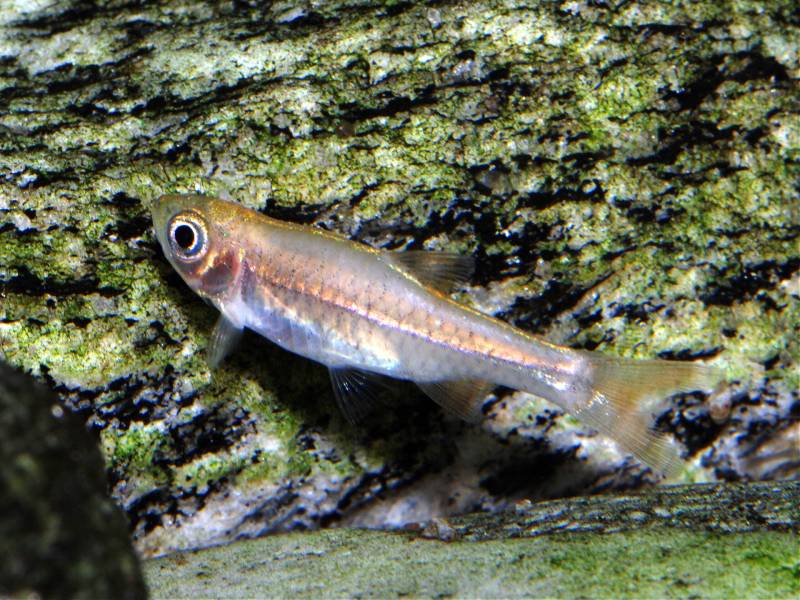
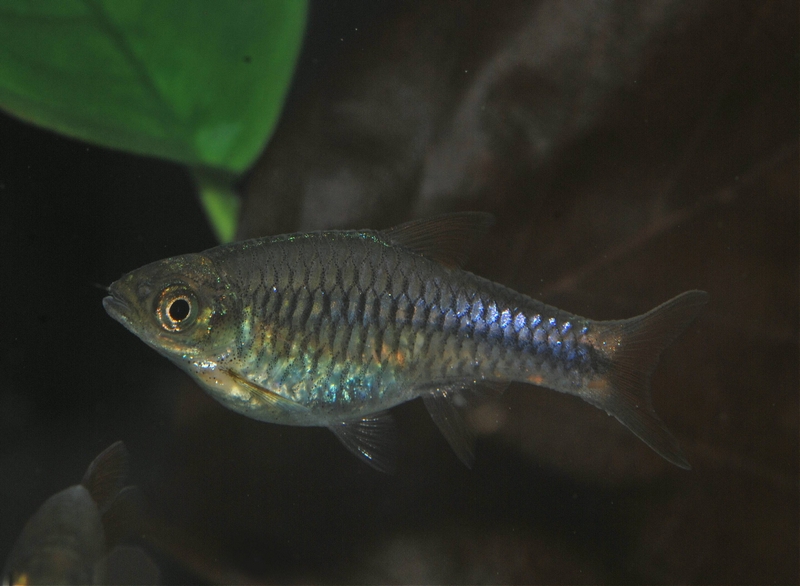
Rasbora lacrimula 是体形小、性情温和的波鱼,淡深色侧线纹在尾柄处汇成泪滴形斑块。较大个体背鳍之后至尾鳍上缘有细小突起,识别时可留意,不要仅凭“红樱桃”“小火山”等商品名定种。
分布与栖息地
确认记录限于印度尼西亚婆罗洲东加里曼丹的贝拉扬河流域,属于马哈坎河下游水系;更广分布仍是可能性。
采集地位于受明显改造的油棕种植区,包括沟渠和开阔地小溪。水清、流缓,底部为砂、黏土和泥,原先的森林曾遭火烧,不能把现今采集环境简单描绘为完整原始森林。
饲养环境
缸底至少约 45 × 30 cm。密植、深色底床,或沉木根、枝条与落叶营造的结构更利于显色;浮水植物能柔化光线。
不需要很强过滤水流,但水质必须洁净,不能让有机污染物持续累积。
食性与喂食
自然可能捕食小昆虫、虫、甲壳类和其他浮游动物,仍属推测。缸内接受适口干粮,但不能只喂干粮,每日加入水蚤、丰年虾等细小活饵或冷冻饵有助于状态和繁殖准备。
习性与混养
非常和平,伙伴选择须特别考虑它小巧的成年体形。至少 8~10 条同养可减少紧张,雄鱼竞争求偶时颜色更鲜明。
雌雄区分
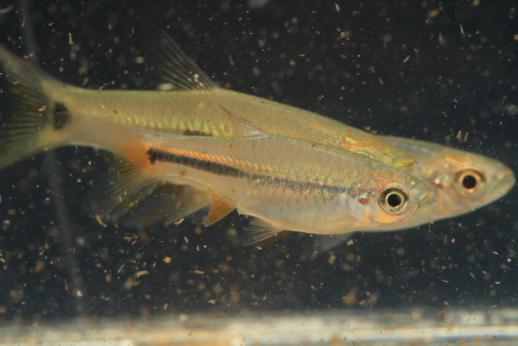
成年雄鱼通常更小、更纤细,颜色更浓,雌鱼相对厚实。
繁殖
为持续散卵型,不护卵。成熟密植缸可能自然留下少量鱼苗,若希望提高数量,可另设较长浅水容器,开始只加半缸水,保持暗光,底部用网或塑料草垫让卵脱离成鱼嘴边。
水质微酸至中性,温度可处于既有适宜范围较高一端。初期小型动力过滤沿缸长送水,放入一至两对养壮、雌鱼腹部充实的亲鱼,每隔数小时少量补入较凉水逐步加满,并少量投活或冷冻饵。
一只雌鱼可分多次产卵,每次约 5~12 粒,一批通常 30~50 粒。几天后移走成鱼,将动力过滤换成成熟海绵过滤,避免吸入鱼苗。卵约 18~48 小时孵化,再过 24~48 小时自由游动,先喂草履虫等微饵,长大后再转丰年虾无节幼体和微虫。
补充说明
背部细小突起在小个体上不明显,可能与成熟有关,不能单凭它们判断雌雄。泪滴形尾柄斑与突起所在位置,应一起用于辨认。
图片
图片来自 SeriouslyFish,版权归各摄影者所有。
English
Overview
Rasbora lacrimula is a tiny, peaceful rasbora with a faint dark lateral stripe ending in a teardrop-shaped tail-base mark. Larger fish develop small projections behind the dorsal fin and onto the upper tail edge. These features are more useful than cherry or dwarf-volcano trade labels.
Distribution & habitat
Confirmed records are limited to the Belayan drainage within the lower Mahakam system in Indonesian East Kalimantan. A wider regional distribution remains possible rather than established.
Collection sites include gutters and open-ground streams in a heavily modified oil-palm landscape. Clear water moves slowly over sand, clay, and mud. Earlier forest fires changed the area, so the recorded setting should not be described simply as intact primary forest.
Aquarium setup
Provide a footprint of at least around 45 × 30 cm. Dense plants over a dark bottom, or wood and leaves creating natural cover, help display its coloration. Floating vegetation softens the light.
Strong currents are unnecessary, but consistently clean water remains essential; gentle flow does not justify accumulating organic waste.
Diet & feeding
Small insects, worms, crustaceans, and other plankton are suggested natural prey. Dry foods of appropriate size are accepted, but should be supplemented daily with small live or frozen items such as Daphnia and brine shrimp to support condition and breeding readiness.
Behaviour & compatibility
It is very peaceful, with its minute adult dimensions especially important in choosing companions. Eight to ten or more reduce nervousness and let males show stronger colors during courtship competition.
Sexual dimorphism
Adult males tend to be smaller, slimmer, and more intensely colored than females.
Breeding
It scatters eggs repeatedly without care. A mature planted aquarium may retain a few fry, but greater yields call for a separate long, shallow container, initially half-filled and dimly lit. Mesh or plastic grass protects fallen eggs from the adults.
Use mildly acidic to neutral water, toward the warmer part of the established suitable range. An initial small power filter can direct flow along the tank. Add one or two conditioned pairs, then gradually top up with small additions of cooler water every few hours while offering modest live or frozen feeds.
Several releases usually occur, each yielding around 5–12 eggs, with 30–50 in a typical batch. After a few days, remove adults and replace powered filtration with a mature sponge unit to protect fry. Hatching takes about 18–48 hours, followed by another 24–48 hours before free swimming. Paramecium or similar microscopic food precedes brine shrimp nauplii and microworms as the young grow.
Notes
The small dorsal projections are inconspicuous in smaller fish and may relate to maturity; they should not alone be used for sexing. Their position and the teardrop-shaped tail marking together aid identification.
来源
- https://www.seriouslyfish.com/species/rasbora-lacrimula(抓取于 2026-10-10)
rasbora-lacrimula · 文件: data/species/rasbora-lacrimula.md · 状态: 草稿