科氏波鱼
概要
| 字段 | 值 |
|---|---|
| 类别 | 鱼 |
| 学名 | Rasbora kottelati |
| 别名 | 科氏波魚 |
| 分类 | 鲤形目 Cypriniformes › 鲤科 Cyprinidae › Rasbora |
| 水体 | 淡水 |
| 成体体长 | 7 cm |
| 饲养难度 | 中等 |
| 最小水体 | 108 L |
| 最小缸长 | 120 cm |
| 群居方式 | 群游 |
| 特征 | 会跳缸: 是 |
| 外部数据 | seriouslyfish rasbora-kottelati;fishbase 27256 |
| 原产地 | 文莱、马来西亚 |
水质参数
| 参数 | 耐受范围 | 最适范围 | 单位 |
|---|---|---|---|
| 水温 | 23–28 | — | °C |
| 总硬度 | 2–10 | — | dGH |
概述
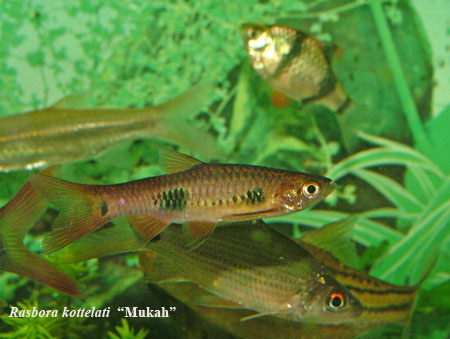
科氏波鱼(Rasbora kottelati)是婆罗洲范围有限的黑水鱼,尾柄上额外的椭圆暗斑有助与近似的大点波鱼区分。其饲养经验主要借鉴近缘种,选购时应先核实身份并准备稳定环境。
分布与栖息地
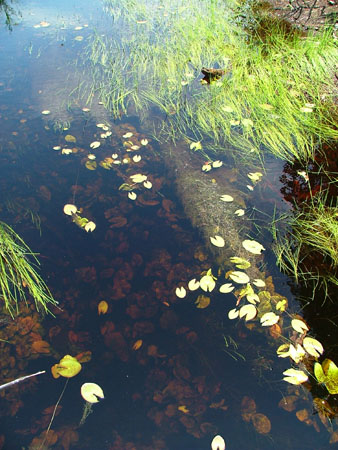
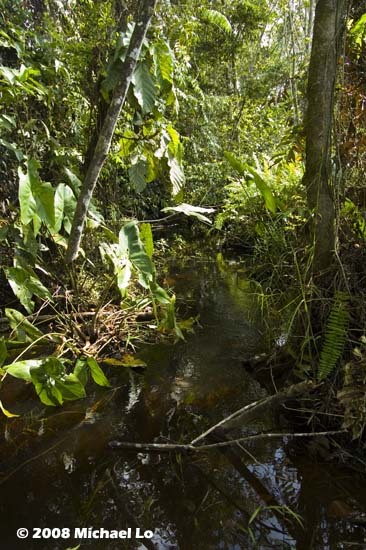
仅分布于文莱和马来西亚砂拉越北部,包括拉让河至巴兰河一带及文莱数条黑水支流。栖息古老泥炭沼泽林溪河,林冠遮光,落叶和枝条覆盖底部,水极软、偏酸。
饲养环境
群养建议至少 120 × 30 × 30 厘米。可采用细沙、沉木、落叶和浮水植物形成遮荫,耐阴水草补充隐蔽;这类布置主要依据相近黑水鱼经验。避免未成熟的新缸及骤变水质,规律维护并严密加盖。落叶微生物可提供幼鱼补充食源,但不能代替专门喂食。
食性与喂食
可能主要摄食水生和陆生无脊椎动物。饲养可提供适口干粮,并每天搭配小份红虫、水蚤、丰年虾等活饵或冷冻饵料,观察接受情况。
习性与混养
预计适合温和混养,但同种行为主要参照近缘种判断。建议至少 8~10 条且留足空间;雄鱼间可能有较强竞争,拥挤或数量过少更易出问题。选伴应兼顾黑水需求和体型。
雌雄区分
成熟雌鱼腹部较圆,通常略大于雄鱼。
繁殖
家养繁殖情况并不确定。可尝试近缘种的散卵繁殖方法:约 75 厘米长的弱光浅缸、成熟水与隔卵底,调养后放入一两对并分次补较凉水;约两天后移走亲鱼,改海绵过滤。属内常见发育时间只能作观察参考,不能保证本种会同样反应。鱼苗阶段预备微型食物,再按大小转喂微虫或丰年虾幼体。
补充说明
除尾柄椭圆斑外,本种缺少大点波鱼尾鳍中部的条纹。地域型的体色、斑点连接程度仍可有差异,识别宜综合观察。
图片
图片来自 SeriouslyFish,版权归各摄影者所有。
English
Overview
Restricted to part of Borneo, Rasbora kottelati closely resembles the clown rasbora but carries an additional oval mark on the tail peduncle. Much practical care advice is adapted from that relative, so identification and a stable prepared aquarium deserve attention.
Distribution & habitat
Its known range is confined to Brunei and northern Sarawak. Peat-forest streams and rivers supply shaded, soft acidic water above leaf-strewn substrates. These habitats are vulnerable to forest conversion.
Aquarium setup
A group should be given at least 120 by 30 by 30 cm. Sand, wood, leaves and floating cover offer a shaded arrangement consistent with its habitat and related-species experience. Use established filtration, stable chemistry and a secure lid. Microorganisms associated with leaf litter can supplement, rather than replace, deliberate fry feeding.
Diet & feeding
Small invertebrates are the presumed natural prey. Offer appropriately sized prepared foods with small daily live or frozen additions, watching how the fish respond.
Behaviour & compatibility
Compatibility is expected to resemble that of its close relative. Keep a spacious group of at least eight to ten; males may compete strongly, with inadequate numbers or crowding increasing difficulties. Choose companions suited to the same conditions and size range.
Sexual dimorphism
Mature females are described as fuller-bellied and often slightly larger.
Breeding
Captive breeding is uncertain. A trial based on relatives may use a dim shallow tank around 75 cm long, protected eggs and gradual cooler-water additions after conditioning adults. Remove adults after a couple of days and use sponge filtration. Neither spawning response nor genus-level development schedules are assured for this species. Prepare microscopic first foods and larger fry foods for later growth.
Notes
Besides the extra tail-peduncle blotch, the central caudal stripe of its close relative is absent. Regional variation in body color and connecting spots makes a combination of characters preferable for identification.
来源
- https://www.seriouslyfish.com/species/rasbora-kottelati(抓取于 2026-10-10)
rasbora-kottelati · 文件: data/species/rasbora-kottelati.md · 状态: 草稿