麦氏波鱼
概要
| 字段 | 值 |
|---|---|
| 类别 | 鱼 |
| 学名 | Rasbora dusonensis |
| 别名 | 黄尾波鱼、麥氏波魚、黃尾波魚、Leuciscus dusonensis |
| 分类 | 鲤形目 Cypriniformes › 鲤科 Cyprinidae › Rasbora |
| 水体 | 淡水 |
| 原产地 | 印度尼西亚、马来西亚 |
| 成体体长 | 16.2 cm |
| 饲养难度 | 中等 |
| 最小水体 | 108 L |
| 最小缸长 | 120 cm |
| 群居方式 | 群游 |
| 性情 | 温和 |
| 特征 | 会跳缸: 是 |
| 外部数据 | seriouslyfish rasbora-dusonensis;fishbase 10370 |
| 食性 | 肉食 |
水质参数
| 参数 | 耐受范围 | 最适范围 | 单位 |
|---|---|---|---|
| 水温 | 20–26 | — | °C |
| pH | 4–7.5 | — | — |
| 总硬度 | 1–12 | — | dGH |
概述
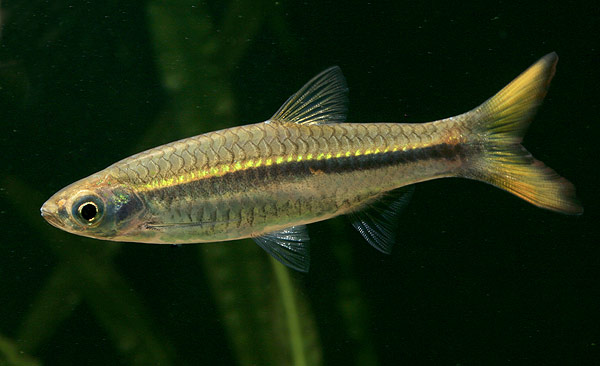
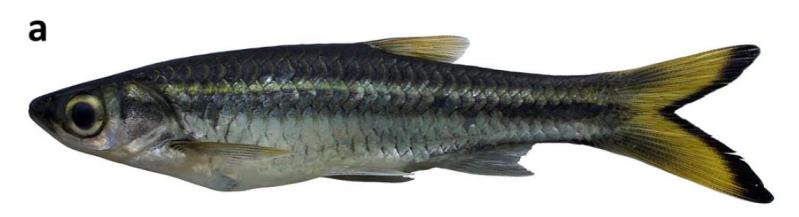
麦氏波鱼(Rasbora dusonensis)最醒目的是亮黄色尾鳍及宽暗色鳍缘。它与红尾的近似种长期混淆,养成体型应留余量:常见成年记录约 9.5~10.5 厘米,但也有标准体长 16.2 厘米的标本。
分布与栖息地
确认分布于苏门答腊、马来半岛和婆罗洲。既见于偏浑浊、近中性的较大河道,也见于极软酸性的泥炭黑水,以及水潭、回水区和水库;部分地区雨季进入淹水地带。
饲养环境
底面至少 120 × 30 厘米,并为成鱼群体保留开阔泳道。可用密植景观,或石砾、圆石、沉木配适度流水。必须严密加盖,并以严格换水和清污维持低有机负荷;对积污的耐受不能因分布广就高估。
食性与喂食
野外主要摄食水生与陆生无脊椎动物,尤其昆虫。适口干粮之外,每天搭配小份水蚤、丰年虾等活饵或冷冻饵料,利于体色与调养。
习性与混养
性情温和,至少 6 条同养可减轻紧张,雄鱼会为吸引雌鱼而展示。混养须以可能达到的成鱼尺寸挑选伙伴,不仅看购入时的小鱼体型。
雌雄区分
成熟雌鱼腹部更圆,往往略大于雄鱼。
繁殖
水族箱繁殖可能尚未实现,预期为散卵且不护卵。可尝试近缘种的隔卵办法,避免亲鱼接触卵;准备成熟、装饰充分的繁殖环境。近缘波鱼常见约 18~48 小时孵化、再一两天平游,但本种时间仍需观察。初期可能需要草履虫级别食物,再换丰年虾无节幼体或微虫。
补充说明
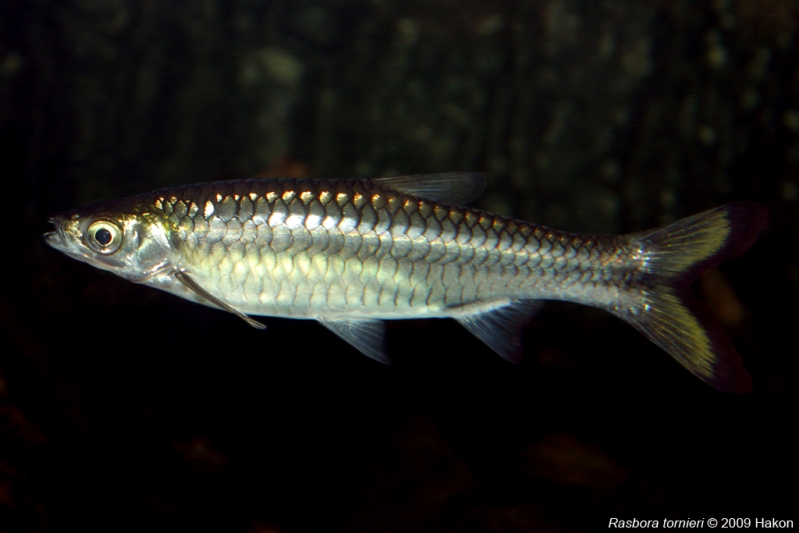
历史上本种曾与其他灰色或红尾波鱼混淆,相关旧异名解释并不都正确。亮黄尾鳍、宽暗边、体侧清楚的纵带组合更有辨识价值。
图片
图片来自 SeriouslyFish,版权归各摄影者所有。
English
Overview
A bright yellow tail with a broad dark border is a key feature of Rasbora dusonensis. Historically confused with a red-tailed relative, it deserves careful identification. Common adult reports are around ten centimeters, but a specimen of 16.2 cm standard length demonstrates the need to plan for larger fish.
Distribution & habitat
Confirmed localities lie on Sumatra, Borneo and the Malay Peninsula. Habitats range from larger, somewhat turbid river channels to acidic peat-swamp waters, as well as permanent pools, backwaters and reservoirs. Some populations enter flooded areas during the wet season.
Aquarium setup
Use at least a 120 by 30 cm footprint, leaving clear routes for an adult group. Planting or a moderately flowing river layout can work. A close-fitting cover prevents escapes. Consistent cleaning and water renewal are especially important because accumulated organic wastes are poorly tolerated.
Diet & feeding
Insects and other aquatic or terrestrial invertebrates dominate the natural menu. Prepared foods are accepted, but regular live or frozen supplements should remain part of the diet.
Behaviour & compatibility
Keep a group of six or more. Social company improves confidence and allows male displays. This peaceful species can join a suitable community, but companion selection must account for eventual adult size.
Sexual dimorphism
Mature females are usually larger and fuller-bellied.
Breeding
Aquarium breeding may remain unrecorded, and an unguarded egg-scattering strategy is expected rather than confirmed here. Methods successful with relatives emphasize preventing adults from reaching eggs. Genus-level incubation and swimming times are provisional guides only. Microscopic first food may be needed before fry can handle brine-shrimp nauplii or microworms.
Notes
Older identifications and synonymies require caution. The yellow tail, broad distal border and sharply contrasting body stripes together are more informative than an inherited trade label.
来源
- https://www.seriouslyfish.com/species/rasbora-dusonensis(抓取于 2026-10-10)
rasbora-dusonensis · 文件: data/species/rasbora-dusonensis.md · 状态: 草稿