头条波鱼 · Porthole Rasbora
概要
| 字段 | 值 |
|---|---|
| 类别 | 鱼 |
| 学名 | Rasbora cephalotaenia |
| 别名 | 頭條波魚 |
| 分类 | 鲤形目 Cypriniformes › 鲤科 Cyprinidae › Rasbora |
| 水体 | 淡水 |
| 成体体长 | 13 cm |
| 饲养难度 | 中等 |
| 最小水体 | 243 L |
| 最小缸长 | 120 cm |
| 群居方式 | 群游 |
| 特征 | 会跳缸: 是 |
| 外部数据 | seriouslyfish rasbora-cephalotaenia;fishbase 10365 |
| 原产地 | 马来西亚、印度尼西亚、文莱、泰国;新加坡原生种群已被认为局部消失 |
| 性情 | 温和 |
| 繁殖方式 | 散卵 |
水质参数
| 参数 | 耐受范围 | 最适范围 | 单位 |
|---|---|---|---|
| 水温 | 22–25 | — | °C |
| 总硬度 | 1–12 | — | dGH |
概述
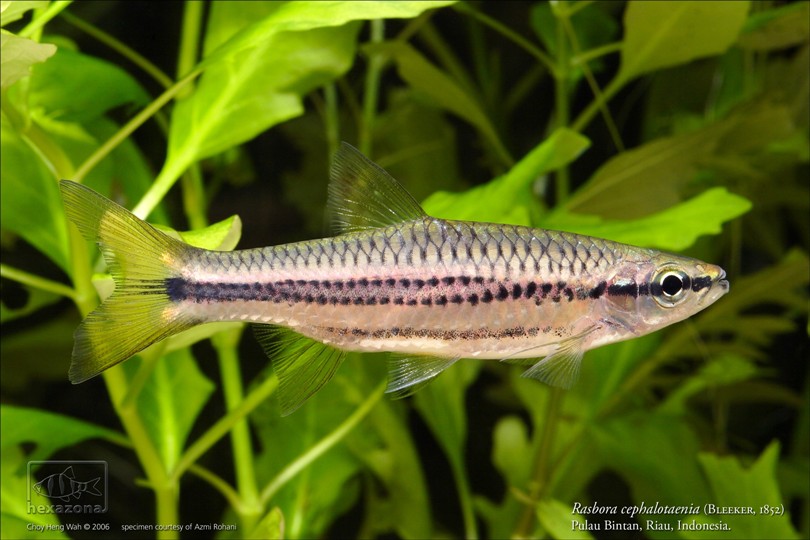
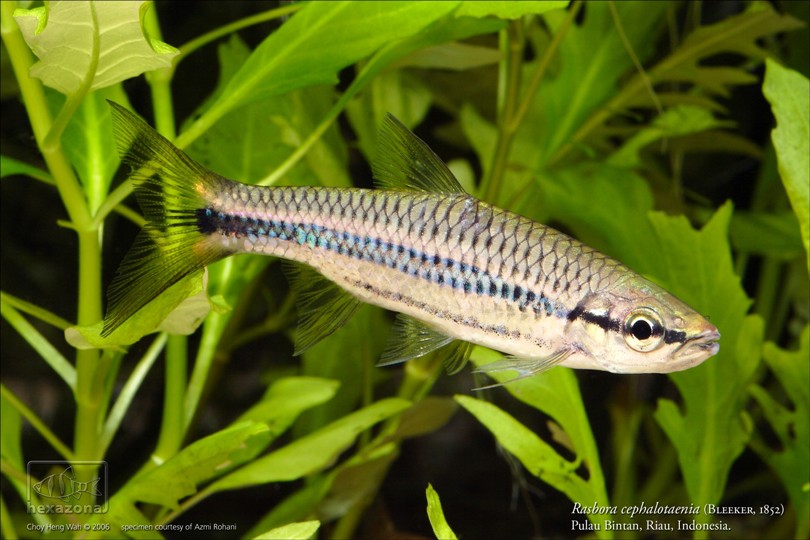
头条波鱼(Rasbora cephalotaenia)适合大型温和混养缸,体侧暗带由一串斑点组成,而不是连续实线。它活动量不小,对成熟水质的依赖比造景形式更重要,在茶色水中体色尤其明显。
分布与栖息地
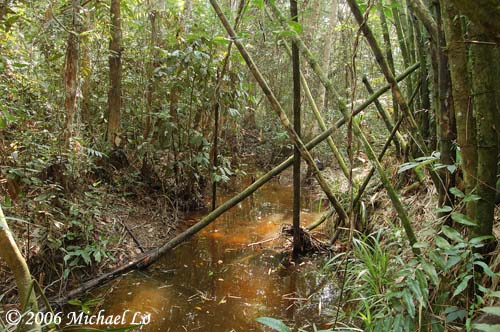
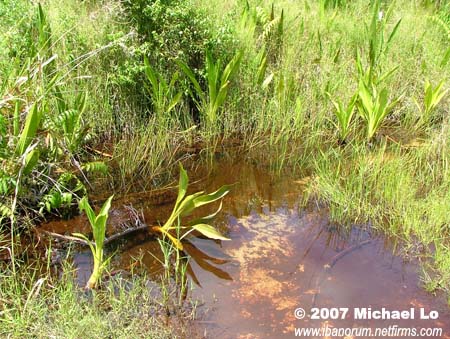
见于马来半岛、苏门答腊、婆罗洲和泰国南部;新加坡原生种群被认为已局部消失,中国旧记录很可能误认。栖息泥炭沼泽林的黑水溪河,林冠遮光,落叶和枝条丰富,水极软且可很酸。种植园扩张和开发持续影响这类栖地。
饲养环境
群养约需 120 × 45 × 45 厘米。细沙、沉木、干落叶和浮水植物能形成遮荫,耐弱光水草可作点缀;落叶表面微生物也能为幼鱼补充食物。维持偏暗照明和稳定水质,不要放入尚未成熟的新缸。天然栖地极低酸碱度并不意味着饲养必须追求极端值;缓慢适应与日常维护更关键,缸盖须防跳。
食性与喂食
可能主要摄食水生及陆生无脊椎动物。可用优质适口干粮配合红虫、水蚤、丰年虾等活饵或冷冻饵料,保持食谱多样。
习性与混养
至少 6 条同养,足够同伴可减少紧张。可搭配体型相当且温和的波鱼、鳅类或其他适应相同环境的鱼,黑水布置下还须核对伙伴的水质需求。
雌雄区分
成熟雌鱼腹部更圆,常略大于雄鱼。
繁殖
本种被描述为散卵且无护卵行为,但爱好者繁殖成功情况不明确。可尝试近缘种的隔卵繁殖方法:约 90 × 30 × 30 厘米浅缸、弱光和成熟水,调养后放入一两对,少量多次补较凉水。约两天后移出亲鱼,使用海绵过滤。属内常见孵化约 18~48 小时、再 24~48 小时平游只能作参考;先备微型食物,随后再增加活饵大小。
图片
图片来自 SeriouslyFish,版权归各摄影者所有。
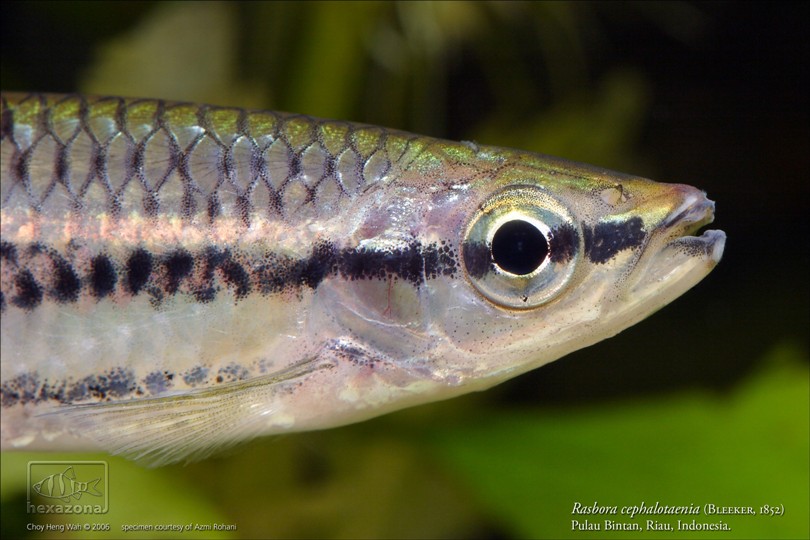
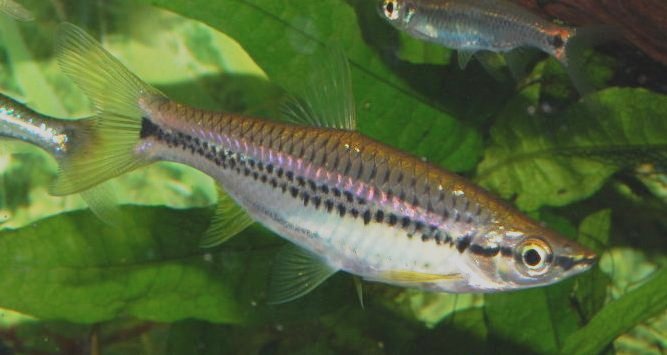
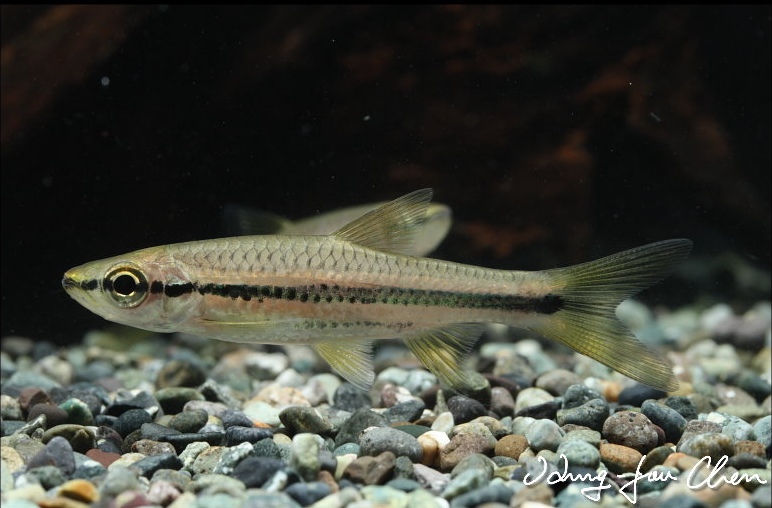
English
Overview
Rasbora cephalotaenia is an active, peaceful choice for a substantial aquarium. A chain of dark spots forms its lateral marking, helping distinguish it from relatives with a solid stripe. Established water conditions matter more than elaborate decoration, although tannin-colored water enhances its appearance.
Distribution & habitat
Native records span the Malay Peninsula, Sumatra, Borneo and southern Thailand. The former Singapore population is considered lost, while old Chinese records are probably erroneous. Forest peat-swamp channels provide shaded, very soft acidic water over accumulated leaves and wood. Habitat conversion threatens these environments.
Aquarium setup
A group needs roughly 120 by 45 by 45 cm. Sand, shaded woodwork, dried leaves and floating plants suit a forest-water display. Microorganisms on decomposing leaves can supplement fry food. Avoid biologically immature tanks and abrupt chemical changes. Extremely acidic habitat records are not a target that every aquarium must reproduce. Fit a close cover.
Diet & feeding
The presumed wild diet is largely small invertebrates. Combine suitable prepared food with regular live or frozen portions to maintain condition and color.
Behaviour & compatibility
Keep six or more to encourage confidence. Comparably sized peaceful fishes can share the aquarium, but a blackwater-themed community still requires matching each species to the actual conditions.
Sexual dimorphism
Females generally become fuller-bodied and somewhat larger at maturity.
Breeding
Hobby breeding success is uncertain. The fish is described as an egg scatterer without parental care, and a method adapted from relatives may be attempted in a dim, shallow 90 cm container with egg protection. Add conditioned pairs and introduce cooler water gradually. Remove adults after about two days and use sponge filtration. Genus-level development times are only approximate guidance; microscopic food should be available before larger fry food is introduced.
来源
- https://www.seriouslyfish.com/species/rasbora-cephalotaenia(抓取于 2026-10-10)
rasbora-cephalotaenia · 文件: data/species/rasbora-cephalotaenia.md · 状态: 草稿