红尾波鱼 · Red-tailed Rasbora
概要
| 字段 | 值 |
|---|---|
| 类别 | 鱼 |
| 学名 | Rasbora borapetensis |
| 别名 | 紅尾波魚 |
| 分类 | 鲤形目 Cypriniformes › 鲤科 Cyprinidae › Rasbora |
| 水体 | 淡水 |
| 成体体长 | 5 cm |
| 饲养难度 | 入门 |
| 最小水体 | 68 L |
| 最小缸长 | 60 cm |
| 群居方式 | 群游 |
| 性情 | 温和 |
| 水流偏好 | 低 |
| 外部数据 | seriouslyfish rasbora-borapetensis;fishbase 10834 |
| 原产地 | 泰国、柬埔寨、老挝、越南、中国、马来西亚、菲律宾、印度尼西亚、文莱;新加坡为引入 |
| 食性 | 肉食 |
| 繁殖方式 | 散卵 |
水质参数
| 参数 | 耐受范围 | 最适范围 | 单位 |
|---|---|---|---|
| 水温 | 22–26 | — | °C |
| 总硬度 | 2–12 | — | dGH |
概述
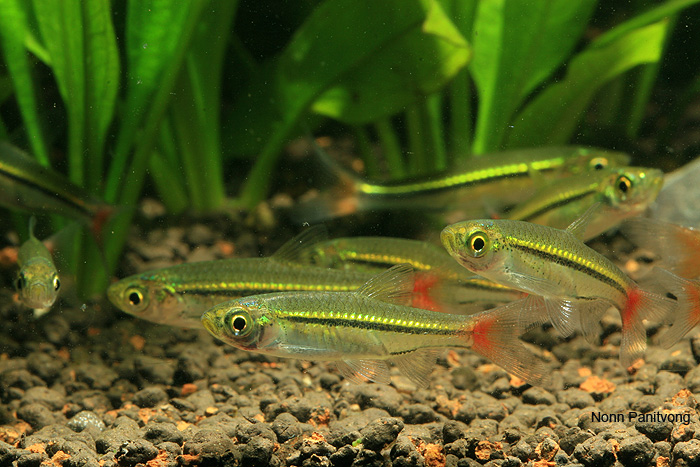
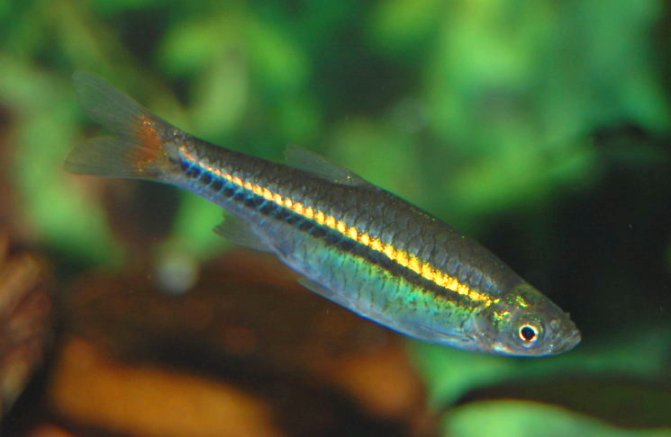
红尾波鱼(Rasbora borapetensis)是常见、温和且适合新手的群游鱼。稳定后体色比店内紧迫状态更好,尾鳍基部呈红色,而背鳍没有近似种那样的红斑。
分布与栖息地
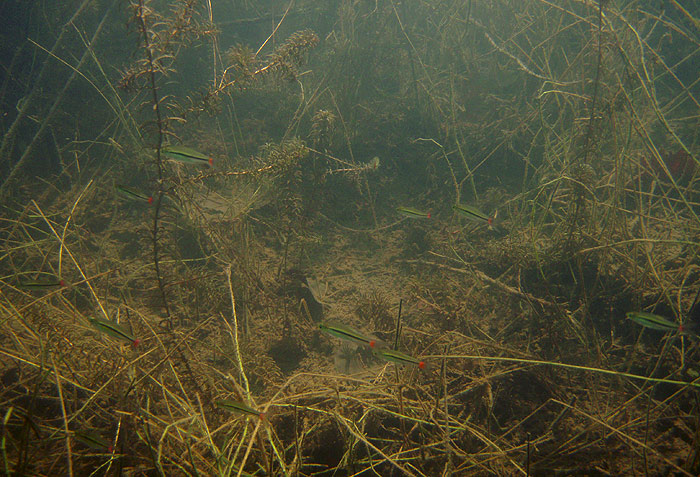
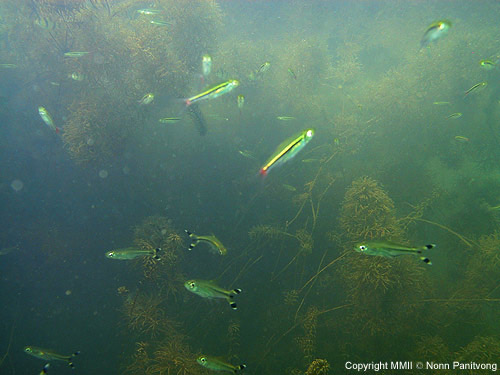
分布涵盖湄公河、湄南河、美功河及东南亚多地,也有中国、菲律宾和巽他群岛记录;新加坡种群为引入。偏爱池塘、水沟、水库、运河及缓流浅岸。虽然部分地点水质受污染仍有记录,饲养时不应因此放松维护。
饲养环境
小群可从 60 × 38 × 30 厘米缸起步。密植水草、深色底砂、浮水植物和沉木遮光都利于展示,过滤保持柔和,过急水流可能使它吃力。
食性与喂食
野外捕食小昆虫、蠕虫、甲壳类和其他浮游动物。可吃适口干粮,但每天搭配少量水蚤、丰年虾等活饵或冷冻饵料,更利于状态与繁殖调养。
习性与混养
至少 8~10 条同养,群体使它更安定,雄鱼展示更明显。适合温和混养,选伴时重视其小体型及缓流需求,不能仅凭同属“群游鱼”就随意搭配。
雌雄区分
雄鱼通常更小、更修长,颜色更浓;雌鱼腹部较丰。
繁殖
散卵、不护卵,密植成熟缸可能自然出现少量幼鱼。专门繁殖可用约 75 × 30 × 30 厘米浅缸,先半缸水、弱光和隔卵网,微酸至中性水取适养温度较高端;一两对调养好的亲鱼入缸后逐渐补较凉水。每轮约 5~12 粒,常见总量约 30~50 粒。两天左右移出会吞卵的亲鱼,换成熟海绵过滤。卵通常 18~48 小时孵化,再 24~48 小时平游,起初喂微型食物,长大后换丰年虾幼体等。
补充说明
与红背鳍的近似波鱼区分时,应查看背鳍是否无色、尾鳍是否仅基部红,以及鳍上是否无黑色素,不能只凭“红尾”商品名。
图片
图片来自 SeriouslyFish,版权归各摄影者所有。
English
Overview
Rasbora borapetensis is a readily available, peaceful schooling fish suitable for beginners. Settled individuals can look considerably brighter than newly imported shop fish. Red is concentrated at the tail base, while the dorsal fin remains clear.
Distribution & habitat
Records cover major mainland Southeast Asian basins and extend into China, the Philippines and the Sunda islands. Singapore populations are introduced. Shallow margins of still or gently moving waters are favored. Occurrence at polluted sites does not make poor aquarium water desirable.
Aquarium setup
A small group can be housed from a footprint of 60 by 38 cm. Plants and a dark substrate support an attractive display, with floating cover or wood softening the light. Keep circulation gentle because strong currents can be difficult for this fish.
Diet & feeding
Small animal prey forms the natural diet. Appropriately sized dry foods are accepted, but regular live or frozen offerings add variety and help condition breeding adults.
Behaviour & compatibility
Keep at least eight to ten. Social company reduces nervousness and encourages male displays. Select peaceful tankmates with compatible water movement and size requirements.
Sexual dimorphism
Males usually appear smaller, slimmer and more intensely colored than females.
Breeding
For deliberate breeding, protect the scattered eggs in a dim shallow aquarium. Start a roughly 75 cm long container partly filled, introduce conditioned pairs and gradually add cooler water. Slightly acidic to neutral conditions near the warm end of the maintenance range are suggested. Spawning occurs in small repeated releases, often totaling thirty to fifty eggs. Remove adults after about two days and protect fry with sponge filtration. Incubation commonly lasts eighteen to forty-eight hours, followed by another day or two before swimming. Supply microscopic foods at first.
Notes
Check dorsal and caudal markings when distinguishing similar trade fish: the clear dorsal and red tail base are more useful than a common name alone.
来源
- https://www.seriouslyfish.com/species/rasbora-borapetensis(抓取于 2026-10-10)
rasbora-borapetensis · 文件: data/species/rasbora-borapetensis.md · 状态: 草稿