银线波鱼 · Silver Rasbora
概要
| 字段 | 值 |
|---|---|
| 类别 | 鱼 |
| 学名 | Rasbora argyrotaenia |
| 别名 | 景洪波鱼、銀線波魚、景洪波魚、Leuciscus argyrotaenia、Leuciscus cyanotaenia、Leuciscus schwenkii |
| 分类 | 鲤形目 Cypriniformes › 鲤科 Cyprinidae › Rasbora |
| 水体 | 淡水 |
| 原产地 | 文莱、印度尼西亚、马来西亚、菲律宾、新加坡 |
| 成体体长 | 14 cm |
| 饲养难度 | 入门 |
| 最小水体 | 243 L |
| 最小缸长 | 120 cm |
| 群居方式 | 群游 |
| 性情 | 温和 |
| 特征 | 会跳缸: 是 |
| 外部数据 | seriouslyfish rasbora-argyrotaenia;fishbase 5169 |
| 游动层 | 上层 |
| 繁殖方式 | 散卵 |
水质参数
| 参数 | 耐受范围 | 最适范围 | 单位 |
|---|---|---|---|
| 水温 | 20–26 | — | °C |
| pH | 6–7.5 | — | — |
| 总硬度 | 2–10 | — | dGH |
概述
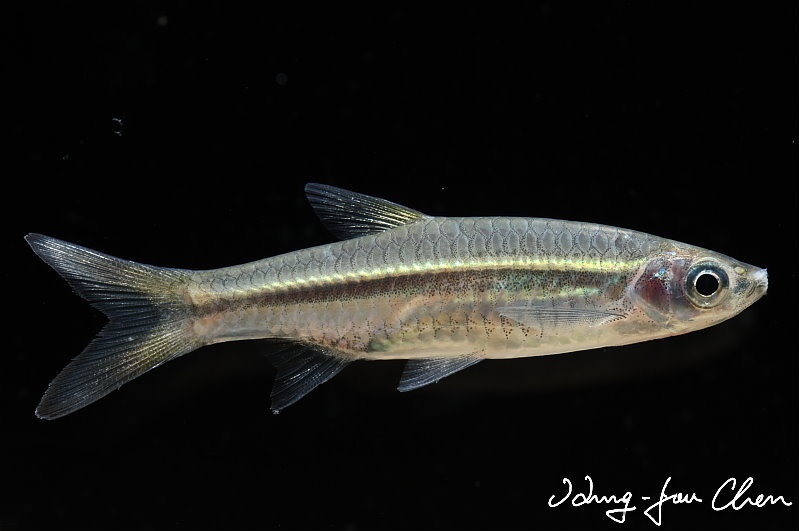
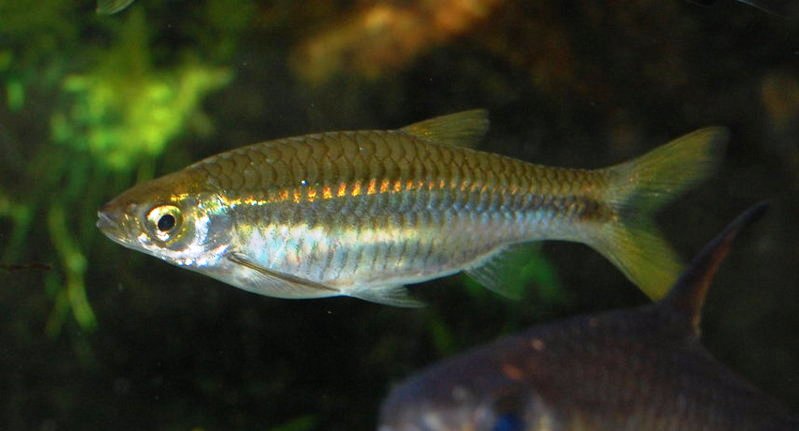
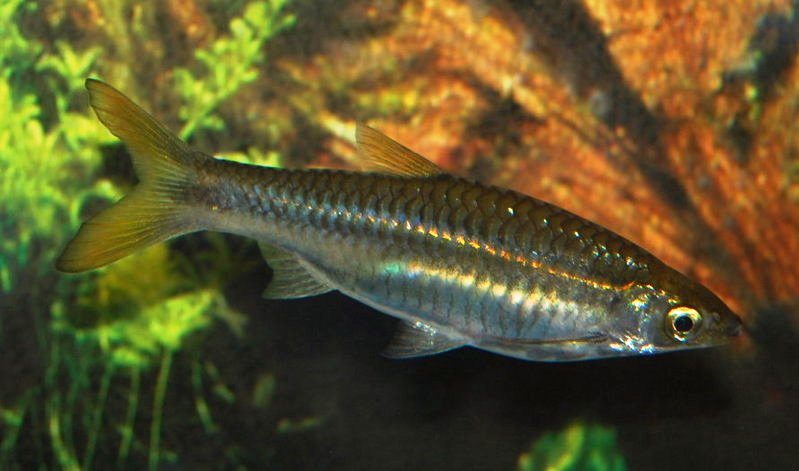
银线波鱼(Rasbora argyrotaenia)是成鱼可达约 14 厘米的大型波鱼,需要宽敞群养。它整体银亮,体侧暗带应较淡;黑带异常鲜明的商品鱼可能是其他种。温和的性情不能抵消它对小型慢游伙伴的压迫。
分布与栖息地
分布在马来半岛、新加坡、苏门答腊、爪哇、婆罗洲及菲律宾巴拉望群岛。旧有湄公河、湄南河和美功河记录被认为是误认。多见于河流、支流和林溪,也有湖泊记录;文莱的观察显示常在缓流河段或潭区靠近水面游动,雨季进入淹水区觅食。
饲养环境
群养至少考虑 120 × 45 × 45 厘米空间,水质与开阔泳道优先。可布置石砾流水景观,搭配沉木和耐流水附生水草,或采用密植缸并留出游泳区。缸盖应严密,防止跳出。
食性与喂食
胃内容物研究提示野外可能偏重藻类和浮游植物,也可能摄食水生或陆生无脊椎动物。日常提供含藻或植物成分的优质干粮,并搭配红虫、水蚤、丰年虾等活饵、冷冻饵料。
习性与混养
至少 6 条同养,有助减轻紧张并展示体色。适合大型缸中胆量相当的伙伴;体型过小、过于胆怯或进食缓慢的鱼容易受干扰,尤其在投喂时。
雌雄区分
成熟雌鱼腹部更圆,常略大于雄鱼。
繁殖
已有印度尼西亚人工繁殖记录:成对亲鱼在降酸碱度、放置拉菲草绳的容器中产卵,一次约 80 粒。它散卵且不护卵。提高鱼苗回收率可尝试借鉴近缘波鱼:用约 90 × 30 × 30 厘米浅缸、隔卵底和弱光,充分调养后放入一两对,逐渐补入较凉水诱导;两天左右移走亲鱼,并改用成熟海绵过滤。属内常见孵化时间约 18~48 小时,再过 24~48 小时平游,但不应当作本种保证值。先备草履虫等微型饵料,再转较大活饵。
补充说明
不同地理种群的体色和遗传差异提示,现有种名下可能包含不止一个物种;不要把所有银色横带波鱼按本种处理。
图片
图片来自 SeriouslyFish,版权归各摄影者所有。
English
Overview
A group of Rasbora argyrotaenia needs a substantial aquarium: this silver-bodied rasbora reaches about fourteen centimeters. Its lateral stripe is relatively subdued, so heavily striped fish sold under the name merit closer identification. Large size can intimidate quiet companions despite a nonaggressive disposition.
Distribution & habitat
The accepted range includes the Malay Peninsula, Singapore, the Greater Sunda islands and Palawan. Several mainland river records have been reassigned as misidentifications. River and forest-stream habitats predominate, with some lake records; observations in Brunei describe near-surface swimming in slow sections and pools. Flooded areas are used during the rains.
Aquarium setup
Provide at least 120 by 45 by 45 cm for a group, prioritizing water quality and uninterrupted swimming room. Rockwork and attached hardy plants suit a river-style layout, while a planted aquarium is another option. A secure cover is essential.
Diet & feeding
Gut examinations suggest a strong plant and algal component, while consumption of small invertebrates is also suspected. Use vegetable-containing prepared foods alongside regular live or frozen animal foods.
Behaviour & compatibility
Six or more provide useful social company. Choose confident companions appropriate to a large aquarium, taking particular care that slower or much shyer fish can feed without being overwhelmed.
Sexual dimorphism
Mature females tend to be larger and fuller through the abdomen.
Breeding
Captive spawning has been documented in Indonesia: paired fish produced around eighty eggs after a pH reduction, using raffia as spawning material. Eggs are scattered without subsequent care. For improved recovery, a method adapted from smaller relatives can be tried in a long shallow tank with protected eggs, dim light and gradual additions of cooler water. Remove adults after about two days and use a mature sponge filter. Typical incubation figures for the genus are only guidance for this method. Have microscopic first food ready before introducing larger fry foods.
Notes
Geographic and genetic variation suggests that the present species concept may eventually be divided. Appearance and collecting locality both matter when assessing fish offered under this name.
来源
- https://www.seriouslyfish.com/species/rasbora-argyrotaenia(抓取于 2026-10-10)
rasbora-argyrotaenia · 文件: data/species/rasbora-argyrotaenia.md · 状态: 草稿