饰圈魮 · Greenstripe Barb
概要
| 字段 | 值 |
|---|---|
| 类别 | 鱼 |
| 学名 | Puntius vittatus |
| 别名 | 饰圈无须魮、飾圈魮、飾圈無鬚魮、Barbus vittatus |
| 分类 | 鲤形目 Cypriniformes › 鲤科 Cyprinidae › Puntius |
| 水体 | 淡水 |
| 原产地 | 印度、巴基斯坦、斯里兰卡 |
| 成体体长 | 4.5 cm |
| 饲养难度 | 入门 |
| 最小水体 | 68 L |
| 最小缸长 | 75 cm |
| 群居方式 | 群游 |
| 性情 | 温和 |
| 外部数据 | seriouslyfish puntius-vittatus;fishbase 12170 |
| 繁殖方式 | 散卵 |
水质参数
| 参数 | 耐受范围 | 最适范围 | 单位 |
|---|---|---|---|
| 水温 | 18–26 | — | °C |
| pH | 6–7.5 | — | — |
| 总硬度 | 2–12 | — | dGH |
概述
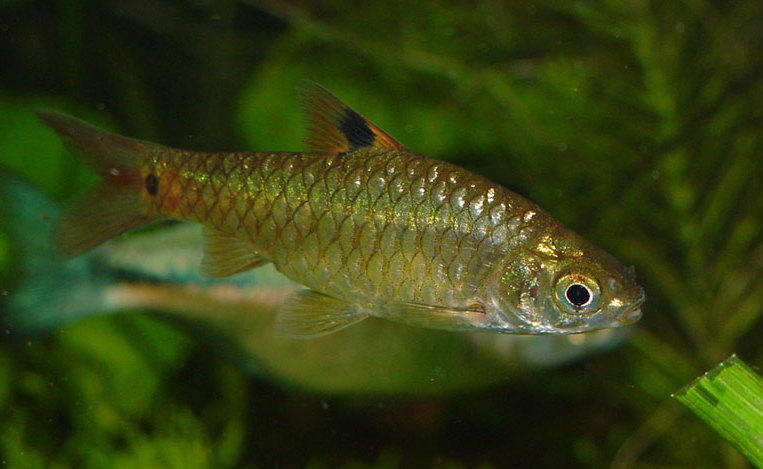
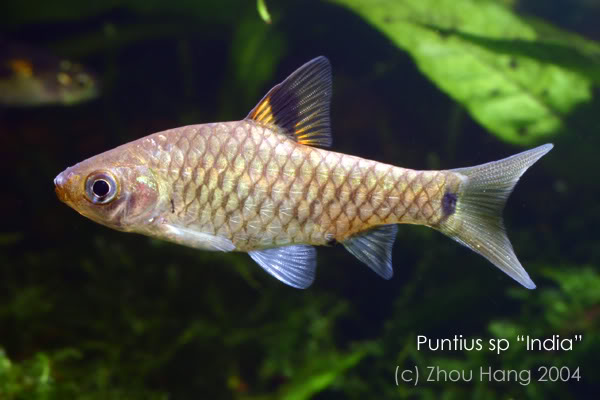
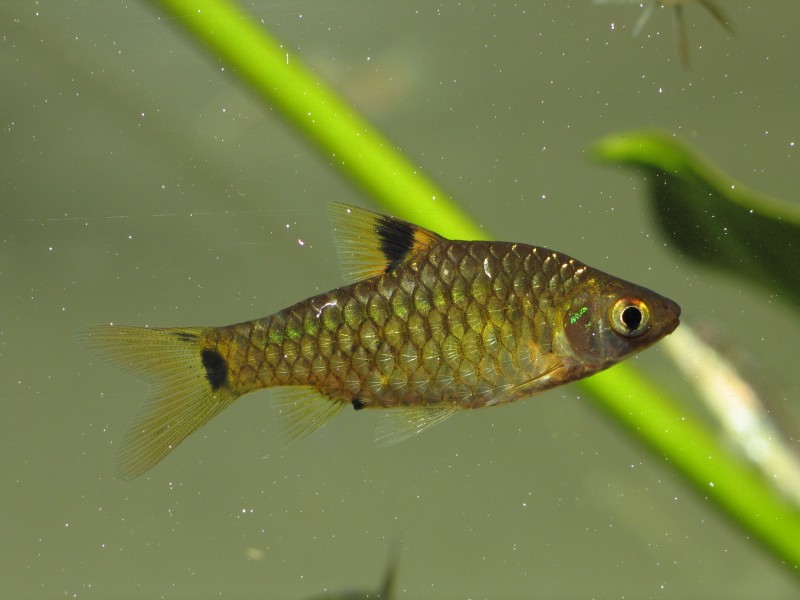
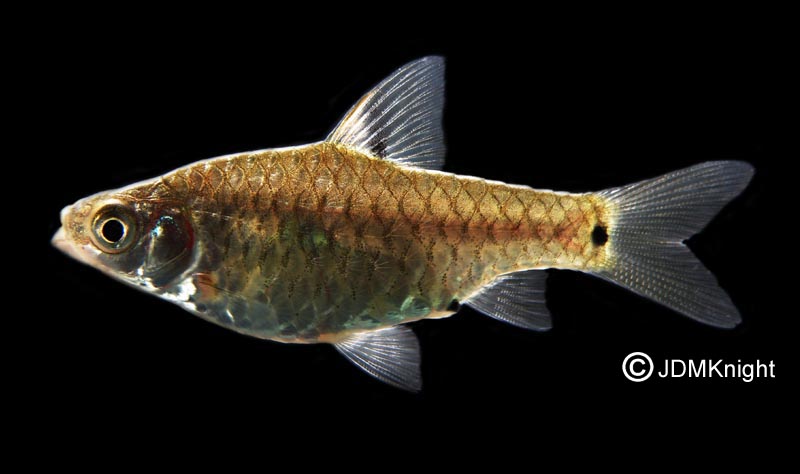
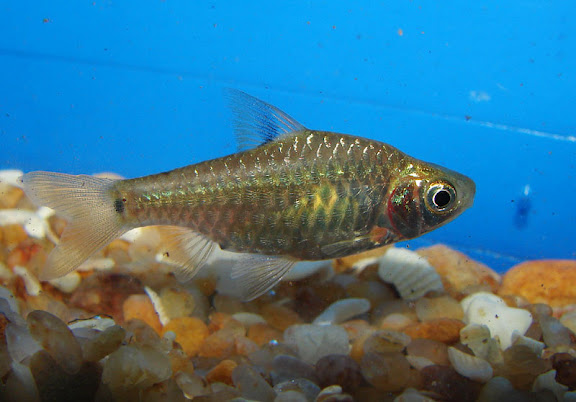
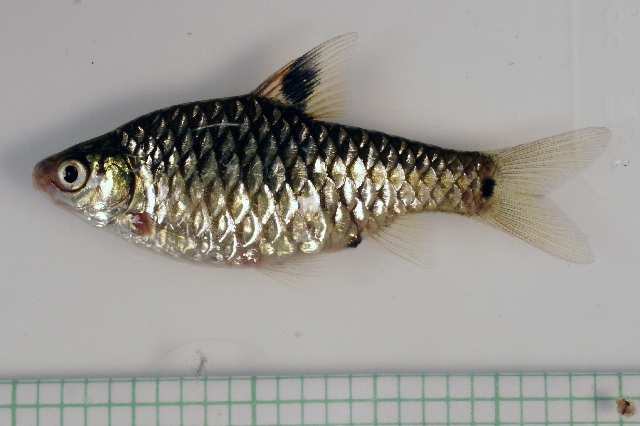
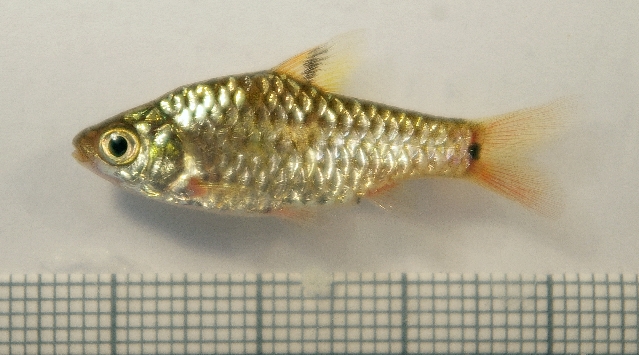
饰圈魮(Puntius vittatus)是温和的小型群居鲤科鱼,虽然分布广,水族贸易中并不特别常见。背鳍黑色纵纹、带橙纹的黑色鳍尖,以及尾柄基部暗斑构成实用辨识线索。
分布与栖息地
分布于印度多地,并见于巴基斯坦与斯里兰卡;印度南部似乎较丰富。常见于低地小溪、支流、池塘、灌溉沟和稻田,偏好泥或粉砂底。不同地区外观有差异,现有种界是否包含多个近缘类群仍待厘清。
饲养环境
底面至少 75 × 30 厘米。水草、深色底砂及遮光的浮水植物、沉木有助发色。过滤不必特别强,但适度水流合适,也可采用溪流式布置。
食性与喂食
可能是杂食采食者,食物含小型无脊椎动物、植物和碎屑。缸内可接受干粮,搭配红虫、水蚤、丰年虾,并选用部分含植物或藻类的薄片、颗粒。
习性与混养
建议至少 8~10 条雌雄混群,也可搭配其他温和群游鱼增加安全感。雄鱼会为展示和群体地位争艳;环境相似、体型接近的鱼和适合水流条件的底栖鱼可考虑混养。
雌雄区分
雄鱼通常更修长,奇鳍和腹鳍颜色更明显;繁殖期胸鳍背面可出现成排细小珠星。
繁殖
散卵、无护卵行为。另设弱光小缸,用隔卵网、玻璃珠或细叶植物阻隔亲鱼,成熟水微酸至中性,温度取适养范围较高端,并保持轻缓增氧。充分调养后可一两对或群体入缸,观察到卵就移出亲鱼。通常约 24~48 小时孵化,再约一天开始平游;初期喂微型食物,随后逐步增加饵料大小。
补充说明
本种没有须,侧线不完整。旧的广义 Puntius 分类已多次拆分,本条保留现有学名;不要仅凭商品名或相似背鳍纹把不同近缘种合并。
图片
图片来自 SeriouslyFish,版权归各摄影者所有。
English
Overview
Puntius vittatus is a peaceful schooling cyprinid that remains less common in aquaria than its broad natural range might suggest. Its dorsal fin combines a vertical dark mark with an orange-marked black tip, and a dark spot marks the tail base.
Distribution & habitat
Records span much of India, with additional populations in Pakistan and Sri Lanka. Lowland channels, pools and cultivated wetlands with muddy or silty beds are typical settings. Geographic variation leaves open the possibility that the current name covers more than one closely related form.
Aquarium setup
A minimum footprint of 75 by 30 cm accommodates a group. Combine planting and a dark base with shade from floating growth or wood. Some circulation is welcome, without requiring exceptionally powerful filtration.
Diet & feeding
Its presumed natural menu mixes small invertebrates with plant material and detritus. Aquarium feeding should therefore be varied, using suitable dry foods, a plant component and regular live or frozen portions.
Behaviour & compatibility
Keep eight to ten or more, preferably of both sexes. Other compatible schooling fishes may provide reassurance. Male rivalry produces displays rather than making this normally peaceful fish unsuitable for a well-planned community.
Sexual dimorphism
Males are slimmer, with stronger fin colors. Rows of minute breeding tubercles may develop on the upper surfaces of their pectoral fins.
Breeding
A separate breeding setup improves egg survival because adults will eat accessible eggs. Use fine vegetation or a protective base, dim lighting and gentle aeration. Conditioned adults can spawn in pairs or groups in slightly acidic to neutral water toward the warm end of their range. Remove them once eggs appear. Expect hatching after about twenty-four to forty-eight hours and swimming fry roughly a day later; microscopic first foods are required.
Notes
Absence of barbels and an incomplete lateral line supplement the fin pattern when identifying this fish. Historical use of the broad genus name Puntius is not sufficient to establish that similar trade fish belong to the same species.
来源
- https://www.seriouslyfish.com/species/puntius-vittatus(抓取于 2026-10-10)
puntius-vittatus · 文件: data/species/puntius-vittatus.md · 状态: 草稿