樱桃无须魮 · Cherry Barb
概要
| 字段 | 值 |
|---|---|
| 类别 | 鱼 |
| 学名 | Puntius titteya |
| 别名 | 櫻桃無鬚魮、Barbus titteya、Capoeta titteya |
| 分类 | 鲤形目 Cypriniformes › 鲤科 Cyprinidae › Puntius |
| 水体 | 淡水 |
| 原产地 | 斯里兰卡 |
| 成体体长 | 5 cm |
| 饲养难度 | 入门 |
| 最小水体 | 54 L |
| 最小缸长 | 60 cm |
| 群居方式 | 群游 |
| 性情 | 温和 |
| 外部数据 | seriouslyfish puntius-titteya;fishbase 6147 |
| 繁殖方式 | 散卵 |
水质参数
| 参数 | 耐受范围 | 最适范围 | 单位 |
|---|---|---|---|
| 水温 | 20–27 | — | °C |
| pH | 6–8 | — | — |
| 总硬度 | 2–20 | — | dGH |
概述
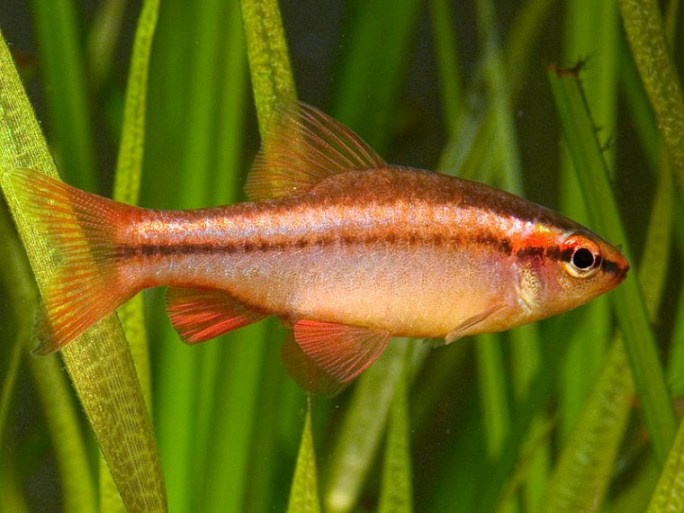
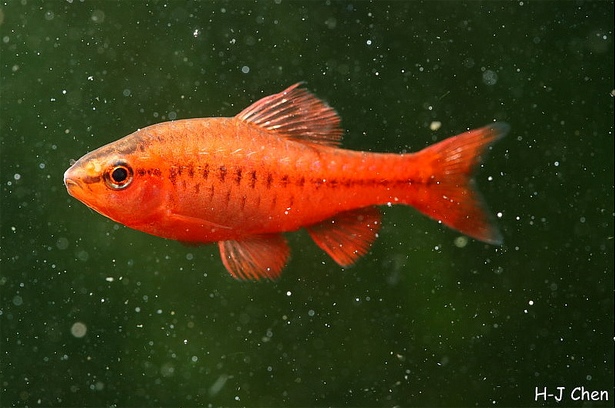
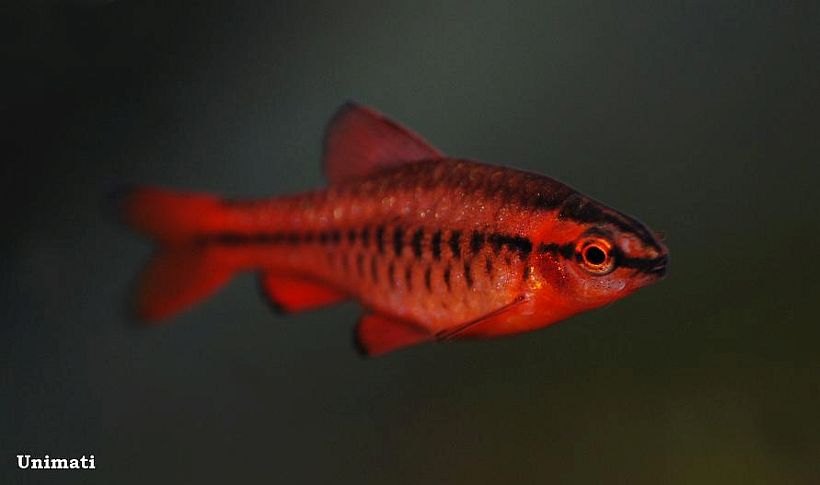
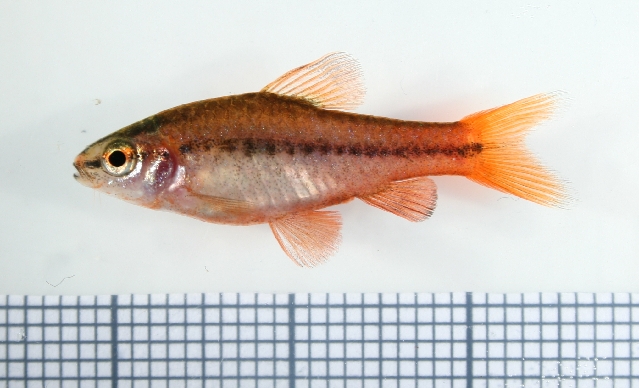
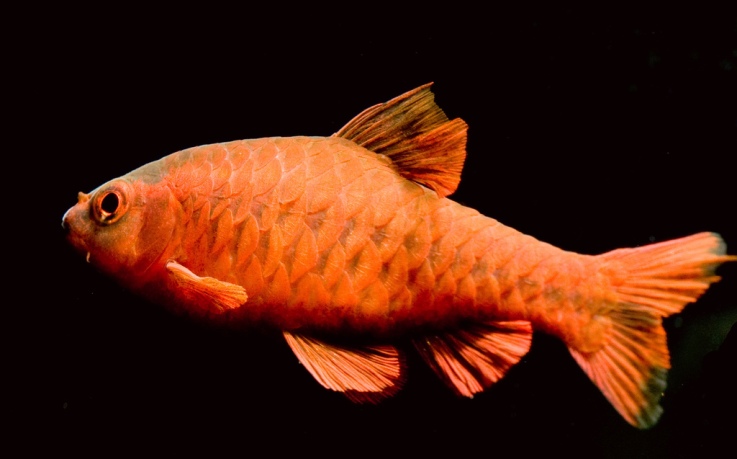
樱桃无须魮(Puntius titteya)是常见且适合新手的小型群居鱼。市售个体大多来自商业繁殖,白化和高红品系的基本照料方式与普通体色相同;雄鱼鲜艳的红色在展示时尤其明显。
分布与栖息地
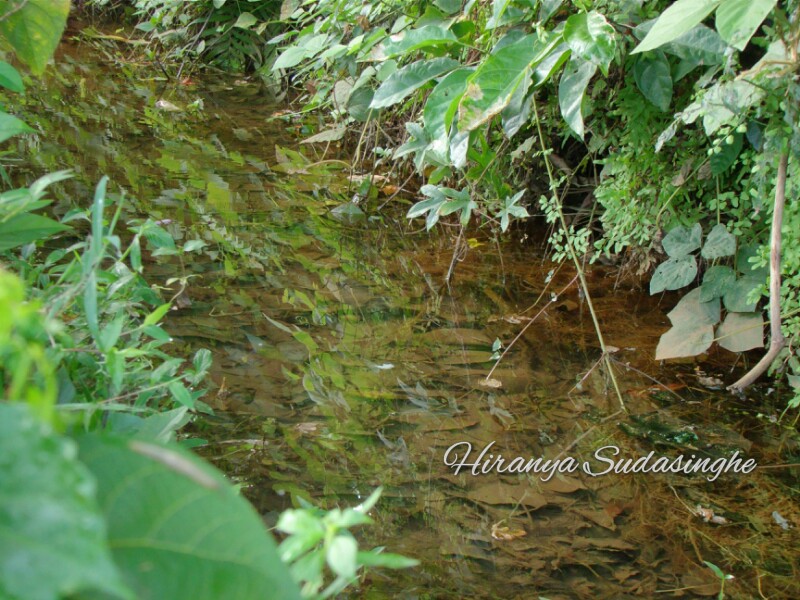
原产斯里兰卡西南湿润区,限于凯拉尼河、尼尔瓦拉河及其间小水系。典型栖地是林荫下清澈或略带茶色的浅溪,沙底覆盖落叶、枝条,岸边根系丰富。水通常偏软、微酸。森林破碎化和水质退化威胁着这些栖地。
饲养环境
至少提供 60 × 30 厘米底面。密植水草、深色底砂、浮水植物与沉木有助展示体色,落叶可增加自然感。无需猛烈过滤,但适度流动合适。人工繁殖鱼适应性较强;野生鱼可能更适合偏软、微酸至中性的环境,不能把商业鱼的耐受范围机械套用。
食性与喂食
野外可能同时采食藻类、有机碎屑和小型无脊椎动物。饲养时以适口薄片或颗粒搭配红虫、水蚤、丰年虾等活饵或冷冻饵料,并让部分干粮含植物或藻类成分。
习性与混养
性情温和,建议至少 6~10 条。群体可减轻胆怯,雄鱼之间的展示也更充分。可与体型和环境需求相近的小型温和鱼混养,选伴时仍须核对各自水质和空间需求。
雌雄区分
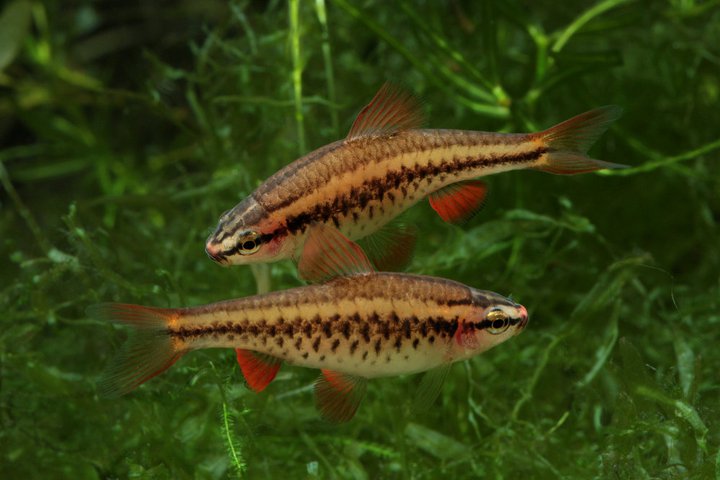
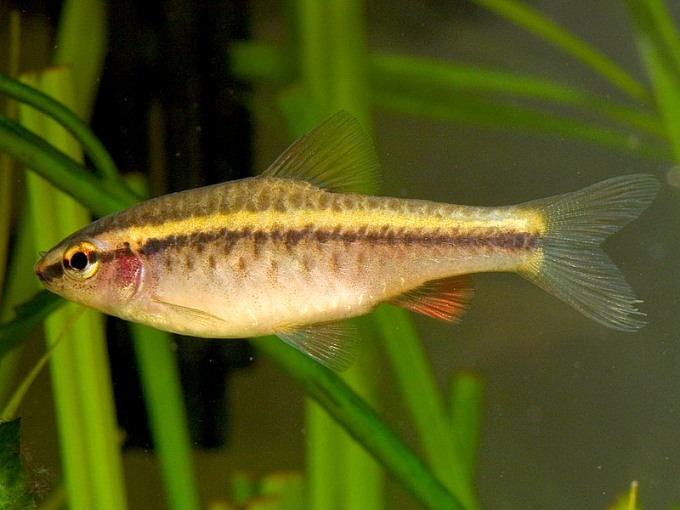
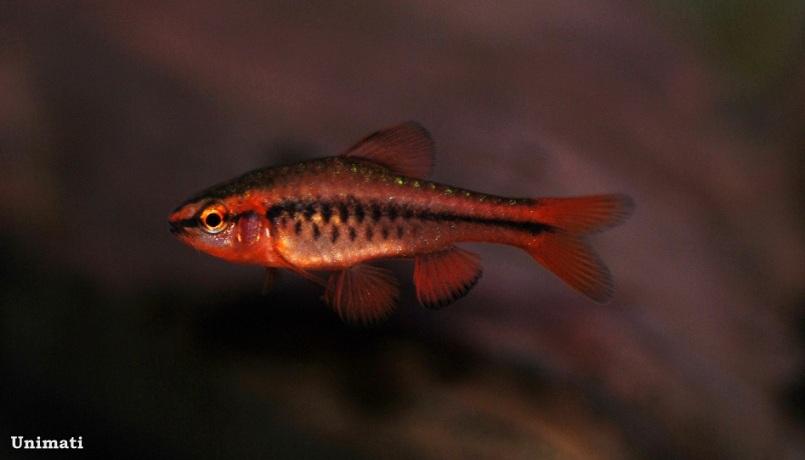
成年雄鱼更小、更修长,颜色更浓,繁殖期尤其明显;部分选育品系会长期保持红色。
繁殖
散卵且不护卵,成熟缸偶尔能自然留下少量鱼苗。提高留苗率可设弱光繁殖缸,用成熟水、隔卵网或细叶植物,海绵过滤轻柔供氧;水偏微酸至中性,温度取适养范围较高端。调养后放入一两对,或在更大缸中群体繁殖;发现卵即移走亲鱼,以免吞卵。卵约 24~48 小时孵化,随后约一天平游,先用微型食物,再逐渐转喂微虫或丰年虾无节幼体。
图片
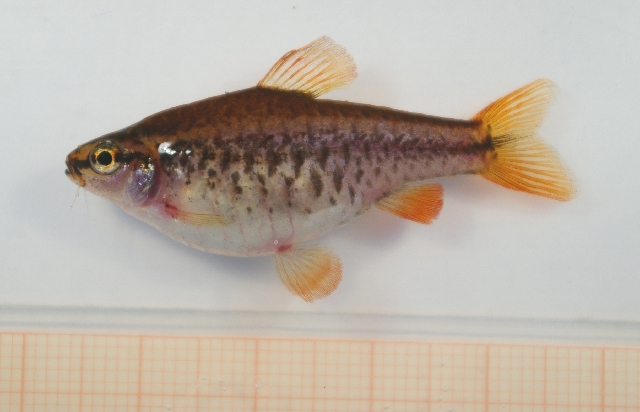
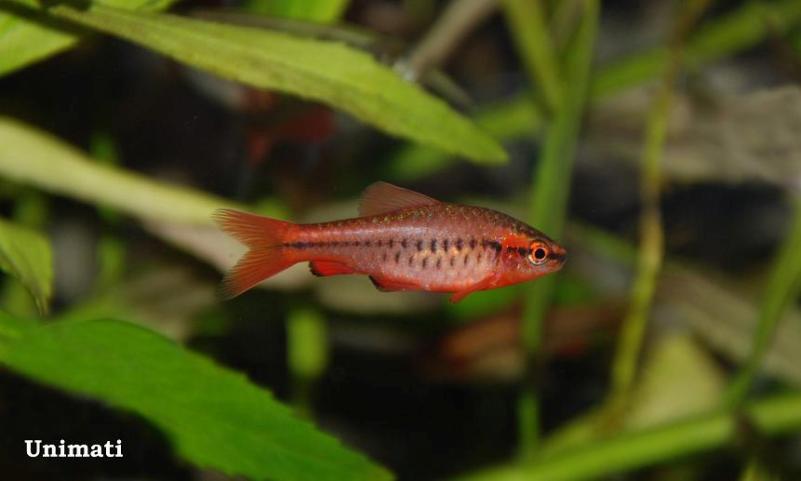
图片来自 SeriouslyFish,版权归各摄影者所有。
English
Overview
Commercially bred Puntius titteya is a widely available choice for a peaceful small-fish community. Albino and intensely red strains require the same basic care as standard-colored fish. A group allows the males to display their strongest colors.
Distribution & habitat
Its native range is confined to southwestern Sri Lanka, including the Kelani and Nilwala basins and intervening streams. Shaded forest channels have sandy beds beneath fallen leaves and branches, with soft, slightly acidic water. Loss and fragmentation of surrounding forest damage these habitats.
Aquarium setup
Allow a footprint of at least 60 by 30 cm. Dark substrate, dense planting and overhead shade create a useful display setting; branches and leaves are optional additions. Moderate circulation is adequate. Farmed stock tolerates a broader range of chemistry than wild fish, which probably favor softer, slightly acidic to neutral conditions.
Diet & feeding
Natural feeding probably includes both small animals and plant-derived material. Provide varied prepared food, including a plant or algal component, with regular small live or frozen invertebrate meals.
Behaviour & compatibility
Six to ten or more form a more confident, attractive group. This peaceful fish suits many carefully chosen small community species, provided their environmental requirements also match.
Sexual dimorphism
Adult males are smaller, more slender and more vividly colored, particularly during reproductive activity. Selectively bred strains may retain strong red pigmentation continuously.
Breeding
Protect eggs from the adults if fry recovery is the aim. A dim separate aquarium with established water, fine vegetation or an egg barrier, and gentle aeration is suitable. Use slightly acidic to neutral water near the warmer end of the maintenance range. Conditioned pairs or a larger breeding group can be introduced, then removed when eggs are seen. Hatching takes roughly one to two days, with free swimming about a day later. Start with microscopic food before graduating to larger fry foods.
来源
- https://www.seriouslyfish.com/species/puntius-titteya(抓取于 2026-10-10)
puntius-titteya · 文件: data/species/puntius-titteya.md · 状态: 草稿