南亚无须魮 · Maharaja Barb
概要
| 字段 | 值 |
|---|---|
| 类别 | 鱼 |
| 学名 | Puntius sahyadriensis |
| 别名 | 南亞無鬚魮 |
| 分类 | 鲤形目 Cypriniformes › 鲤科 Cyprinidae › Puntius |
| 水体 | 淡水 |
| 原产地 | 印度西高止山脉北部及中部 |
| 成体体长 | 6.5 cm |
| 饲养难度 | 中等 |
| 最小水体 | 72 L |
| 最小缸长 | 80 cm |
| 群居方式 | 群游 |
| 性情 | 温和 |
| 外部数据 | seriouslyfish puntius-sahyadriensis;fishbase 24174 |
水质参数
| 参数 | 耐受范围 | 最适范围 | 单位 |
|---|---|---|---|
| 水温 | 18–24 | — | °C |
| pH | 6–7.8 | — | — |
| 总硬度 | 2–15 | — | dGH |
概述
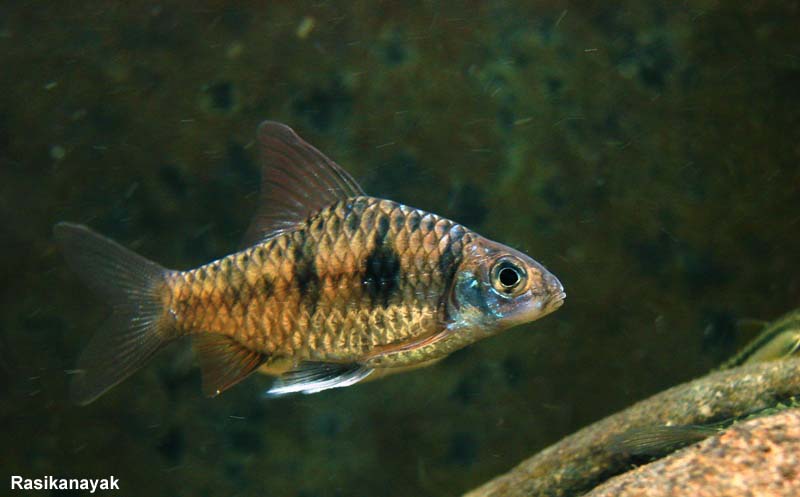
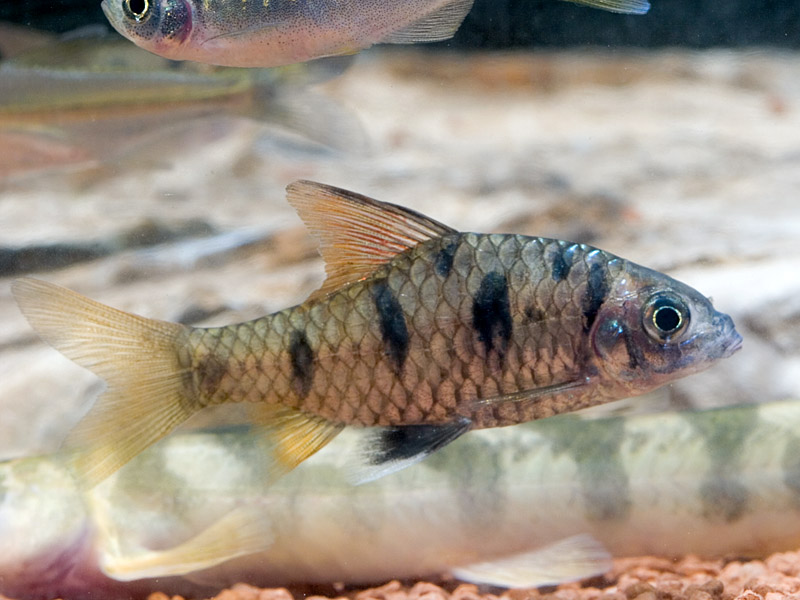
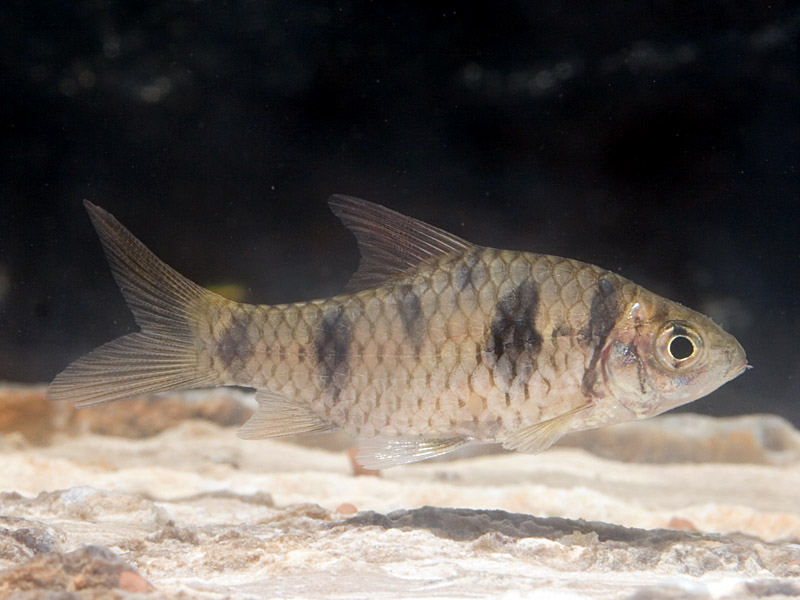
南亚无须魮(Puntius sahyadriensis)具有较有棱角的体形和醒目的雄鱼背鳍。它总体温和,适合以群体形式展示,但对有机污染累积的耐受较差,清洁、富氧的环境是长期饲养重点。
分布与栖息地
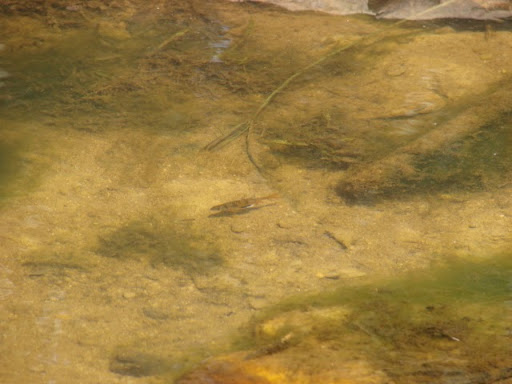
本种为印度西高止山脉北部及中部特有鱼,记录涉及 Yenna、Krishna、Tunga、Bhadra 等水系。溪流常被森林冠层和岸边植被遮蔽,底部有大小石块、沙和砾石;树根伸入水中,较静的角落会积累落枝和落叶。
饲养环境
至少使用底面积约 80 × 30 厘米的缸。可用圆滑石块、沙、细砾和沉木构成溪流景观,在硬景上附着耐阴水草。需要较高含氧量和一定水流,但不必制造激流。维持良好水质,每周更换约 30%~50% 的水,避免有机废物长期积累。
食性与喂食
它可能是兼食动物、植物和碎屑的觅食者。早期一次胃含物观察中,水绵属丝状绿藻约占 90%,这说明藻类可能很重要,却不能据此推定全年只吃藻。饲养时用含植物或藻类成分的优质干粮,搭配水蚤、丰年虾和摇蚊幼虫等活饵或冻饵。
习性与混养
雌雄混养至少 8~10 条,其他合适的群游鱼也可增加安全感。可考虑体型相近的开阔水域鲤科鱼及需求相合的溪流鳅类。雄鱼争取雌鱼或群内地位时的展示,是观赏重点之一。
雌雄区分
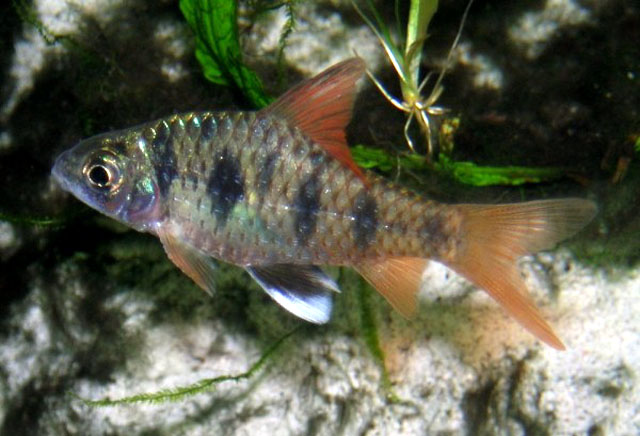
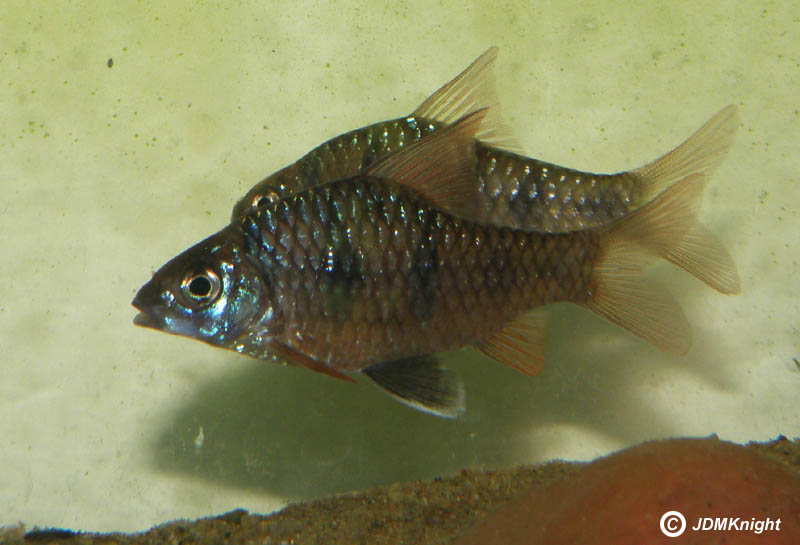
雄鱼色彩较浓,腹鳍带白色尖端,繁殖状态时头部可出现明显珠星,背鳍也较大。雌鱼通常稍大、体形较厚,颜色较淡。
繁殖
可参考近缘小型散卵鱼的方法试繁殖,但不能视作已经确认的本种流程。另设昏暗的成熟水小缸,用细叶植物、拖把或隔卵网保护卵,保持微酸至中性水和轻柔供氧。养壮的亲鱼入缸后,发现卵便移走。近缘种方法给出的参考时间为约 24~36 小时孵化、约 3~4 天后自由游动;仔鱼先用微小开口饵,再逐渐改用微虫和丰年虾无节幼体。
补充说明
本种偶尔以“Khavli”商品名出现。其体形、花纹及雄鱼扩大的背鳍组合具有较高辨识度,现有属级归属仍带有暂定性质。
图片
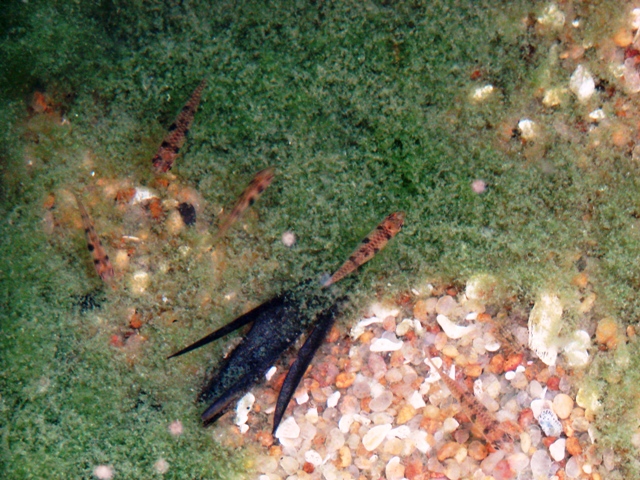
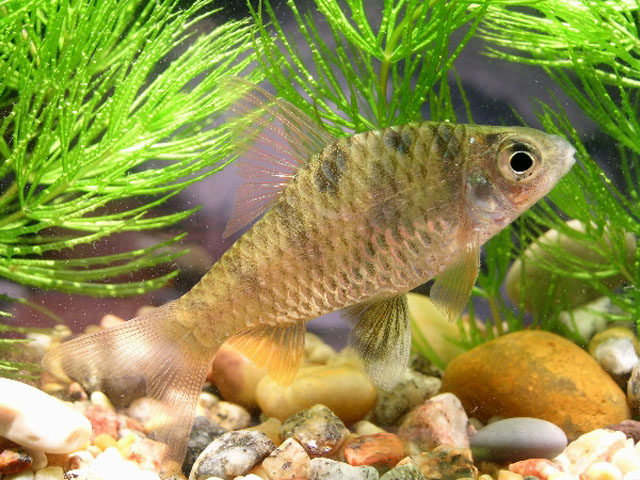
图片来自 SeriouslyFish,版权归各摄影者所有。
English
Overview
Puntius sahyadriensis has an angular outline and a conspicuous enlarged dorsal fin in males. It is generally peaceful and attractive in a group, but accumulated organic pollution is poorly tolerated, making clean, oxygenated water a central requirement.
Distribution & habitat
Endemic to the northern and central Western Ghats of India, it is recorded from drainages including the Yenna, Krishna, Tunga and Bhadra. Forest canopy and dense marginal vegetation shade its streams. Boulders, smaller stones, sand and gravel form the bottom, with submerged roots at the margins and branches and leaves collecting in quieter pockets.
Aquarium setup
Provide at least about 80 × 30 cm of floor space. Rounded stones, sand, fine gravel and wood can recreate a stream setting, with shade-tolerant plants attached to hard surfaces. Maintain ample oxygen and some circulation without creating torrent conditions. Replace approximately 30–50% of the water weekly and prevent waste from accumulating.
Diet & feeding
It is likely to forage on a mixture of animals, plant matter and detritus. An early stomach-content observation found approximately 90% filamentous green algae of the genus Spirogyra. That suggests algae may be important, but does not establish an exclusively algal year-round diet. Use suitable plant- or algae-containing dry foods together with live or frozen water fleas, brine shrimp and bloodworm.
Behaviour & compatibility
Keep a mixed-sex group of eight to ten or more. Other suitable shoaling fishes can add confidence. Similar-sized open-water cyprinids and compatible stream loaches are possible companions. Male displays over females and social rank are particularly interesting to observe.
Sexual dimorphism
Males have stronger colors, white-tipped pelvic fins and enlarged dorsals; noticeable head tubercles develop in breeding condition. Females are usually slightly larger, heavier and less colorful.
Breeding
A trial can follow methods for related small egg-scattering barbs, without assuming they constitute a confirmed protocol for this species. Prepare a dim nursery with established, slightly acidic to neutral water, gentle aeration and fine plants, mops or mesh to protect eggs. Introduce conditioned adults and remove them once eggs appear. Related-species guidance suggests hatching in roughly 24–36 hours and free swimming after about three to four days. Begin feeding microscopic foods, then progress to microworms and brine-shrimp nauplii.
Notes
The trade name “Khavli” is occasionally used. The combined body shape, pattern and male dorsal fin are distinctive, while placement in the current genus remains provisional.
来源
- https://www.seriouslyfish.com/species/puntius-sahyadriensis(抓取于 2026-10-10)
puntius-sahyadriensis · 文件: data/species/puntius-sahyadriensis.md · 状态: 草稿