灰点无须魮
概要
| 字段 | 值 |
|---|---|
| 类别 | 鱼 |
| 学名 | Puntius mahecola |
| 别名 | 灰點無鬚魮、Leuciscus mahecola |
| 分类 | 鲤形目 Cypriniformes › 鲤科 Cyprinidae › Puntius |
| 水体 | 淡水 |
| 原产地 | 印度南部西高止山脉流域 |
| 成体体长 | 7.5 cm |
| 饲养难度 | 入门 |
| 最小水体 | 81 L |
| 最小缸长 | 90 cm |
| 群居方式 | 群游 |
| 性情 | 温和 |
| 外部数据 | seriouslyfish puntius-mahecola;fishbase 61902 |
水质参数
| 参数 | 耐受范围 | 最适范围 | 单位 |
|---|---|---|---|
| 水温 | 18–24 | — | °C |
| pH | 6–7.5 | — | — |
| 总硬度 | 5–15 | — | dGH |
概述
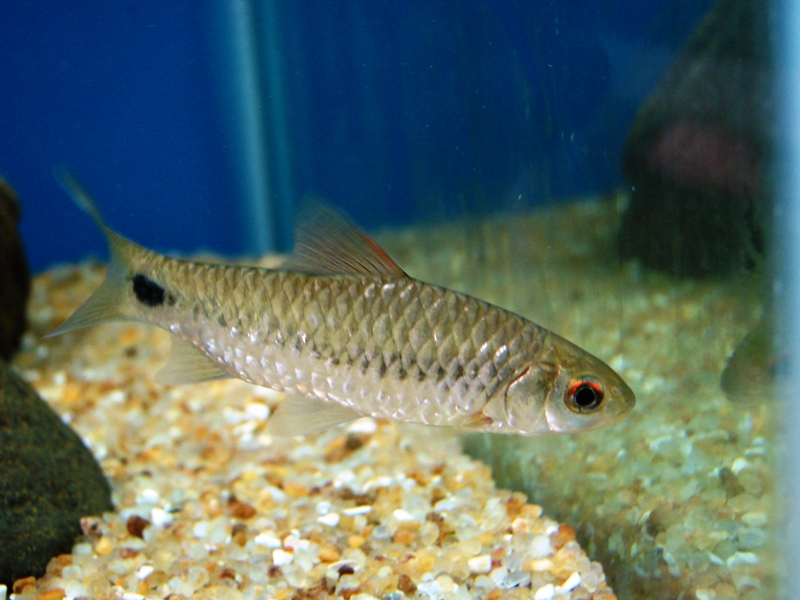
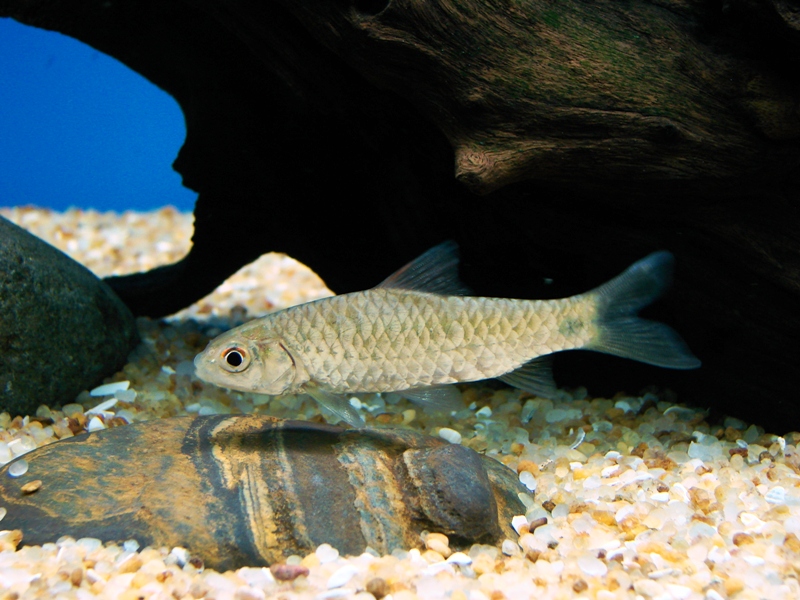
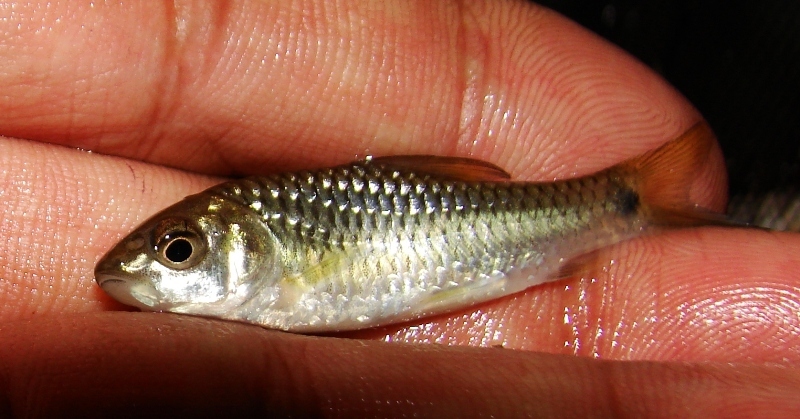
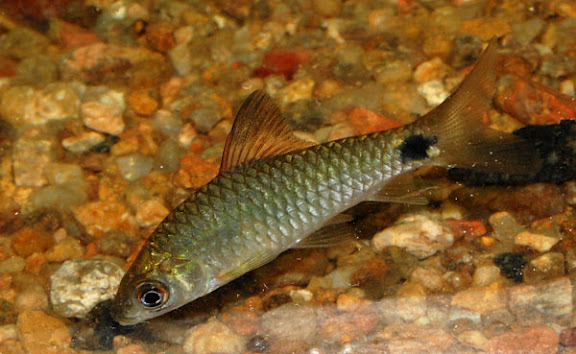
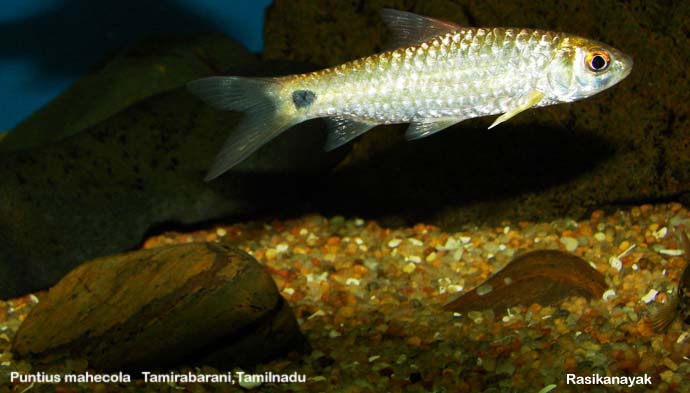
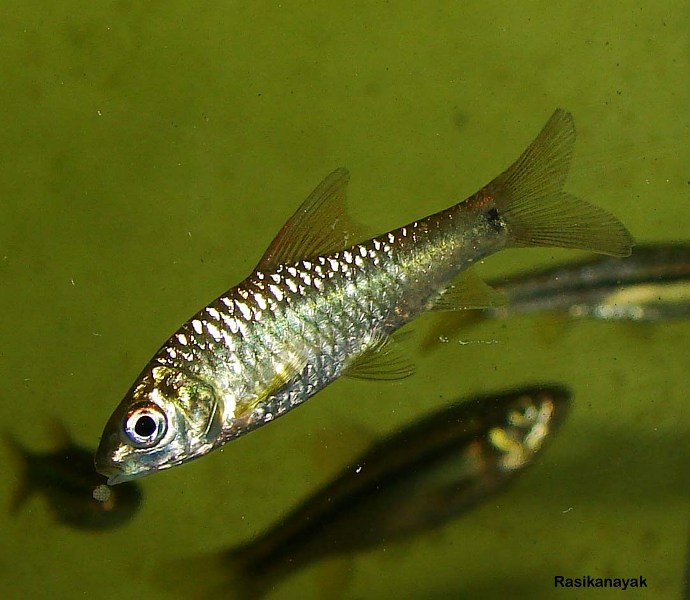
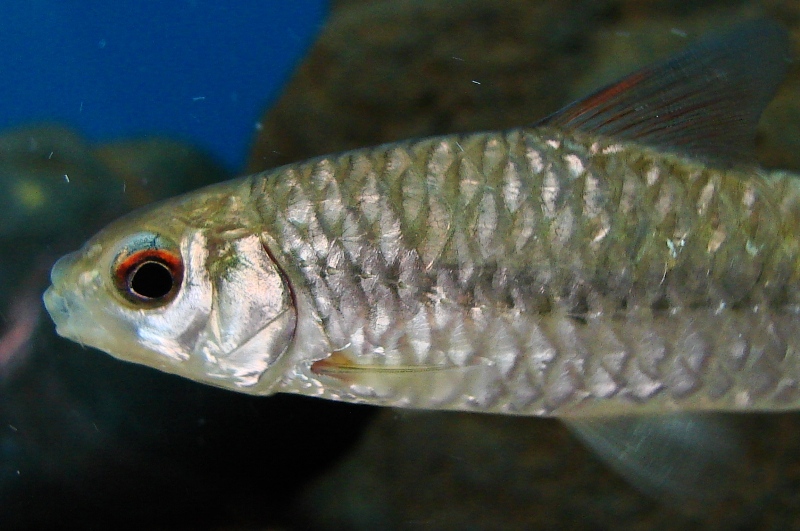
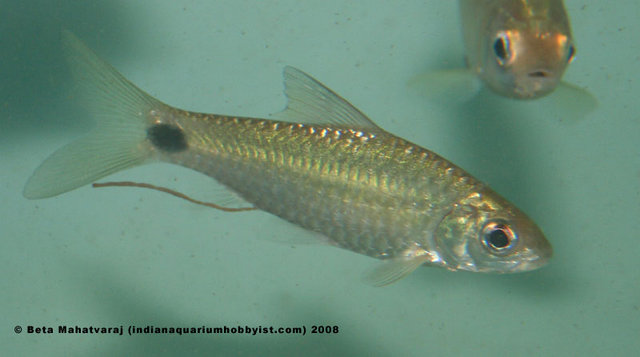
灰点无须魮(Puntius mahecola)是体色相对朴素、尾柄带暗斑的群游鱼。这个名称长期被误用于其他鱼,购买时尤其应确认身份,不能把贸易清单上的“mahecola barb”直接当作可靠鉴定。
分布与栖息地
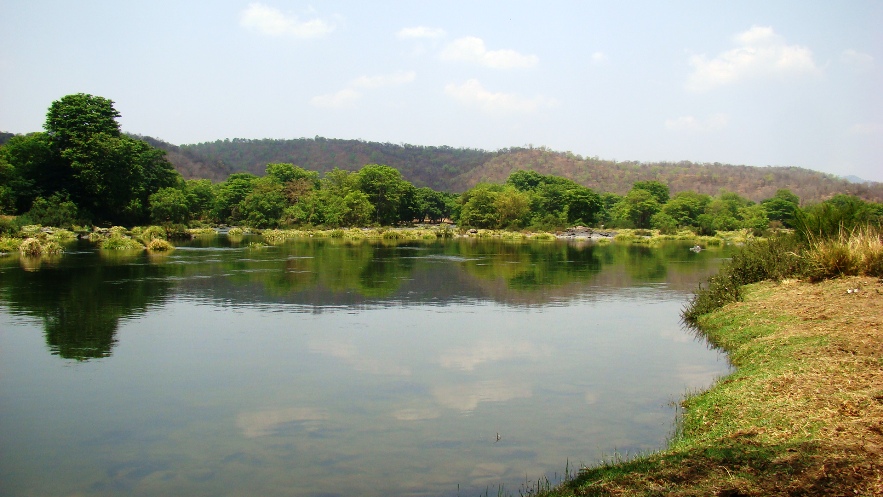
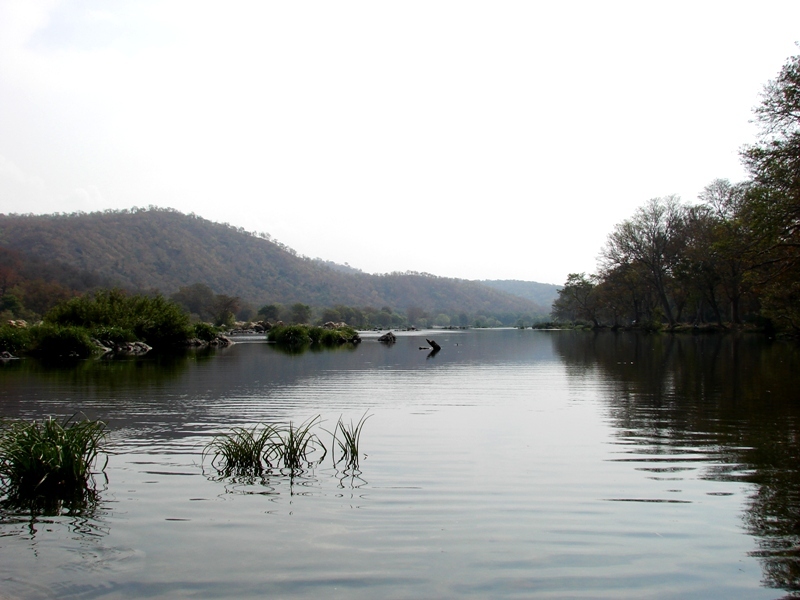
分布于印度南部喀拉拉、卡纳塔克及泰米尔纳德等邦的西高止山脉流域。典型生境是水深不足 2 米、沙或泥底的缓流河段,也见于部分潟湖和筑坝形成的湖泊。季风期间流量和流速可能显著上升,因此平时的缓流描述并不代表全年环境不变。
饲养环境
缸长至少 90 厘米。沙砾、圆石及沉木根枝即可构成自然布局,弱光环境可搭配耐阴水草。不需要激烈水流,但应有一定循环和较高含氧量,可使用余量充足的外置过滤器。每周换水约 30%~50%,并维持规律清洁。
食性与喂食
野外可能兼食蠕虫、昆虫、小型无脊椎动物、植物材料和碎屑。人工环境中通常易开口,可轮换优质薄片、颗粒与水蚤、丰年虾、摇蚊幼虫等食物,部分干粮加入植物或藻类成分。
习性与混养
总体温和,建议至少 8~10 条。成群能减少紧张,雄鱼在同类展示时颜色也更明显。可选择体型合适、温度水质需求相容的小型鲤科鱼、灯鱼或其他温和鱼类,避免只凭商品名称决定组合。
雌雄区分
雄鱼可能稍小、较纤细,花纹颜色较强;这些差异应作为参考,而非绝对判别标准。
补充说明
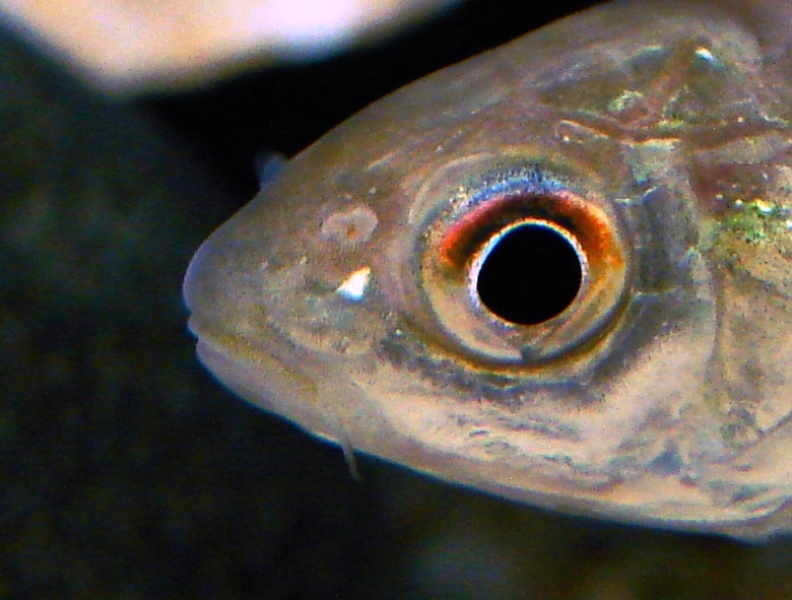
真正的灰点无须魮具有一对短须,暗色尾柄斑位于臀鳍之后,斑块强度随状态变化,有时几乎看不见。它曾被误认为 Puntius amphibius,自身名称又被误用于 Dawkinsia 属鱼,尤其 Dawkinsia assimilis。这些名称的历史混用与部分近似种关系仍未完全厘清;尾斑变淡也不应成为立即改认其他种的理由。
图片
图片来自 SeriouslyFish,版权归各摄影者所有。
English
Overview
Puntius mahecola is a relatively plain shoaling barb with a dark tail-base mark. Its name has a long history of misuse, making identification an important first step when buying fish listed as “mahecola barb”.
Distribution & habitat
It occurs in southern Indian drainages associated with the Western Ghats in Kerala, Karnataka and Tamil Nadu. Typical sites are slow river sections less than two metres deep over sand or mud, although some lagoons and dam-created lakes are also occupied. Monsoon rainfall can greatly increase flow and volume, so a description of quiet conditions does not imply a uniform year-round habitat.
Aquarium setup
Allow at least 90 cm of tank length. Sand or gravel, rounded stones and branching wood provide suitable furnishings, with shade-tolerant plants under subdued light if wanted. Turbulence is unnecessary, but good oxygenation and some circulation are beneficial. Ample external filtration and weekly water replacement of roughly 30–50% support a consistent maintenance routine.
Diet & feeding
It likely forages on small invertebrates, plant material and detritus. Captive feeding is generally straightforward: rotate quality flakes and granules with water fleas, brine shrimp and bloodworm, ensuring that some dry food contains plant or algal ingredients.
Behaviour & compatibility
This is generally a peaceful species. Keep eight to ten or more to reduce nervousness and encourage males to display. Suitable small cyprinids, tetras or other gentle fishes may be combined with it when size and environmental needs agree.
Sexual dimorphism
Males are likely to be a little smaller, leaner and more strongly colored. Use these tendencies as guidance rather than infallible sexing criteria.
Notes
The fish has one pair of short barbels and a tail-peduncle blotch lying entirely behind the anal fin. The blotch changes intensity with condition and may become difficult to see. Historically the fish was confused with Puntius amphibius, while its own name was applied to Dawkinsia, especially Dawkinsia assimilis. Some relationships in this complex remain unsettled; a fading blotch alone does not justify reassignment to another species.
来源
- https://www.seriouslyfish.com/species/puntius-mahecola(抓取于 2026-10-10)
puntius-mahecola · 文件: data/species/puntius-mahecola.md · 状态: 草稿