双斑无须魮 · Two-spotted Barb
概要
| 字段 | 值 |
|---|---|
| 类别 | 鱼 |
| 学名 | Puntius bimaculatus |
| 别名 | 雙斑無鬚魮、Gnathopogon bimaculatus、Puntius puckelli |
| 分类 | 鲤形目 Cypriniformes › 鲤科 Cyprinidae › Puntius |
| 水体 | 淡水 |
| 原产地 | 印度南部及斯里兰卡 |
| 成体体长 | 5 cm |
| 饲养难度 | 入门 |
| 最小水体 | 54 L |
| 最小缸长 | 60 cm |
| 群居方式 | 群游 |
| 性情 | 温和 |
| 外部数据 | seriouslyfish puntius-bimaculatus;fishbase 13635 |
| 食性 | 杂食 |
水质参数
| 参数 | 耐受范围 | 最适范围 | 单位 |
|---|---|---|---|
| 水温 | 18–24 | — | °C |
| pH | 6–7.5 | — | — |
| 总硬度 | 2–15 | — | dGH |
概述
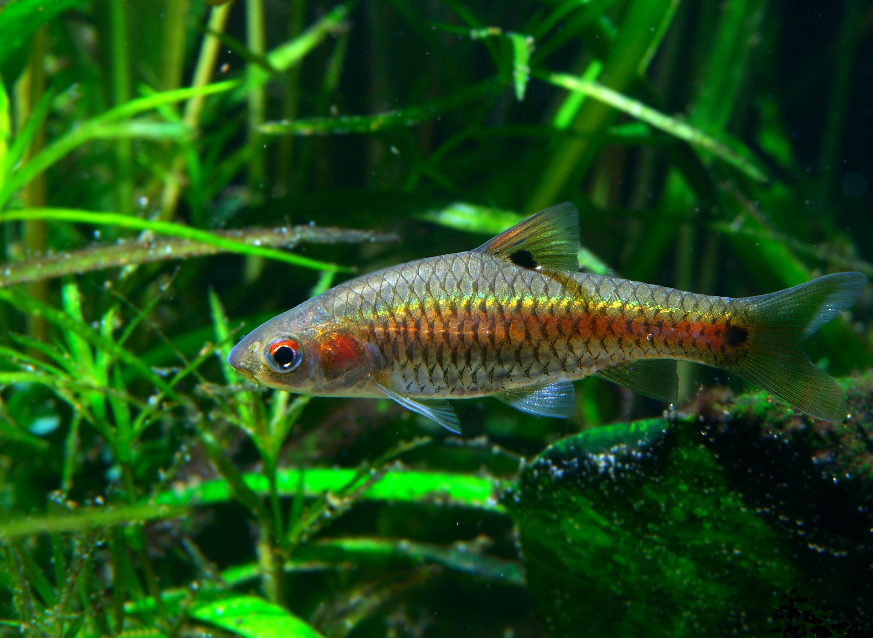
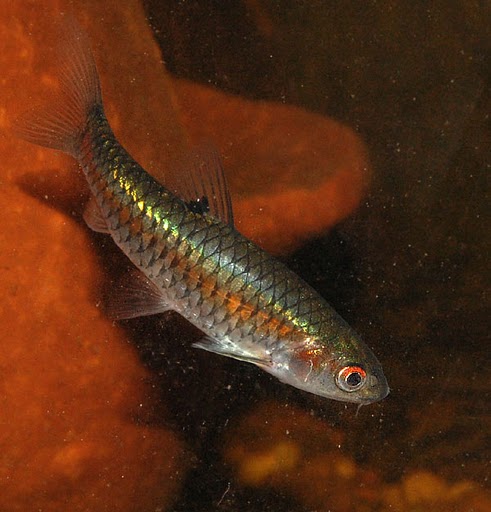
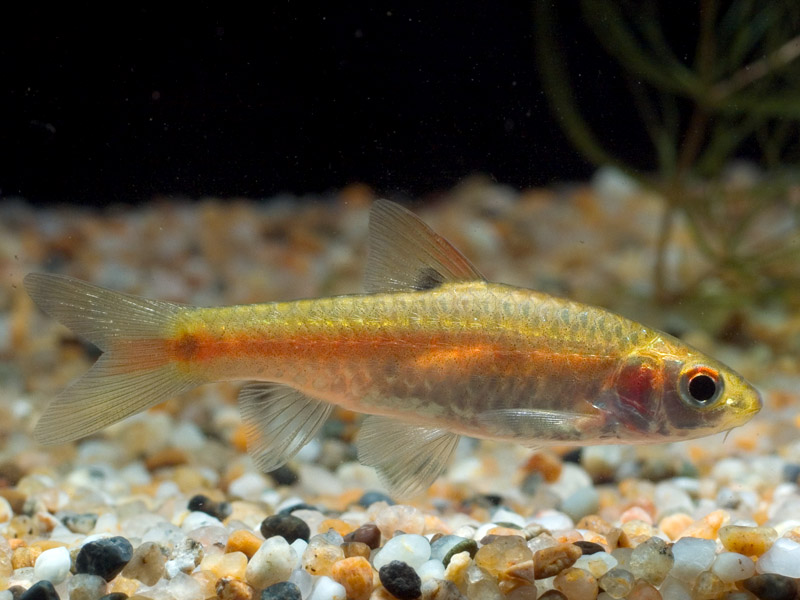
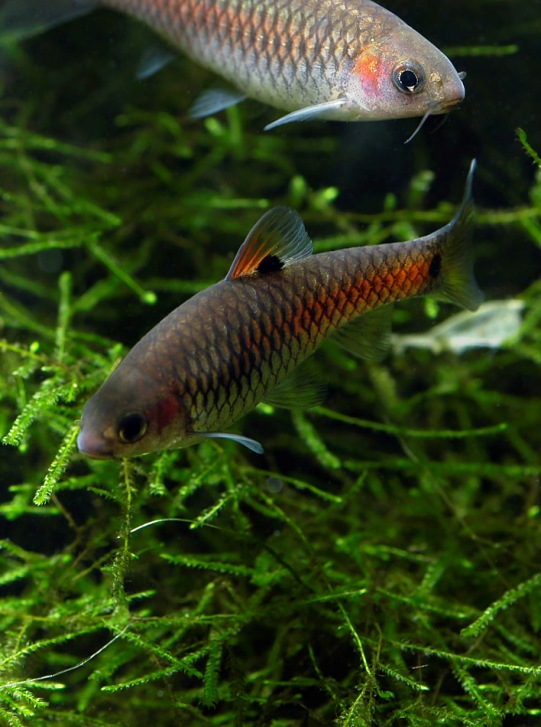
双斑无须魮(Puntius bimaculatus)是温和的小型群游鱼,成熟雄鱼体侧的红色带较醒目。密植、光线柔和的缸很适合展示它,饲养重点是维持群体而不是单独挑一条颜色最鲜艳的个体。
分布与栖息地
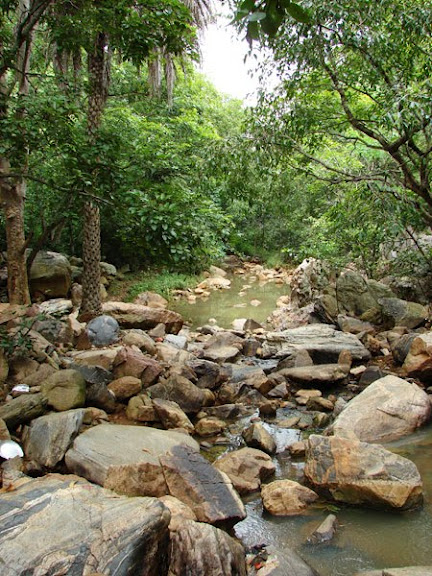
分布于斯里兰卡 Nilwala 河流域及印度南部多地,包括泰米尔纳德、喀拉拉、卡纳塔克、安得拉和马哈拉施特拉等邦。栖息环境从流动的山溪到河流中段较安静的水域都有,通常不见于低地;在斯里兰卡有海拔超过 1500 米山溪的记录。当地鲜艳个体变少可能与选择性采集有关,森林破坏及水质退化也是压力。
饲养环境
缸长至少 60 厘米,以茂密水草配合浮水植物、沉木根枝柔化照明。水流无需很强;溪流布局也可使用,但应避开激流般持续冲刷的环境。
食性与喂食
野外摄取硅藻、藻类、碎屑,以及小昆虫、蠕虫和甲壳动物。提供薄片或颗粒时,搭配水蚤、丰年虾、摇蚊幼虫等活饵或冻饵,并让部分干粮含植物或藻类成分。
习性与混养
至少 6~10 条同养,可减轻紧张,雄鱼在同类竞争下也更容易显色。适合与体型和水质需求相容的温和小鱼混养,可从小型鲤科鱼、灯鱼、部分迷鳃鱼或底栖鱼中挑选具体种类。
雌雄区分
成年雌鱼更大、更厚实,雄鱼色彩较鲜明。
繁殖
可尝试同属小型散卵鱼的繁殖布置:另设成熟水的小缸,弱光、轻柔供氧,放细叶植物、产卵拖把或隔卵网。水保持微酸至中性,温度靠近适宜范围的较高端。养壮亲鱼后放入一两对,见卵及时移出以减少吞卵。此类方法预期约 24~48 小时孵化,再约一天自由游动,先喂微小开口饵,之后过渡到微虫和丰年虾无节幼体;这些时间仅作属级方法参考。
补充说明
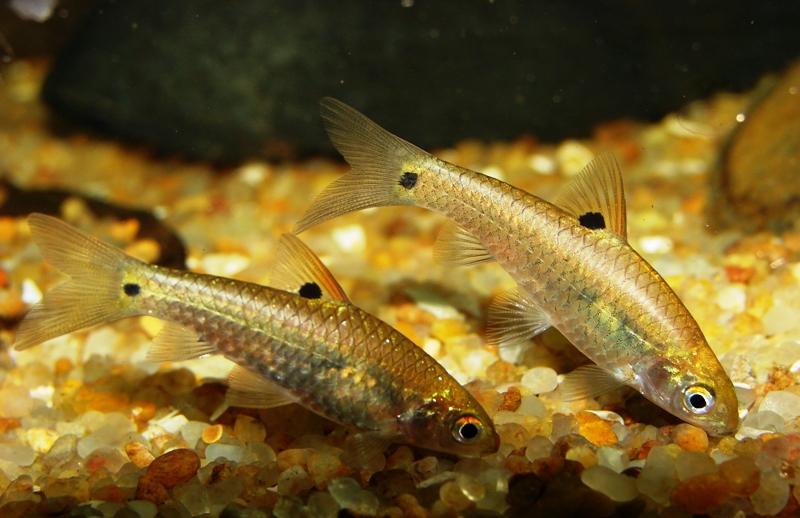
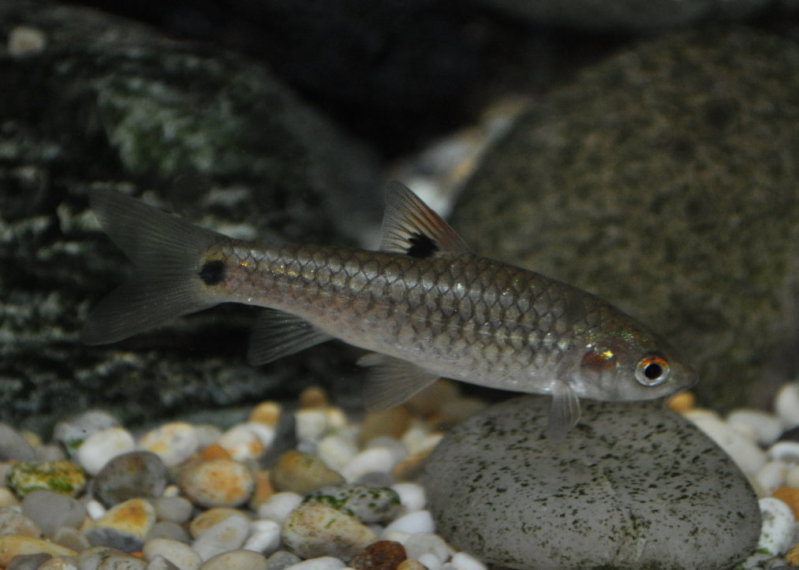
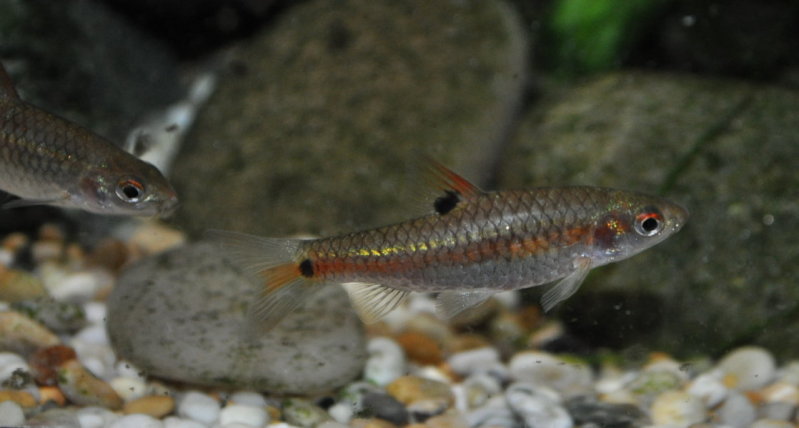
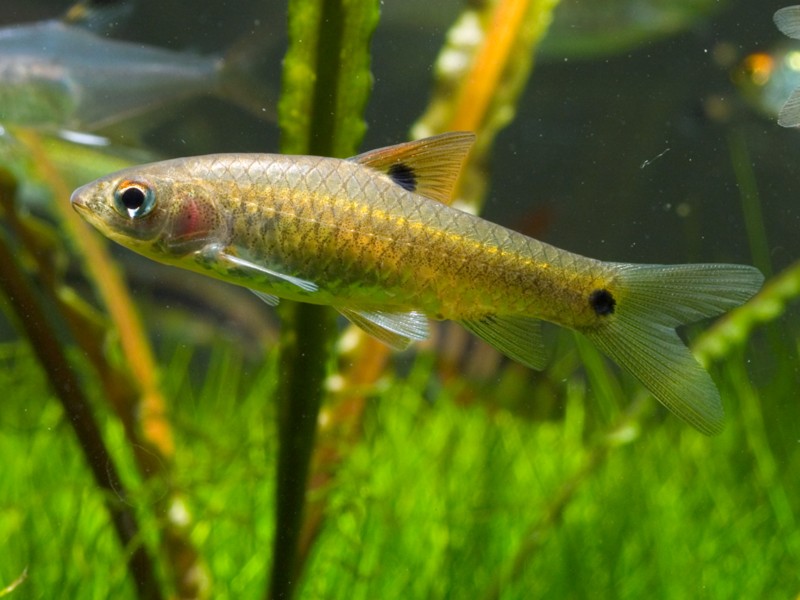
背鳍及尾鳍基部各有圆形暗斑,背鳍有 7 根分枝鳍条。印度与斯里兰卡种群的分类关系仍有待厘清;旧名 Puntius puckelli 目前作为异名,不能直接拿来给印度个体另立种名。
图片
图片来自 SeriouslyFish,版权归各摄影者所有。
English
Overview
Puntius bimaculatus is a peaceful little shoaling fish whose males can show an attractive reddish flank stripe. Softly lit planting displays it well, but a proper social group matters more than selecting a single exceptionally colorful specimen.
Distribution & habitat
It occurs in Sri Lanka's Nilwala drainage and across southern Indian river systems, including those in Tamil Nadu, Kerala, Karnataka, Andhra Pradesh and Maharashtra. Habitats range from hill streams to quieter middle river reaches, with lowlands generally avoided. Sri Lankan records include mountain streams above 1,500 metres. Reports of fewer brightly colored wild fish suggest possible selective-collection effects, alongside pressures from forest loss and declining water quality.
Aquarium setup
Use a tank at least 60 cm long with dense plants and shade from floating vegetation or branching wood. Strong current is unnecessary. A stream-inspired aquarium is possible, provided it does not subject the fish to torrent-like flow.
Diet & feeding
Its natural foraging combines diatoms, algae and detritus with tiny insects, worms and crustaceans. Offer quality flakes or granules, including a plant- or algae-containing option, and regular live or frozen water fleas, brine shrimp and bloodworm.
Behaviour & compatibility
Maintain six to ten or more together for confidence and stronger male displays. Peaceful small cyprinids, tetras and selected labyrinth or bottom-dwelling fishes may work as companions when size and environmental needs match.
Sexual dimorphism
Females become larger and fuller-bodied; males are more colorful.
Breeding
A trial may use the nursery arrangement recommended for small egg-scattering members of the genus: established water, low light, gentle aeration and fine plants, mops or mesh to protect eggs. Use slightly acidic to neutral water towards the warmer end of the suitable range. Introduce one or two conditioned pairs and remove them when eggs are seen. With this general method, hatching is expected in about 24–48 hours and free swimming roughly a day later. Start with microscopic food, then progress to microworms and brine-shrimp nauplii. These are genus-level expectations rather than a firm species-specific timetable.
Notes
Round dark marks occur at the dorsal- and caudal-fin bases, and the dorsal fin has seven branched rays. The relationship between Indian and Sri Lankan populations remains unresolved. Puntius puckelli is treated as a synonym and should not simply be applied as a separate species name to Indian fish.
来源
- https://www.seriouslyfish.com/species/puntius-bimaculatus(抓取于 2026-10-10)
puntius-bimaculatus · 文件: data/species/puntius-bimaculatus.md · 状态: 草稿