虎皮鱼 · Tiger Barb
概要
| 字段 | 值 |
|---|---|
| 类别 | 鱼 |
| 学名 | Puntigrus tetrazona |
| 别名 | 四带无须魮、四帶無鬚魮、Capoeta tetrazona、Barbus tetrazona、Puntius tetrazona、Systomus tetrazona、Systomus sumatranus、Systomus sumatrensis、虎皮魮 |
| 分类 | 鲤形目 Cypriniformes › 鲤科 Cyprinidae › Puntigrus |
| 水体 | 淡水 |
| 原产地 | 印度尼西亚 |
| 成体体长 | 6 cm |
| 饲养难度 | 入门 |
| 最小水体 | 72 L |
| 最小缸长 | 80 cm |
| 群居方式 | 群游 |
| 领地性 | 是 |
| 外部数据 | seriouslyfish puntigrus-tetrazona;fishbase 4766 |
| 性情 | 攻击性 |
| 繁殖方式 | 散卵 |
水质参数
| 参数 | 耐受范围 | 最适范围 | 单位 |
|---|---|---|---|
| 水温 | 20–26 | — | °C |
| pH | 5–8 | — | — |
| 总硬度 | 1–20 | — | dGH |
概述
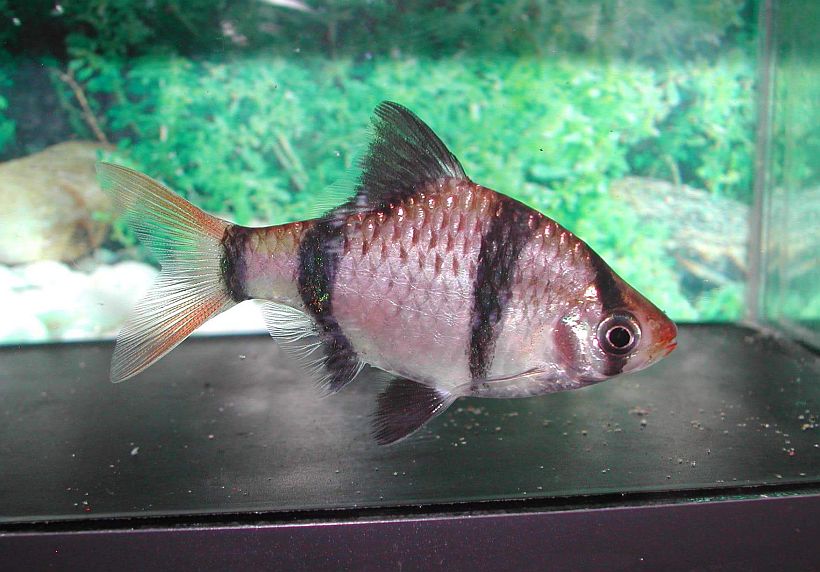
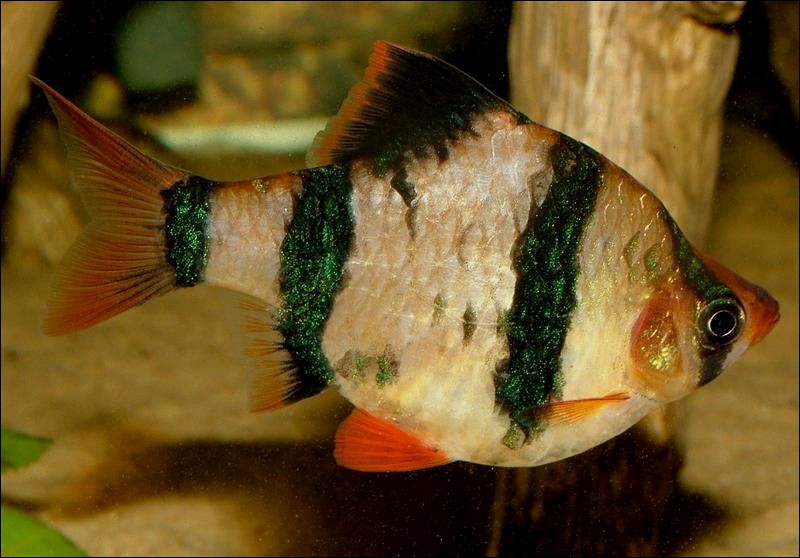
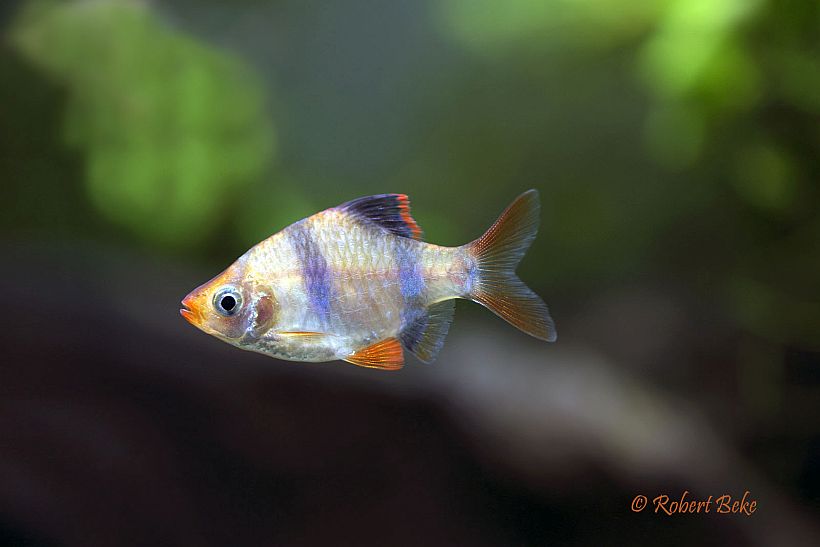
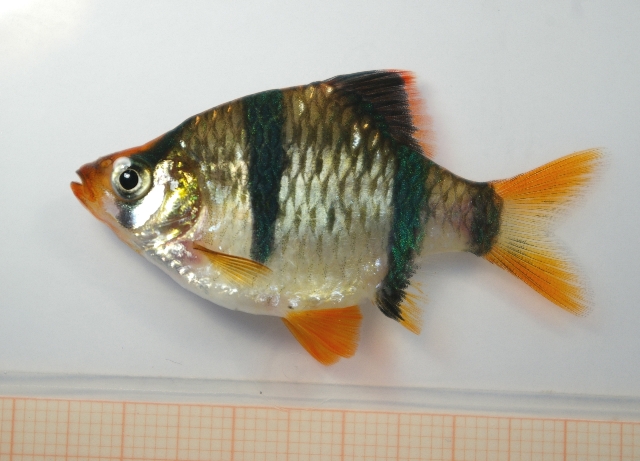
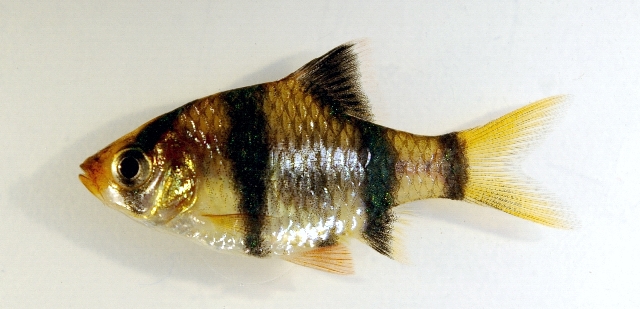
虎皮鱼(Puntigrus tetrazona)活泼、体侧有醒目的深色竖纹,是常见的群养观赏鱼。市场以人工繁殖鱼和观赏品系为主,但商品“虎皮鱼”的准确物种身份仍有混淆,不能只凭商品名作分类判断。
分布与栖息地
可能仅原产印度尼西亚苏门答腊岛中部和南部,婆罗洲的一些历史记录实际涉及近缘种。本种的具体栖地尚未确认,不能把近缘种偏好的清水林间溪流直接当成本种的确定生态资料。
饲养环境
布景并不苛刻,水草、浮水植物、沉木和枝条能提供遮蔽,也有助于展示体色。要留足群体活动空间,拥挤会加重混养问题。人工品系通常较能适应不同水质,野生鱼更适合偏软、酸性至中性的水。
食性与喂食
野外可能以水生无脊椎动物为主,也取食少量植物和有机碎屑。缸养时可用优质薄片或颗粒,部分饲料应含植物成分,再规律搭配水蚤、丰年虾和红虫等活饵或冷冻饵料。
习性与混养
有咬鳍倾向,数量不足或空间受限时尤其明显。建议至少 8~10 条成群,让同种互动分散它们对其他鱼的注意力。群体内有较松散的等级关系,雄鱼会争夺位置和雌鱼关注。
不适合胆小、行动缓慢或长鳍的缸友。可考虑同等体形、较健壮的活跃鱼类及适合相同水质的底栖鳅类,但仍需逐一确认搭配。
雌雄区分
成年雄鱼通常较小、较瘦,颜色更鲜明;雌鱼相对丰满。
繁殖
属于散卵型,不护卵。亲鱼状态好时可能经常产卵,成熟鱼缸里偶尔会自行出现鱼苗。若想提高育苗数量,可设独立繁殖缸,用细叶植物、产卵拖把或隔卵网保护鱼卵,搭配柔和照明与气动增氧。
可选择配对或群体繁殖,产卵后移走亲鱼。卵约经 24~48 小时孵化,鱼苗约再过 24 小时开始自由游动。初期投喂纤毛虫级别的小食物,随后逐渐增加微虫和丰年虾无节幼体。
补充说明
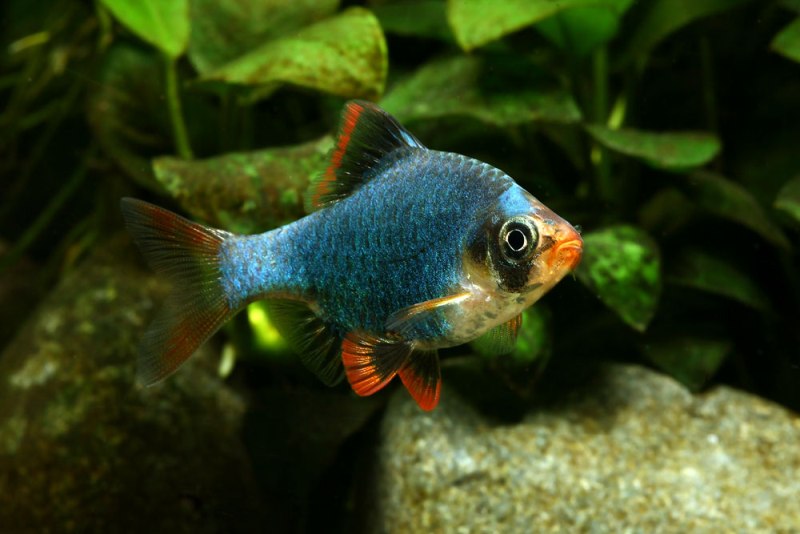
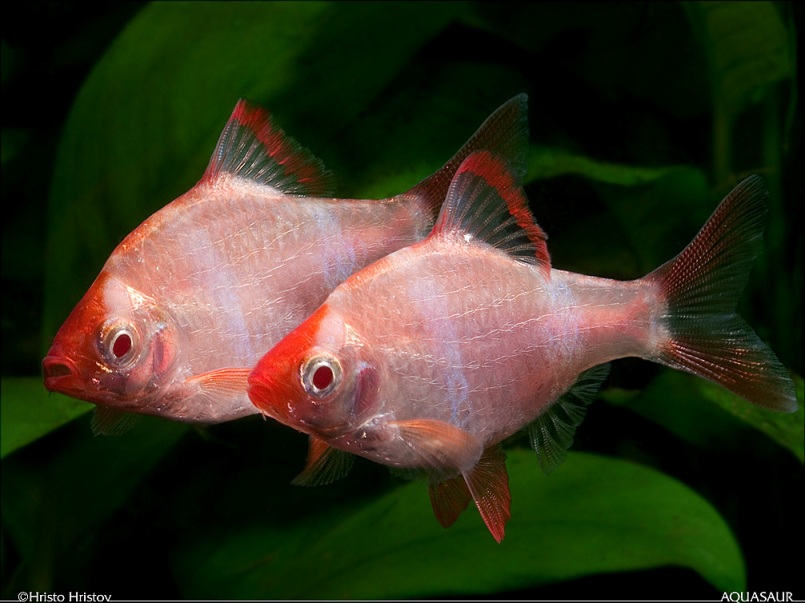
白化、绿色和金色等品系的基本饲养方式相同。部分商业鱼因过度近亲繁殖而体弱或畸形,也有人工注色现象的记录,挑选时不要只追求异常鲜艳的颜色。
图片
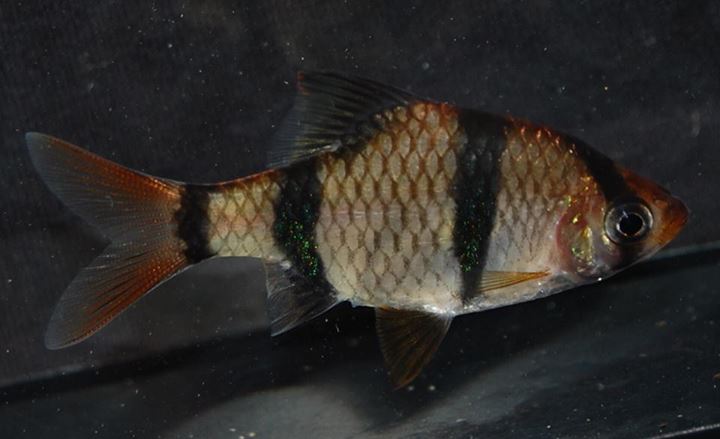
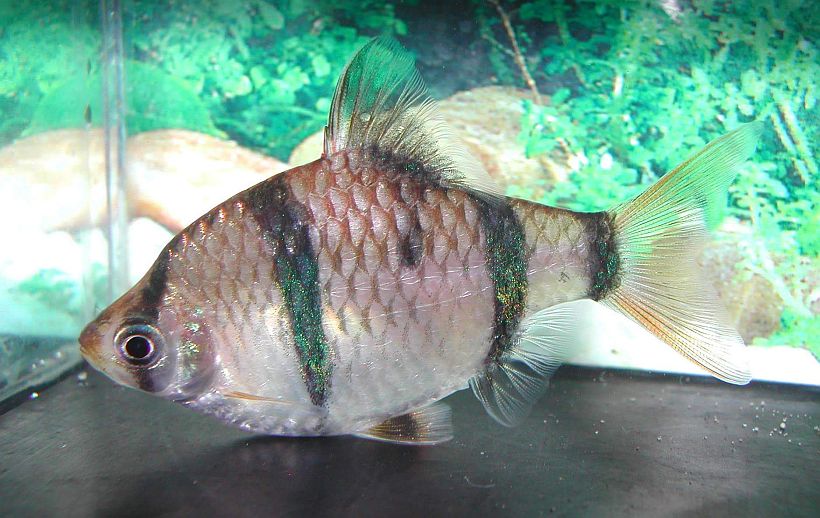
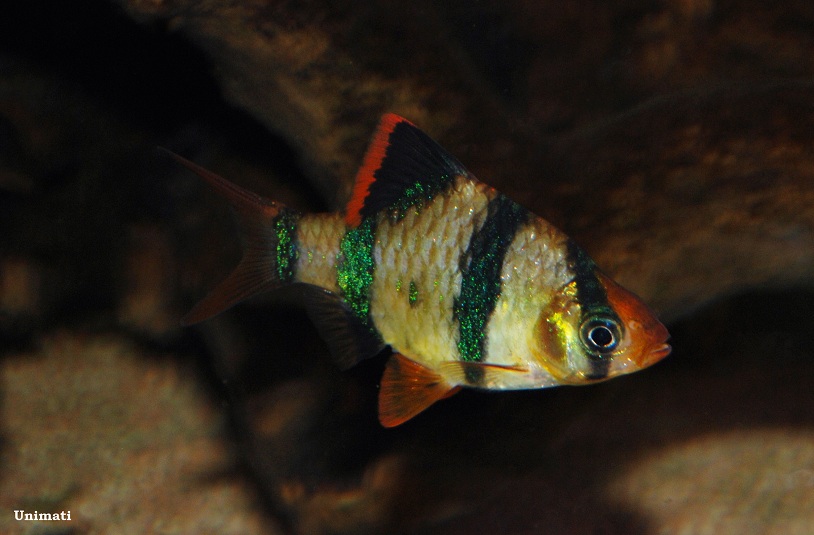
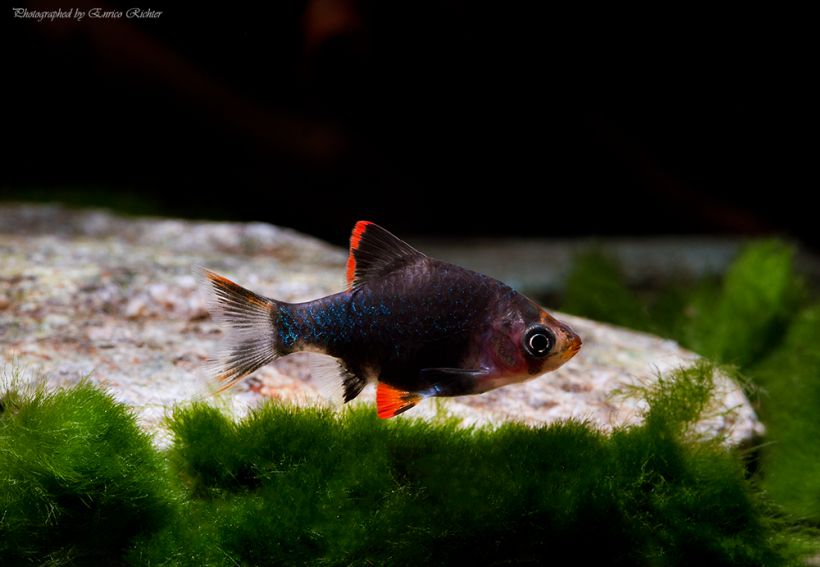
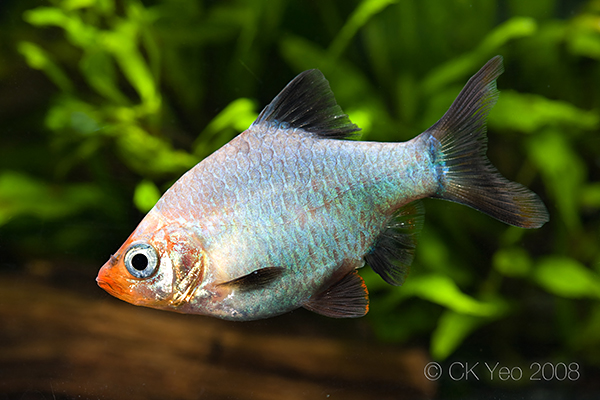
图片来自 SeriouslyFish,版权归各摄影者所有。
English
Overview
Puntigrus tetrazona, the tiger barb, is a lively shoaling fish with conspicuous vertical markings. Farmed ornamental forms dominate aquarium sales. The precise identity of some commercial tiger-barb stock remains confused, so a trade label alone does not resolve taxonomy.
Distribution & habitat
The species is probably native only to central and southern Sumatra, Indonesia. Some older Bornean records concern related species. Its own habitat preferences remain unconfirmed; clear forest streams used by relatives should not be presented as established habitat for this species.
Aquarium setup
Plants, floating cover, and branching wood can improve shelter and display without requiring a particular decorative style. Allow ample room for the group, since restricted space can worsen social problems. Commercial strains tend to be adaptable, while wild stock is better suited to softer water with an acidic to neutral reaction.
Diet & feeding
The suspected wild menu emphasizes aquatic invertebrates, with smaller contributions from plants and organic debris. Feed varied prepared products, including some with plant ingredients, alongside regular small live or frozen prey.
Behaviour & compatibility
Fin damage to tankmates is a recognized risk, especially in cramped tanks or undersized groups. Start with at least eight to ten tiger barbs so that much of their activity is directed toward one another. Males compete within a loose social hierarchy.
Avoid timid, slow, or flowing-finned companions. Robust fish of comparable size, together with suitable bottom-dwelling loaches, offer more promising possibilities after their needs have been checked.
Sexual dimorphism
Mature males are generally leaner, smaller, and more intensely colored than females.
Breeding
Egg scattering occurs without parental care. Occasional fry may survive in an established aquarium, but a separate spawning tank improves control. Fine plants, mops, or mesh can keep eggs beyond adult reach. Provide subdued light and gentle aeration.
Conditioned pairs or groups may be used. Remove adults after spawning. Hatching usually occurs within 24–48 hours, with independent swimming approximately a day later. Start fry on microscopic foods, then introduce microworms and brine shrimp nauplii as their mouths grow.
Notes
Albino, green, and golden selections share the same basic husbandry. Excessive inbreeding can produce weak or malformed fish. Artificial color injection has also been reported, making stock quality more important than unusually vivid coloration.
来源
- https://www.seriouslyfish.com/species/puntigrus-tetrazona(抓取于 2026-10-10)
puntigrus-tetrazona · 文件: data/species/puntigrus-tetrazona.md · 状态: 草稿