杂纹无须魮
概要
| 字段 | 值 |
|---|---|
| 类别 | 鱼 |
| 学名 | Puntigrus partipentazona |
| 别名 | 雜紋無鬚魮、Barbus partipentazona、Systomus partipentazona、Puntius partipentazona |
| 分类 | 鲤形目 Cypriniformes › 鲤科 Cyprinidae › Puntigrus |
| 水体 | 淡水 |
| 原产地 | 柬埔寨、老挝、马来半岛、泰国及越南 |
| 成体体长 | 4 cm |
| 饲养难度 | 入门 |
| 最小水体 | 72 L |
| 最小缸长 | 80 cm |
| 群居方式 | 群游 |
| 性情 | 温和 |
| 外部数据 | seriouslyfish puntigrus-partipentazona;fishbase 27130 |
水质参数
| 参数 | 耐受范围 | 最适范围 | 单位 |
|---|---|---|---|
| 水温 | 20–26 | — | °C |
| pH | 5–7 | — | — |
| 总硬度 | 1–10 | — | dGH |
概述
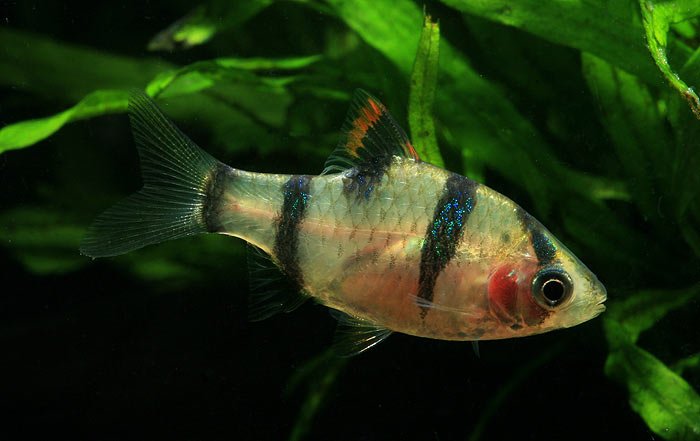
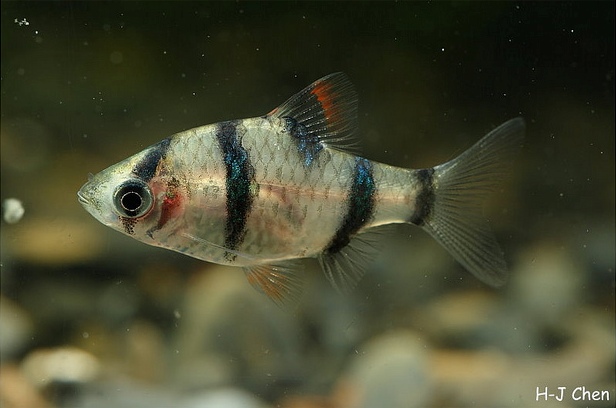
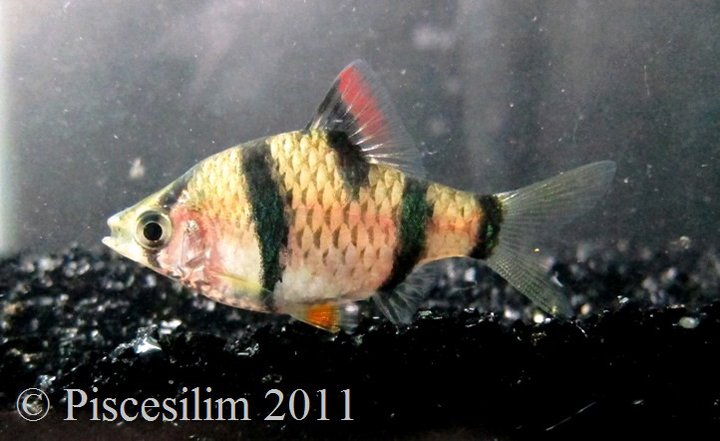
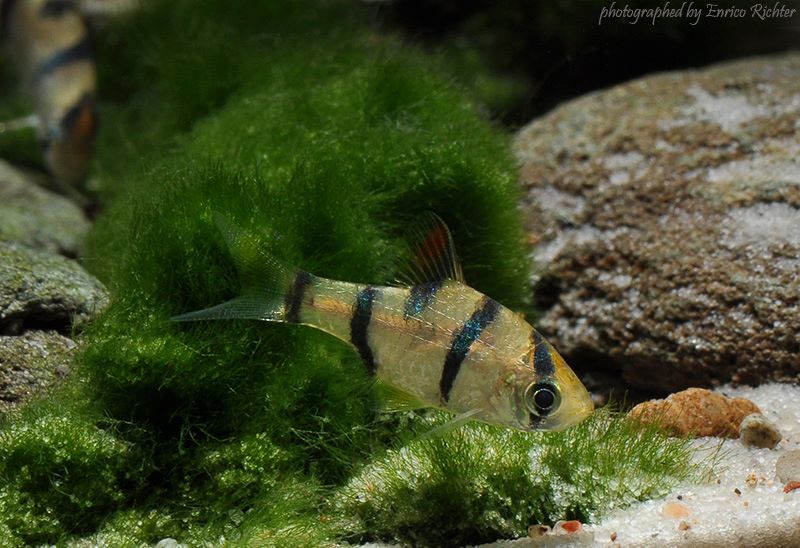
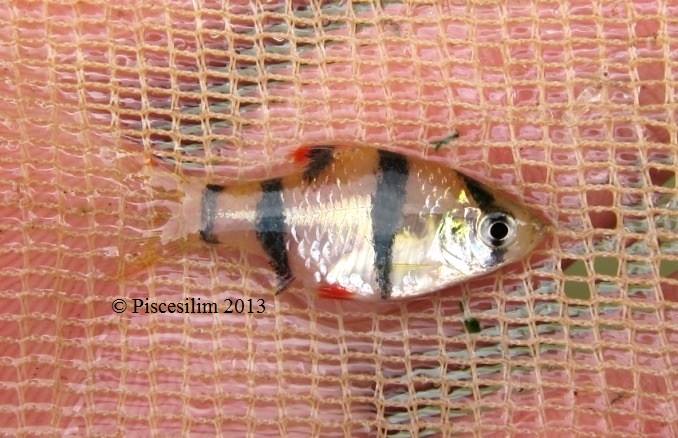
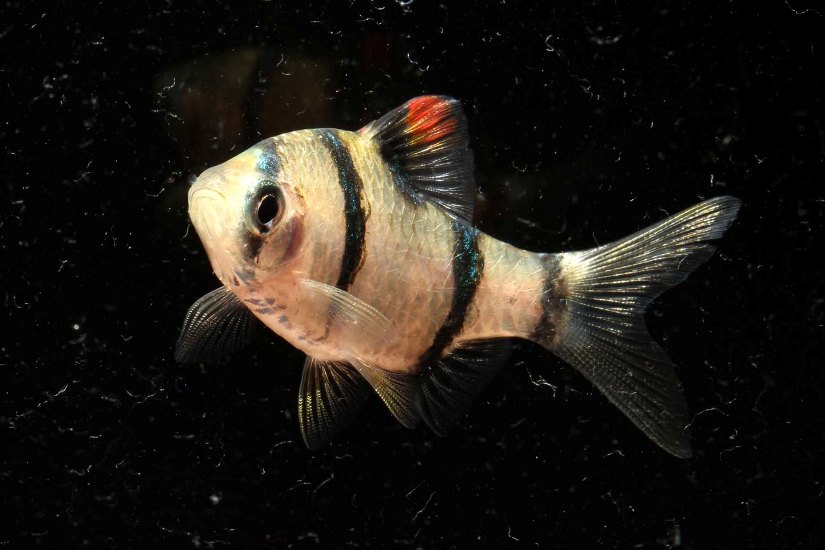
杂纹无须魮(Puntigrus partipentazona)是成群活动的小型横纹鲤科鱼,通常可在经过合理选择的温和混养缸中饲养。背鳍黑斑向体侧延伸,是区别于近缘种的重要线索。
分布与栖息地
分布于越南、柬埔寨、老挝、泰国和马来半岛多条水系,包括湄公河、湄南河及 Endau 河等。常见于植被密集的河段、缓流溪流,也进入天然湖泊;已有记录显示,它似乎偏好藻类和其他浮游植物较丰富的环境。
饲养环境
至少使用约 80 × 30 × 30 厘米的缸。装饰选择较灵活,布置充分的环境有利于显色。浮水植物、垂入水面的植被及沉木枝根可形成遮蔽和明暗层次,群体仍需有可一起活动的空间。
食性与喂食
它可能以昆虫幼虫、浮游动物为主要食物,并兼食植物材料和有机碎屑。人工饲养可用优质干粮搭配经常性的少量活饵或冻饵,如水蚤、丰年虾和摇蚊幼虫,保持食物多样。
习性与混养
至少养 8~10 条。它虽然总体温和,雄鱼仍会不断争夺群内地位和雌鱼,形成较松散的等级关系。挑选同伴时应同时考虑环境需求与群体互动,不能把“温和”理解为同种之间没有追逐。
雌雄区分
成年雄鱼略小、较纤细,体色更浓烈;雌鱼通常较丰满。
补充说明
背鳍的深色斑块向下覆盖约 3~4 行体鳞,下面有时还有额外暗斑。普通商品“虎皮”常是身份不明确的人工繁殖鱼,不能据商品称呼认定为本种。
图片
图片来自 SeriouslyFish,版权归各摄影者所有。
English
Overview
Puntigrus partipentazona is a small barred barb that usually fits a carefully selected peaceful community. A dark dorsal marking continuing down onto the body provides a useful distinction from related species.
Distribution & habitat
Records extend across Vietnam, Cambodia, Laos, Thailand and Peninsular Malaysia, in drainages including the Mekong, Chao Phraya and Endau. It typically occupies heavily vegetated river margins and slow streams, but also occurs in natural lakes. Observations suggest an association with waters containing substantial algae and other phytoplankton.
Aquarium setup
Provide a tank measuring at least about 80 × 30 × 30 cm. Furnishings can be chosen fairly freely, though a well-decorated aquarium should bring out its colors. Floating or trailing vegetation and branching wood supply shade and cover; retain space for the group to move together.
Diet & feeding
It probably eats mainly insect larvae and zooplankton while also browsing plant material and organic debris. In captivity, combine suitable quality dry foods with frequent small portions of live or frozen water fleas, brine shrimp and bloodworm.
Behaviour & compatibility
Keep no fewer than eight to ten. Its generally peaceful disposition coexists with persistent rivalry between males over females and their places in a loose hierarchy. Choose companions with matching requirements and account for these interactions; peaceful does not mean that members of the group never chase one another.
Sexual dimorphism
Adult males are slightly smaller, more slender and more intensely colored than females.
Notes
The dorsal blotch reaches across three or four scale rows on the body, sometimes with another dark mark below it. Many commercially bred “tiger barbs” have uncertain identities, so a trade label is insufficient evidence that a fish belongs to this species.
来源
- https://www.seriouslyfish.com/species/puntigrus-partipentazona(抓取于 2026-10-10)
puntigrus-partipentazona · 文件: data/species/puntigrus-partipentazona.md · 状态: 草稿