Pethia ticto · Ticto Barb
概要
| 字段 | 值 |
|---|---|
| 类别 | 鱼 |
| 学名 | Pethia ticto |
| 别名 | Cyprinus ticto、Barbus ticto、Puntius ticto |
| 分类 | 鲤形目 Cypriniformes › 鲤科 Cyprinidae › Pethia |
| 水体 | 淡水 |
| 原产地 | 孟加拉国、不丹、印度、缅甸、尼泊尔、巴基斯坦 |
| 成体体长 | 6.5 cm |
| 饲养难度 | 入门 |
| 最小水体 | 72 L |
| 最小缸长 | 80 cm |
| 群居方式 | 群游 |
| 性情 | 温和 |
| 外部数据 | seriouslyfish pethia-ticto;fishbase 4815 |
水质参数
| 参数 | 耐受范围 | 最适范围 | 单位 |
|---|---|---|---|
| 水温 | 18–25 | — | °C |
| pH | 6–7.5 | — | — |
| 总硬度 | 2–12 | — | dGH |
概述
Pethia ticto 是南亚分布记录广泛的小型温和群居鱼,但长期与其他相似种混淆。真正的雄鱼并不会像 Pethia padamya 那样在体侧出现鲜艳橙红色,商品名或红色照片都不足以确认身份。
分布与栖息地
模式产地位于孟加拉东南部,分布记录覆盖印度次大陆多地,包括巴基斯坦、印度、尼泊尔、不丹、孟加拉国和斯里兰卡。缅甸与中国云南的记录可能属于其他种,尚需核实。
似乎偏好浅溪与小支流,有时也出现在较高海拔,底床常为泥或淤泥。不过分布范围很大,各地水深、流速和浑浊程度均会变化,不能统一成一种固定溪流环境。
饲养环境
密植水草和深色底床通常有助于显色,浮水植物、沉木根枝可以柔化光线。布景选择灵活,过滤不需过强,但适度水流较合适,也能采用溪流式造景。
食性与喂食
天然可能搜食小昆虫、蠕虫、其他无脊椎动物,以及植物性物质和有机碎屑。缸中通常不难喂养,优质薄片、颗粒搭配规律的小型活饵或冷冻红虫、水蚤、丰年虾,部分干粮可含植物或藻成分。
习性与混养
通常温和,可与体型相近、水质相容的鲤科鱼、脂鲤及适合的鲶鳅类共同饲养。八至十条或更多的雌雄混合群体有利于自然行为,其他群居鱼也可提供安全感。
同种数量足够时,雄鱼更多地把注意力放在彼此展示和争取位次上,颜色会更充分。
雌雄区分
雄鱼一般较纤细,鳍色更浓,包括腹鳍。不要把体侧鲜艳橙红色当成本种雄鱼的必要特征。
繁殖
同属鱼常以散卵方式繁殖,不护卵。在成熟、布景密集的缸里偶尔可能自行出现少量鱼苗;若希望提高数量,近缘种常用独立的弱光繁殖缸,配细叶植物、产卵拖把或网隔保护落卵,并采用温和的海绵过滤。
同属经验通常使用软水、微酸至中性以及适温内偏暖的条件。亲鱼经活饵调养后,可放入一至两对,较大容器也可用雌雄各六条的小群。次晨产卵后及时移走成鱼,以免吃卵。
这类鱼卵通常约 24~48 小时孵化,再过约一天自由游动,先吃微型开口饵,再转微虫或丰年虾无节幼体。这是同属常用方法,本种不同来源群体的具体表现未明确。
补充说明
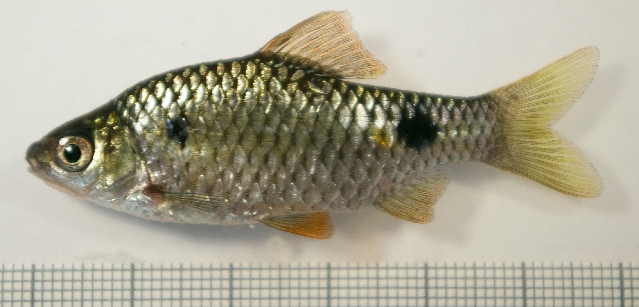
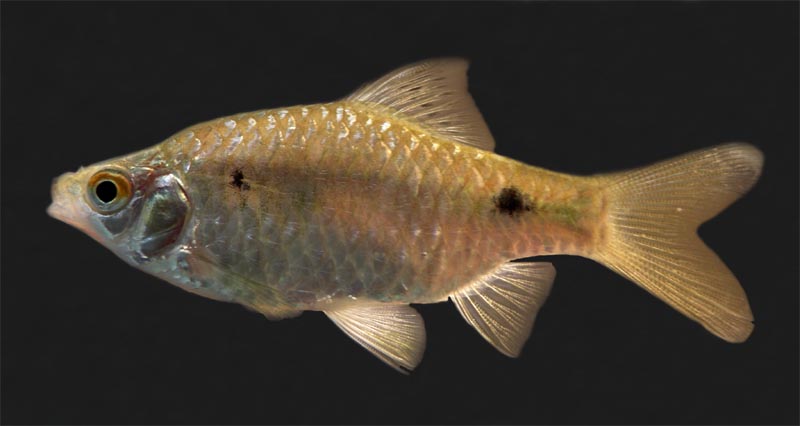
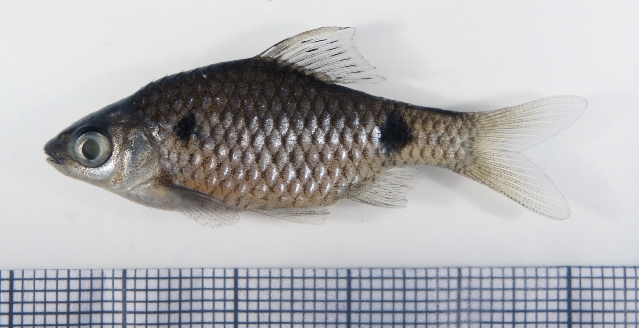
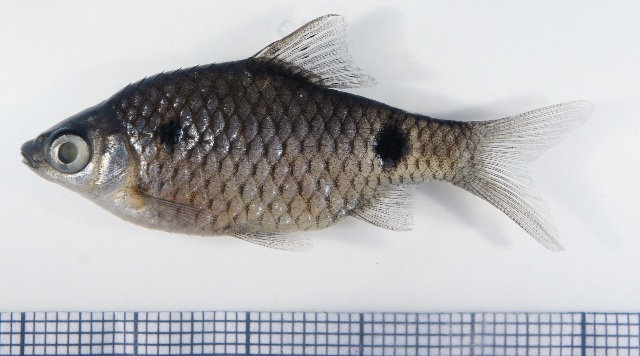
可结合不完整侧线、鳃后小斑和尾柄斑辨认。鳃后斑通常不超过一枚鳞片大小,靠近第三至第四枚侧线鳞;尾柄斑位于臀鳍基后部上方附近。背鳍常有一至两排不规则斑纹。
不同地域群体外观变化明显,历史上归在这一名称下的部分鱼已经被拆分为独立种。饲养和鉴定时应记录可靠产地,不能把所有双黑斑小型鲃都归为本种。
图片
图片来自 SeriouslyFish,版权归各摄影者所有。
English
Overview
Widely recorded across South Asia, Pethia ticto is a peaceful small shoaler with a history of mistaken identity. Unlike Pethia padamya, males do not develop a brilliant orange-red flank. A trade label or photograph of a red fish is therefore insufficient identification.
Distribution & habitat
The type locality lies in southeastern Bengal. Records extend across much of the Indian subcontinent, including Pakistan, India, Nepal, Bhutan, Bangladesh, and Sri Lanka. Reports from Myanmar and Yunnan in China may represent other species and require confirmation.
Shallow streams and minor tributaries, sometimes at elevation, appear to be favored, often with mud or silt substrates. Across such a broad range, however, depth, current, and turbidity vary substantially.
Aquarium setup
Dark substrate and dense planting provide an effective display. Floating vegetation and woody branches soften the lighting. Decoration is flexible, and moderate movement is useful without requiring powerful filtration; a stream-style aquarium can also suit the fish.
Diet & feeding
Small insects, worms, other invertebrates, plant material, and organic debris are presumed natural foods. Captive feeding is generally uncomplicated. Combine quality flakes or granules with regular live or frozen bloodworms, water fleas, and Artemia. Include some plant- or algae-enriched dry foods.
Behaviour & compatibility
Its generally peaceful disposition suits companions of similar size with compatible water requirements, including appropriate cyprinids, characins, catfishes, and loaches. A mixed-sex group of eight to ten or more supports natural behavior, while additional shoaling companions can provide reassurance.
With sufficient conspecifics, males spend more time displaying to one another and establishing their relative positions, showing stronger color in the process.
Sexual dimorphism
Males are usually slimmer, with stronger fin color, including the pelvic fins. Bright orange-red flanks should not be used as the defining feature of a male of this species.
Breeding
Members of the genus commonly scatter eggs without parental care. A few fry may occasionally survive in a mature, densely furnished aquarium. For better yields, methods used with relatives involve a separate dim spawning aquarium with fine plants, mops, or a mesh barrier protecting fallen eggs, plus gentle sponge filtration.
Soft, slightly acidic to neutral water and temperatures toward the warmer end of the appropriate range are commonly used. After live-food conditioning, introduce one or two pairs, or roughly six of each sex in larger quarters. Adults are removed after spawning, often the following morning, because they may eat the eggs.
Hatching in these fishes generally takes about 24–48 hours, followed by swimming roughly a day later. Very small starter foods precede microworms or Artemia nauplii. These are general methods for the genus rather than a confirmed account for every population assigned to P. ticto.
Notes
Useful features include an incomplete lateral line, a small humeral mark, and a caudal-peduncle blotch. The humeral spot is usually no larger than one scale and lies around the third or fourth lateral-line scale. The rear blotch lies near the level above the back of the anal-fin base. One or two irregular rows of spots commonly mark the dorsal fin.
Geographic variation is considerable, and some fishes historically placed under this name have already been recognized as separate species. Reliable locality information matters; two dark flank marks alone do not identify every small barb as P. ticto.
来源
- https://www.seriouslyfish.com/species/pethia-ticto(抓取于 2026-10-10)
pethia-ticto · 文件: data/species/pethia-ticto.md · 状态: 草稿