Pethia tiantian
概要
| 字段 | 值 |
|---|---|
| 类别 | 鱼 |
| 学名 | Pethia tiantian |
| 别名 | Puntius tiantian |
| 分类 | 鲤形目 Cypriniformes › 鲤科 Cyprinidae › Pethia |
| 水体 | 淡水 |
| 原产地 | 缅甸 |
| 成体体长 | 5 cm |
| 饲养难度 | 入门 |
| 最小水体 | 68 L |
| 最小缸长 | 75 cm |
| 群居方式 | 群游 |
| 性情 | 温和 |
| 外部数据 | seriouslyfish pethia-tiantian;fishbase 62116 |
水质参数
| 参数 | 耐受范围 | 最适范围 | 单位 |
|---|---|---|---|
| 水温 | 15–25 | — | °C |
| pH | 6.5–7.5 | — | — |
| 总硬度 | 1–5 | — | dGH |
概述
Pethia tiantian 来自缅甸北部山区,是较适合有季节温差环境的小型温和群居鱼。市场上另有未描述的缅甸产鱼使用相同商品名,完整侧线等形态特征比标签更有鉴别价值。
分布与栖息地
仅知分布于克钦邦偏远的葡萄地区,见于伊洛瓦底江上游 Mali Hka 河及其 Nan Hto Chaung 支流。
后者穿过森林,采集河段约 3 m 宽,多数位置不到 0.5 m 深,清澈无色的水在石、砾和沙底上较快流动,间有浅急流。水中未见水草,岸边植被提供浓密遮荫。Mali Hka 主河道则超过 100 m 宽,曾在浅水石岸边采到个体。
饲养环境
深色底床、密植水草、浮水植物与沉木根枝有助于显色和遮光。也可以布置为有适度水流的溪流缸,过滤无需过强。
原生地有明显季节变化,不宜常年维持在适温上限。是否需要加热应取决于实际室温能否保持在适温范围内,而不是简单视作热带鱼固定高温饲养。
食性与喂食
天然可能搜食藻、硅藻、碎屑及小型昆虫、蠕虫、甲壳动物等。缸中通常容易喂养,可用优质薄片、颗粒搭配小型活饵和冷冻红虫、水蚤、丰年虾,并提供含植物或藻成分的干粮。
习性与混养
性情温和,适合与体型和水质需求相容的小型鱼共同饲养。建议八至十条或更多的雌雄混合群,其他群居鱼有助于缓解紧张。
群体足够大时,雄鱼相互展示、争取位次,体色和活动会更自然。
雌雄区分
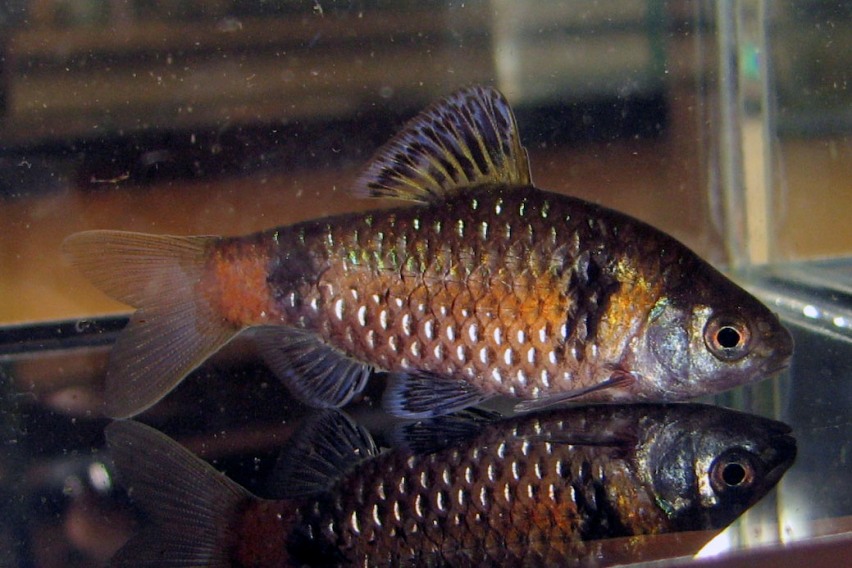
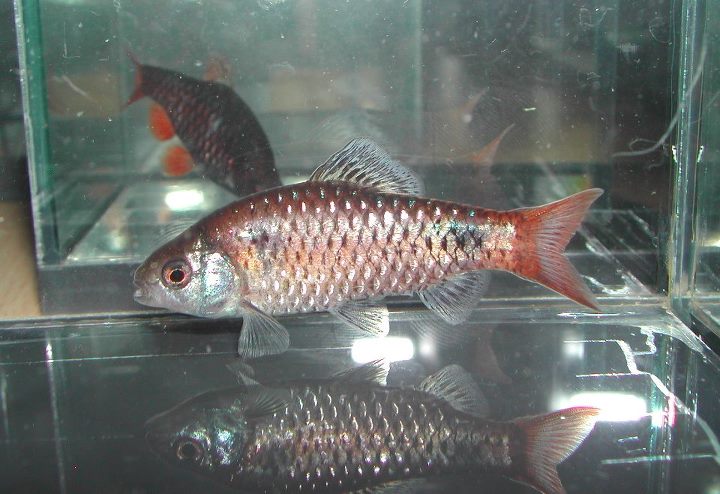
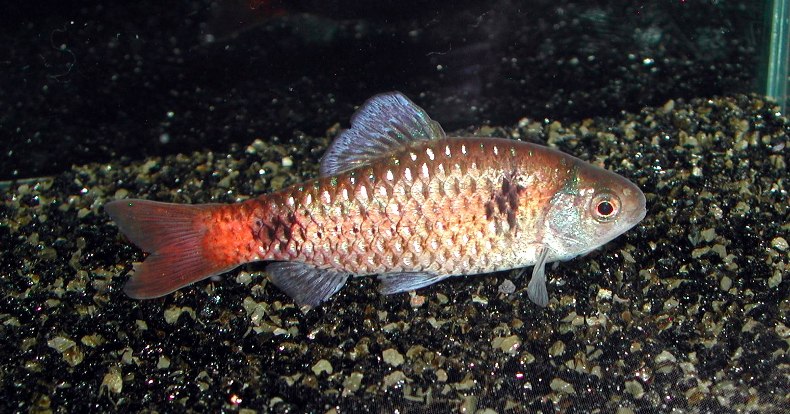
雄鱼成年后较小、较瘦,色彩更浓,繁殖状态下体侧可呈铜橙色;雌鱼通常更丰满。
繁殖
尚无本种成功人工繁殖的明确记录。近缘种的经验可作为尝试方向:使用成熟、弱光的独立繁殖缸,配置细叶植物、产卵拖把或让卵落下而亲鱼够不到的网隔,并用温和的气动海绵过滤。
近缘种常在近中性、适温范围偏暖的水中产卵。可先用活饵调养,再放入一至两对;空间更大时也有雌雄各六条的群体繁殖方法。通常次晨产卵,随后移走亲鱼,以免卵被吃掉。
这类方法中的卵约 24~48 小时孵化,再约一天自由游动,先喂微型开口饵,长大后再用微虫和丰年虾无节幼体。这些时间和方法属于近缘种经验,不能视为本种已验证流程。
补充说明
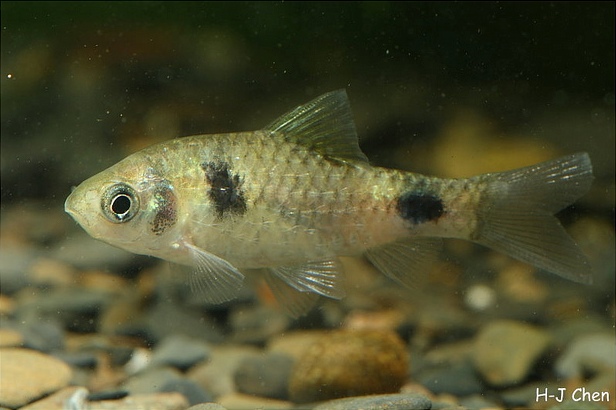
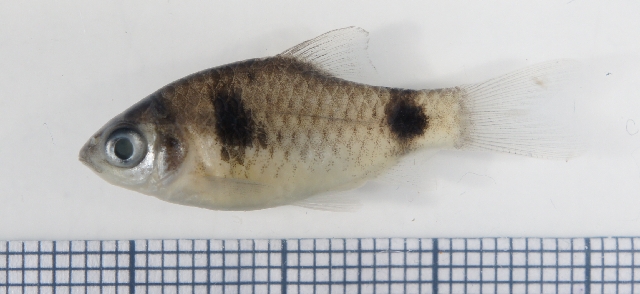
本种的侧线完整延伸到尾鳍基部,能与若干外观相近但侧线短的种区分。与 Pethia didi 相比,体形较纤细、背鳍较短;背鳍和臀鳍各有一道深色条纹,而后者背鳍具有两组深色斑纹。
未分枝背鳍末条较细、柔软,带细锯齿。鉴定时应综合这些特征,不能仅凭体侧黑斑或商品所称的缅甸产地。
图片
图片来自 SeriouslyFish,版权归各摄影者所有。
English
Overview
From the mountains of northern Myanmar, Pethia tiantian is a peaceful small shoaler suited to seasonal temperature variation. Trade names can be misleading because an undescribed Myanmar fish is also sold under its name. Identification requires anatomical details such as the complete lateral line.
Distribution & habitat
Its known range is restricted to the remote Putao area of Kachin State, in the upper Irrawaddy system. Records come from the Mali Hka and its tributary, Nan Hto Chaung.
At the forest tributary site, clear, colorless water ran fairly rapidly through occasional riffles over rock, gravel, and sand. The channel was roughly 3 m across and generally less than 0.5 m deep. Bank vegetation shaded the water, but submerged plants were absent. A specimen from the much wider Mali Hka was collected along a shallow rocky margin; that channel exceeded 100 m in width.
Aquarium setup
Use dark substrate and dense planting for good presentation, with floating plants and woody branches providing shade. A stream-style arrangement with moderate movement is another option; strong filtration is not essential.
Seasonal variation matters more than constant tropical warmth. Avoid maintaining the upper temperature limit continuously. Whether heating is needed depends on the actual room temperature remaining within the suitable range.
Diet & feeding
Wild fish are presumed to forage on algae, diatoms, debris, and small insects, worms, and crustaceans. Captive specimens generally feed readily. Combine quality prepared foods with regular live or frozen bloodworms, water fleas, and Artemia, including plant- or algae-based ingredients in part of the dry-food ration.
Behaviour & compatibility
Peaceful behavior allows suitable small companions with matching environmental needs. Keep a mixed-sex shoal of eight to ten or more; other shoaling fishes can also reduce nervousness.
Larger groups allow males to display and establish rank among themselves, promoting more natural activity and stronger coloration.
Sexual dimorphism
Mature males are smaller, slimmer, and more intensely colored. Their sides become copper-orange in breeding condition, whereas females have a fuller outline.
Breeding
A successful breeding account specific to this species is lacking. Methods used with relatives provide an experimental starting point: a mature, dimly lit spawning aquarium, fine plants or spawning mops, or a mesh barrier that leaves fallen eggs beyond the adults' reach. A gently running air-powered sponge filter is suitable.
Related species often spawn in near-neutral water toward the warmer end of their appropriate range. Condition adults with live foods, then introduce one or two pairs, or groups of about six of each sex where space permits. Spawning commonly follows the next morning, after which adults are removed to prevent egg predation.
In those related fishes, hatching takes roughly 24–48 hours and swimming begins around a day later. Tiny starter foods precede microworms and Artemia nauplii. These timings and procedures are comparative guidance, not a demonstrated protocol for P. tiantian.
Notes
The lateral line reaches the caudal base, unlike the shortened line of several similar species. Compared with Pethia didi, the body is more slender and the dorsal fin shorter. A single dark stripe crosses each of the dorsal and anal fins, rather than the two dorsal marking series of that relative.
The last unbranched dorsal ray is thin and flexible with fine serrations. These combined features are more dependable than flank blotches or a Myanmar label alone.
来源
- https://www.seriouslyfish.com/species/pethia-tiantian(抓取于 2026-10-10)
pethia-tiantian · 文件: data/species/pethia-tiantian.md · 状态: 草稿