Pethia padamya · Odessa Barb
概要
| 字段 | 值 |
|---|---|
| 类别 | 鱼 |
| 学名 | Pethia padamya |
| 别名 | Puntius padamya |
| 分类 | 鲤形目 Cypriniformes › 鲤科 Cyprinidae › Pethia |
| 水体 | 淡水 |
| 原产地 | 缅甸 |
| 成体体长 | 4.6 cm |
| 饲养难度 | 入门 |
| 最小水体 | 72 L |
| 最小缸长 | 80 cm |
| 群居方式 | 群游 |
| 性情 | 温和 |
| 外部数据 | seriouslyfish pethia-padamya;fishbase 64645 |
水质参数
| 参数 | 耐受范围 | 最适范围 | 单位 |
|---|---|---|---|
| 水温 | 16–25 | — | °C |
| pH | 6.5–8.5 | — | — |
| 总硬度 | 5–20 | — | dGH |
概述
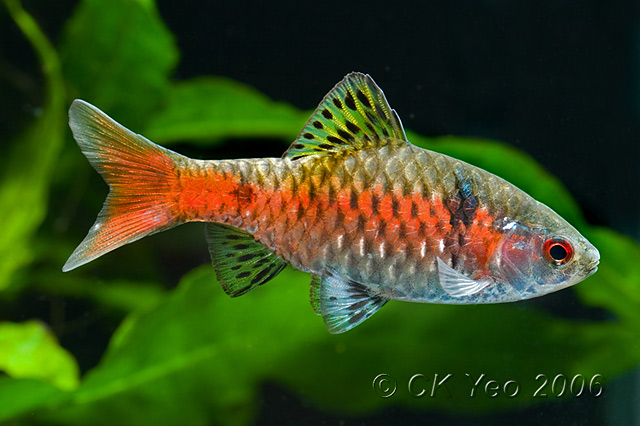
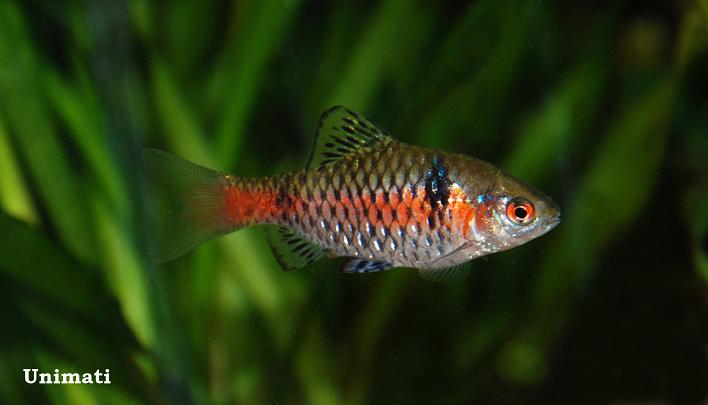
Pethia padamya 以雄鱼体侧宽阔的红橙色带著称,英文常称“Odessa Barb”。它是自然存在的独立物种,并非因最早在乌克兰贸易中出现就原产那里,也不是已经证实的杂交鱼。
分布与栖息地
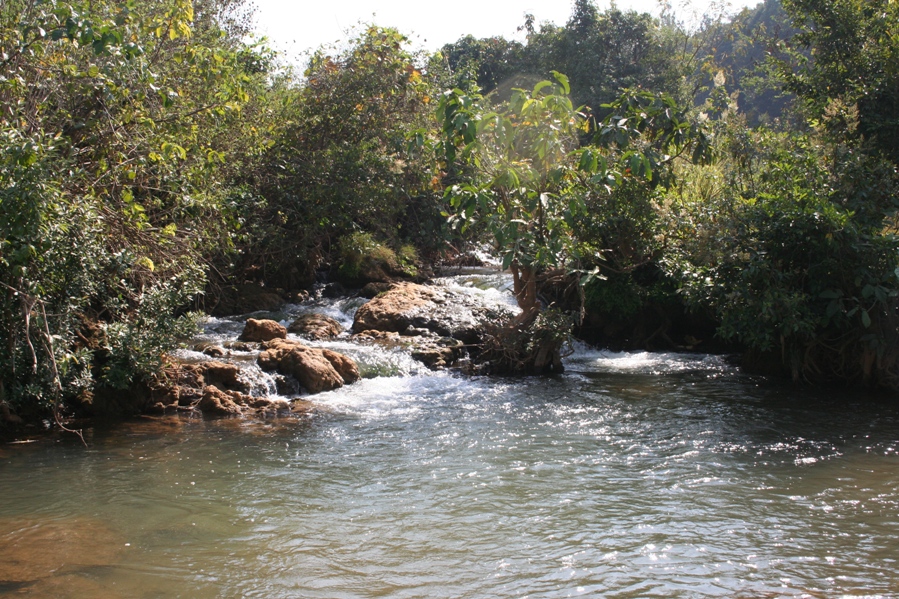
已知来自缅甸中部,模式鱼采于曼德勒地区 Toe Gyi 村一处由小溪补水的人工池塘,钦敦江下游及主河道附近小塘也有记录。
采点水通常较清,缺少水草,经过石灰岩地区,底部有砾石或泥。单次特殊野外环境不宜直接照搬到长期饲养条件中。
饲养环境
密植、深色底床通常有利于显色,浮水植物和沉木根枝可减光并形成自然遮蔽。过滤不必很强,适度水流受到欢迎,也可适应溪流式布景。
食性与喂食
天然可能杂食,搜食蠕虫、昆虫和其他小型无脊椎动物,并摄入植物物质、有机碎屑。缸中容易投喂,优质薄片、颗粒配规律的小型活饵或冷冻红虫、水蚤、丰年虾,部分干粮应有植物或藻类成分。
习性与混养
通常很温和,适合经过筛选的综合缸。体型相近、适应相似水质和水流的群游鱼是较好的方向,合适鳅类和底栖鲤科鱼也可考虑。
建议八至十条或更多、雌雄混合。其他相容群游鱼能增加安全感,雄鱼争取雌鱼注意或群体地位时也更显色。
雌雄区分
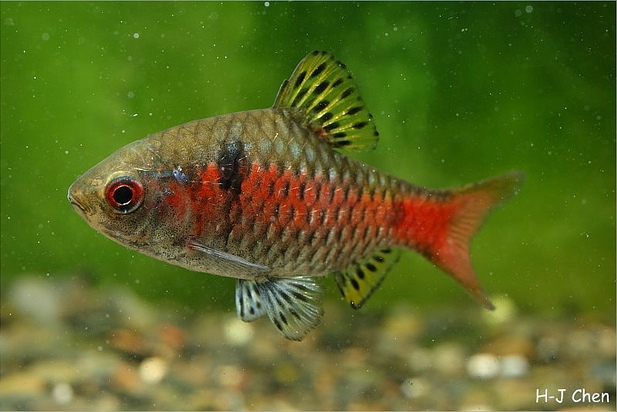
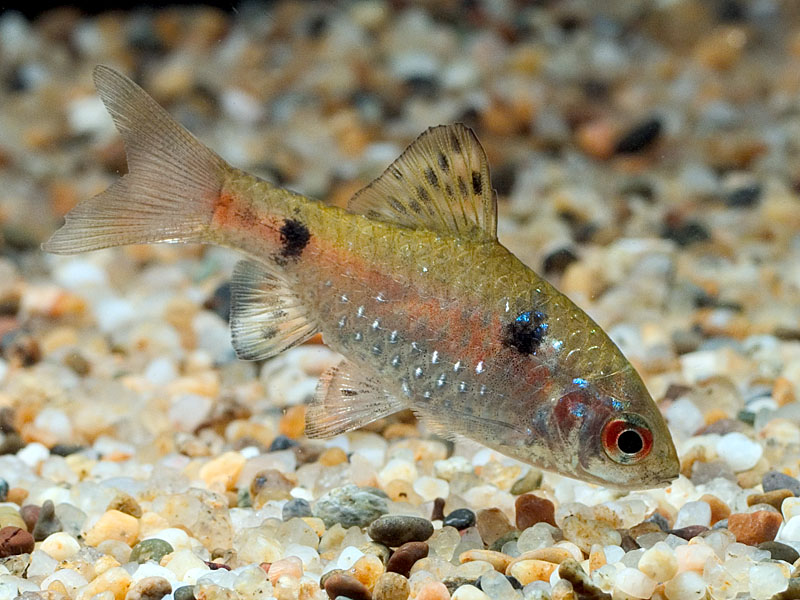
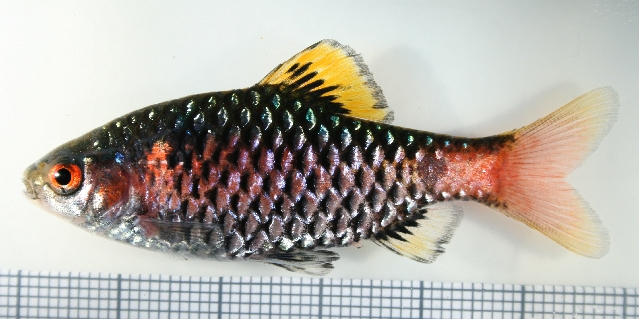
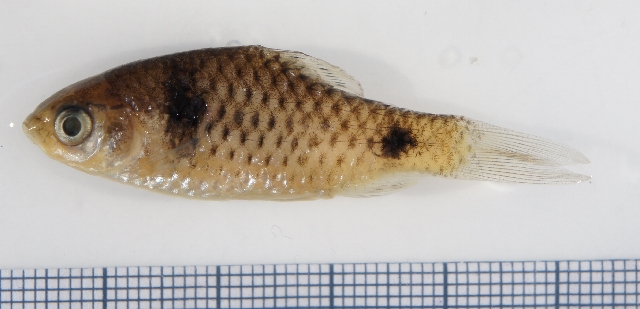
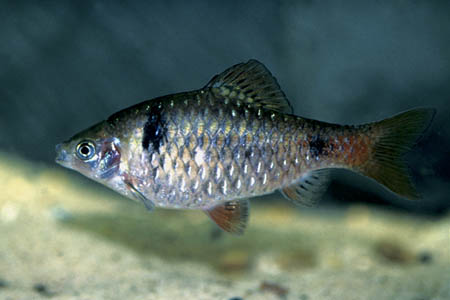
雄鱼体侧有宽阔鲜红橙带,鳍上的暗纹较清晰。成熟雌鱼通常身体更厚,体色朴素得多。
繁殖
可以本属散卵、无亲鱼照护的通用方法作尝试框架,但不视为每个步骤都已在本种验证。成熟缸可能自然留下少量鱼苗,要提高存活率可用独立弱光环境,隔卵网、塑料草垫、玻璃珠、细叶草或拖把保护卵。
水保持成熟、接近中性,温度取适温范围上端,气动过滤或气石供氧。可用调理好的一至两对,或在更大缸中雌雄各约六条,可能次晨产卵。发现卵后移走成鱼;通用记录约 24~48 小时孵化,再约一天自由游动,先喂微小纤毛虫类食物,长大后转微虫和丰年虾无节幼体。
补充说明
1970 年代初即进入贸易,因首先出现在乌克兰而得“Odessa”称呼,来源在 2003 年前一直不明,2008 年十月正式描述。过去关于杂交、亚种或染色的猜测不能代替野生种群证据。
养殖个体似乎在受惊时较能保持体色,长期选色可能有关,但这一解释尚未验证。上颌须、较竖长的肩斑和雄鱼鳍上的黑边、多排黑点也是鉴别时应注意的特征。
图片
图片来自 SeriouslyFish,版权归各摄影者所有。
English
Overview
A broad red-orange male flank band makes Pethia padamya, the Odessa Barb, distinctive. It is a naturally occurring species. Early appearance in Ukrainian trade neither makes Ukraine its native range nor establishes a hybrid origin.
Distribution & habitat
Known localities are in central Myanmar. Type fish came from a stream-fed artificial pond at Toe Gyi in Mandalay, with additional records from the lower Chindwin and a nearby pond.
Collection waters were generally clear and plant-free over gravel or mud in a limestone-influenced area. Exceptional individual field observations should not replace normal aquarium conditions.
Aquarium setup
Dense plants and a dark bottom enhance color, while floating shade and roots create cover. Strong filtration flow is unnecessary, though some water movement is appreciated and stream-style layouts can work.
Diet & feeding
Omnivorous foraging on worms, insects, other small invertebrates, plant material, and detritus is suspected in nature. Captive feeding is straightforward. Offer quality flakes or granules with regular small live or frozen bloodworms, water fleas, and Artemia, including plant- or algae-enriched preparations.
Behaviour & compatibility
It is usually very peaceful in a carefully chosen community. Similar-sized schooling fishes with comparable environmental needs are good candidates, along with appropriate loaches and bottom cyprinids.
Choose eight to ten or more in a mixed-sex group. Other compatible schooling fish can add reassurance, while rival males display stronger color during courtship or rank-related interactions.
Sexual dimorphism
Males carry a broad vivid red-orange side band and more sharply defined fin markings. Mature females are fuller-bodied and much plainer.
Breeding
The genus's general nonparental egg-scattering method supplies a possible framework rather than a sequence verified step by step for this species. Mature aquariums may retain occasional young; a separate dim setup can improve survival using mesh, synthetic grass, marbles, fine plants, or mops.
Use mature near-neutral water toward the warmer end of the suitable temperature range and gentle aeration. Try one or two conditioned pairs, or roughly six of each sex in larger quarters. Spawning may follow next morning. Remove adults when eggs appear. Generic accounts give 24–48 hours to hatch and another day to free swimming, with infusoria-grade food followed by microworms and Artemia nauplii.
Notes
It entered trade in the early 1970s, taking its Odessa label from Ukraine. Origin remained uncertain until 2003, and formal description followed in October 2008. Earlier hybrid, subspecies, or dyeing proposals cannot override the discovery of natural populations.
Farmed fish seem to retain color better under stress. Selection for color is a possible explanation, not a verified one. Maxillary barbels, an elongated shoulder mark, and dark male fin margins with multiple spot rows also help identify it.
来源
- https://www.seriouslyfish.com/species/pethia-padamya(抓取于 2026-10-10)
pethia-padamya · 文件: data/species/pethia-padamya.md · 状态: 草稿