黑带无须魮 · Black Ruby Barb
概要
| 字段 | 值 |
|---|---|
| 类别 | 鱼 |
| 学名 | Pethia nigrofasciata |
| 别名 | 黑条魮、黑帶無鬚魮、黑條魮、Barbus nigrofasciatus、Puntius nigrofasciatus |
| 分类 | 鲤形目 Cypriniformes › 鲤科 Cyprinidae › Pethia |
| 水体 | 淡水 |
| 原产地 | 斯里兰卡 |
| 成体体长 | 5.5 cm |
| 饲养难度 | 入门 |
| 最小水体 | 72 L |
| 最小缸长 | 80 cm |
| 群居方式 | 群游 |
| 性情 | 温和 |
| 外部数据 | seriouslyfish pethia-nigrofasciata;fishbase 6144 |
水质参数
| 参数 | 耐受范围 | 最适范围 | 单位 |
|---|---|---|---|
| 水温 | 20–27 | — | °C |
| pH | 5.5–7.5 | — | — |
| 总硬度 | 2–15 | — | dGH |
概述
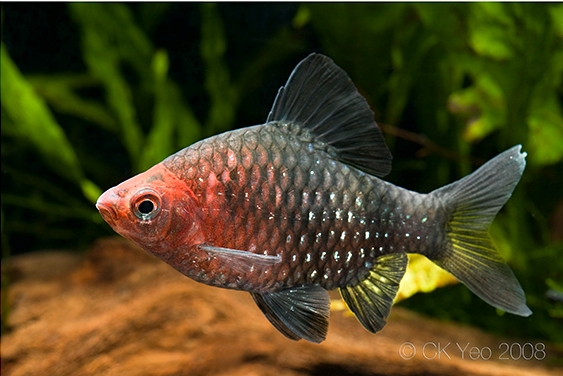
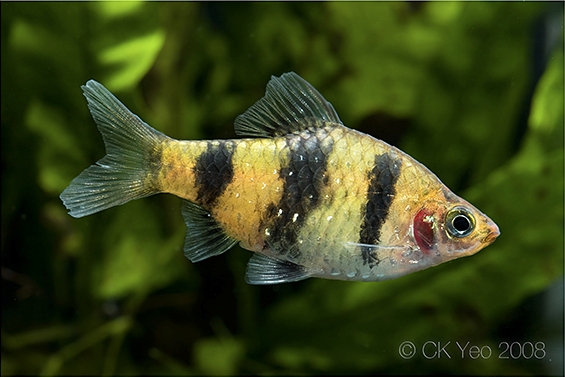
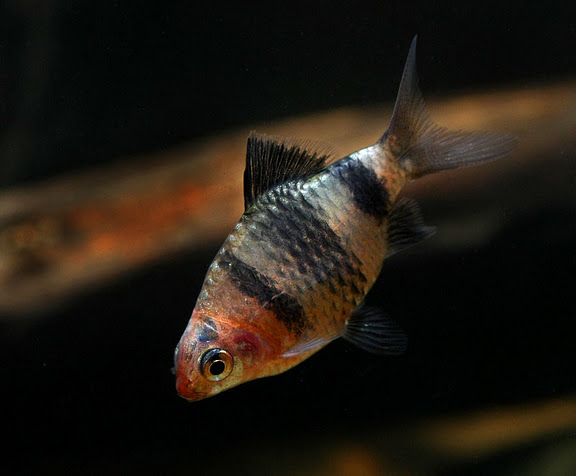
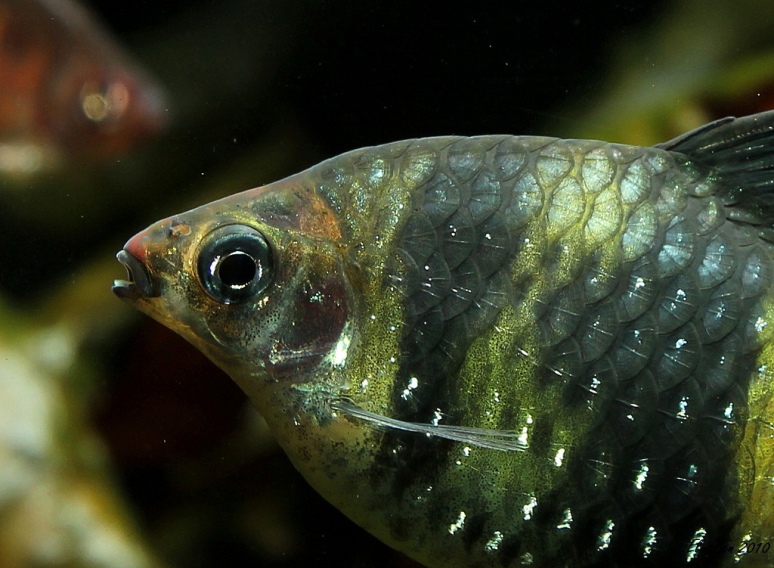
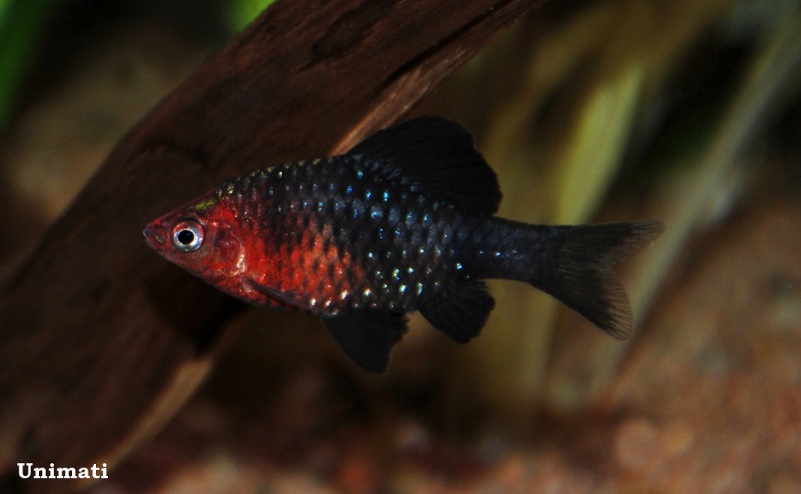
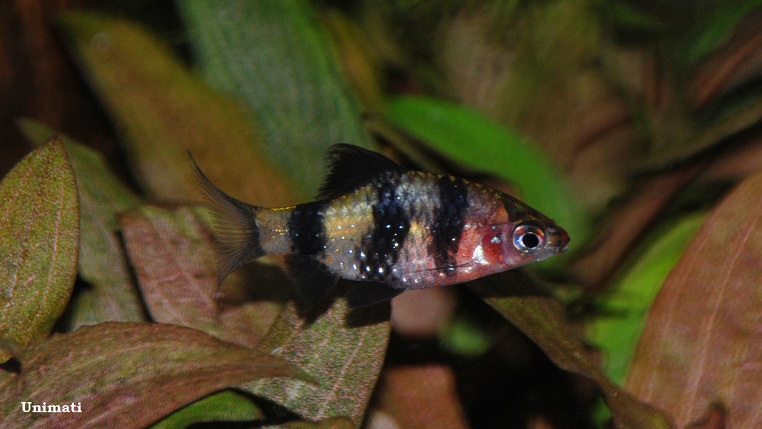
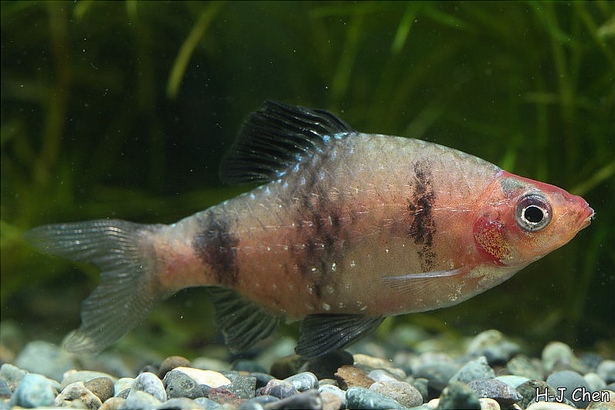
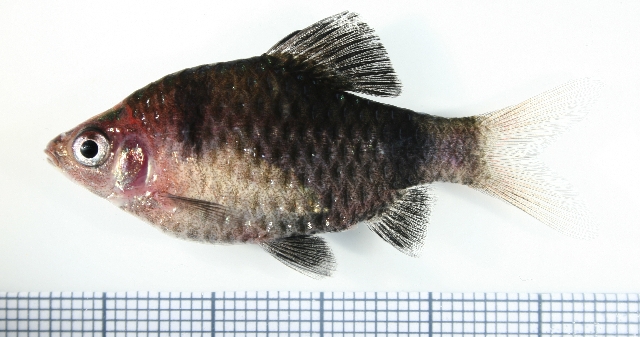
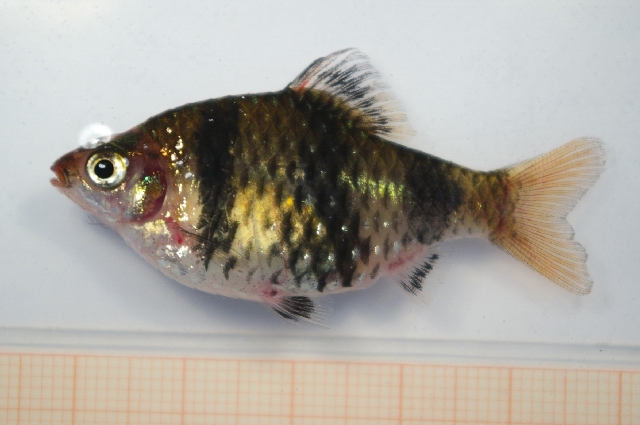
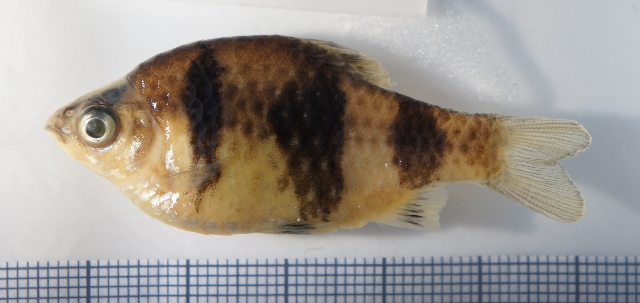
黑带无须魮(Pethia nigrofasciata)体侧有三处深色竖纹,繁殖雄鱼头部和前半身会转为红紫色。人工繁殖鱼适应水质的能力较强,野生个体则可能更偏好硬度较低、弱酸至中性的水体。
分布与栖息地
原生于斯里兰卡西南湿润区的凯拉尼河、尼尔瓦拉河及两者之间的小水系。典型环境是林下浅溪,水清或略带颜色,沙底覆盖落叶、细枝和树枝,岸边植物与根系提供遮蔽,水中大型水草往往不多。森林砍伐和水质退化威胁这些狭小栖地。
饲养环境
深色底砂和茂密水草有助于发色,浮水植物、沉木和少量落叶可营造更自然的阴暗环境。过滤无需过强,保留适度水流即可。野生鱼可能更适应偏软水,不能把人工品系的广泛适应力无条件套用到新到野生鱼。
食性与喂食
野外可能利用硅藻、藻类、碎屑及多种小型无脊椎动物。人工环境通常容易喂食,优质干粮与红虫、水蚤、丰年虾等活饵或冷冻饵搭配,部分干粮应含植物或藻类成分。
习性与混养
通常十分温和,可与体型、环境需求相容的鱼混养。建议六至十尾或更多成群,减少胆怯并让雄鱼在同种竞争者面前充分展示颜色。
雌雄区分
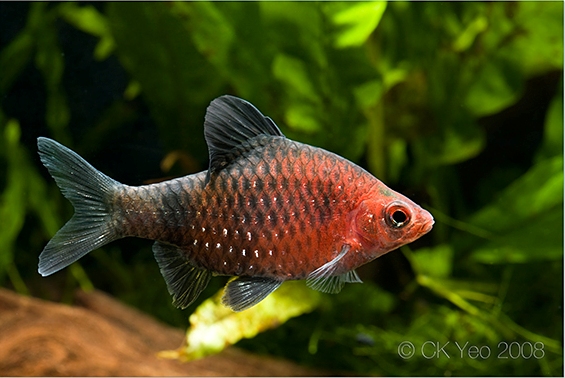
雄鱼更小、更修长且鲜艳。繁殖期全身花纹加深,头部和前段身体出现红紫色,是比平时体色更明显的特征。
繁殖
可参考同属散卵鱼的方法,另设光线较暗的繁殖缸,使用成熟水并温和供氧,用网格、细叶植物或产卵拖把隔开亲鱼与卵。亲鱼调养后成对或成群进入,产卵后移出以减少吃卵。鱼苗早期需要极细小开口饵,之后再接续微虫、丰年虾幼体。
补充说明
强烈的繁殖雄鱼色彩有助于与同样带三条深纹的近缘鱼区分。有关选择性采集减少鲜艳野生个体的说法仍带推测性,不能作为颜色差异的唯一解释。
图片
图片来自 SeriouslyFish,版权归各摄影者所有。
English
Overview
Three dark flank markings characterize Pethia nigrofasciata, while reproductive males develop a reddish-purple head and forebody. Farmed stock is comparatively adaptable; wild fish may prefer softer water with mildly acidic to neutral chemistry.
Distribution & habitat
The species is endemic to southwestern Sri Lanka's wet zone, including the Kelani, Nilwala and intervening smaller drainages. Shaded shallow forest streams have clear or lightly tinted water over sand covered with leaves and fallen wood. Marginal roots provide shelter, while large aquatic plants may be scarce. Forest clearance and deteriorating water quality threaten these habitats.
Aquarium setup
Dark substrate, dense planting, floating cover and wood encourage good color. Some leaf litter adds a natural touch. Strong filtration current is unnecessary, though moderate movement is appreciated. Do not assume newly obtained wild fish share every aspect of farmed stock's adaptability.
Diet & feeding
Wild feeding probably includes algae, diatoms, debris and varied small invertebrates. Aquarium fish readily accept good prepared foods supplemented with live or frozen items. Include plant or algal ingredients in part of the dry-food menu.
Behaviour & compatibility
Usually very peaceful, it suits compatible community fishes of appropriate size. Six to ten or more conspecifics reduce nervousness and encourage stronger displays between males.
Sexual dimorphism
Males are smaller, slimmer and more colorful. In reproductive condition the pattern darkens and the front of the body becomes red-purple, making sexual differences much clearer.
Breeding
General methods for related egg scatterers offer a practical approach. Use a separate dim aquarium with mature water, gentle aeration and mesh, fine plants or mops protecting eggs. Introduce conditioned pairs or a group, then remove adults after spawning. Fry require microscopic starter foods before they can accept larger live foods.
Notes
The distinctive breeding colors of males help separate the species from relatives with similar dark bars. Suggestions that selective collection has reduced vivid wild forms remain tentative rather than a complete explanation of color variation.
来源
- https://www.seriouslyfish.com/species/pethia-nigrofasciata(抓取于 2026-10-10)
pethia-nigrofasciata · 文件: data/species/pethia-nigrofasciata.md · 状态: 草稿