Pethia nigripinnis
概要
| 字段 | 值 |
|---|---|
| 类别 | 鱼 |
| 学名 | Pethia nigripinnis |
| 别名 | Puntius nigripinnis |
| 分类 | 鲤形目 Cypriniformes › 鲤科 Cyprinidae › Pethia |
| 水体 | 淡水 |
| 原产地 | 印度 |
| 成体体长 | 4.5 cm |
| 饲养难度 | 中等 |
| 最小水体 | 81 L |
| 最小缸长 | 90 cm |
| 群居方式 | 群游 |
| 性情 | 温和 |
| 外部数据 | seriouslyfish pethia-nigripinnis;fishbase 66493 |
| 领地性 | 是 |
水质参数
| 参数 | 耐受范围 | 最适范围 | 单位 |
|---|---|---|---|
| 水温 | 16–21 | — | °C |
| pH | 5.5–7.5 | — | — |
| 总硬度 | 2–12 | — | dGH |
概述
Pethia nigripinnis 是偏好凉水的西高止山溪鱼,成年雄鱼多枚鳍呈深黑,尾鳍红色。雄鱼会占据小领域,因此即使性情总体温和,也需要分隔视线及足够底面积,不能直接套用普通热带综合缸。
分布与栖息地
记录来自印度喀拉拉邦 Wayanad 的 Kalindhi 溪,属卡比尼河支流,以及泰米尔纳德邦尼尔吉里山区 Moyar 水系的 Kakkan Halla,可能限于西高止山南部。
天然是凉爽流水山溪,常有岩块、卵石、细沙淤泥及落叶,岸边草木、竹叶和根系遮蔽。有采点未发现水草,雄鱼分别占据根系、落叶间的小领域,雌鱼则两三条成小群。某拦水坝下方流速较快处没有采到本种,因此不能简单理解为越急的水越好。
饲养环境
弱光、深色底床和密植有利于显色,也可做石砾、圆石、沉木的溪流式环境,附生蕨类和水榕作补充。多雄饲养需比最低规格更宽敞,并用根枝和植物提供躲避、遮断视线。
只用成熟稳定的缸,每周换水约 30%~50%。保持适合的凉水条件,是筛选混养鱼时首先要考虑的限制。
食性与喂食
天然可能搜食藻、硅藻、有机碎屑及小型无脊椎动物。缸中容易喂养,可用优质薄片、颗粒,规律补充红虫、水蚤、丰年虾等,部分干粮含植物或藻类成分。
习性与混养
较温和,但凉水需求使它不适合多数常规热带综合缸。专门维持,或搭配体型接近、需要相似环境的鱼较合适。
它形成松散群体和等级,并非始终同步群游。雄鱼间会较量、增强体色,弱鱼需要能退出视线的区域,多雄时不能只增加数量而不扩展空间。
雌雄区分
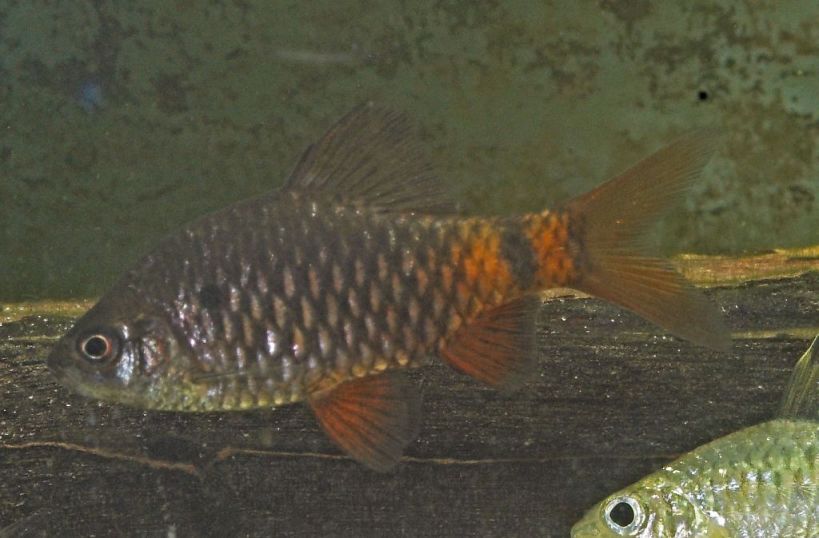
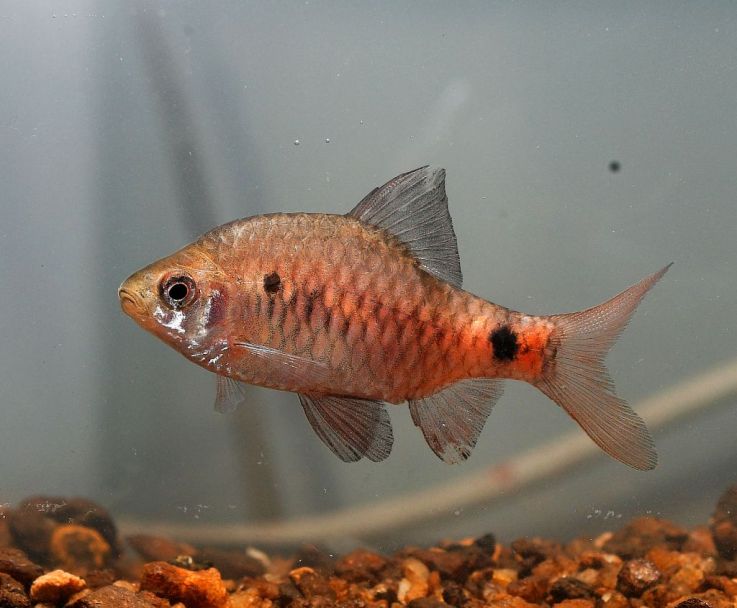
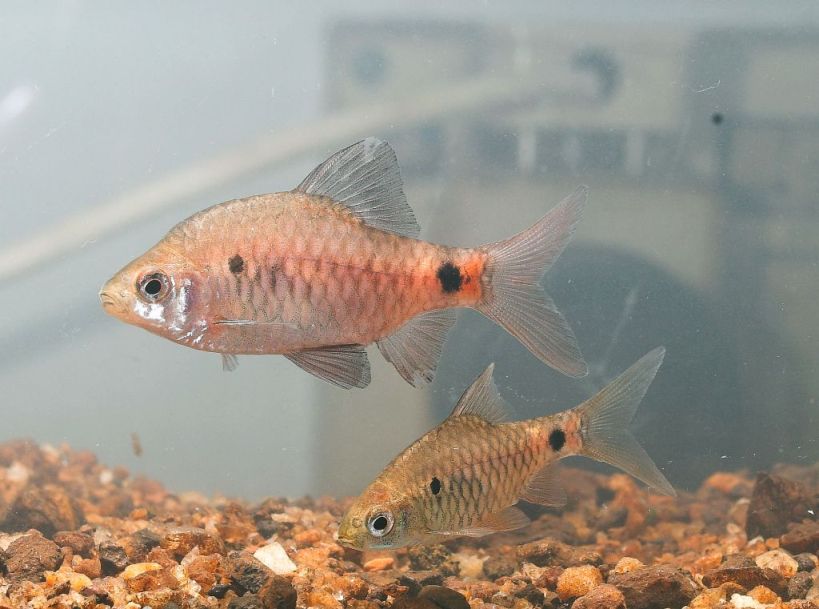
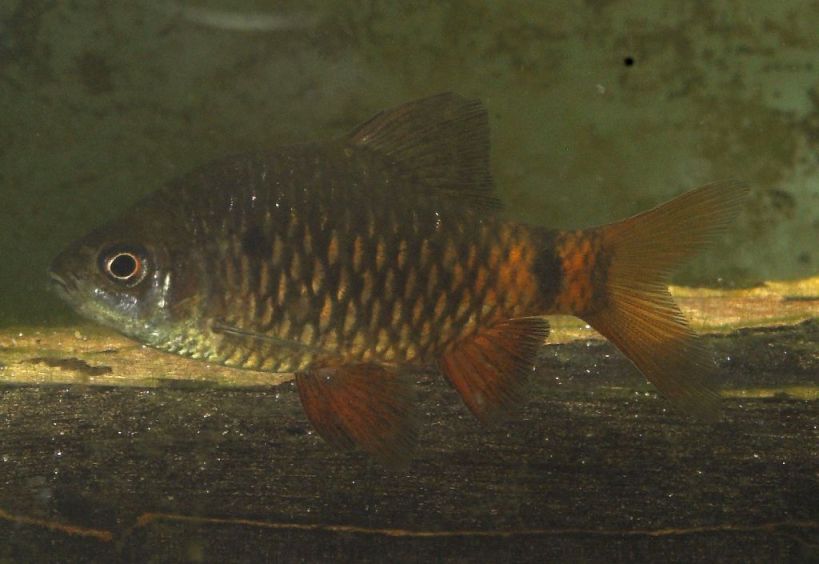
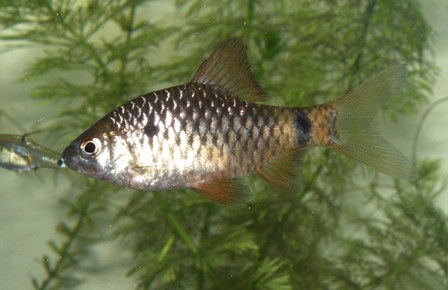
雄鱼明显纤细,繁殖状态下色彩尤其浓,背鳍、腹鳍和臀鳍呈深黑,尾鳍鲜红;雌鱼鳍大致透明。鉴别描述还提到成年雄鱼胸鳍为黑色。
繁殖
本种家庭繁殖尚无确定方法,可参考近缘小型鲤科鱼散卵且无亲鱼照护的框架。另设弱光成熟水环境,使用隔卵网、塑料草垫、玻璃珠、细叶草或产卵拖把,水弱酸至中性、温度位于凉水适温上端,以气动过滤或气石供氧。
可尝试调理后的一至两对,或在更大空间中雌雄各约六条。近缘流程预期可能次晨产卵,见卵后移出成鱼。孵化常约 24~48 小时,再约一天自由游动;初期微小纤毛虫食物,长大后再喂微虫或丰年虾无节幼体。以上是近缘参考,不是保证的本种时间表。
补充说明
肩部黑点与尾柄环状暗带、无口须及成年雄鱼黑鳍是较有用的识别组合。尾柄暗带并非所有近缘种都相同,选鱼时应同时留意性别、成熟程度与体纹。
图片
图片来自 SeriouslyFish,版权归各摄影者所有。
English
Overview
A cool-water Western Ghats fish, Pethia nigripinnis develops several black fins and a red tail in adult males. Males occupy small territories, so generally peaceful behavior still requires space and interrupted sight lines. It is not a straightforward fit for a warm tropical community.
Distribution & habitat
Records come from the Kalindhi, a Kabini tributary in Kerala's Wayanad, and Kakkan Halla in the Moyar system of Tamil Nadu's Nilgiri Hills. It appears restricted to the southern Western Ghats.
Cool flowing streams contain rock, cobbles, silt, sand, and leaves, with bankside roots and vegetation providing cover. Some sites lack aquatic plants. Males were found individually among roots and leaves, while females formed groups of two or three. No specimens occurred in the faster section below one small dam, so maximum current is not the objective.
Aquarium setup
Dim light, a dark bottom, and dense planting enhance color. A stream arrangement of rocks, gravel, and roots with attached ferns or Anubias is another option. Multiple males require more than minimum accommodation and numerous visual barriers.
Use mature stable water and change approximately 30–50% weekly. Its cool-water requirement is a primary constraint when choosing companions.
Diet & feeding
Algae, diatoms, detritus, and small invertebrates are presumed natural foods. Aquarium feeding is easy: quality flakes or granules can be supplemented with regular bloodworms, water fleas, and Artemia. Include some plant- or algae-enriched preparations.
Behaviour & compatibility
It is relatively peaceful but poorly matched to most warm-water communities. Dedicated housing or comparable-sized fishes requiring similar conditions is preferable.
It forms loose aggregations and a hierarchy rather than a permanently coordinated school. Rival males display and spar, while subordinates need places outside their sight. More males require more space, not simply a larger head count.
Sexual dimorphism
Males are slimmer and especially colorful during reproduction. Dorsal, pelvic, and anal fins become deep black and the tail bright red; female fins are largely clear. Diagnostic descriptions also identify black pectoral fins in adult males.
Breeding
No confirmed home method is available. Related small-cyprinid egg-scattering techniques provide a provisional framework: separate dim accommodation, mature slightly acidic to neutral water toward the upper end of its cool range, gentle aeration, and mesh, synthetic grass, marbles, fine plants, or mops protecting eggs.
One or two conditioned pairs, or about six of each sex with more room, can be tried. The related method anticipates possible spawning next morning, removal of adults on finding eggs, hatching in 24–48 hours, and free swimming about a day later. Start with infusoria-grade food before microworms or Artemia nauplii. These are borrowed timings rather than established guarantees.
Notes
The shoulder spot, ring-like tail-base marking, absent barbels, and black adult male fins form useful identification clues. Sex, maturity, and the full pattern matter when comparing similar barbs.
来源
- https://www.seriouslyfish.com/species/pethia-nigripinnis(抓取于 2026-10-10)
pethia-nigripinnis · 文件: data/species/pethia-nigripinnis.md · 状态: 草稿