Pethia manipurensis
概要
| 字段 | 值 |
|---|---|
| 类别 | 鱼 |
| 学名 | Pethia manipurensis |
| 别名 | Puntius manipurensis |
| 分类 | 鲤形目 Cypriniformes › 鲤科 Cyprinidae › Pethia |
| 水体 | 淡水 |
| 原产地 | 印度 |
| 成体体长 | 6.2 cm |
| 饲养难度 | 入门 |
| 最小水体 | 72 L |
| 最小缸长 | 80 cm |
| 群居方式 | 群游 |
| 性情 | 温和 |
| 外部数据 | seriouslyfish pethia-manipurensis;fishbase 60650 |
水质参数
| 参数 | 耐受范围 | 最适范围 | 单位 |
|---|---|---|---|
| 水温 | 18–25 | — | °C |
| pH | 5.5–7.5 | — | — |
| 总硬度 | 2–15 | — | dGH |
概述
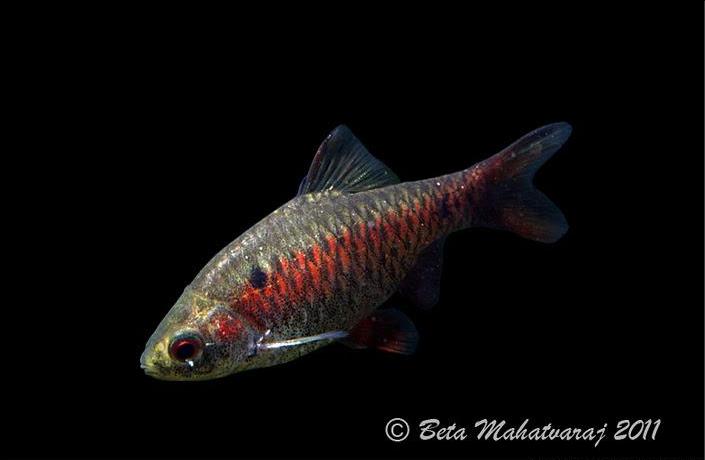
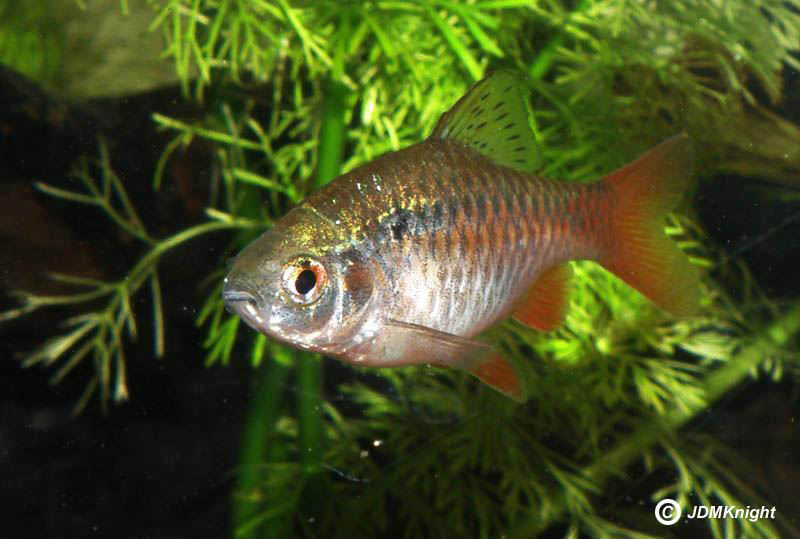
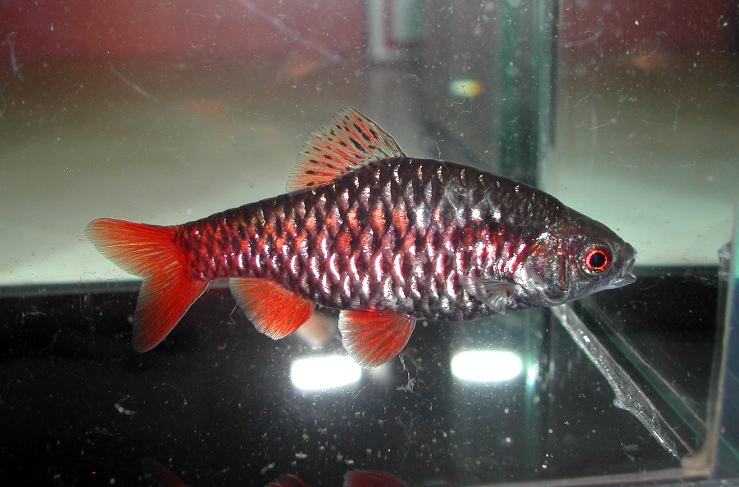
Pethia manipurensis 是印度洛克塔克湖记录到的小型温和鲃类,雄鱼体侧和尾鳍带橙红。已有观赏鱼商业繁育,选择时仍应认真辨认肩部小黑点,避免与红色近缘种混淆。
分布与栖息地
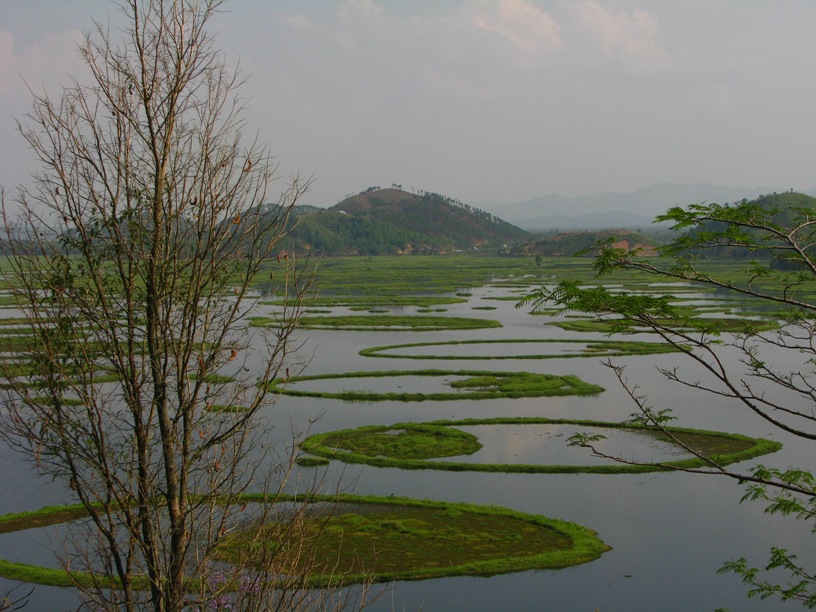
已知来自曼尼普尔邦 Bishnupur 地区的洛克塔克湖,可能为湖区特有。野生数量不多且曾被描述为持续下降。
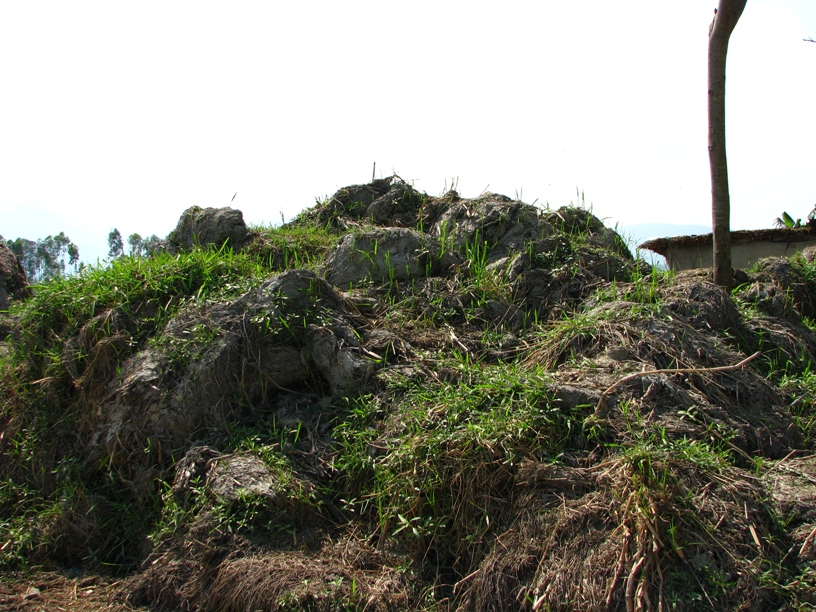
湖面有由土壤、植物和不同程度腐解有机物形成的浮岛,天然状态下参与养分调节。污水、农业输入、淤积和周边植被丧失影响湖水;1983 年出水河修坝又妨碍浮岛碎块自然流走,加上利用浮岛构筑大型围鱼设施,使漂浮物增多,改变湖区生态。水葫芦扩张也是压力之一。
饲养环境
不特别挑布景,但深色底床和密植可改善显色。浮水植物、沉木根枝、落叶能增加自然遮蔽。
过滤不必很强,可有一定水流,溪流式布置也能适应。混养仍应将水质维持在适用范围,不能把“不苛刻”理解为无需管理。
食性与喂食
天然可能搜食硅藻、藻、有机碎屑、小昆虫、蠕虫及甲壳动物等。缸内通常容易投喂,规律提供小型活饵或冷冻红虫、水蚤、丰年虾,搭配优质薄片、颗粒,部分饵料含植物或藻成分。
习性与混养
通常温和,经过体型、性情和水质筛选后,可与其他小型鲤科鱼、脂鲤、卵胎生鱼及合适鲶鳅类混养。
建议六至十条或更多,同伴降低胆怯,雄鱼面对竞争者时更显色。
雌雄区分
成年雄鱼较小、纤细、颜色更浓,繁殖时更明显;雄鱼背鳍有暗色标记,雌鱼没有。
繁殖
本属通用散卵、无亲鱼照护的方式可作为尝试方向,不视为本种完整验证程序。要提高存活率,可另设弱光成熟水环境,用隔卵网、塑料草垫、玻璃珠、细叶草或产卵拖把保护卵,水弱酸至中性、温度靠近适温上端,以气动过滤轻柔供氧。
充分调理后可试一至两对,或更大缸内雌雄各约六条,可能次晨产卵。见卵后移出成鱼。通用流程常约 24~48 小时孵化,再过约一天自由游动;先用纤毛虫级饵料,长大后换微虫、丰年虾无节幼体等。
补充说明
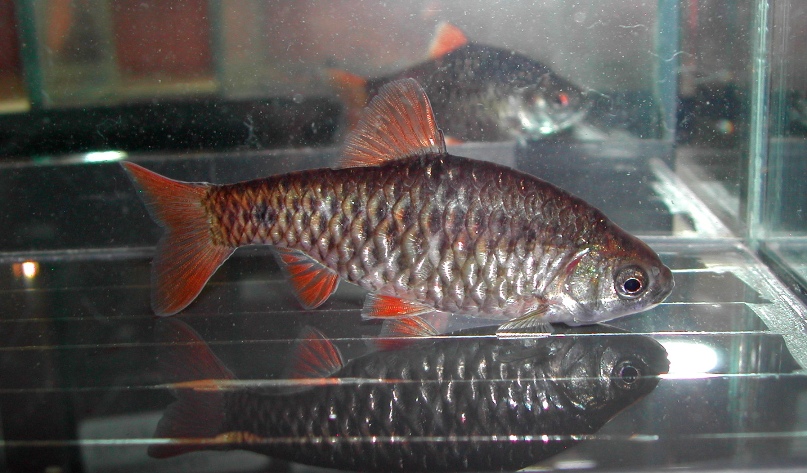
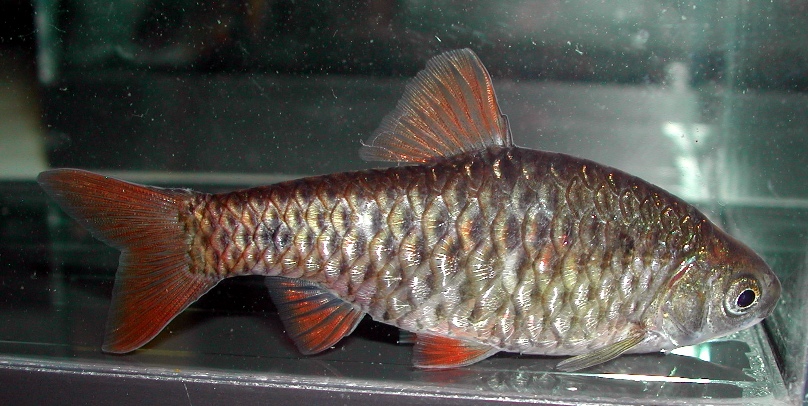
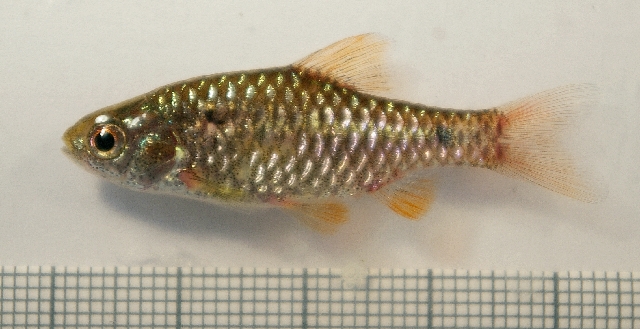
本种肩部标记较小,横向只覆盖约一枚鳞或更少,位置略高于侧线,与一些红色近似种的大而竖长肩斑不同。体侧约二十四至二十五枚鳞,腹鳍和臀鳍没有暗点,可结合观察。
图片
图片来自 SeriouslyFish,版权归各摄影者所有。
English
Overview
Orange-red flanks and tail characterize male Pethia manipurensis, a peaceful small barb recorded from India's Loktak Lake. Commercial aquarium production exists, but its small shoulder spot remains important for distinguishing similar red relatives.
Distribution & habitat
It is known from Loktak Lake in Manipur's Bishnupur area and may be endemic there. Wild abundance has been described as low and declining.
Floating islands of soil, plants, and decomposing organic material naturally participate in nutrient regulation. Sewage, agricultural inputs, silt, and loss of surrounding vegetation affect the lake. A 1983 outlet barrage impeded normal export of floating material, while large fishing enclosures built from it further increased accumulation and altered lake ecology. Water-hyacinth expansion adds pressure.
Aquarium setup
Decoration is flexible, although dense plants and a dark bottom enhance color. Floating vegetation, roots, and leaves add natural cover.
Strong filtration flow is unnecessary, but some circulation is appreciated and a stream-style arrangement can also work. Environmental adaptability is not a substitute for maintaining appropriate water conditions.
Diet & feeding
Diatoms, algae, detritus, insects, worms, and crustaceans are presumed wild foods. Captive feeding is generally easy. Offer regular small live or frozen bloodworms, water fleas, and Artemia with quality flakes or granules, including some plant- or algae-based content.
Behaviour & compatibility
Usually peaceful, it can share suitable conditions with other small cyprinids, characins, livebearers, and appropriate catfishes or loaches after checking size and temperament.
Keep six to ten or more. Companions reduce nervousness and encourage stronger male colors in the presence of rivals.
Sexual dimorphism
Adult males are smaller, slimmer, and more colorful, especially during reproduction. They carry dark dorsal markings absent from females.
Breeding
The genus's general nonparental egg-scattering method offers a possible approach, not a fully verified species-specific sequence. A separate dim setup with mature slightly acidic to neutral water, temperature toward the suitable upper end, and gentle aeration can protect eggs using mesh, synthetic grass, marbles, fine plants, or mops.
Try one or two conditioned pairs or about six of each sex with more room. Spawning may follow next morning; remove adults when eggs appear. Generic guidance suggests hatching in 24–48 hours and free swimming roughly a day later. Start with infusoria-grade food before progressing to microworms or Artemia nauplii.
Notes
The shoulder mark is small, about one scale wide or less, and sits slightly above the lateral line, contrasting with the larger vertical blotches of some red relatives. Approximately 24–25 scales along the side and absence of dark pelvic or anal spots provide further clues.
来源
- https://www.seriouslyfish.com/species/pethia-manipurensis(抓取于 2026-10-10)
pethia-manipurensis · 文件: data/species/pethia-manipurensis.md · 状态: 草稿