金色无须魮 · Golden Dwarf Barb
概要
| 字段 | 值 |
|---|---|
| 类别 | 鱼 |
| 学名 | Pethia gelius |
| 别名 | 金色無鬚魮、Cyprinus gelius、Puntius gelius、Cyprinus canius |
| 分类 | 鲤形目 Cypriniformes › 鲤科 Cyprinidae › Pethia |
| 水体 | 淡水 |
| 原产地 | 孟加拉国、印度、缅甸、尼泊尔 |
| 成体体长 | 4 cm |
| 饲养难度 | 中等 |
| 最小水体 | 54 L |
| 最小缸长 | 60 cm |
| 群居方式 | 群游 |
| 性情 | 温和 |
| 水流偏好 | 低 |
| 外部数据 | seriouslyfish pethia-gelius;fishbase 4762 |
| 食性 | 肉食 |
水质参数
| 参数 | 耐受范围 | 最适范围 | 单位 |
|---|---|---|---|
| 水温 | 18–24 | — | °C |
| pH | 6–7 | — | — |
| 总硬度 | 1–10 | — | dGH |
概述
金色无须魮(Pethia gelius)体型小、性情十分温和,却不适合热闹而抢食激烈的混养缸。新进口个体常偏瘦,应先确保能在没有竞争的环境中吃到足够食物,再考虑混养。
分布与栖息地
核心分布在印度北部、尼泊尔和孟加拉国的恒河及布拉马普特拉河水系,印度南部也有确认记录,缅甸伊洛瓦底江三角洲的记录仍值得进一步核对。多见于泥底或淤泥底的缓流水体、河边缓流区,以及经过农田的浅溪;水深、流速和浑浊程度随季节变化。
饲养环境
适合茂密水草缸,浮水植物及沉木可遮光并提供安全感。过滤应温和,过快水流会让它吃力。只放入过滤已成熟、参数稳定的缸,避免新缸和水化学骤变。
食性与喂食
野外捕食小昆虫、蠕虫、甲壳类和其他浮游动物。会吃尺寸合适的干粮,但不能只靠干粮;每天安排水蚤、丰年虾等小型活饵或冷冻饵,有助于恢复体况和发色。消瘦的新鱼可先单独调养,避免被其他鱼抢食。
习性与混养
宜单养缸或与同样微小、温和的鱼和适合的淡水虾搭配。建议至少八至十尾一起养,能减少紧张,雄鱼在求偶竞争中也会表现更丰富的颜色和行为。
雌雄区分
成熟雌鱼明显更圆腹,往往稍大,颜色没有雄鱼浓。
繁殖
可参考同属鱼的散卵繁殖法,另设弱光成熟水缸,轻柔供氧,以网格或细叶植物让卵避开亲鱼。调养后成对或成群放入,产卵后移走成鱼。鱼苗从纤毛虫级别的小饵开始,长大后转用微虫和丰年虾幼体。初期饵料尺寸与供给稳定性尤其重要。
补充说明
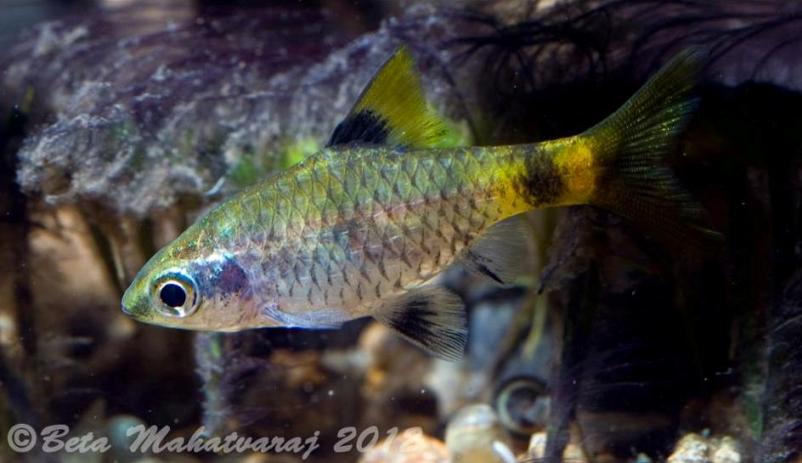
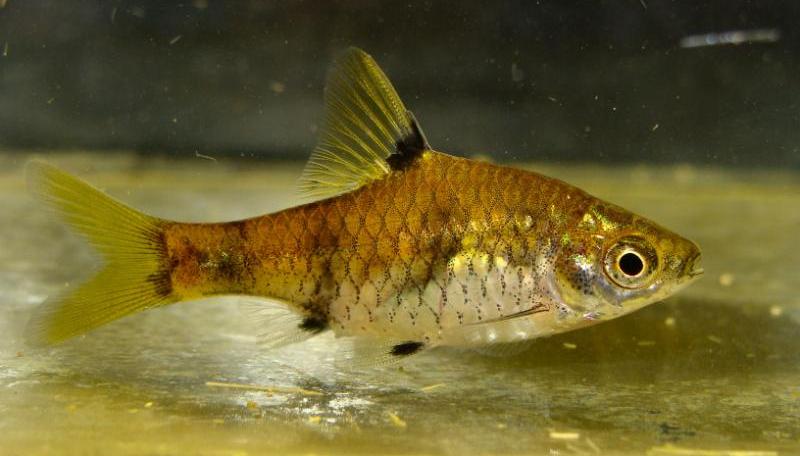
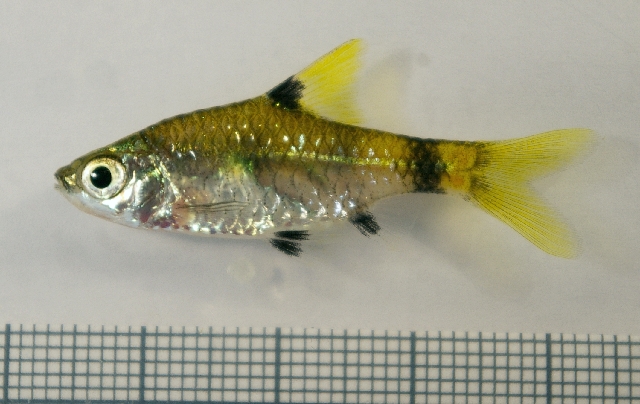
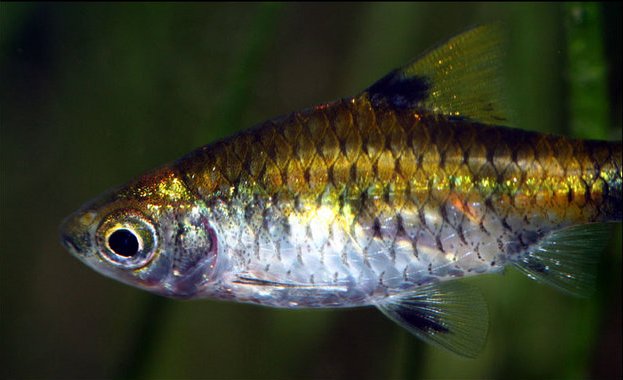
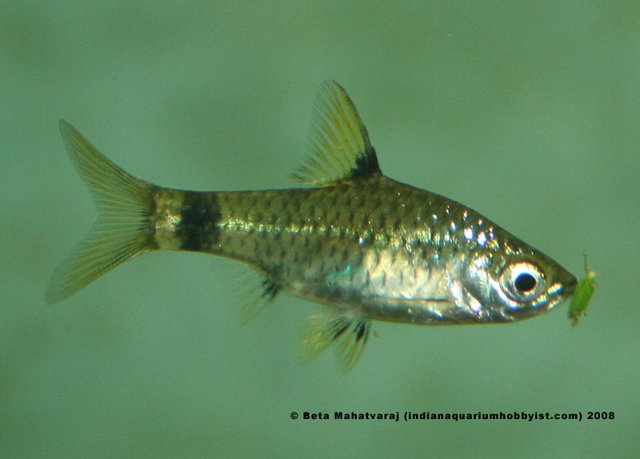
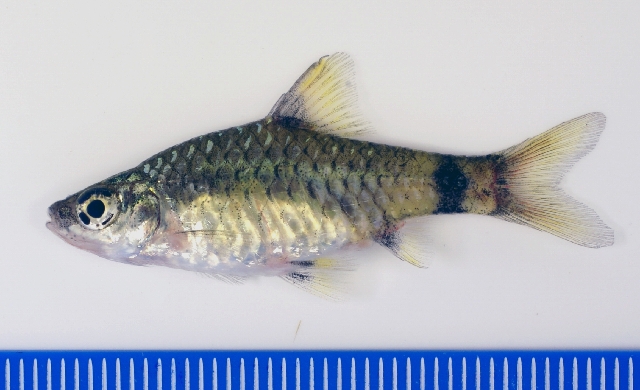
淡黄色身体、明黄色背鳍腹鳍和臀鳍、尾柄黑带及体侧模糊斑块有助于识别。若干过去归作本种的“色型”已被分为独立种,不能仅凭金黄色体色认定身份。
图片
图片来自 SeriouslyFish,版权归各摄影者所有。
English
Overview
Very small and gentle, Pethia gelius is a poor choice for a busy community with strong feeding competition. Imports are frequently thin, so initial care should ensure unrestricted access to food before considering companions.
Distribution & habitat
The core range lies in the Ganges and Brahmaputra systems of northern India, Nepal and Bangladesh. Confirmed southern Indian records broaden that range, while reports from Myanmar's Irrawaddy delta deserve further scrutiny. Muddy slow waters, river margins and shallow streams crossing cultivated land are typical. Depth, flow and turbidity vary seasonally.
Aquarium setup
Dense plants, floating cover and wood provide shelter and subdued lighting. Keep filtration gentle, since a fast current can be difficult for this fish. Introduce it only to a biologically established system with stable chemistry.
Diet & feeding
Small insects, worms, crustaceans and other zooplankton form the natural diet. Suitable dry foods are accepted but should not be the only offering. Daily small live or frozen meals support condition and color. Thin arrivals may need a settling period without competitors.
Behaviour & compatibility
A dedicated aquarium or a community of similarly diminutive, peaceful fishes and appropriate shrimp is preferable. At least eight to ten conspecifics reduce nervousness and encourage natural male displays.
Sexual dimorphism
Mature females are noticeably fuller-bellied, often slightly larger and less intensely colored.
Breeding
Methods for related egg-scattering barbs offer a possible approach: a separate dim aquarium with mature water, gentle aeration and mesh or fine plants protecting eggs. Introduce conditioned pairs or a group and remove the adults after spawning. Microscopic starter foods should precede microworms and brine-shrimp nauplii as the young grow.
Notes
A pale yellow body, bright yellow dorsal, pelvic and anal fins, a dark tail-base band and diffuse flank marks aid recognition. Some former presumed color forms have been recognized as separate species, so golden coloration alone is insufficient identification.
来源
- https://www.seriouslyfish.com/species/pethia-gelius(抓取于 2026-10-10)
pethia-gelius · 文件: data/species/pethia-gelius.md · 状态: 草稿