Pethia erythromycter · Lipstick Barb
概要
| 字段 | 值 |
|---|---|
| 类别 | 鱼 |
| 学名 | Pethia erythromycter |
| 别名 | Puntius erythromycter |
| 分类 | 鲤形目 Cypriniformes › 鲤科 Cyprinidae › Pethia |
| 水体 | 淡水 |
| 原产地 | 缅甸 |
| 成体体长 | 3.5 cm |
| 饲养难度 | 中等 |
| 最小水体 | 81 L |
| 最小缸长 | 90 cm |
| 群居方式 | 群游 |
| 外部数据 | seriouslyfish pethia-erythromycter;fishbase 63870 |
| 食性 | 杂食 |
水质参数
| 参数 | 耐受范围 | 最适范围 | 单位 |
|---|---|---|---|
| 水温 | 18–24 | — | °C |
| pH | 7–7.5 | — | — |
| 总硬度 | 5–12 | — | dGH |
概述
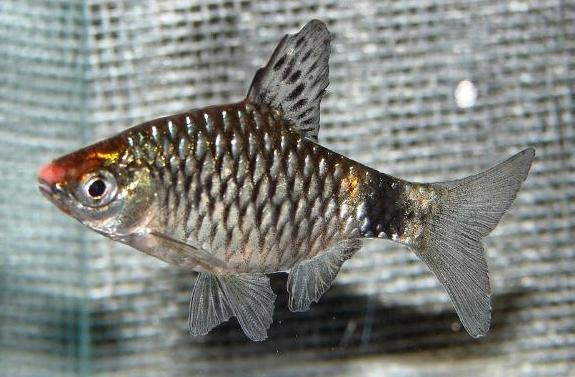
Pethia erythromycter 雄鱼嘴周呈红色,繁殖时身体可变深蓝,体型虽小,雄鱼间却常激烈较量。饲养重点是足够空间、密植遮蔽和较多雌鱼,不宜按普通温和小鲃的方式少量混养。
分布与栖息地
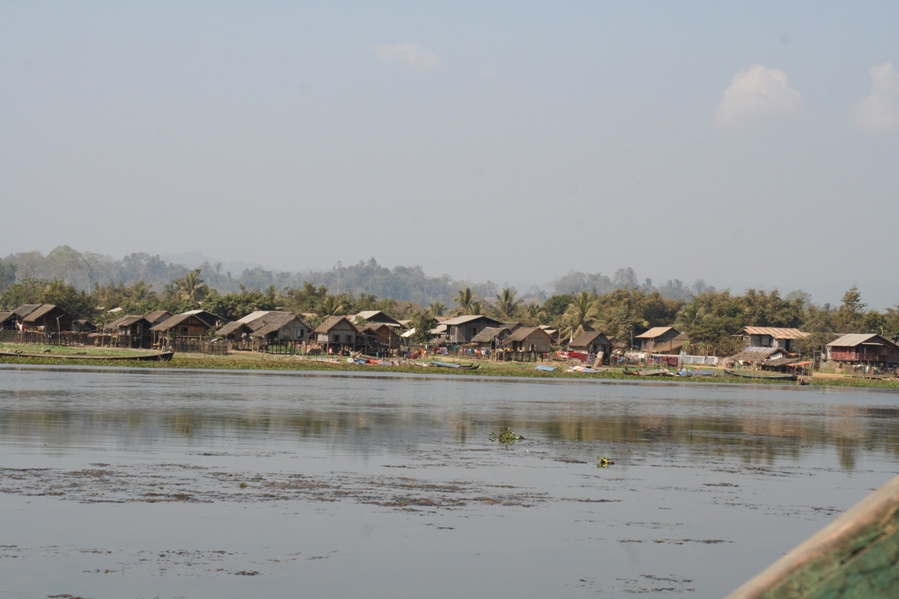
来自缅甸北部伊洛瓦底江上游,记录包括克钦邦密支那附近小溪、支流和茵多吉湖。
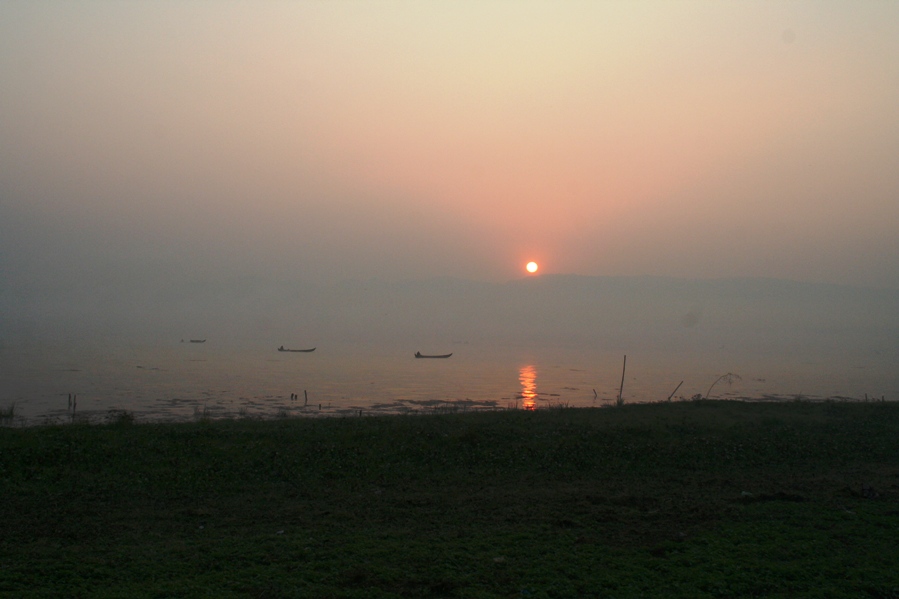
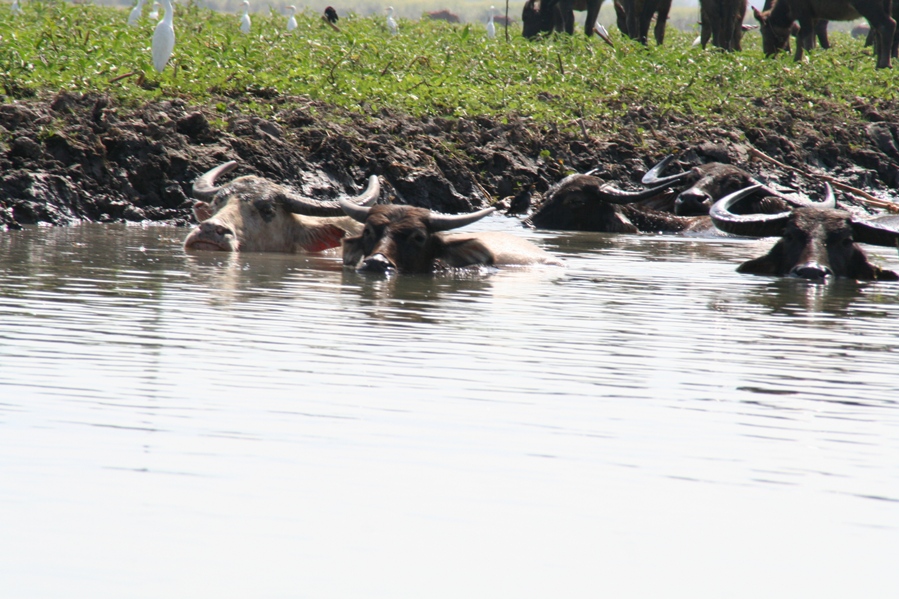
湖中水下环境可见较清水体、密集水草及藻类,底部可能为混有腐解植物的软黏土。东北部湖水经 Indaw Chaung 穿过沼泽地,再汇入伊洛瓦底江支流。溪流采点的具体条件不能由湖区景象完全代替。
饲养环境
必须有丰富水草,多处阻断视线,空旷环境会让雄鱼争斗过强。浮水植物和沉木根枝可减光、增加遮蔽,不能只因成年体型小就缩减缸长。
食性与喂食
属于广食性的杂食鱼,天然可能吃各类小无脊椎动物、藻、硅藻和有机碎屑;具体菜单仍属推测。
人工环境中容易喂养,规律提供红虫、水蚤、丰年虾等小型活饵或冷冻饵,搭配优质薄片、颗粒,其中一部分含植物或藻类成分。
习性与混养
可与健壮、活跃的小型鲤科鱼或适合的鳅类混养,但慢游鱼及长鳍鱼可能遭到咬鳍,或在抢食中受到压制。
雄鱼白天常相互争斗,数量少或空间不足时尤甚。建议每条雄鱼至少配四条雌鱼;维持二十条以上的较大群体也可能分散冲突,但需要相应空间及遮蔽。
雌雄区分
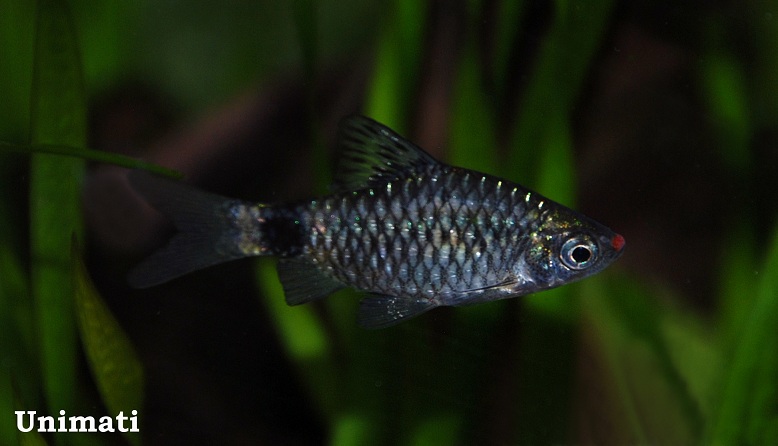
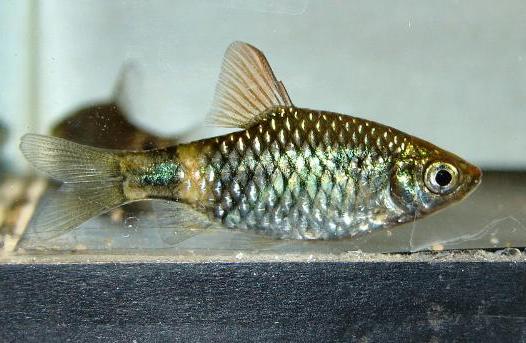
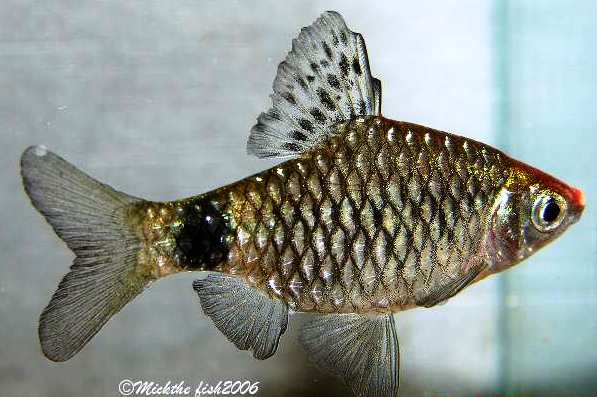
雄鱼嘴周红,强势个体可有细红线向背鳍方向延伸,繁殖状态时全身变墨蓝,并有吻部疣突。成熟雌鱼通常更大、更圆润。
繁殖
本属通用散卵方法可作为尝试框架,而非已逐项验证的本种程序。准备弱光繁殖环境,以网、塑料草垫、玻璃珠、细叶草或拖把阻挡亲鱼吃卵。水取中性附近并保持在适用范围,温度靠近适温上端,气动过滤供氧。
调理后可放一至两对,或先观察群体中有哪对分出准备产卵再转移。见卵后移走成鱼。通用方法中孵化约 36~48 小时,再约 24~48 小时后自由游动;先喂微小纤毛虫类食物,逐渐加入微虫、丰年虾无节幼体,约十天阶段可尝试碎干粮或白线虫,具体要按幼鱼口径调整。
补充说明
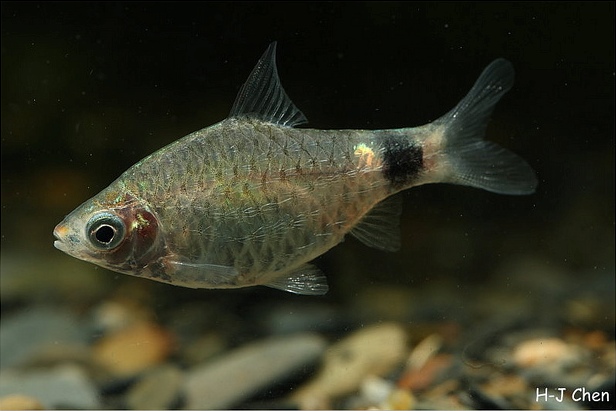
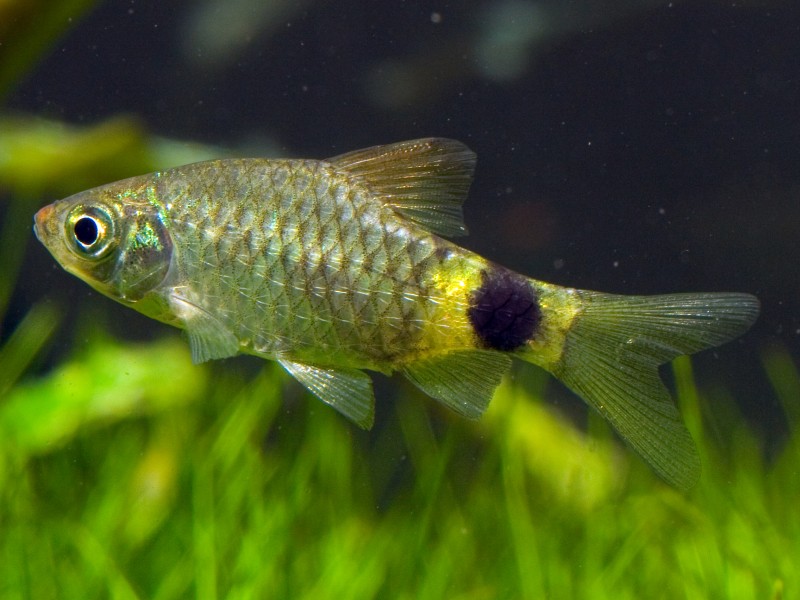
2006 年开始进入贸易,2008 年正式描述,也有“Tulip barb”称呼。嘴周红色、短而弯曲的侧线、尾柄暗带及无口须等是识别组合,背鳍上两排暗点也有帮助,不能仅靠红嘴辨认。
图片
图片来自 SeriouslyFish,版权归各摄影者所有。
English
Overview
Male Pethia erythromycter show red around the mouth and can turn dark blue in breeding condition. Despite small size, males dispute vigorously. Space, dense visual cover, and a female-biased group matter more than treating it as an ordinary peaceful miniature barb.
Distribution & habitat
It occurs in northern Myanmar's upper Irrawaddy drainage, including streams around Myitkyina and Lake Indawgyi.
Lake images show relatively clear water, thick aquatic growth, and algae over apparently soft clay mixed with decomposing plants. The northeastern outlet passes through marshland before reaching an Irrawaddy tributary. Lake conditions cannot fully represent its separate stream habitats.
Aquarium setup
Plant densely and interrupt sight lines in many places. Open surroundings can intensify male fighting. Floating cover and roots soften light and add shelter. Its small adult size is not a reason to reduce the required aquarium length.
Diet & feeding
It is a generalized omnivore, with small invertebrates, algae, diatoms, and organic particles among presumed natural foods. The detailed prey mix remains tentative.
Captive feeding is straightforward. Combine regular small live or frozen bloodworms, water fleas, and Artemia with quality flakes or granules, including some plant- or algae-enriched food.
Behaviour & compatibility
Robust active small cyprinids or suitable loaches can work. Slow or long-finned companions risk feeding competition or fin damage.
Males frequently spar during daylight, especially in small groups or restricted space. Aim for at least four females per male. A larger group exceeding twenty may also spread conflict, provided accommodation and shelter expand accordingly.
Sexual dimorphism
Males have red mouths, with a narrow red extension toward the dorsal region in dominant fish. Breeding males become inky blue and develop snout tubercles. Mature females are generally larger and fuller-bodied.
Breeding
The genus's general egg-scattering method offers a framework rather than a fully verified species-specific sequence. Use dim accommodation and mesh, artificial grass, marbles, fine plants, or mops to protect eggs. Keep water near neutral within the appropriate range, toward the warmer end of the suitable temperature range, with gentle air-driven oxygenation.
Introduce one or two conditioned pairs or transfer a pair seen separating from the main group to spawn. Remove adults when eggs appear. Generic guidance gives 36–48 hours to hatch and another 24–48 to free swimming. Begin with minute infusoria-grade food, then microworms and Artemia nauplii. At around ten days, crushed preparations or grindal worms may be tried according to mouth size.
Notes
Trade appearances began in 2006, followed by formal description in 2008; Tulip barb is another label. Red mouth pigmentation, a short curved lateral line, dark tail-base band, absent barbels, and two rows of dorsal spots form a more useful identification set than red lips alone.
来源
- https://www.seriouslyfish.com/species/pethia-erythromycter(抓取于 2026-10-10)
pethia-erythromycter · 文件: data/species/pethia-erythromycter.md · 状态: 草稿