坎氏无须魮 · Cuming's Barb
概要
| 字段 | 值 |
|---|---|
| 类别 | 鱼 |
| 学名 | Pethia cumingii |
| 别名 | 坎氏無鬚魮、Barbus cumingii、Puntius cumingii |
| 分类 | 鲤形目 Cypriniformes › 鲤科 Cyprinidae › Pethia |
| 水体 | 淡水 |
| 原产地 | 斯里兰卡 |
| 成体体长 | 4.1 cm |
| 饲养难度 | 入门 |
| 最小水体 | 54 L |
| 最小缸长 | 60 cm |
| 群居方式 | 群游 |
| 性情 | 温和 |
| 外部数据 | seriouslyfish pethia-cumingii;fishbase 6143 |
| 食性 | 杂食 |
水质参数
| 参数 | 耐受范围 | 最适范围 | 单位 |
|---|---|---|---|
| 水温 | 20–27 | — | °C |
| pH | 5.5–7 | — | — |
| 总硬度 | 1–12 | — | dGH |
概述
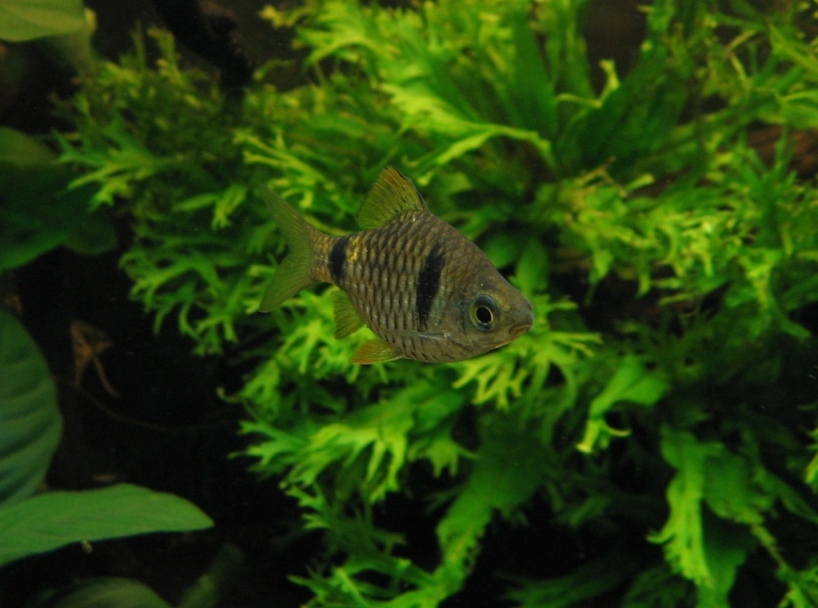
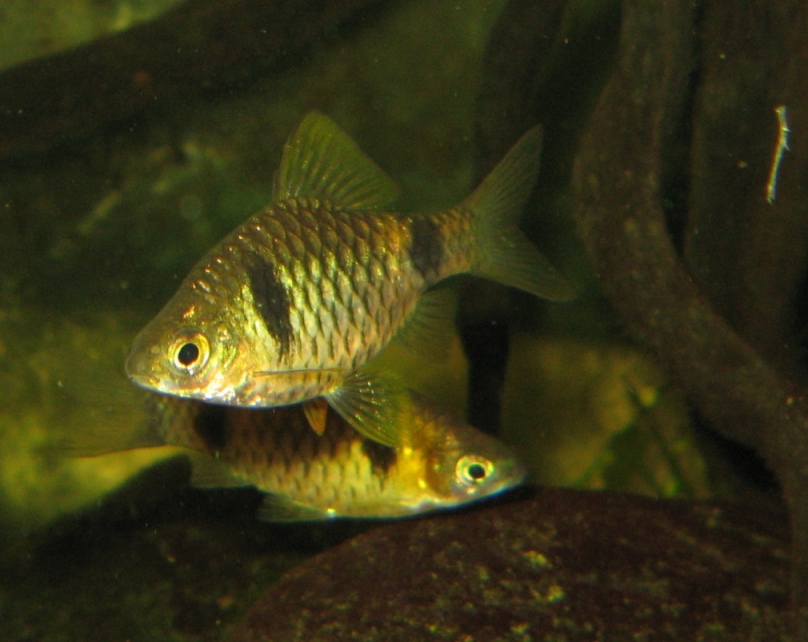
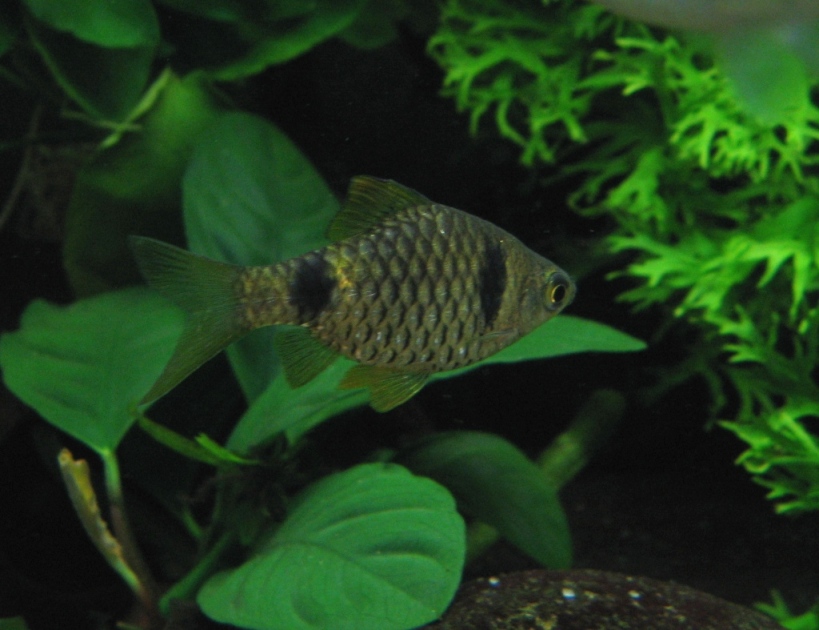
坎氏无须魮(Pethia cumingii)是斯里兰卡西南部的小型温和群游鱼,黄色鳍和体侧两处深色斑块有助于识别。过去被算作本种的红鳍鱼已经被分开,不能把黄鳍与红鳍简单当作同一种的色型。
分布与栖息地
为斯里兰卡特有种,似乎仅见于本塔拉河及金河流域的中上游,偏好有沙、砾石或岩石底的流水溪流和支流。北部其他河流的旧记录涉及近缘种。原生环境受到森林损失和水质恶化影响,鲜艳个体减少也可能与选择性采集有关,但这一解释仍有不确定性。
饲养环境
造景可灵活安排,深色底砂和较密水草能帮助显色。加入浮水植物、沉木根部和枝条柔化光线,提供遮蔽。过滤无需很强,适度水流有益,也可采用溪流式布局。
食性与喂食
野外利用硅藻、其他藻类、碎屑及小昆虫、蠕虫、甲壳类等多种食物。缸中容易喂食,可将含植物或藻类成分的优质干粮与红虫、水蚤、丰年虾等活饵或冷冻饵轮换。
习性与混养
总体十分温和,可与环境需求相容的小型鱼组成混养群落。建议六至十尾或更多成群,能减少胆怯,雄鱼在有同种竞争者时会展示更好的颜色。
雌雄区分
雄鱼明显更小、修长且鲜艳,进入繁殖状态时差异更突出。
繁殖
可参考同属散卵鱼布置独立繁殖缸,使用成熟水、弱光、温和增氧和保护卵的网格、细叶植物或产卵拖把。亲鱼养壮后可成对或成群尝试,发现卵即移出成鱼以减少被吃的机会。鱼苗初期吃极细小开口饵,长大后再接续微虫和丰年虾幼体。
补充说明
活鱼黄色鳍、较短的侧线和体侧两块竖向黑斑可联合用于鉴别。黄色鳍与体型等差异具有物种识别意义,不应完全归因于饲养发色。
图片
图片来自 SeriouslyFish,版权归各摄影者所有。
English
Overview
A small peaceful barb from southwestern Sri Lanka, Pethia cumingii can be recognized by its yellow fins and two dark flank marks. Red-finned fishes once included under this name are now separated, so the two appearances should not simply be treated as color strains of one species.
Distribution & habitat
It is endemic to Sri Lanka and apparently limited to the Bentara and Gin systems. Flowing tributaries and middle or upper river sections with sand, gravel or rock are preferred. Older northern records involve a relative. Forest loss and declining water quality affect the habitat; selective collection is also a possible, rather than proven, explanation for fewer vividly colored fish.
Aquarium setup
The layout can be flexible, though dark substrate and dense planting improve the display. Floating plants and wood soften the light and add shelter. Powerful filtration is unnecessary, but some circulation is appreciated, and a stream-style layout is suitable.
Diet & feeding
Natural food includes algae, diatoms, debris and a variety of small invertebrates. Captive fish feed readily. Rotate good prepared foods containing plant ingredients with small live or frozen items.
Behaviour & compatibility
Its generally mild nature suits a carefully chosen small-fish community. Six to ten or more conspecifics provide security and allow males to display more intensely around rivals.
Sexual dimorphism
Males are distinctly smaller, slimmer and more colorful, especially in reproductive condition.
Breeding
General egg-scattering barb methods provide a trial approach. Use a separate dim tank with established water, gentle aeration and mesh, fine plants or mops protecting eggs. Condition adults before introducing pairs or a group, and remove them after eggs appear. Fry need microscopic first foods before progressing to microworms and newly hatched brine shrimp.
Notes
Yellow fins, a short lateral line and two upright black flank marks are useful in combination. Differences in fin color and size may reflect species identity rather than aquarium conditioning alone.
来源
- https://www.seriouslyfish.com/species/pethia-cumingii(抓取于 2026-10-10)
pethia-cumingii · 文件: data/species/pethia-cumingii.md · 状态: 草稿