Pethia aurea
概要
| 字段 | 值 |
|---|---|
| 类别 | 鱼 |
| 学名 | Pethia aurea |
| 分类 | 鲤形目 Cypriniformes › 鲤科 Cyprinidae › Pethia |
| 水体 | 淡水 |
| 原产地 | 印度 |
| 成体体长 | 2.5 cm |
| 饲养难度 | 中等 |
| 最小水体 | 41 L |
| 最小缸长 | 45 cm |
| 群居方式 | 群游 |
| 性情 | 温和 |
| 水流偏好 | 低 |
| 外部数据 | seriouslyfish pethia-aurea;fishbase 67191 |
水质参数
| 参数 | 耐受范围 | 最适范围 | 单位 |
|---|---|---|---|
| 水温 | 18–24 | — | °C |
| pH | 6–7 | — | — |
| 总硬度 | 1–10 | — | dGH |
概述
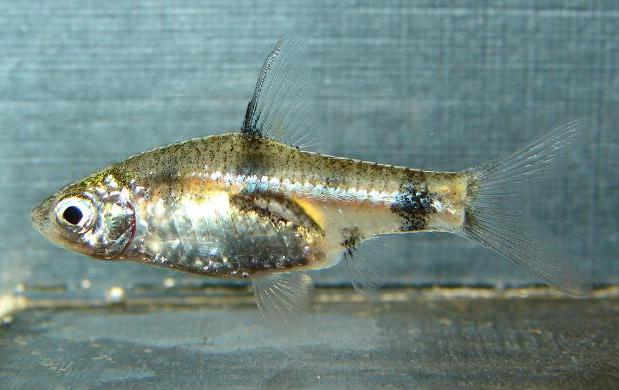
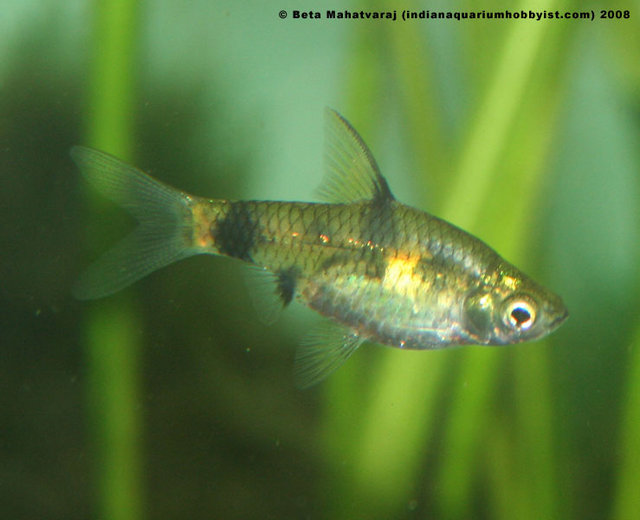
Pethia aurea 是黄金沙色的小型群游鱼,尾柄有宽黑带,背鳍起点下方有黑斑。性情非常温和却胆小,适合成熟水草缸中的小鱼群,不宜因体型小就随意塞进强流或抢食激烈的环境。
分布与栖息地
已知来自印度西孟加拉邦南二十四区的一系列池塘,地处恒河三角洲。
饲养环境
水草缸较合适,浮水植物及沉木根枝可柔化光线、形成安全感。过滤不需很强,快流可能使其吃力。
必须使用成熟、稳定的缸,避免水化学大幅波动,不能直接投入尚未建立稳定系统的新缸。
食性与喂食
天然可能以小昆虫、蠕虫、甲壳动物和浮游动物为食,微型捕食的判断仍有推测成分。缸中能吃合适大小的干粮,但每天应配少量活饵或冷冻水蚤、丰年虾等,而非只靠薄片或颗粒。
习性与混养
体型小且胆怯,最好专门维持,或只配其他微型温和鱼及适型淡水虾。并不是越温和就越适合任何综合缸。
至少八至十条能减轻紧张、表现更自然的群体活动,雄鱼争取雌鱼注意时也更显色。
雌雄区分
成熟雌鱼腹部明显较圆,常略大于雄鱼,颜色相对较淡。
繁殖
本属通用繁殖方式是散卵且不照护后代,可作为尝试方向,不能视为已逐步验证的本种流程。成熟缸有时可能自然出现少量鱼苗;希望提高存活率时,可设独立弱光繁殖环境,用隔卵网、塑料草垫、玻璃珠、细叶草或产卵拖把保护卵。
采用成熟水,弱酸至中性,温度取适温上端,气动海绵过滤或气石提供轻柔循环。充分调理后放入一至两对亲鱼,可能次晨产卵;也可在更宽敞条件下尝试雌雄各约六条的群体。
发现卵后移走可能吃卵的成鱼。属级通用流程中的卵常约 24~36 小时孵化,鱼苗约 3~4 天后自由游动。开口先用微小纤毛虫类食物,再按口径改喂微虫和丰年虾无节幼体。
补充说明
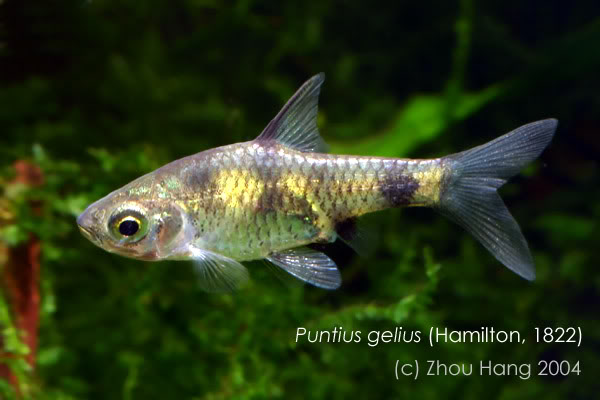
曾被当作 Pethia gelius 的体色型。除金黄色身体外,宽尾柄黑带、背鳍基下黑斑及臀鳍起点上方黑点也有识别价值,不能只按“金色小鲃”标签辨认。其正式描述将这些近似类型区分开来。
图片
图片来自 SeriouslyFish,版权归各摄影者所有。
English
Overview
Golden Pethia aurea has a broad dark tail-base band and a blotch below the dorsal origin. Very peaceful but timid, it suits a mature planted aquarium with other tiny companions. Small size does not make strong current or competitive communities appropriate.
Distribution & habitat
Known collections are from ponds in South 24 Parganas, West Bengal, within India's Ganges delta.
Aquarium setup
Plant generously and use floating vegetation or roots to soften illumination. Gentle filtration is sufficient; fast flow may be difficult for the fish.
A mature stable system is essential because changes in water chemistry can cause problems. Do not use an unestablished aquarium.
Diet & feeding
A diet of tiny insects, worms, crustaceans, and zooplankton is presumed, with micropredation still an inference. Suitable dry food is accepted but should be complemented daily with small live or frozen water fleas, Artemia, and similar items.
Behaviour & compatibility
Dedicated housing or a community of other miniature peaceful fishes and appropriate freshwater shrimp is preferable. Timidity and size limit suitability for broader communities despite its peaceful behavior.
Keep at least eight to ten. Companions reduce nervousness and encourage natural group activity, with males displaying stronger color during courtship competition.
Sexual dimorphism
Mature females are conspicuously rounder in the abdomen, often a little larger, and less intensely colored.
Breeding
The genus's general egg-scattering, nonparental method offers a possible approach rather than a fully verified species-specific sequence. A mature aquarium may produce occasional fry. For greater survival, use a separate dim setup with mesh, artificial grass, marbles, fine plants, or mops to protect eggs.
Mature slightly acidic to neutral water toward the warmer end of the appropriate range and gentle aeration are suggested. Introduce one or two conditioned pairs, with spawning potentially the next morning. A larger arrangement can instead accommodate roughly six of each sex.
Remove adults once eggs appear because they may eat them. Generic accounts suggest 24–36 hours to hatching and free swimming after about three or four days. Begin with minute infusoria-grade food before progressing to microworms and Artemia nauplii.
Notes
It was once treated as a color form of Pethia gelius. Golden color, the broad tail-base band, a blotch beneath the dorsal origin, and a mark above the anal origin provide a useful combination. A generic golden-barb trade label is insufficient for identifying these similar small forms.
来源
- https://www.seriouslyfish.com/species/pethia-aurea(抓取于 2026-10-10)
pethia-aurea · 文件: data/species/pethia-aurea.md · 状态: 草稿