红绿灯 · Neon Tetra
概要
| 字段 | 值 |
|---|---|
| 类别 | 鱼 |
| 学名 | Paracheirodon innesi |
| 别名 | 红绿魮脂鲤、霓虹脂鯉、紅綠魮脂鯉、Hyphessobrycon innesi、Cheirodon innesi、霓虹脂鲤 |
| 分类 | 脂鲤目 Characiformes › 脂鲤科 Characidae › Paracheirodon |
| 水体 | 淡水 |
| 成体体长 | 3 cm |
| 饲养难度 | 入门 |
| 最小水体 | 54 L |
| 最小缸长 | 60 cm |
| 群居方式 | 群游 |
| 性情 | 温和 |
| 外部数据 | seriouslyfish paracheirodon-innesi;fishbase 10691 |
| 原产地 | 哥伦比亚、巴西、秘鲁的亚马孙流域 |
| 繁殖方式 | 产卵 |
水质参数
| 参数 | 耐受范围 | 最适范围 | 单位 |
|---|---|---|---|
| 水温 | 21–25 | — | °C |
| pH | 4–7.5 | — | — |
| 总硬度 | 1–12 | — | dGH |
概述
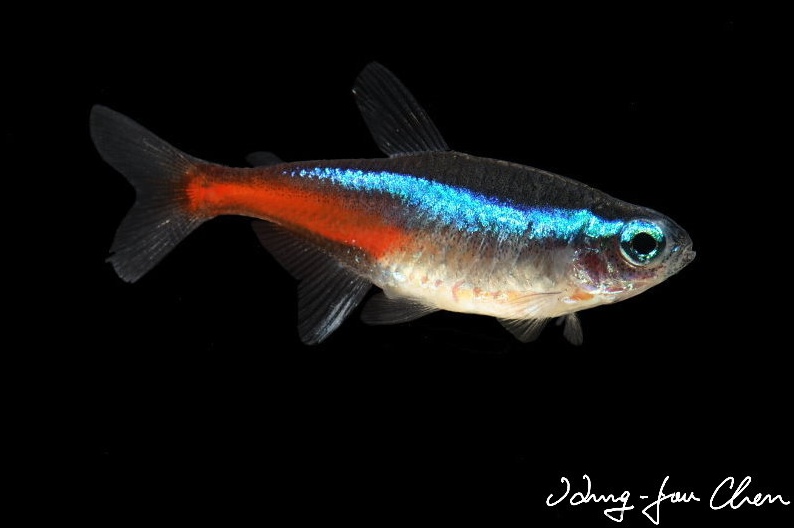
红绿灯(Paracheirodon innesi)是常见的小型灯鱼,蓝色侧带与红色体纹十分醒目。健康个体并不难养,但挑鱼比单看颜色更重要:长期大量繁殖的商品鱼可能存在体形缺陷或健康问题。
分布与栖息地
分布于哥伦比亚、巴西和秘鲁的亚马孙流域,完整分布范围仍不清楚。它主要生活在林间溪流和小支流,较少出现在浑浊的干流。栖地多为酸性、低矿物质的黑水,也有清水记录,水底常见树根、枯枝和落叶层。
饲养环境
可用细沙、沉木和枝条构成有遮蔽的环境,搭配耐阴水草及浮水植物,避免过强照明。干燥落叶能增加躲藏处,分解时附着的微生物也可为鱼苗提供补充食物。常见人工繁殖鱼通常比野生鱼更能适应缸养条件。
食性与喂食
野外可能兼食小型无脊椎动物、藻类和落果等。人工饲料可以接受,但日常菜单宜包含水蚤、红虫等小型活饵或冷冻饵料,保持食物多样。
习性与混养
性情温和,适合与体形相近的小型灯鱼、温和的小型鲶鱼等混养。建议一次饲养至少 8~10 条,并让群体包含雌雄个体;有其他群游鱼陪伴时,通常更有安全感。选择慈鲷作缸友时,应确认其不捕食小鱼。
雌雄区分
成熟雌鱼通常略大,腹部和身体轮廓也比雄鱼饱满。
繁殖
想稳定育出鱼苗,可另设昏暗的繁殖缸,用细叶植物、产卵拖把或隔卵网保护鱼卵,配轻柔运转的海绵过滤。用小型活饵调理亲鱼,既可群体繁殖,也可选择腹部饱满的雌鱼与发色良好的雄鱼配对。
亲鱼会吃卵,发现产卵后应及时隔离。鱼卵约在 24~36 小时后孵化,之后再过 3~4 天开始自由游动。初期投喂草履虫等微小食物,长大后再接微虫和丰年虾无节幼体。卵和早期鱼苗怕光,应尽量避光。繁殖需要软水、酸性水;日常饲养参数不能直接当作完整的繁殖方案。
补充说明
选购时留意离群、躁动和体表白斑,出现这类情况的鱼群宜避开。俗称“霓虹灯病”的微孢子虫感染发展到晚期很难治疗,但细菌感染也可能出现相似症状,不能仅凭外观下定论。
与宝莲灯(Paracheirodon axelrodi)相比,红绿灯身体红色区域较少,蓝色侧带较窄,向后延伸的距离也较短。
图片
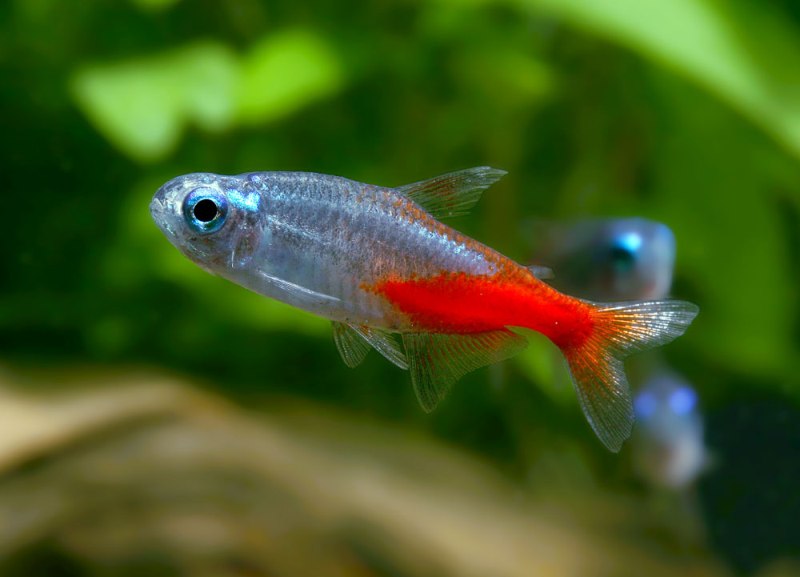
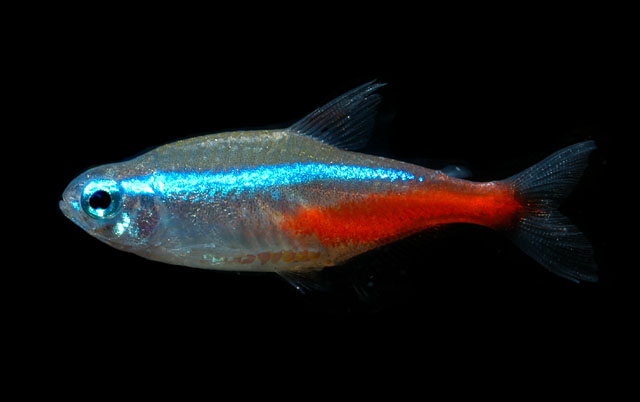
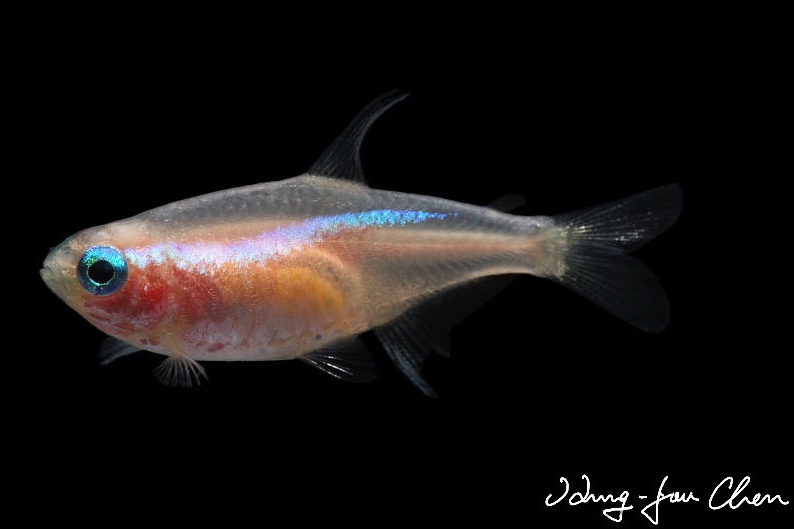
图片来自 SeriouslyFish,版权归各摄影者所有。
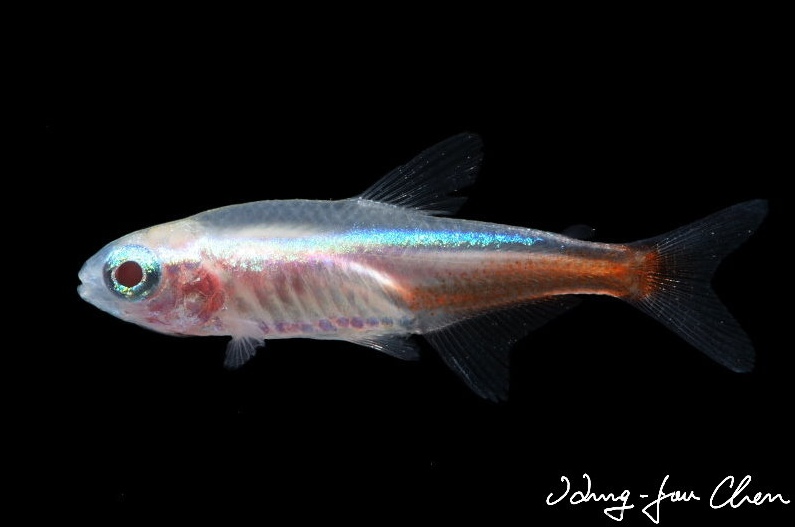
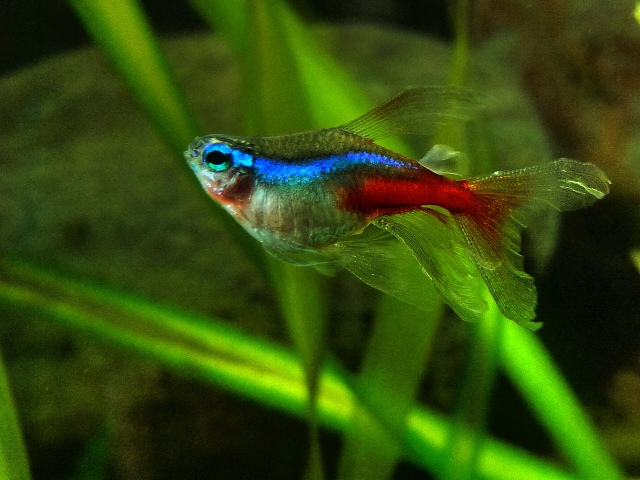
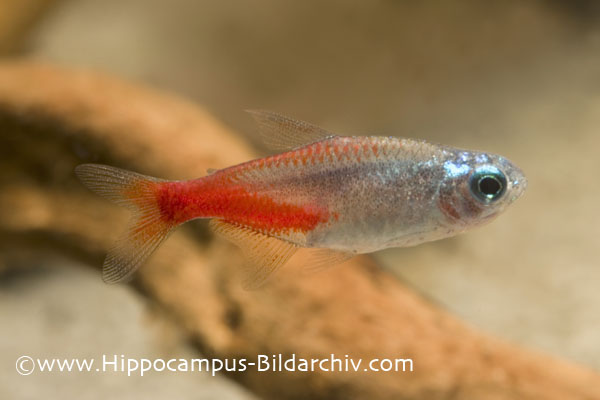
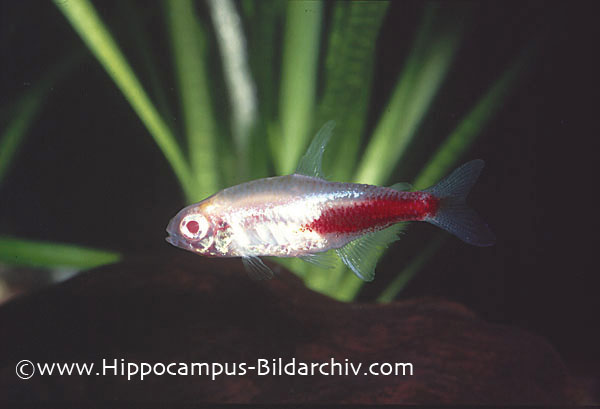
推荐饲料
English
Overview
The familiar neon tetra, Paracheirodon innesi, combines a bright lateral stripe with red markings on a small body. Healthy specimens are manageable aquarium residents, but commercial stock varies in quality. Examine body shape and behavior carefully before choosing a group.
Distribution & habitat
Records come from Amazonian Colombia, Brazil, and Peru, although the full range remains unresolved. Forest creeks and smaller tributaries are more characteristic habitats than muddy main channels. Many sites contain acidic, mineral-poor brown water, with roots, branches, and fallen leaves providing structure. Clear-water populations are also known.
Aquarium setup
A shaded layout with sand, branching wood, and suitable plants gives the fish shelter. Floating vegetation can soften illumination. Dried leaves add cover and support microorganisms that small fry may graze on. Farm-raised neons generally tolerate aquarium conditions more readily than wild stock.
Diet & feeding
The natural diet is thought to include both animal and plant material. Although prepared foods are accepted, vary them with small frozen or live offerings, including bloodworms and water fleas.
Behaviour & compatibility
Plan for a mixed-sex shoal numbering at least eight to ten. Other schooling fish can help the group settle. Suitable companions include similarly sized tetras and small, peaceful catfish; any cichlid companions should be chosen for their lack of predatory behavior.
Sexual dimorphism
Adult females tend to exceed males slightly in size and have a fuller outline, particularly around the abdomen.
Breeding
A separate, darkened aquarium makes it easier to protect the spawn. Provide fine vegetation or a spawning mop, or use a mesh barrier that allows eggs to fall beyond the adults' reach. Gentle sponge filtration is sufficient. Condition breeders with small live foods; either groups or selected pairs can be used.
Remove adults after spawning because exposed eggs may be eaten. Hatching generally follows within 24–36 hours, and swimming begins another three to four days afterward. Start with microscopic foods, then increase prey size to microworms and newly hatched brine shrimp. Keep eggs and early fry shielded from light. Breeding calls for soft, acidic water and should be planned separately from routine maintenance.
Notes
Restlessness, isolation, or pale patches warrant caution when buying fish. Advanced microsporidian neon tetra disease is extremely difficult to treat, but bacterial illness can produce a similar appearance. Symptoms alone do not identify the cause.
Compared with the cardinal tetra (Paracheirodon axelrodi), the neon has less extensive red coloration and a narrower blue stripe that ends farther forward.
来源
- https://www.seriouslyfish.com/species/paracheirodon-innesi(抓取于 2026-10-10)
paracheirodon-innesi · 文件: data/species/paracheirodon-innesi.md · 状态: 草稿