哈氏纹唇鱼 · Hard-lipped Barb
概要
| 字段 | 值 |
|---|---|
| 类别 | 鱼 |
| 学名 | Osteochilus hasseltii |
| 别名 | 纵带纹唇鱼、软鳍鱼、哈氏紋唇魚、縱帶紋唇魚、軟鰭魚(香港) |
| 分类 | 鲤形目 Cypriniformes › 鲤科 Cyprinidae › Osteochilus |
| 水体 | 淡水 |
| 成体体长 | 32 cm |
| 饲养难度 | 中等 |
| 最小水体 | 648 L |
| 最小缸长 | 180 cm |
| 群居方式 | 群游 |
| 外部数据 | seriouslyfish osteochilus-hasseltii;fishbase 277 |
| 原产地 | 缅甸、泰国、老挝、柬埔寨、越南、马来半岛及婆罗洲、苏门答腊、爪哇 |
| 食性 | 杂食 |
| 特征 | 翻底砂: 是 |
水质参数
| 参数 | 耐受范围 | 最适范围 | 单位 |
|---|---|---|---|
| 水温 | 22–25 | — | °C |
| 总硬度 | 5–12 | — | dGH |
概述
哈氏纹唇鱼(Osteochilus hasseltii)虽然体型较大,却是容易在抢食中吃亏的羞怯群居鱼。它不停浏览底部和植物表面的微小食物,因此合适的底砂、沉底饵和喂食节奏比单次投下大量饵料更重要。
分布与栖息地
原生范围横跨东南亚大陆与大巽他群岛,涉及萨尔温江、湄公河、湄南河等大水系,也见于湖泊、水库和部分泥炭沼泽。主要利用软底缓流支流与较大溪流,雨季开始时进入淹水森林觅食、繁殖,季风末期返回支流;迁移距离通常不长,可能形成较局部的种群。
饲养环境
需要宽敞空间、偏暗光线和柔软沙底,以便拱砂觅食。大块沉木可形成阴影,鱼不觅食时常停留其中。底床水草可能被翻起,可选附生水草或盆栽布置,浮水植物也有助于遮光。宽叶植物表面的附着物可供它浏览。
食性与喂食
野生胃内容物显示它是杂食鱼,但食物颗粒很小,包括浮游动植物、小型水生无脊椎动物和碎屑。几乎不从水面取食,应提供细颗粒沉底粮,选择含螺旋藻或其他植物成分的配方,并每天搭配红虫、水蚤、丰年虾等小型活饵或冷冻饵。少量多餐比一次大量投喂更符合其持续觅食的方式。
习性与混养
过于凶猛的同伴容易使它吃不到食物。虽然不太可能捕食小鱼,体型相近、环境相容的温和鱼通常更合适。至少五尾同养;只有两三尾时,弱势个体可能持续受欺负,单养又可能转而攻击外形相似的鱼。它会形成群体等级,并不总是整齐同步群游。
雌雄区分
成熟雌鱼可能比雄鱼更厚实。
补充说明
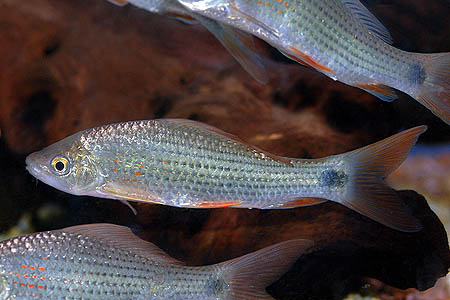
尾部斑点、体侧橙色细点和缺少黑色侧中条带可辅助辨识。不同地区的鳍色可能不同,不能仅凭红鳍或透明鳍判断身份。
图片
图片来自 SeriouslyFish,版权归各摄影者所有。
English
Overview
Large size does not make Osteochilus hasseltii a forceful feeder. This shy social fish can lose out to assertive companions. Its habit of repeatedly browsing small particles makes substrate, sinking food and feeding frequency particularly important.
Distribution & habitat
The natural range spans mainland Southeast Asia and the Greater Sunda Islands, including major systems such as the Salween, Mekong and Chao Phraya. Lakes, reservoirs and some peat swamps are also occupied. Soft-bottomed tributaries and larger slow streams are typical. Short seasonal movements take fish into flooded forest at the beginning of the rains and back into tributaries afterward, potentially maintaining localized populations.
Aquarium setup
Provide generous room, subdued lighting and soft sand for rooting through the bottom. Large wood pieces create shaded resting areas. Rooted plants may be disturbed, so attached or potted planting is more practical. Floating vegetation softens the light, while broad leaves offer surfaces for browsing.
Diet & feeding
Wild stomach contents show an omnivore feeding on very small particles: plankton, aquatic invertebrates and debris. Surface feeding is uncommon. Supply fine sinking foods with plant ingredients, plus daily small live or frozen meals. Several modest feedings better suit its continual grazing than one large daily portion.
Behaviour & compatibility
Aggressive feeders can deprive it of food. Small fish are not considered likely prey, but similarly sized, compatible and mild-tempered partners are usually preferable. Keep at least five. With only two or three, subordinates may be repeatedly harassed; an isolated fish may attack lookalikes. Groups develop a hierarchy rather than always swimming in tight synchrony.
Sexual dimorphism
Mature females are expected to be heavier-bodied than males.
Notes
A tail spot, orange flank flecks and the absence of a black midlateral band help identify it. Fin coloration varies geographically, so red versus transparent fins alone should not determine identity.
来源
- https://www.seriouslyfish.com/species/osteochilus-hasseltii(抓取于 2026-10-10)
osteochilus-hasseltii · 文件: data/species/osteochilus-hasseltii.md · 状态: 草稿