Oreichthys crenuchoides · Drape Fin Barb
概要
| 字段 | 值 |
|---|---|
| 类别 | 鱼 |
| 学名 | Oreichthys crenuchoides |
| 分类 | 鲤形目 Cypriniformes › 鲤科 Cyprinidae › Oreichthys |
| 水体 | 淡水 |
| 原产地 | 印度 |
| 成体体长 | 4.5 cm |
| 饲养难度 | 入门 |
| 最小水体 | 54 L |
| 最小缸长 | 60 cm |
| 群居方式 | 群游 |
| 外部数据 | seriouslyfish oreichthys-crenuchoides;fishbase 65188 |
| 繁殖方式 | 附着产卵 |
水质参数
| 参数 | 耐受范围 | 最适范围 | 单位 |
|---|---|---|---|
| 水温 | 23–28 | — | °C |
| pH | 6–7.5 | — | — |
| 总硬度 | 2–10 | — | dGH |
概述
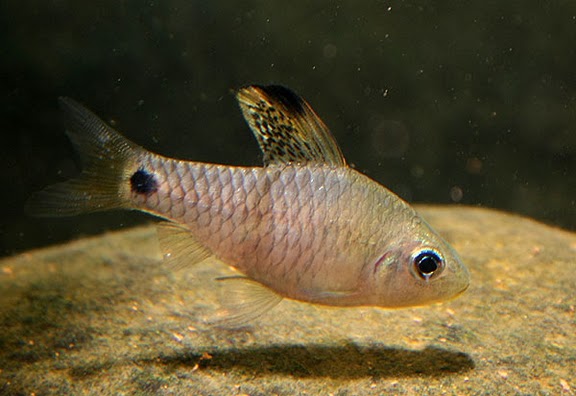
Oreichthys crenuchoides 的雄鱼背鳍显著增大,展示时十分醒目,但它摄食胆怯,不适合与强势抢食鱼混养。群体、柔软底床和能阻断视线的草木布局,决定了弱势个体是否有安稳活动的空间。
分布与栖息地
可能为印度西孟加拉邦布拉马普特拉河支流特有,记录包括靠近阿萨姆边界的 Jorai 河、Ghoti Ganga 河和 Buxa 保护区。
模式地点的 Jorai 河宽约 5 m,泥底、水较清,缓慢流经开阔地区。缓流也是同属鱼常见的环境特征。
饲养环境
布置丰富水草、沉木等结构,加浮水植物柔化照明,落叶可增加自然遮蔽。过滤和水流保持轻柔,底床尽量柔软,本属鱼下颌有用于觅食的细小感觉结构。
不要只在空缸里增加鱼数,应让根枝和植物形成多条遮断视线的通道。
食性与喂食
能接受适口干粮,但不能只喂干粮,每天配细小活饵或冷冻水蚤、丰年虾等。它可能害羞、迟疑不食,需观察每条真正吃到的情况。
习性与混养
较大、过于活跃或抢食强的鱼会使它受压制。小型温和鲤科鱼是较稳妥的伙伴;一些小脂鲤或小型底层鲶鱼也可能相容,但仍需观察。
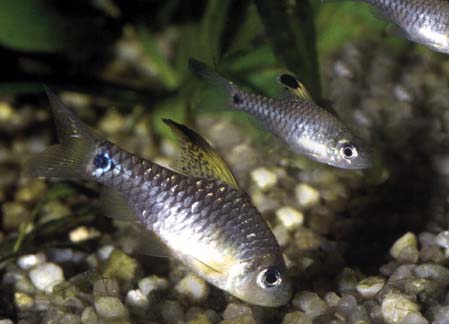
至少八条较合适,形成松散群体和明显等级,雄鱼会相互展示、较量。单养、群体太小或空间狭窄时可能长期退缩,弱鱼也可能被持续欺压。
雌雄区分
雄鱼通常稍大、体色与鳍色更浓,背鳍明显延长。成熟雌鱼临产腹部圆润。不过部分弱势雄鱼会维持较小体型和短背鳍,看起来像雌鱼,因此不能只靠鳍长判断。
繁殖
没有亲鱼照护,状态合适时可连续少量产卵。雌鱼会倒游,把卵贴在宽叶背面或其他固体表面。成熟、遮蔽丰富的缸中可能自然出现少量幼鱼;要提高存活率,可另设繁殖缸,放一至两对亲鱼及产卵拖把、宽叶水草。
约两三天后移走亲鱼,最早一批卵约在首次产卵第三天孵化,幼鱼再靠卵黄维持约五天。开口先用草履虫等微小食物,长大后再转为丰年虾无节幼体、微虫等。
有观察发现,外形类似雌鱼的弱势雄鱼会偷袭参与繁殖,若与其他雄鱼分开,约八周后可逐渐长出典型长背鳍。这不应被误判为性别发生改变。
补充说明
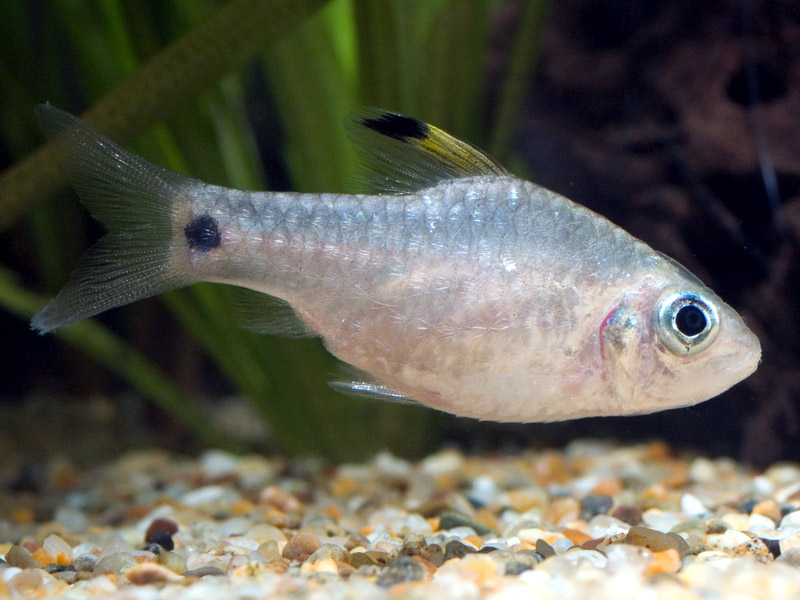
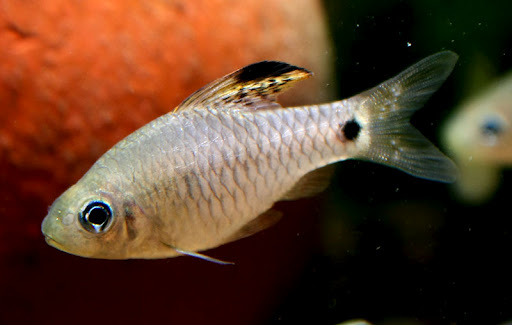
尾基大而清晰的黑斑、臀鳍无暗斑及雄鱼高背鳍是较有用的特征。常被以其他近似种名或“high fin”等标签出售,须结合形态识别,不能让商品名替代物种鉴定。
图片
图片来自 SeriouslyFish,版权归各摄影者所有。
English
Overview
Male Oreichthys crenuchoides develop a strikingly enlarged dorsal fin, but timid feeding limits community choices. A group, soft substrate, and vegetation or wood interrupting sight lines help weaker fish remain active without constant pressure.
Distribution & habitat
It may be endemic to West Bengal tributaries of the Brahmaputra, with records from the Jorai near Assam, the Ghoti Ganga, and Buxa reserve.
The type site was a roughly 5 m wide, clear, slow-flowing stretch of the Jorai over mud in open country. Slow water is also typical for related fishes.
Aquarium setup
Use abundant plants and wood, floating cover to soften light, and optional leaves. Keep current gentle and favor a soft bottom; tiny sensory structures on the lower jaw assist foraging in members of the genus.
Create numerous broken sight lines. Increasing group size in a bare aquarium does not provide the same protection.
Diet & feeding
Appropriate dry foods are accepted but should be supplemented daily with small live or frozen water fleas, Artemia, and similar items. Reluctant feeding makes it necessary to verify that every fish actually eats.
Behaviour & compatibility
Larger, boisterous, or competitive feeders can suppress it. Small peaceful cyprinids are better choices; some small characins or bottom catfishes may work, with continued observation.
Maintain at least eight. It forms a loose hierarchy rather than a synchronized school, and males display and spar. Isolation, very small groups, or cramped accommodation can cause withdrawal and persistent bullying of subordinates.
Sexual dimorphism
Males are slightly larger and more colorful, with greatly extended dorsal fins. Ripe females become rounded. However, some subordinate males retain small bodies and short fins, resembling females, so fin length alone can mislead.
Breeding
There is no parental attendance, and small batches can be laid repeatedly when adults are ready. Females invert beneath broad leaves or other solid surfaces to attach eggs. A mature sheltered aquarium may produce occasional young; a separate setup with one or two pairs, mops, and broad-leaved plants can improve survival.
Remove adults after two or three days. The earliest eggs hatch around the third day after initial laying, and yolk reserves sustain larvae for approximately another five days. Begin feeding with Paramecium or similar minute foods, moving to Artemia nauplii and microworms as the young become large enough.
Female-like subordinate males have been observed sneaking into spawning events. After separation from other males, typical extended dorsal fins developed in about eight weeks. This should not be confused with a change of sex.
Notes
A large distinct tail-base mark, lack of a dark anal-fin marking, and the male's high dorsal fin aid recognition. Similar-species names and high-fin labels are often applied in trade, so inspect morphology rather than relying on the sales name.
来源
- https://www.seriouslyfish.com/species/oreichthys-crenuchoides(抓取于 2026-10-10)
oreichthys-crenuchoides · 文件: data/species/oreichthys-crenuchoides.md · 状态: 草稿