山魮
概要
| 字段 | 值 |
|---|---|
| 类别 | 鱼 |
| 学名 | Oreichthys cosuatis |
| 别名 | 库尔格无须魮、庫爾格無鬚魮 |
| 分类 | 鲤形目 Cypriniformes › 鲤科 Cyprinidae › Oreichthys |
| 水体 | 淡水 |
| 原产地 | 孟加拉国、印度、尼泊尔 |
| 成体体长 | 4.3 cm |
| 饲养难度 | 中等 |
| 最小水体 | 54 L |
| 最小缸长 | 60 cm |
| 群居方式 | 群游 |
| 外部数据 | seriouslyfish oreichthys-cosuatis;fishbase 24052 |
水质参数
| 参数 | 耐受范围 | 最适范围 | 单位 |
|---|---|---|---|
| 水温 | 24–28 | — | °C |
| pH | 6.5–7.5 | — | — |
| 总硬度 | 5–15 | — | dGH |
概述
山魮(Oreichthys cosuatis)是体型小、进食较谨慎的鲤科鱼,适合安静、遮蔽物丰富的群养环境。它会在群体内建立等级,雄鱼之间也会展示和较量,因此胆小并不代表可以忽略同类互动。贸易中有多种近似鱼使用同一名称,辨种应格外谨慎。
分布与栖息地
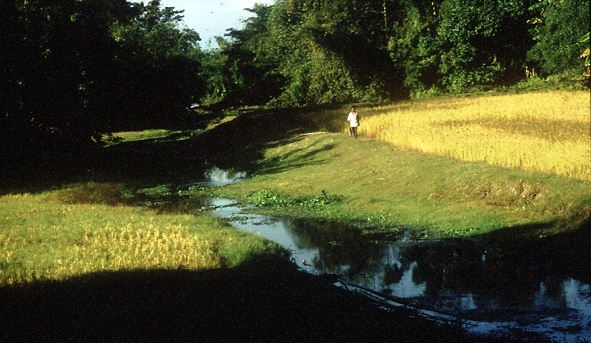
可能主要局限于尼泊尔、印度和孟加拉国的恒河及布拉马普特拉河流域。泰国、缅甸和印度西高止山的部分记录,很可能属于尚未描述的其他种,不能据此认定本种的范围。栖地似乎以流速较缓的小支流和源头溪流为主,水体清澈,岸边有浓密的悬垂植被。
饲养环境
布置密植水草、沉木及适量落叶,浮水植物可减弱光线;同时用造景打断个体之间的视线。水流宜温和。下颌有用于觅食的细小感觉结构,底材应柔软,避免粗糙表面妨碍其探食。环境既要提供躲藏处,也要让弱势鱼能离开强势个体的视野。
食性与喂食
能接受细小干粮,但不宜长期只喂一种干饲料。每天配合水蚤、丰年虾等体型合适的活体或冷冻食物,有助于维持状态与发色。它可能因胆怯而迟疑进食,投喂时应确认每条鱼都能吃到,而不是只观察强势伙伴是否抢得积极。
习性与混养
不适合与体型大、动作粗猛或抢食强的鱼混养,容易受欺负或吃不到食物。小型、温和的鲤科伙伴更容易匹配。建议至少八条,并有足够遮挡;单养、群体太小或空间局促都可能使鱼长期躲藏,也可能让弱势成员持续遭到排挤。
雌雄区分
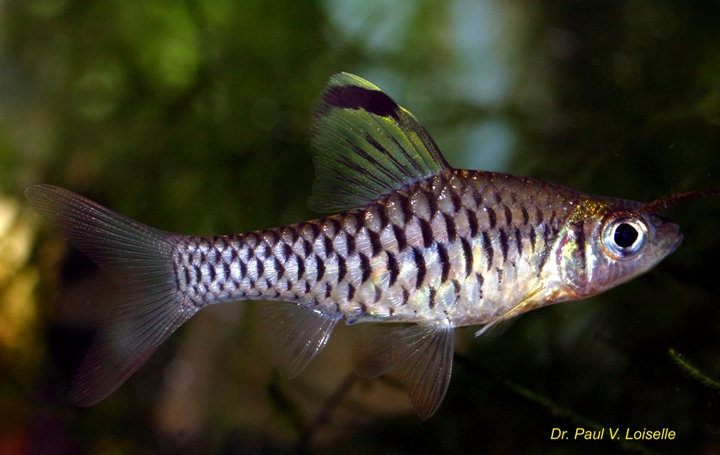
仅凭外形判别雌雄应保持谨慎。雄鱼较大的体型、较鲜明的颜色和延长的背鳍,以及成熟雌鱼较圆的腹部,可作为观察线索,但雌雄外观差异的描述并不一致,不宜依赖单一特征。
补充说明
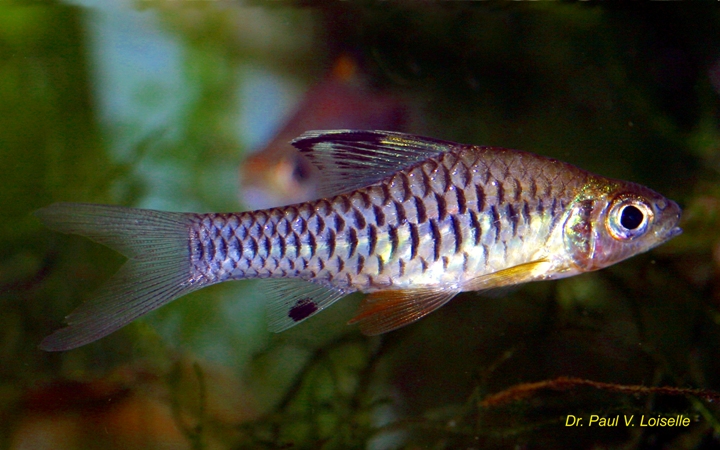
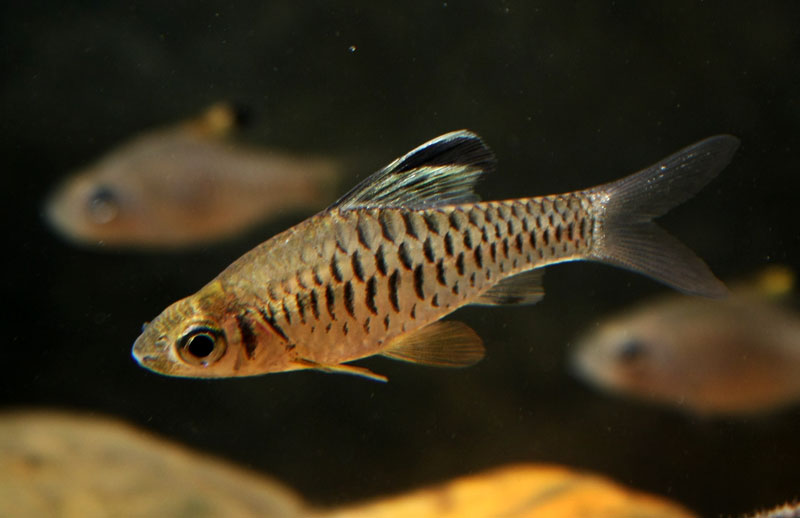
本种通常没有黑色尾柄斑,成鱼臀鳍可见深色三角斑。不过,有些尚未描述的近似鱼同样缺乏尾柄斑,因此不能只靠这一项排除误认。产地和多个形态特征应结合考虑。
图片
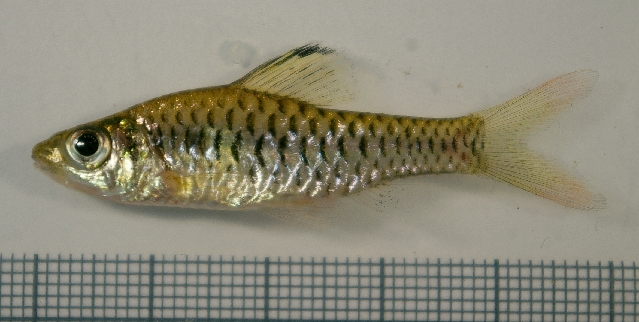
图片来自 SeriouslyFish,版权归各摄影者所有。
English
Overview
Oreichthys cosuatis is a small, cautious feeder suited to a quiet aquarium with substantial cover and a proper group. Individuals establish a hierarchy, and males display and spar, so a shy disposition does not eliminate social pressure. Similar undescribed fishes also appear under its name in trade.
Distribution & habitat
It is probably centered on the Ganges and Brahmaputra basins in Nepal, India, and Bangladesh. Some records from Thailand, Myanmar, and India's Western Ghats likely concern other, undescribed species. Its habitats apparently include slow minor tributaries and headwaters with clear water and dense overhanging vegetation.
Aquarium setup
Use plants, wood, and some leaf litter to provide shelter, with floating growth to soften the light. Arrange cover to interrupt sightlines so subordinate fish can move out of view. Keep water movement gentle. A soft substrate suits the tiny sensory structures on the lower jaw that help the fish forage.
Diet & feeding
Small dried foods are accepted, but should not form an exclusive diet. Provide appropriately sized live or frozen Daphnia, Artemia, and similar foods daily to support condition and color. Feeding can be hesitant, particularly around stronger companions; check that each fish obtains food.
Behaviour & compatibility
Large, boisterous, or highly competitive fish can bully it or monopolise meals. Small, peaceful cyprinids are more suitable partners. Keep at least eight individuals with plentiful visual barriers. Isolation, very small groups, and cramped quarters can result in withdrawal or repeated harassment of subordinates.
Sexual dimorphism
Sexing from appearance requires caution. Larger size, stronger color, and an extended dorsal fin in males, together with a rounder abdomen in mature females, may offer clues. Accounts of how clearly the sexes differ are inconsistent, so a single feature should not be treated as decisive.
Notes
The species generally lacks a black caudal-peduncle spot, while adults can show a dark triangular marking on the anal fin. Some undescribed lookalikes also lack the tail-base spot. Identification therefore needs several features and locality information together.
来源
- https://www.seriouslyfish.com/species/oreichthys-cosuatis(抓取于 2026-10-10)
oreichthys-cosuatis · 文件: data/species/oreichthys-cosuatis.md · 状态: 草稿