Opsarius signicaudus
概要
| 字段 | 值 |
|---|---|
| 类别 | 鱼 |
| 学名 | Opsarius signicaudus |
| 分类 | 鲤形目 Cypriniformes › 鲤科 Cyprinidae › Opsarius |
| 水体 | 淡水 |
| 原产地 | 泰国 |
| 成体体长 | 10 cm |
| 饲养难度 | 中等 |
| 最小水体 | 243 L |
| 最小缸长 | 120 cm |
| 群居方式 | 独居 |
| 特征 | 会跳缸: 是 |
| 外部数据 | seriouslyfish opsarius-signicaudus;fishbase 66957 |
水质参数
| 参数 | 耐受范围 | 最适范围 | 单位 |
|---|---|---|---|
| 水温 | 18–26 | — | °C |
| pH | 6–8 | — | — |
| 总硬度 | 2–12 | — | dGH |
概述
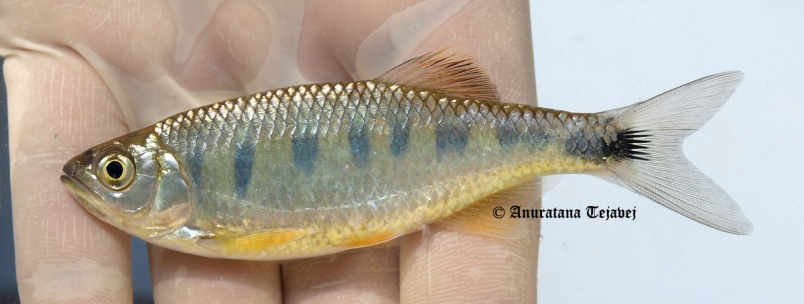
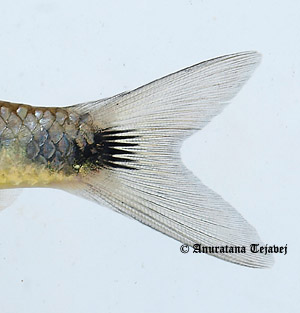
Opsarius signicaudus 来自泰国西部湄功河源流,尾基有一块向尾鳍延伸的长暗斑。它游速快、摄食旺,需要富氧、洁净且有充分游动空间的环境,不能因旧商品标签陌生而忽略成年群体的需要。
分布与栖息地
已知限于湄功河 Khwae Yai 与 Khwae Noi 两支的源头支流,模式点在北碧府桑卡拉武里地区。
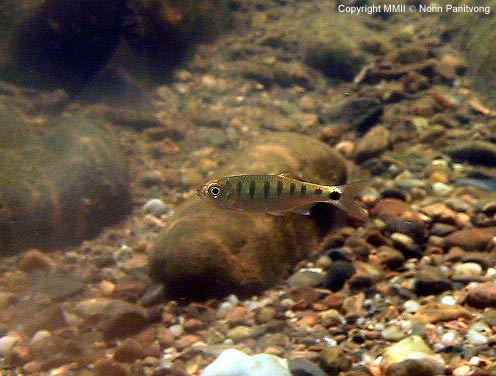
生活于坡度低至中等、流速中等偏快的河溪,底部有砾石、卵石、大石及基岩。成鱼偏向较深、有流动的河段,幼鱼则利用浅水或大石背后流速较缓的区域。
饲养环境
沙、细砾及大小圆石可形成溪流布景,沉木和根枝作为辅助,避免占满游动区。耐受的附生蕨类、水榕可固定在硬景上。
需要稳定成熟的过滤环境,对有机废物累积敏感。保持清洁、高溶氧、适中水流,必要时增加曝气或造流,每周换水约 30%~50%。缸盖必须严密。
食性与喂食
本属通常在表面摄食水生及陆生昆虫,可能兼吃小鱼和底栖无脊椎动物,不宜直接把属级食谱当作本种确定分类。
优质干粮需搭配小型活饵或冷冻红虫、丰年虾、切碎蚯蚓等。果蝇和小蟋蟀可在充分摄食调理后投喂。
习性与混养
速度与抢食优势会让慢游、胆小鱼难以适应,很小的鱼也可能被捕食。较健壮且相近体型的开阔水域鲤科鱼,以及适应相同水流条件的底层鱼更可考虑。
宜至少五条同种维持松散群体及等级关系。两三条时弱鱼可能被持续追赶,单条则可能攻击外形相近的异种;不要将群居理解为没有竞争。
雌雄区分
成熟雄鱼胸部会更发达,头部疣突更多,繁殖状态下颜色较浓。雌鱼可能稍大,身体尤其在怀卵时更厚实。
繁殖
尚无可采用的人工繁殖记录。
补充说明
尾基暗斑由尾端大斑与体侧最后一道竖纹相连,横向延伸到部分尾鳍鳍条上。侧线鳞通常约三十六至三十九枚,口须短,部分个体缺少吻须。这些特征有助于与同样有大尾斑的近似种区分。
可能曾以错误名称出口,准确识别应结合尾斑方向、须长及鳞列,而非仅看贸易名。
图片
图片来自 SeriouslyFish,版权归各摄影者所有。
English
Overview
The western Thai headwater fish Opsarius signicaudus has an elongated dark tail-base blotch extending onto the fin. Fast swimming and vigorous feeding require clean oxygenated water and ample space for a group.
Distribution & habitat
Known records are restricted to headwater tributaries of the Khwae Yai and Khwae Noi within the Mae Klong basin. The type locality lies in Sangklaburi, Kanchanaburi.
Moderate to fast streams and rivers over gravel, cobbles, boulders, and bedrock are occupied. Adults tend to use deeper flowing sections, while juveniles shelter in shallows or slower pockets behind large rocks.
Aquarium setup
Use sand, fine gravel, and rounded stones for a stream layout, adding roots without sacrificing open water. Sturdy attached ferns or Anubias can be included.
A mature stable system is essential. Prevent organic waste accumulation and maintain abundant oxygen with moderate circulation, extra aeration, or pumps as needed. Change roughly 30–50% weekly and secure the cover tightly.
Diet & feeding
The genus mainly feeds near the surface on aquatic and terrestrial insects, possibly also taking small fishes and bottom invertebrates. That account should not be treated as a confirmed species-specific classification.
Supplement quality dry food with live or frozen bloodworms, Artemia, and chopped earthworms. Gut-loaded fruit flies and small crickets offer additional variety.
Behaviour & compatibility
Its speed and strong feeding response can overwhelm slow or timid companions, and very small fishes face possible predation. Robust open-water cyprinids of similar size and suitable bottom dwellers sharing its needs are better options.
Keep at least five to form a loose social hierarchy. Two or three may leave subordinates under constant pressure, while a solitary fish may target similar-looking companions. Group living still involves competition.
Sexual dimorphism
Males develop a fuller chest, more head tubercles, and stronger color in breeding condition. Females may become slightly larger and are especially thick-bodied when ripe.
Breeding
No established aquarium method is available.
Notes
The tail blotch combines the last flank bar with the large mark at the tail base, extending lengthwise onto basal rays. Approximately 36–39 lateral-line scales and short barbels, with rostral barbels absent in some fish, assist separation from other large-spotted relatives.
Exports may have occurred under incorrect names. Tail-mark orientation, barbel length, and scale rows are more dependable clues than a trade label alone.
来源
- https://www.seriouslyfish.com/species/opsarius-signicaudus(抓取于 2026-10-10)
opsarius-signicaudus · 文件: data/species/opsarius-signicaudus.md · 状态: 草稿