丽色低线鱲
概要
| 字段 | 值 |
|---|---|
| 类别 | 鱼 |
| 学名 | Opsarius pulchellus |
| 别名 | 麗色低線鱲、Barilius pulchellus、Barilius buddhae、Barilius pellegrini、Paradaniops macropterus、Daniops nammuensis |
| 分类 | 鲤形目 Cypriniformes › 鲤科 Cyprinidae › Opsarius |
| 水体 | 淡水 |
| 原产地 | 柬埔寨、中国、老挝、泰国、越南 |
| 成体体长 | 11 cm |
| 饲养难度 | 中等 |
| 最小水体 | 243 L |
| 最小缸长 | 120 cm |
| 群居方式 | 群游 |
| 特征 | 会跳缸: 是;吃小鱼: 是 |
| 外部数据 | seriouslyfish opsarius-pulchellus;fishbase 27046 |
| 食性 | 肉食 |
水质参数
| 参数 | 耐受范围 | 最适范围 | 单位 |
|---|---|---|---|
| 水温 | 18–26 | — | °C |
| pH | 6–7.5 | — | — |
| 总硬度 | 2–12 | — | dGH |
概述
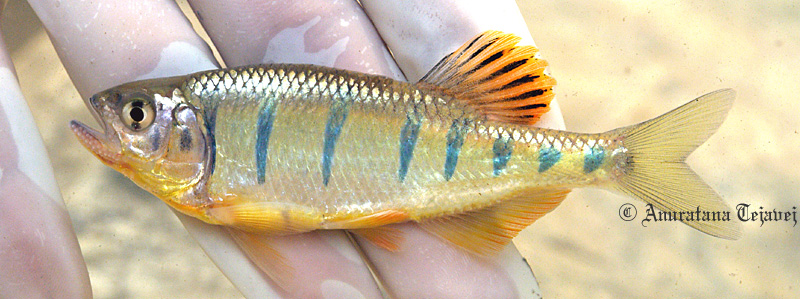
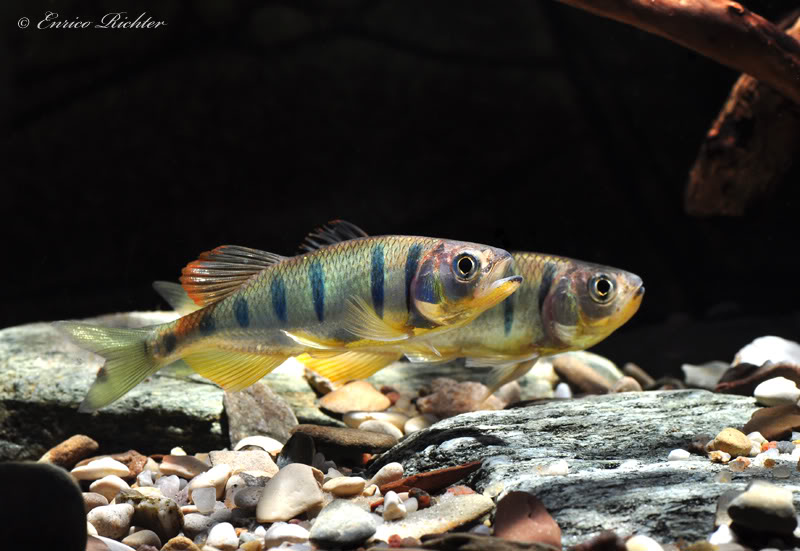
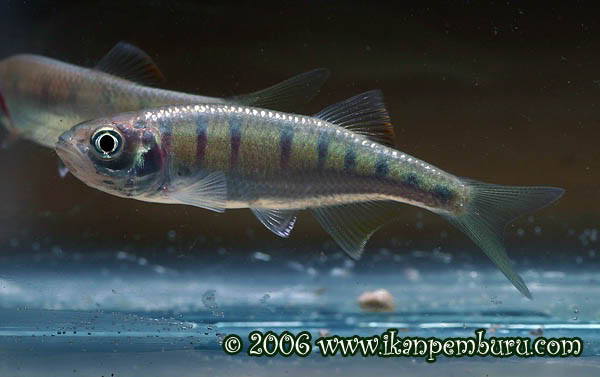
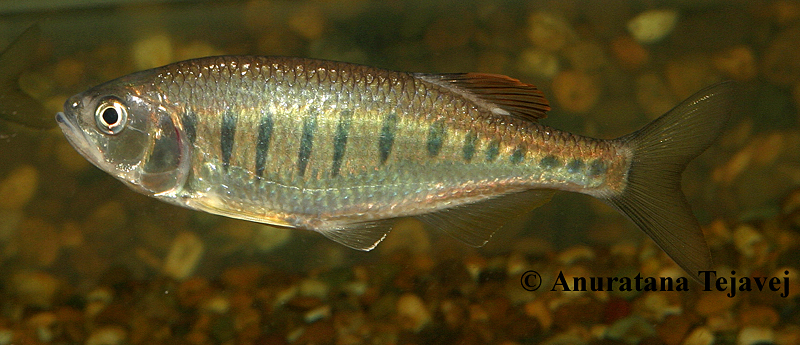
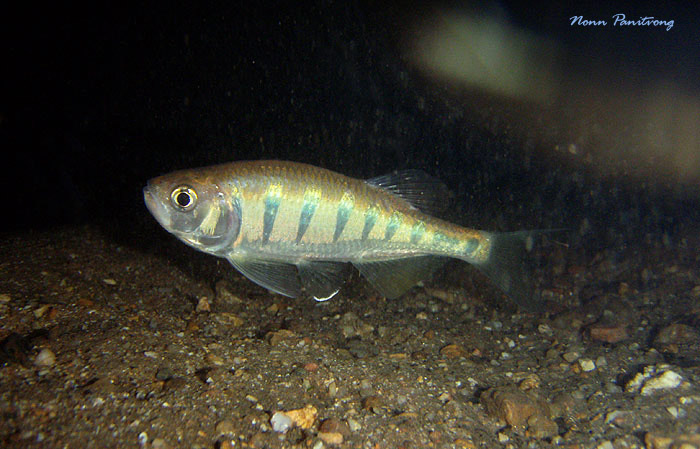
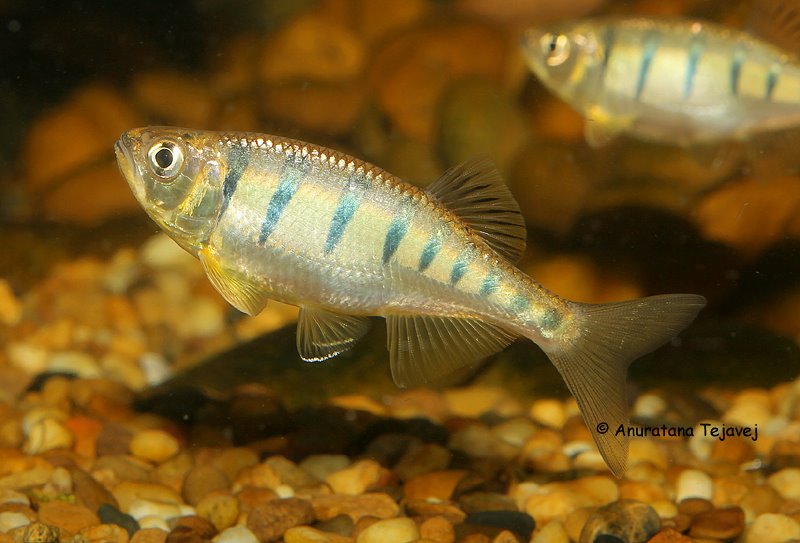
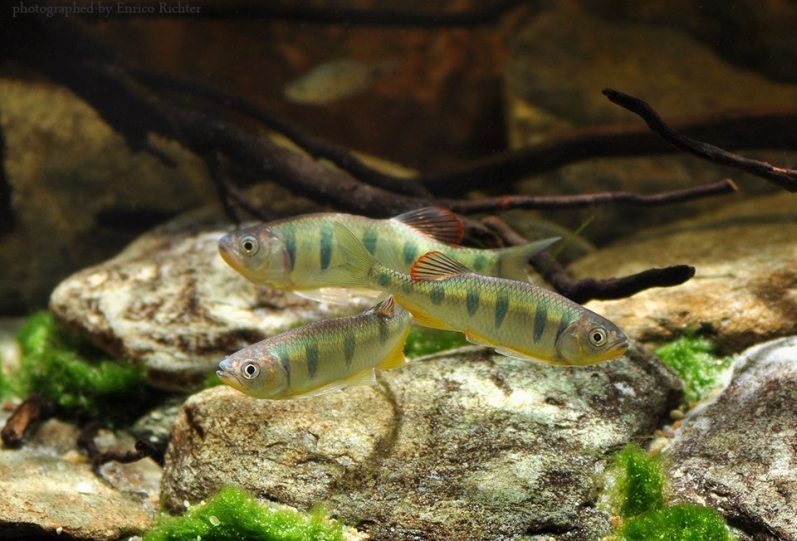
丽色低线鱲(Opsarius pulchellus)体侧有七至十条上下延伸的条斑,靠近尾部的斑纹趋于圆短。它游速快、抢食积极,适合空间宽裕的流水群养环境;水中含氧量、游泳距离与伙伴的活动能力,都比单纯追求装饰繁复更重要。
分布与栖息地
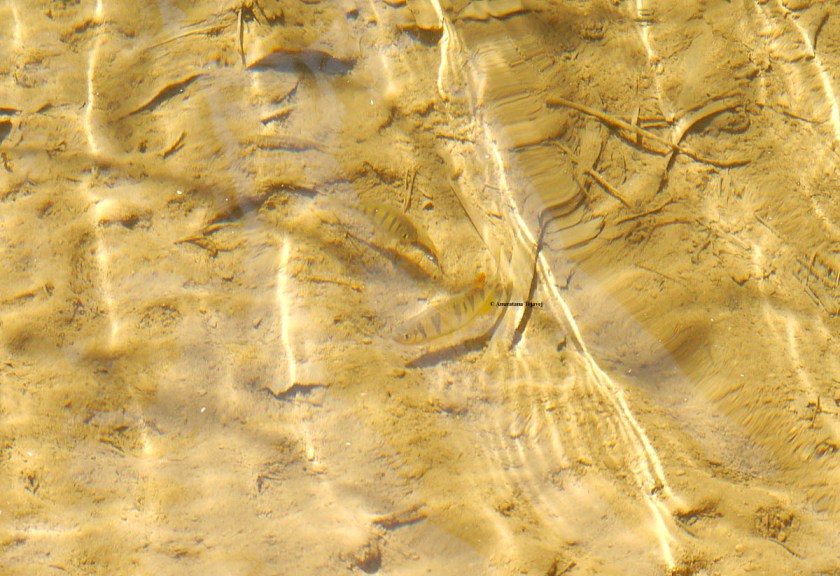
分布于泰国中西部湄南河水系,以及泰国、老挝、柬埔寨和越南的湄公河中下游流域,中国云南的湄公河上游也有少量记录。常见于山麓的清澈溪流和源头河段,坡度较低至中等,水流适中至较急、溶氧丰富,底部有砾石、卵石、巨石或裸露基岩;有时也进入水流较快的大河。
饲养环境
保留足够的连续游泳区,用沙砾、圆石、较大石块与沉木营造河床结构。耐受的附生植物可作为点缀。成熟过滤、良好供氧和适中水流是基础,每周换水约三分之一至一半,避免有机废物积累。尚未成熟的缸不适合本种;缸盖必须严密,包括管线周围的空隙。
食性与喂食
本属以水面附近的水生及陆生昆虫为主要食物,也可能捕食小鱼和底栖无脊椎动物。可投喂优质干粮,但应经常搭配活体或冷冻丰年虾、红虫和切碎蚯蚓。提供果蝇或小蟋蟀时,先给饲料昆虫喂食,提升其营养价值。
习性与混养
不宜放进以慢游、胆小鱼为主的普通混养缸。抢食时尤其容易压制弱势伙伴,小鱼还可能被吞食;选择体型相仿、活动能力较强的鱼更合适。至少饲养五条,以分散群体内的等级压力。两三条的小群体可能使某条鱼长期受欺负,单养个体也可能转而追逐外形相近的其他鱼。
雌雄区分
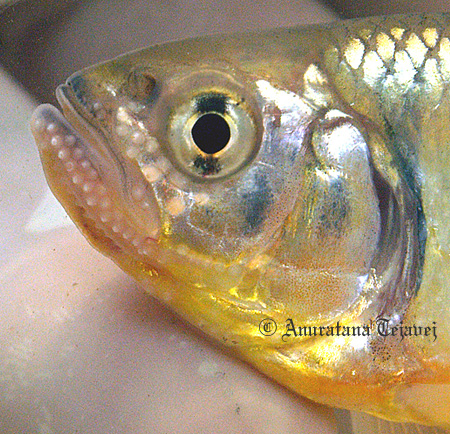
成熟雄鱼的胸鳍、背鳍和臀鳍较延长;繁殖状态下头部及身体可出现珠星,身体下半部变得鲜黄至橙色。雌鱼颜色较淡,通常体型更大、更厚实,怀卵时腹部尤其明显。
补充说明
贸易中使用的俗名很多,不能仅凭标签判断本种。体侧条斑的数量及由前向后变圆的形态,是比泛用商品名更有价值的观察点。
图片
图片来自 SeriouslyFish,版权归各摄影者所有。
English
Overview
Opsarius pulchellus has seven to ten upright flank markings that become rounder toward the tail. This swift, competitive feeder suits a spacious river-style group aquarium, where oxygenation, uninterrupted swimming room, and suitably active companions matter greatly.
Distribution & habitat
Its range includes the Chao Phraya system in central and western Thailand and the middle to lower Mekong basin in Thailand, Laos, Cambodia, and Vietnam. A few records also come from the upper Mekong in Yunnan, China. Typical sites are clear, oxygen-rich submontane streams and headwaters with low to moderate gradients and moderate to fast flow. Gravel, cobbles, boulders, and exposed bedrock form the channel; larger fast-flowing rivers are also used.
Aquarium setup
Leave a broad swimming corridor among sand, gravel, worn stones, larger rocks, and wood. Tough attached plants can soften the arrangement. Maintain mature filtration, good oxygenation, and moderate circulation. Weekly changes of around one-third to one-half of the water help limit organic accumulation. Avoid newly established tanks and fit a secure lid, including around pipes and cables.
Diet & feeding
The genus mainly takes aquatic and terrestrial insects near the surface; small fish and bottom invertebrates may also be eaten. Offer quality prepared food alongside frequent live or frozen Artemia, bloodworms, and chopped earthworms. Fruit flies and small crickets should be fed nutritious food before use.
Behaviour & compatibility
Slow-moving or timid community fishes can lose out to its vigorous feeding, and tiny companions risk predation. Choose robust fishes of comparable size. A group of five or more helps distribute interactions within the hierarchy. In pairs or trios, a subordinate can receive persistent harassment; a solitary individual may direct attention toward other similarly shaped species.
Sexual dimorphism
Adult males develop longer pectoral, dorsal, and anal fins. Breeding males acquire tubercles on the head and body and bright yellow to orange color below. Females are generally less vivid, larger, and deeper-bodied, particularly when carrying eggs.
Notes
Several trade names are applied to this fish. The number and changing shape of its flank markings offer more useful identification clues than a general commercial label.
来源
- https://www.seriouslyfish.com/species/opsarius-pulchellus(抓取于 2026-10-10)
opsarius-pulchellus · 文件: data/species/opsarius-pulchellus.md · 状态: 草稿