饰妆低线鱲
概要
| 字段 | 值 |
|---|---|
| 类别 | 鱼 |
| 学名 | Opsarius ornatus |
| 别名 | 飾妝低線鱲、Barilius ornatus |
| 分类 | 鲤形目 Cypriniformes › 鲤科 Cyprinidae › Opsarius |
| 水体 | 淡水 |
| 原产地 | 泰国 |
| 成体体长 | 11 cm |
| 饲养难度 | 中等 |
| 最小水体 | 540 L |
| 最小缸长 | 150 cm |
| 群居方式 | 群游 |
| 特征 | 会跳缸: 是;吃小鱼: 是 |
| 外部数据 | seriouslyfish opsarius-ornatus;fishbase 54669 |
| 食性 | 肉食 |
水质参数
| 参数 | 耐受范围 | 最适范围 | 单位 |
|---|---|---|---|
| 水温 | 18–26 | — | °C |
| pH | 6–8 | — | — |
| 总硬度 | 2–12 | — | dGH |
概述
饰妆低线鱲(Opsarius ornatus)是游动活跃的流水鱼,适合有足够游泳距离、供氧充分的大型鱼缸。市场名称和早期分布记录存在混淆,购买时应先确认身份;旧有的广泛分布说法不能直接套用于本种。
分布与栖息地
已知记录来自泰国,但确切范围尚有争议。一种解释认为它主要见于克拉地峡东侧春蓬府的少数水系,尤其是 Tha Sae 流域;另一种解释认为模式产地可能属于湄南河流域,但该流域缺乏描述之后的采集记录。栖地包括流速不同的溪河,底部可为沙、砾石或泥。
饲养环境
用沙砾、磨圆石块和沉木布置河流式环境,同时留下宽阔游泳区。水流可保持适中,重点是充足溶氧、成熟过滤和清洁水质;每周换水约三分之一至一半。不要放进尚未稳定的新缸。可用附生的耐受型水草点缀,缸盖及设备开口都应封妥,防止跳出。
食性与喂食
本属主要在水面捕食水生与陆生昆虫,也可能吃小鱼及底栖无脊椎动物。人工饲养可用优质干粮配合活体或冷冻的丰年虾、红虫和切碎蚯蚓。果蝇、小蟋蟀等饲料昆虫应先喂养营养充足的食物,再用于投喂。
习性与混养
游速和抢食能力会给温吞、胆小的鱼造成压力,体型很小的鱼还有被捕食的风险。伙伴宜选择体型相近、活动能力匹配的鱼。至少养五条,让群体等级互动分散;只养两三条容易使弱势个体持续受压,单养也可能追逐外形相近的其他鱼。
雌雄区分
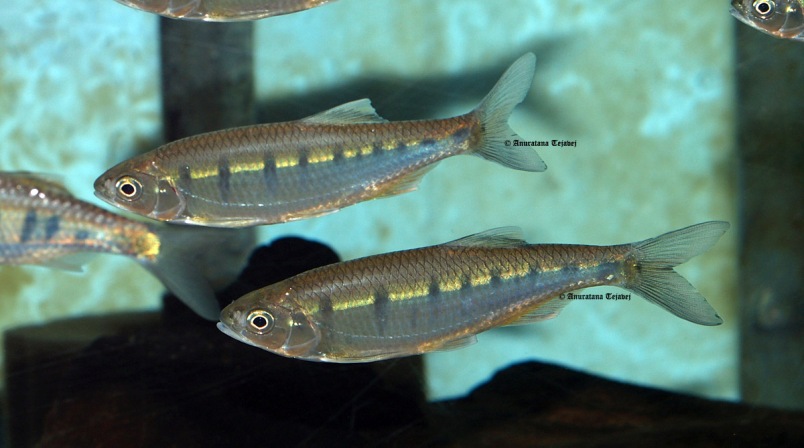
雌鱼通常体型较大、腹部较厚,颜色不及雄鱼鲜明,怀卵时更明显。成熟雄鱼似乎会在头部、身体和鳍上出现细小珠星,腹侧也可能呈红橙色至古铜色。
补充说明
早先被归入本种的萨尔温江、Ataran、Ping 及湄公河记录,涉及另一种近缘鱼。尾柄黑斑缺失或很小、触须短细等形态可供辨认,但贸易标签和单个斑纹都不足以可靠确定身份。
图片
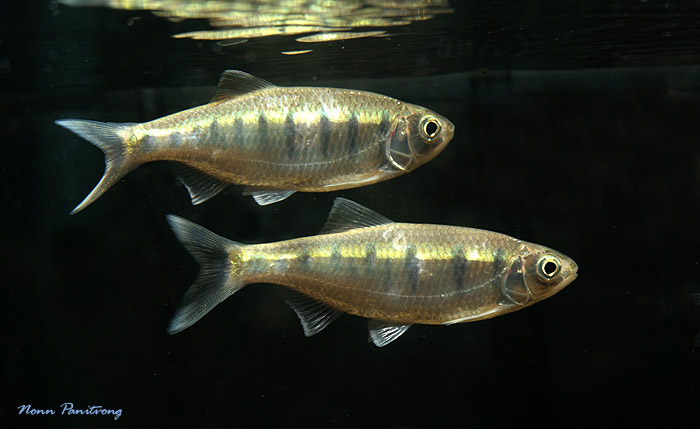
图片来自 SeriouslyFish,版权归各摄影者所有。
English
Overview
Opsarius ornatus is an active river fish that needs substantial swimming room and well-oxygenated water. Its identity deserves attention before purchase: trade labels and historical locality records have confused it with relatives, so an apparently wide reported range can be misleading.
Distribution & habitat
It occurs in Thailand, but its precise range remains disputed. One interpretation restricts it to a few systems in Chumphon Province on the eastern Isthmus of Kra, especially the Tha Sae basin. Another places the original locality in the Chao Phraya system, where subsequent collections have not confirmed it. Reported habitats include flowing streams and rivers over sand, gravel, or mud.
Aquarium setup
Arrange sand, gravel, rounded stones, and wood around a generous open swimming area. Hardy attached plants can be included. Provide established filtration, ample oxygen, and moderate circulation; replace roughly one-third to one-half of the water weekly. An immature aquarium is unsuitable. Fit a secure cover and close equipment gaps because these fish can jump.
Diet & feeding
Members of this genus chiefly hunt aquatic and terrestrial insects at the surface, with small fishes and bottom invertebrates possibly supplementing the diet. Combine suitable prepared foods with live or frozen Artemia, bloodworms, and chopped earthworms. Feed fruit flies or small crickets nutritious food before offering them to the fish.
Behaviour & compatibility
Its speed and competitive feeding can overwhelm timid or slow companions, while very small fish may be eaten. Select robust partners of similar size. Keep at least five: a pair or trio can leave the weakest fish under sustained pressure, and an isolated individual may harass other similarly shaped fishes.
Sexual dimorphism
Females tend to be larger, fuller, and less colorful, especially when carrying eggs. Mature males apparently develop tiny tubercles on the head, body, and fins, together with reddish-orange or bronze color along the underside.
Notes
Older records from the Salween, Ataran, Ping, and Mekong involve another related species. An absent or small caudal-peduncle mark and short, slender barbels can assist identification, but neither one marking nor a dealer's label provides a secure diagnosis.
来源
- https://www.seriouslyfish.com/species/opsarius-ornatus(抓取于 2026-10-10)
opsarius-ornatus · 文件: data/species/opsarius-ornatus.md · 状态: 草稿