Opsarius infrafasciatus
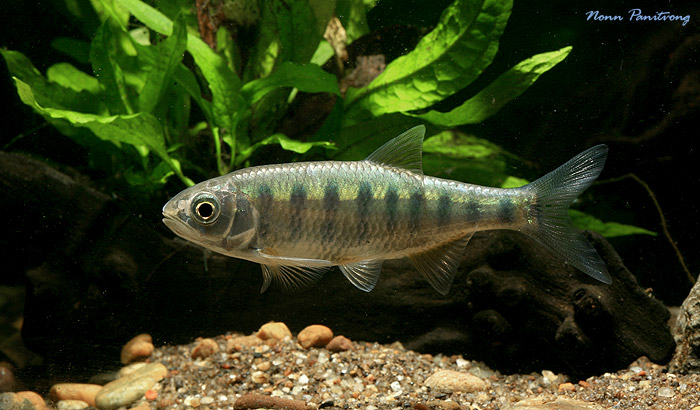
概要
| 字段 | 值 |
|---|---|
| 类别 | 鱼 |
| 学名 | Opsarius infrafasciatus |
| 分类 | 鲤形目 Cypriniformes › 鲤科 Cyprinidae › Opsarius |
| 水体 | 淡水 |
| 原产地 | 中国、缅甸、泰国 |
| 成体体长 | 10 cm |
| 饲养难度 | 中等 |
| 最小水体 | 243 L |
| 最小缸长 | 120 cm |
| 群居方式 | 群游 |
| 特征 | 会跳缸: 是 |
| 外部数据 | seriouslyfish opsarius-infrafasciatus;fishbase 55218 |
水质参数
| 参数 | 耐受范围 | 最适范围 | 单位 |
|---|---|---|---|
| 水温 | 18–26 | — | °C |
| pH | 6–8 | — | — |
| 总硬度 | 2–12 | — | dGH |
概述
Opsarius infrafasciatus 是活跃、游速很快的溪流群居鱼,尾部的小斑点是辨认线索之一。它对水质和供氧要求较高,抢食积极,搭配同伴时应避免慢游、胆小和过小的鱼。
分布与栖息地
记录涉及泰国滨河、缅甸及中国的 Ataran—萨尔温江相关水系,以及中国境内的湄公河支流。模式产地对应泰国清迈府 Mae Tang 河。
常见于源头及类似的小河溪流,坡度低至中等,流速中等至快,含氧高,底床有砾石、卵石、大石和裸露岩床。
饲养环境
以沙、细砾和不同大小圆石构建溪流环境,沉木根枝作辅助,务必留出开阔游动区。可固定耐受水流的附生蕨类或水榕。
需要成熟稳定的缸,不能容忍有机污物积累。维持清洁水质、高溶氧和适中循环,按需配过滤、造流及曝气,每周换水约 30%~50%,并用严密缸盖防跳。
食性与喂食
本属通常在表层摄食水生、陆生昆虫,可能兼吃小鱼及底栖无脊椎动物,这不等于本种已有完整天然食谱。
缸中可用优质干粮配活饵或冷冻红虫、丰年虾及切碎蚯蚓。果蝇和小蟋蟀也可用,先让饵虫充分摄食,以提高其投喂价值。
习性与混养
其环境要求和抢食速度使它不适合普通安静综合缸。慢游、胆小鱼可能受压制,小得多的鱼还有被捕食风险。较健壮、相近体型的开阔水域鱼及适型底栖鱼更可考虑。
同种形成有等级的松散群体,应至少五条。只养两三条时弱鱼可能持续被欺负,单养则可能转而攻击外形相似的异种。群居不等于始终整齐同步游动。
雌雄区分
繁殖状态下雄鱼头部和身体出现可见疣突,体色更浓。雌鱼通常略大、体形更厚,怀卵时尤其明显。
繁殖
尚无可采用的人工繁殖记录。
补充说明
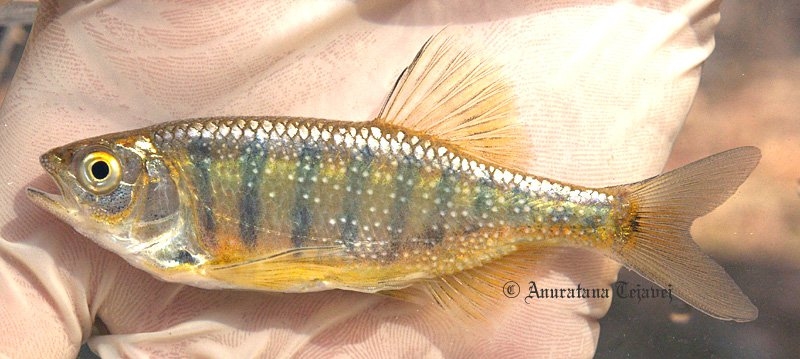
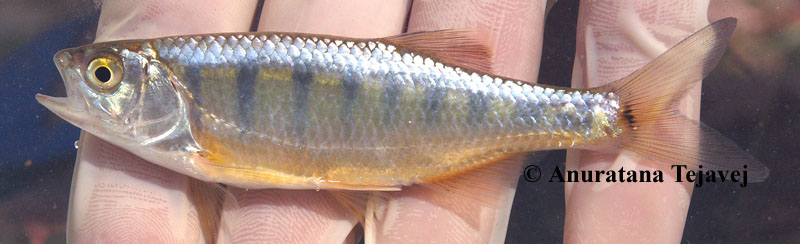
曾与近似种混作异名,2012 年的处理重新将其区别开来。小尾斑、约三十六至四十一枚侧线鳞、短小或缺失的口须等需要组合观察。旧属名 Barilius 可能仍出现在历史标签中。
图片
图片来自 SeriouslyFish,版权归各摄影者所有。
English
Overview
A small tail spot is one clue to the identity of the fast-swimming Opsarius infrafasciatus. Strong feeding activity and requirements for clean oxygenated water make timid, slow, or much smaller fishes poor companions.
Distribution & habitat
Records involve Thailand's Ping, the Ataran and Salween region in Myanmar and China, and Chinese Mekong tributaries. The type locality corresponds to the Mae Tang in Chiang Mai province.
Typical sites are headwaters and minor streams or rivers of low to intermediate gradient, with moderate to rapid flow over gravel, cobbles, boulders, and exposed rock.
Aquarium setup
A stream arrangement of sand, fine gravel, and rounded stones can include roots while preserving extensive swimming room. Hardy attached ferns or Anubias are suitable.
Use a mature stable aquarium and prevent organic waste accumulation. Maintain clean water, abundant oxygen, and moderate circulation with filtration, pumps, or aeration as required. Weekly changes of approximately 30–50% and a secure cover are essential provisions.
Diet & feeding
The genus generally takes aquatic and land insects near the surface, with small fishes and bottom invertebrates possibly included. This does not establish a complete natural menu for this species.
Combine good dry food with live or frozen bloodworms, Artemia, and chopped earthworms. Fruit flies or small crickets are additional options after gut-loading.
Behaviour & compatibility
Environmental demands and feeding speed make quiet general communities unsuitable. Timid or slower fish may be overwhelmed, while much smaller ones face possible predation. Robust similar-sized open-water companions and appropriate bottom dwellers are better candidates.
Maintain at least five individuals. It forms a loose hierarchy-based aggregation rather than a constantly coordinated school. Two or three leave weaker fish vulnerable to persistent harassment; solitary fish may turn aggression toward similar-looking species.
Sexual dimorphism
Breeding males show visible head and body tubercles and stronger color. Females are generally somewhat larger and fuller-bodied, especially when carrying eggs.
Breeding
No established aquarium breeding method is available.
Notes
Historically confused in synonymy with similar species, it was treated as distinct in the 2012 assessment. A small tail spot, approximately 36–41 lateral-line scales, and short or absent barbels contribute to identification. Older labels may still use Barilius.
来源
- https://www.seriouslyfish.com/species/opsarius-infrafasciatus(抓取于 2026-10-10)
opsarius-infrafasciatus · 文件: data/species/opsarius-infrafasciatus.md · 状态: 草稿