多氏低线鱲 · Manipur Baril
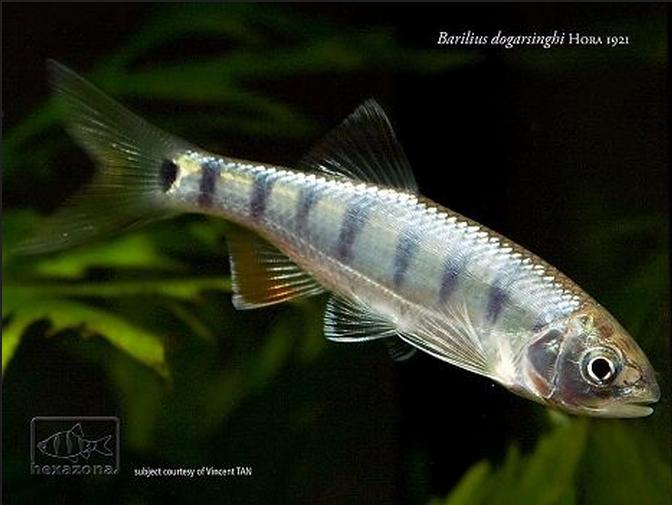
概要
| 字段 | 值 |
|---|---|
| 类别 | 鱼 |
| 学名 | Opsarius dogarsinghi |
| 别名 | 多氏低線鱲 |
| 分类 | 鲤形目 Cypriniformes › 鲤科 Cyprinidae › Opsarius |
| 水体 | 淡水 |
| 原产地 | 印度、缅甸 |
| 成体体长 | 8.5 cm |
| 饲养难度 | 中等 |
| 最小水体 | 540 L |
| 最小缸长 | 150 cm |
| 群居方式 | 群游 |
| 特征 | 会跳缸: 是;吃小鱼: 是 |
| 外部数据 | seriouslyfish opsarius-dogarsinghi;fishbase 24327 |
| 食性 | 肉食 |
水质参数
| 参数 | 耐受范围 | 最适范围 | 单位 |
|---|---|---|---|
| 水温 | 18–24 | — | °C |
| pH | 6–7.5 | — | — |
| 总硬度 | 2–12 | — | dGH |
概述
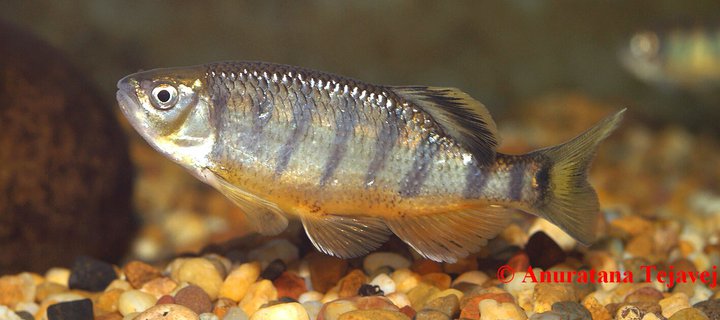
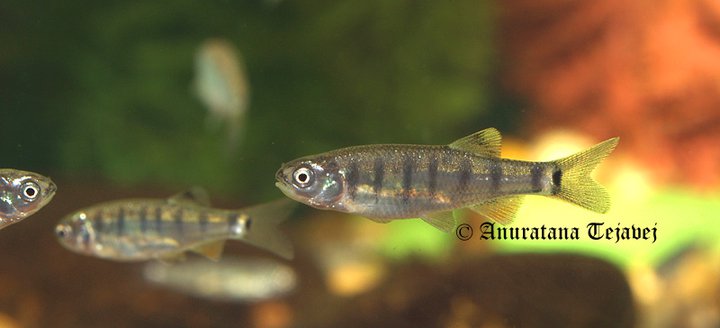
多氏低线鱲(Opsarius dogarsinghi)体侧有八至九条深蓝竖纹,尾鳍基部带醒目的大暗斑。它虽不算巨型鱼,却游动极快,需要很大的横向空间,普通混养缸通常不适合。
分布与栖息地
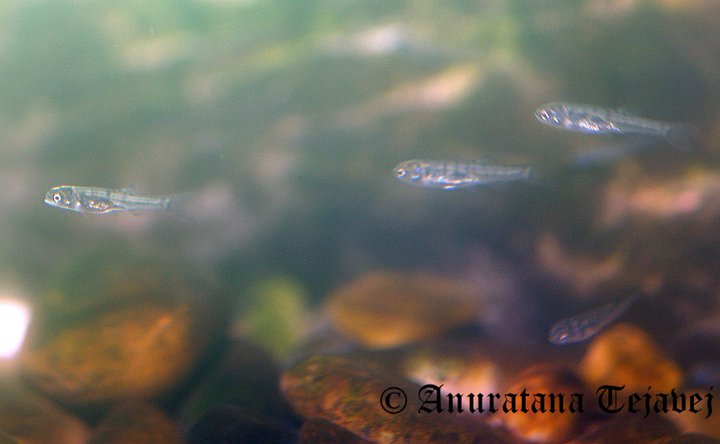
多数记录来自印度东北部曼尼普尔和那加兰的钦敦江水系,缅甸也有少量记录;具体支流范围仍有不确定性,另涉及巴拉克河上游。生活在富氧、低至中等坡度的中速或较快流水中,底部为砾石、圆石和裸岩。
饲养环境
用沙砾、圆石和少量沉木布置河流风格,留足开放游动区,耐养水草可附生造景。成熟过滤、充氧和适度水流必须维持稳定洁净,不可投入尚未成熟的鱼缸。每周换水三成至一半,盖板必须严密,它有很强跳跃能力。
食性与喂食
自然取食以水面昆虫为主,也可能捕食小鱼和底栖无脊椎动物。干粮之外,经常喂红虫、丰年虾和碎蚯蚓等活饵或冷冻饵料;果蝇、小蟋蟀应先喂营养饲料再投给鱼。
习性与混养
小鱼可能被吃,迟缓和胆小的鱼也容易在投喂时受压。合适缸友应体型相近、健壮,能适应河流环境。至少五条同养能分散群内等级压力;两三条时弱势鱼可能被不断追逐,单条则可能攻击相似鱼。
雌雄区分
雌鱼较大、较厚实,颜色通常偏淡。繁殖雄鱼头部会长珠星,身体下部带橙色。
繁殖
已有水族箱繁殖成功记录,但尚不能据此给出具体可复现的产卵条件、孵化时间或育苗流程。
图片
图片来自 SeriouslyFish,版权归各摄影者所有。
English
Overview
Eight or nine blue bars and a prominent dark mark at the tail base help recognize Opsarius dogarsinghi. Modest body size does not remove its need for extensive swimming length. Its speed makes a standard mixed aquarium a poor choice.
Distribution & habitat
Most records concern the Chindwin system in northeastern India's Manipur and Nagaland, with additional occurrences in Myanmar and the upper Barak. Exact tributary limits remain uncertain. Oxygenated streams with moderate to fast flow over gravel, cobbles, and bedrock provide typical habitat.
Aquarium setup
Arrange a spacious river-style tank with stones, sand, and limited wood, leaving long clear swimming routes. Hardy attached plants can be used. Mature filtration, oxygenation, and circulation must maintain stable clean water. Weekly changes of roughly one-third to one-half are recommended. A close-fitting cover is vital against jumping.
Diet & feeding
Surface insects dominate the general natural feeding pattern, with small fishes and benthic invertebrates also possible prey. Supplement prepared food with regular frozen or live meals. Worms, brine shrimp, and nutritionally gut-loaded small insects provide variety.
Behaviour & compatibility
Tiny fish may be swallowed, while slow or hesitant partners can lose out during feeding. Robust fishes of comparable size and compatible river requirements are preferable. Five or more conspecifics help distribute dominance interactions. Smaller groups can leave one fish repeatedly targeted; solitary individuals may become hostile to lookalikes.
Sexual dimorphism
Females tend to be larger, fuller, and less colorful. Reproductive males develop head tubercles and orange coloration on the lower body.
Breeding
Aquarium reproduction has been achieved, but detailed spawning conditions and a repeatable rearing procedure have not been established here.
来源
- https://www.seriouslyfish.com/species/opsarius-dogarsinghi(抓取于 2026-10-10)
opsarius-dogarsinghi · 文件: data/species/opsarius-dogarsinghi.md · 状态: 草稿