Opsarius caudiocellatus
概要
| 字段 | 值 |
|---|---|
| 类别 | 鱼 |
| 学名 | Opsarius caudiocellatus |
| 别名 | Barilius caudiocellatus |
| 分类 | 鲤形目 Cypriniformes › 鲤科 Cyprinidae › Opsarius |
| 水体 | 淡水 |
| 原产地 | 中国、缅甸、泰国 |
| 成体体长 | 8.6 cm |
| 饲养难度 | 中等 |
| 最小水体 | 304 L |
| 最小缸长 | 150 cm |
| 群居方式 | 群游 |
| 特征 | 会跳缸: 是 |
| 外部数据 | seriouslyfish opsarius-caudiocellatus;fishbase 55220 |
水质参数
| 参数 | 耐受范围 | 最适范围 | 单位 |
|---|---|---|---|
| 水温 | 18–24 | — | °C |
| pH | 6.5–8 | — | — |
| 总硬度 | 2–12 | — | dGH |
概述
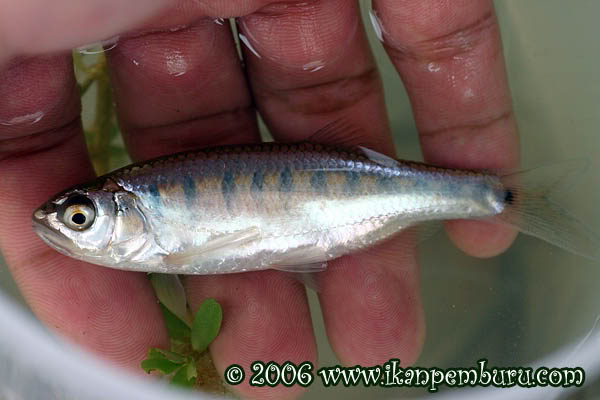
Opsarius caudiocellatus 是游速快、抢食积极的河溪群居鱼,尾鳍基部的圆形黑斑和黑色背鳍鳍条有助于辨认。需要宽敞、洁净、富氧的成熟缸,不适合仅按体长把它加入安静小鱼综合缸。
分布与栖息地
已知来自中国、缅甸及泰国西部的怒江—萨尔温江水系,以及中国云南的澜沧江上游。模式产地位于云南孟定。
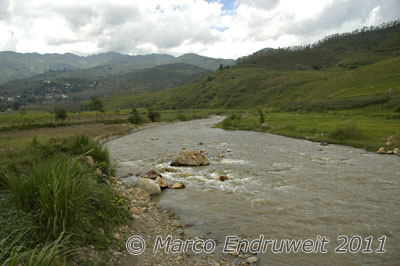
可能栖息于坡度低至中等、流速中等到较快的河溪,底床有砾石、卵石、大石及裸露岩床。2010 年一月云南云县北桥河采点的水较浑浊,水深 20 cm 处测得约 22 °C、pH 7.6,电导率约 70 µS/cm;这是单次环境记录,不是新的长期饲养目标。
饲养环境
河溪式布置可用沙、细砾、大小石块、沉木根枝,留足开阔游动区。耐受水流的附生蕨类、水榕可固定在布景上。
水质必须清洁稳定,避免有机废物积累,维持较高溶氧和适中水流,可按需增加过滤、造流或气石。只放入成熟缸,每周换水约 30%~50%,并配严密缸盖防跳。
食性与喂食
本属鱼多在水面附近捕食水生和陆生昆虫,可能兼吃小鱼及底栖无脊椎动物;不能把这份属级食谱直接当作本种已确认的全部食物。
可提供优质干粮,但仍应规律搭配活饵或冷冻红虫、丰年虾、切碎蚯蚓等。果蝇和小蟋蟀也可使用,投喂前先让饵虫充分摄食调理。
习性与混养
不适合多数普通综合缸,极快游速和旺盛抢食可能压制慢游、胆小鱼。太小的鱼也可能成为猎物,应避免。较健壮、体型相近的中上层鲤科鱼及适应相同水环境的底层鱼才更合适。
它是形成等级的松散群居鱼,并非始终整齐同步群游。至少五条更合适,仅两三条时弱势鱼可能不断被追赶,单条又可能攻击外形相似的其他鱼。
雌雄区分
成年雌鱼可能略大、更厚实、颜色较淡,怀卵时尤其明显。雄鱼繁殖期可能像近缘种一样更显色并出现繁殖疣突,但这些差异仍应谨慎判断。
繁殖
尚无可采用的人工繁殖记录。
补充说明
背鳍鳍条黑而鳍膜透明,尾基圆黑斑是较直观的组合特征。可能曾以错误名称进入贸易,旧属名 Barilius 也可能出现在资料中,不能仅凭商品标签确认身份。
图片
图片来自 SeriouslyFish,版权归各摄影者所有。
English
Overview
Fast swimming and vigorous feeding distinguish the riverine Opsarius caudiocellatus. A round black tail-base spot and dark dorsal rays assist identification. It needs spacious, clean, oxygenated mature accommodation, not simply a quiet community chosen by body length.
Distribution & habitat
Records span the Salween system in China, Myanmar, and western Thailand and the upper Mekong in Yunnan. Mengding in Yunnan is the type locality.
Moderate to swift rivers and streams of low or intermediate gradient, over gravel, cobbles, boulders, and bedrock, are the suggested habitat. A January 2010 Beiqiaohe site in Yunxian had turbid water measured at about 22 °C, pH 7.6, and 70 µS/cm conductivity at 20 cm depth. This is one field observation, not a replacement aquarium target.
Aquarium setup
Arrange sand, gravel, stones, and optional roots as a stream layout, retaining extensive swimming space. Hardy attached ferns or Anubias can be used.
Avoid organic waste accumulation and maintain stable clean water with plentiful oxygen and moderate circulation. Filters, additional pumps, or air stones can be used as needed. Use only a mature aquarium, change roughly 30–50% weekly, and secure the lid against jumping.
Diet & feeding
Members of the genus feed largely near the surface on aquatic and terrestrial insects, possibly also taking small fishes and bottom invertebrates. This general account is not a confirmed complete species-specific menu.
Good dry preparations should be supplemented with live or frozen bloodworms, Artemia, chopped earthworms, and similar foods. Fruit flies and small crickets are options after appropriate gut-loading.
Behaviour & compatibility
A standard community is usually unsuitable. Speed and assertive feeding may overwhelm slow or timid fishes, while very small companions face possible predation. Robust similar-sized open-water cyprinids and suitable bottom dwellers sharing its environmental requirements are better candidates.
It forms a loose aggregation with a hierarchy rather than a continuously coordinated school. Keep at least five. With only two or three, subordinates may suffer persistent harassment; solitary fish may attack similar-looking companions.
Sexual dimorphism
Adult females may be larger, deeper-bodied, and less colorful, especially when ripe. Breeding males may show stronger color and tubercles as in related fishes, but these tendencies need cautious interpretation.
Breeding
No practical aquarium breeding record is available.
Notes
Black dorsal rays separated by clear membranes and the round tail-base spot form useful recognition clues. Trade appearances may have occurred under incorrect names, and the older genus Barilius can still appear in references. A sales label alone cannot settle identity.
来源
- https://www.seriouslyfish.com/species/opsarius-caudiocellatus(抓取于 2026-10-10)
opsarius-caudiocellatus · 文件: data/species/opsarius-caudiocellatus.md · 状态: 草稿