伯纳特低线鱲
概要
| 字段 | 值 |
|---|---|
| 类别 | 鱼 |
| 学名 | Opsarius bernatziki |
| 别名 | 伯納特低線鱲、Barilius bernatziki |
| 分类 | 鲤形目 Cypriniformes › 鲤科 Cyprinidae › Opsarius |
| 水体 | 淡水 |
| 原产地 | 缅甸、泰国 |
| 成体体长 | 9 cm |
| 饲养难度 | 中等 |
| 最小水体 | 243 L |
| 最小缸长 | 120 cm |
| 群居方式 | 群游 |
| 特征 | 会跳缸: 是;吃小鱼: 是 |
| 外部数据 | seriouslyfish opsarius-bernatziki;fishbase 54667 |
| 食性 | 肉食 |
水质参数
| 参数 | 耐受范围 | 最适范围 | 单位 |
|---|---|---|---|
| 水温 | 18–26 | — | °C |
| pH | 6–7.5 | — | — |
| 总硬度 | 2–12 | — | dGH |
概述
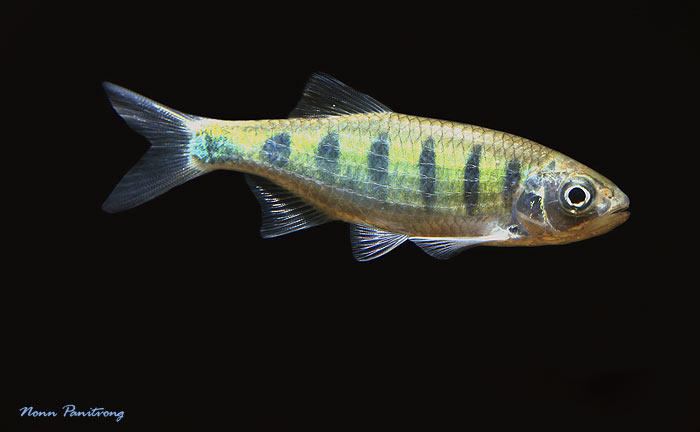
伯纳特低线鱲(Opsarius bernatziki)体侧有六至七条蓝色竖纹,尾鳍基部有较大蓝黑斑,吻须和上颌须都很短。它行动敏捷,投喂时尤其积极,不能按普通安静小鱼安排混养。
分布与栖息地
似乎分布于泰国半岛拉廊、攀牙、北大年及缅甸德林达依的河流,完整范围尚不明确。常见于离海岸较远、富氧且有中等至较快水流的河溪,底部多石砾;也有泥底、沙质河岸的浅水河段记录。
饲养环境
使用宽敞的溪流式鱼缸,沙、砾石、圆石与沉木可提供布景,但应保留开阔游动区。附生耐养水草可用。需要成熟过滤、充足溶氧和适度循环,不能容忍有机废物积累;每周换水三成至一半,缸盖严密防跳。
食性与喂食
以水面附近的陆生和水生昆虫为主要食物,小鱼和底栖无脊椎动物可能也会摄食。人工投喂用优质干粮搭配红虫、丰年虾、碎蚯蚓等,果蝇或小蟋蟀应先作营养强化再喂。
习性与混养
不适合一般混养缸,缓慢或胆小的鱼容易被抢食和高速游动压制,小鱼有被吃风险。选择体型相近、健壮且适应流水的缸友。至少五条成群,避免两三条形成持续受欺负的弱势个体,也不宜忽视独养时对相似鱼的攻击可能。
雌雄区分
雌鱼通常较大、更厚实,颜色相对淡。雄鱼进入繁殖状态时,身体下部会出现橙色。
补充说明
尾部大斑的形状、延伸位置与须长都是区分近缘种的线索,不能只看“尾巴有斑”。
图片
图片来自 SeriouslyFish,版权归各摄影者所有。
English
Overview
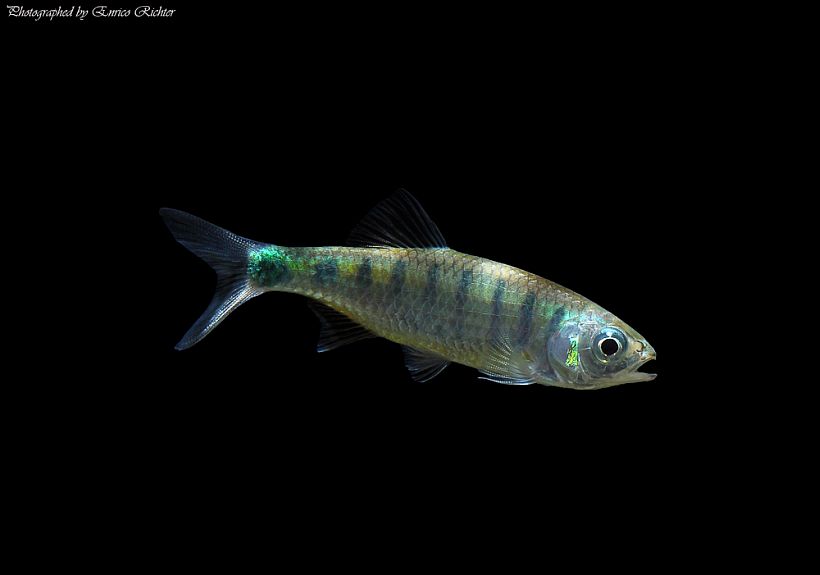
Six or seven bluish flank bars, a substantial tail-base blotch, and very short barbels help identify Opsarius bernatziki. Its speed and feeding enthusiasm make it unsuitable for a quiet general community.
Distribution & habitat
The probable range includes river systems in peninsular Thailand and Myanmar's Tanintharyi region, though its limits remain uncertain. Oxygenated flowing streams away from immediate coastal areas are typical. Rocky substrates are common, but a shallow muddy reach with sandy margins is also documented.
Aquarium setup
Provide a spacious stream-style tank with open swimming routes. Sand, gravel, worn stones, and limited wood can be combined with hardy attached plants. Mature filtration, ample oxygen, and moderate circulation are essential. Prevent organic accumulation with weekly changes of about one-third to one-half. Close the lid carefully against jumping.
Diet & feeding
Surface-dwelling insects provide the main natural feeding pattern, while small fish and bottom invertebrates may also be taken. Use quality preparations with regular live or frozen additions, such as worms and brine shrimp. Gut-loaded fruit flies and small crickets are further options.
Behaviour & compatibility
Slow or hesitant fish can be overwhelmed at feeding time, and tiny companions may become prey. Select robust, similarly sized fishes adapted to compatible river conditions. Keep five or more so hierarchical attention is distributed. Very small groups risk relentless pressure on subordinates, while solitary fish may direct aggression toward similar-looking species.
Sexual dimorphism
Females tend to be larger, fuller, and less colorful. Males develop orange on the lower body when reproductively active.
Notes
The shape and extent of the caudal blotch, together with barbel length, help distinguish relatives. A dark spot at the tail alone does not establish identity.
来源
- https://www.seriouslyfish.com/species/opsarius-bernatziki(抓取于 2026-10-10)
opsarius-bernatziki · 文件: data/species/opsarius-bernatziki.md · 状态: 草稿