巴纳低线鱲
概要
| 字段 | 值 |
|---|---|
| 类别 | 鱼 |
| 学名 | Opsarius barna |
| 别名 | 巴納低線鱲、Cyprinus barna、Barilius barna、Opsarius fasciatus、Opsarius latipinnatus、Barilius papillatus |
| 分类 | 鲤形目 Cypriniformes › 鲤科 Cyprinidae › Opsarius |
| 水体 | 淡水 |
| 原产地 | 孟加拉国、不丹、印度、缅甸、尼泊尔 |
| 成体体长 | 13 cm |
| 饲养难度 | 中等 |
| 最小水体 | 540 L |
| 最小缸长 | 150 cm |
| 群居方式 | 群游 |
| 特征 | 会跳缸: 是;吃小鱼: 是 |
| 外部数据 | seriouslyfish opsarius-barna;fishbase 24308 |
| 食性 | 肉食 |
水质参数
| 参数 | 耐受范围 | 最适范围 | 单位 |
|---|---|---|---|
| 水温 | 16–24 | — | °C |
| pH | 6–8 | — | — |
| 总硬度 | 2–15 | — | dGH |
概述
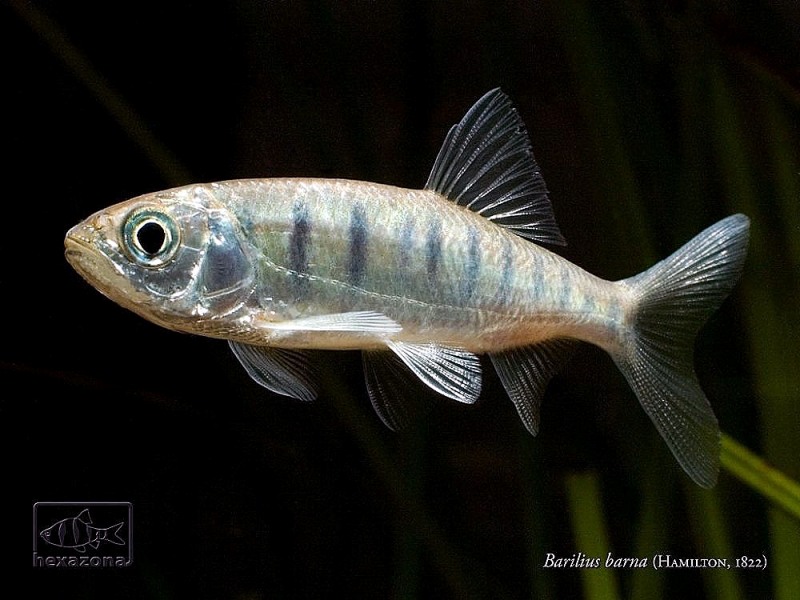
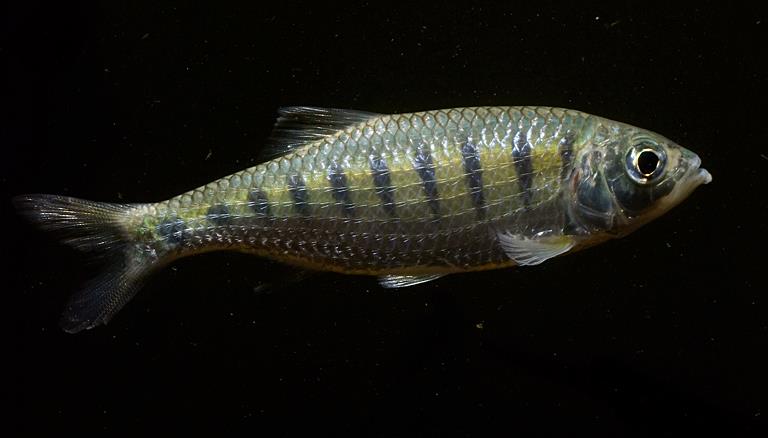
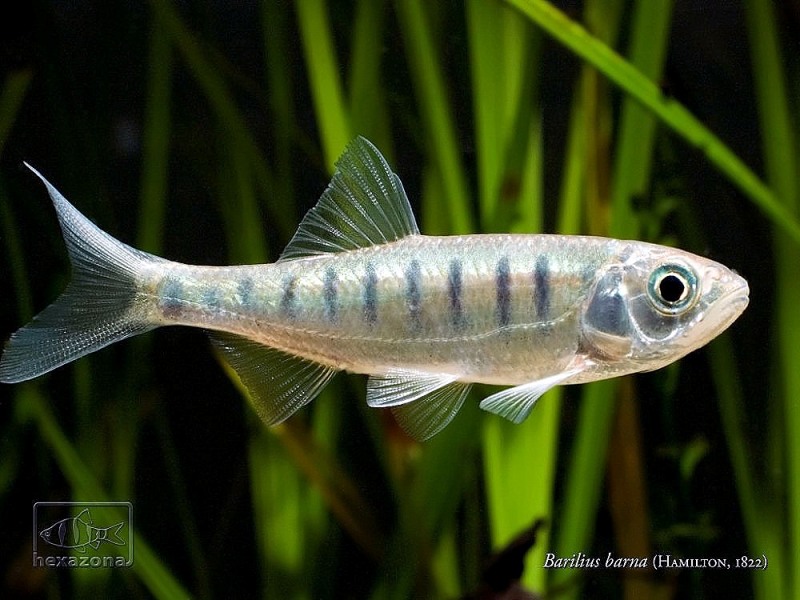
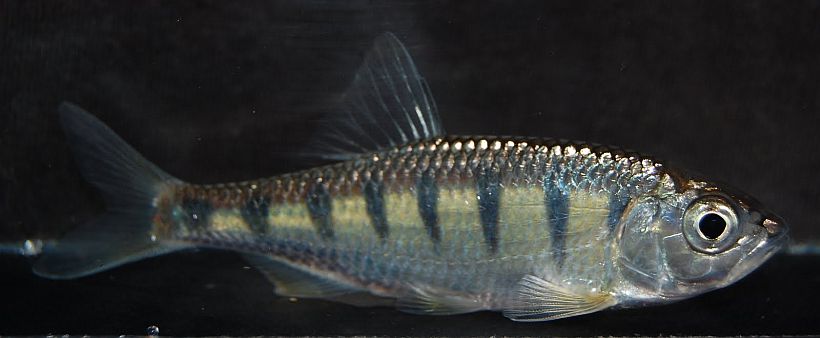
巴纳低线鱲(Opsarius barna)游速极快、抢食积极,不适合普通温和小鱼混养缸。体侧有多条深蓝竖纹且没有须,选鱼时也应注意它对开放空间和水质的要求。
分布与栖息地
明确见于印度北部恒河和布拉马普特拉河流域,也被认为分布到马哈纳迪河及尼泊尔、不丹、孟加拉国和缅甸若开邦。湄公河记录有疑问,云南上游的可能分布尚需确认。
常生活在富氧、有一定坡度的中速至急流溪河,底部多砾石、圆石和裸岩;也有旱季被限制在浅缓流或近静止水潭中的采集记录。
饲养环境
大型鱼缸中以沙砾、圆石和少量沉木模拟河流,必须保留大面积游动区。铁皇冠、黑木蕨、水榕可附生于造景。过滤、充氧和适度水流应维持稳定洁净,不能投入未成熟的新缸。每周换水三成至一半,盖板严密防跳。
食性与喂食
以表层昆虫取食为主,小鱼及底栖无脊椎动物可能也会吃。干粮应配合红虫、丰年虾、碎蚯蚓等活饵或冷冻饵料;果蝇和小蟋蟀也可用,但投喂前应先给饵虫喂食营养饲料。
习性与混养
慢游、胆小的鱼容易受惊或抢不到食,明显更小的鱼还可能被捕食。适合与体型相当、健壮的开放水域鱼及合适底栖河流鱼混养。至少五条同养,数量仅两三条时弱势鱼可能遭持续追逐,独养则可能攻击外形相近的鱼。
雌雄区分
雌鱼通常较大、更厚实,颜色较淡,怀卵时差别尤其明显。
繁殖
人工繁殖记录很少,据称较大比例的偏凉换水可能诱发产卵,但尚不能视为完整可靠的繁殖流程。
图片
图片来自 SeriouslyFish,版权归各摄影者所有。
English
Overview
Fast swimming and forceful feeding make Opsarius barna a poor fit for an ordinary quiet community. Multiple blue flank bars and absence of barbels aid recognition. Its space and water-quality needs deserve as much attention as its appearance.
Distribution & habitat
It is known from northern India's Ganges and Brahmaputra systems, with a wider range attributed to the Mahanadi, Nepal, Bhutan, Bangladesh, and Myanmar's Rakhine region. Mekong records are questionable, although occurrence in upper Yunnan waters remains possible.
Oxygenated, sloping rivers over gravel, cobbles, and bedrock are typical. Seasonal collections also include fish confined to shallow slow or nearly stagnant pools.
Aquarium setup
Use a large river-style enclosure with sand, stones, and limited wood, leaving extensive swimming room. Hardy attached plants are possible. Established filtration, oxygenation, and moderate circulation must keep water consistently clean. Do not introduce it to an immature system. Weekly changes of around one-third to one-half and a secure lid are recommended.
Diet & feeding
Surface insects form the principal feeding pattern, with small fishes and benthic animals also considered possible prey. Supplement prepared food with worms, brine shrimp, and other appropriate live or frozen items. Fruit flies or small crickets can be offered after nutritious gut-loading.
Behaviour & compatibility
Timid or slow fish can be intimidated or deprived of food, and much smaller fish may be eaten. Robust open-water fishes of comparable size and suitable river-bottom species are better candidates. Keep five or more to distribute hierarchical pressure. Pairs or trios can leave subordinates constantly targeted; solitary individuals may attack lookalikes.
Sexual dimorphism
Females are usually larger, heavier, and less colorful, especially when carrying eggs.
Breeding
Captive reproduction is poorly documented. Large cooler-water changes have reportedly stimulated spawning, but that observation is not a complete established breeding protocol.
来源
- https://www.seriouslyfish.com/species/opsarius-barna(抓取于 2026-10-10)
opsarius-barna · 文件: data/species/opsarius-barna.md · 状态: 草稿