Mystacoleucus argenteus
概要
| 字段 | 值 |
|---|---|
| 类别 | 鱼 |
| 学名 | Mystacoleucus argenteus |
| 别名 | Acanthonotus argenteus |
| 分类 | 鲤形目 Cypriniformes › 鲤科 Cyprinidae › Mystacoleucus |
| 水体 | 淡水 |
| 原产地 | 缅甸、泰国 |
| 成体体长 | 14 cm |
| 饲养难度 | 中等 |
| 最小水体 | 243 L |
| 最小缸长 | 120 cm |
| 群居方式 | 群游 |
| 外部数据 | seriouslyfish mystacoleucus-argenteus;fishbase 24042 |
| 性情 | 温和 |
水质参数
| 参数 | 耐受范围 | 最适范围 | 单位 |
|---|---|---|---|
| 水温 | 20–27 | — | °C |
| pH | 6–7.5 | — | — |
| 总硬度 | 2–15 | — | dGH |
概述
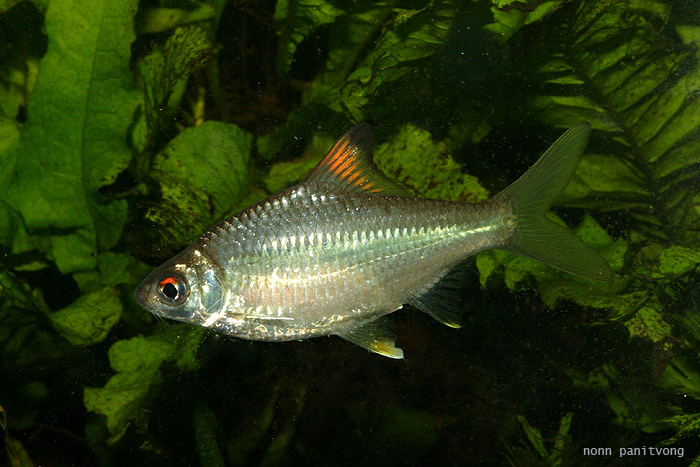
Mystacoleucus argenteus 是缅甸及泰国西部水系的银色鲤科鱼,偶尔以“缅甸彩虹鲃”等商品名出现。它不凶,却游动、抢食有力,选择伙伴时要考虑这种活动强度。
分布与栖息地
记录涉及萨尔温江及缅甸伊洛瓦底江中游。具体偏好的生境主要根据近亲推测,清洁、富氧的流水与砂砾底可作为环境方向,不能将每项近亲栖地特征都当成本种已证实的固定要求。
饲养环境
缸底至少约 120 × 45 cm,开阔游动区和水质比布景更重要。可用磨圆岩石、砂、细砾、沉木与附生水草构成流水景观。
不需要激流般造流,但要有较高溶氧和中等水流。保持洁净,避免有机污染物积累,每周换水约 30%~50%。
食性与喂食
自然食性可能是较广泛的杂食,但对近亲胃含物的研究不能直接当作本种完整菜单。
缸内通常容易喂养,可定期给活或冷冻红虫、水蚤、丰年虾,搭配优质薄片或颗粒,其中部分宜含螺旋藻等植物性成分。
习性与混养
没有明显攻击性,但尤其进食时的活跃表现会让慢游或胆小鱼不安。适合体形相近、较强健且适应流水环境的伙伴。
野外结群,缸内至少六条同养较合适,空间应按群体而不是单条体长规划。
雌雄区分
性成熟雌鱼可能较雄鱼更高身,但这一差异并非已经确认的可靠性别标准。
补充说明
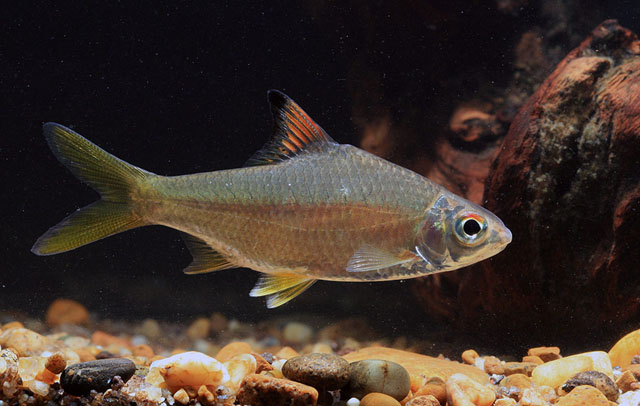
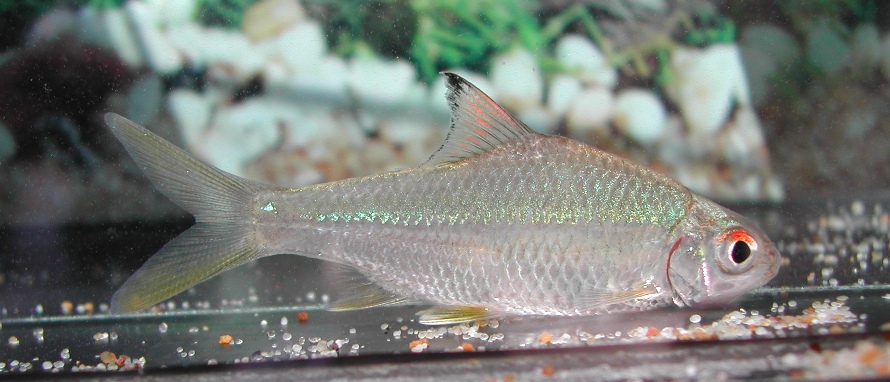
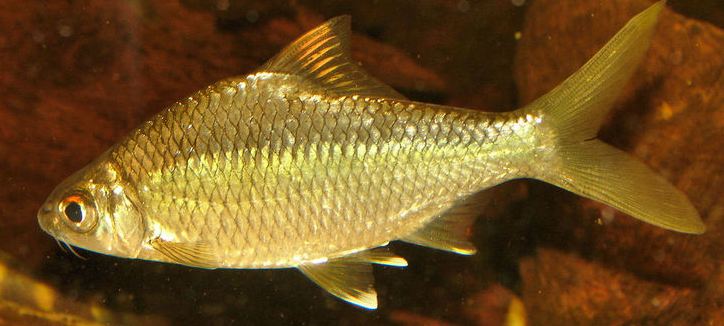
与外形相近的 Mystacoleucus obtusirostris 相比,本种身体缺少其典型的黑色鳞缘。银色身体可泛淡紫、蓝色,背鳍与其他鳍色也可辅助观察,不能仅凭一个商品名定种。
同属背鳍前有朝头部方向伏倒的小棘,肉眼可能不易看清,却可能缠网,捕捞移动时须避免硬拉。
图片
图片来自 SeriouslyFish,版权归各摄影者所有。
English
Overview
Mystacoleucus argenteus is a silver cyprinid associated with Myanmar and western Thailand, sometimes sold under a Burmese rainbow-barb label. It is nonaggressive, but vigorous swimming and feeding are important considerations when selecting companions.
Distribution & habitat
Records involve the Salween system and Myanmar's middle Irrawaddy. Detailed habitat preferences are largely inferred from relatives. Clean, oxygen-rich running water over sand or gravel offers a working environmental direction, rather than proof that every related-species habitat feature applies here.
Aquarium setup
Provide a footprint of at least about 120 × 45 cm, emphasizing swimming room and water quality. Rounded stones, sand, fine gravel, wood, and attached plants can create a river-like layout.
Torrent-strength flow is unnecessary, but abundant oxygen and moderate movement are beneficial. Prevent organic pollution from accumulating and change roughly 30–50% of the water weekly.
Diet & feeding
A broad omnivorous natural diet is considered likely. Gut-content studies of a relative should not be treated as a complete confirmed account for this species.
Captive fish generally feed readily. Regular live or frozen bloodworms, Daphnia, and brine shrimp can accompany quality flakes or granules, with some preparations containing plant material such as spirulina.
Behaviour & compatibility
Although nonaggressive, its activity can unsettle slow or timid fishes, especially at meals. Similarly sized, robust companions suited to moving water are preferable.
It schools in nature, and six or more should be maintained together. Plan space around the group rather than the length of one fish.
Sexual dimorphism
Mature females may have deeper bodies than males, but this is a tentative rather than established external distinction.
Notes
Unlike the similar Mystacoleucus obtusirostris, it lacks characteristic dark scale edges on the body. Silver coloration can show lilac or blue tones, and fin colors offer additional clues; a trade label alone is insufficient identification.
Members of the genus have a small forward-facing spine before the dorsal fin. It may be difficult to see but can snag in a net, so avoid pulling a caught fish free by force.
来源
- https://www.seriouslyfish.com/species/mystacoleucus-argenteus(抓取于 2026-10-10)
mystacoleucus-argenteus · 文件: data/species/mystacoleucus-argenteus.md · 状态: 草稿