Microrasbora cf. rubescens · Flame Red 'Rasbora'
概要
| 字段 | 值 |
|---|---|
| 类别 | 鱼 |
| 学名 | Microrasbora cf. rubescens |
| 分类 | 鲤形目 Cypriniformes › 鲤科 Cyprinidae › Microrasbora |
| 水体 | 淡水 |
| 原产地 | 缅甸 |
| 成体体长 | 4 cm |
| 饲养难度 | 入门 |
| 最小水体 | 54 L |
| 最小缸长 | 60 cm |
| 群居方式 | 群游 |
| 外部数据 | seriouslyfish microrasbora-cf-rubescens |
水质参数
| 参数 | 耐受范围 | 最适范围 | 单位 |
|---|---|---|---|
| 水温 | 20–26 | — | °C |
| pH | 6.5–7.5 | — | — |
| 总硬度 | 1–10 | — | dGH |
概述
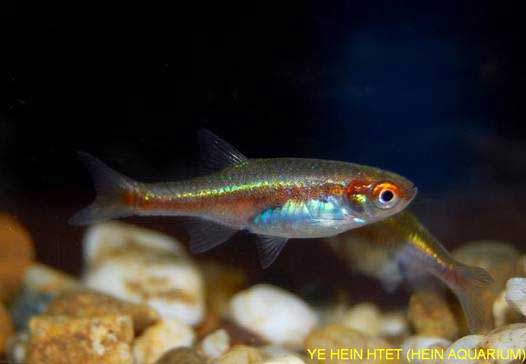
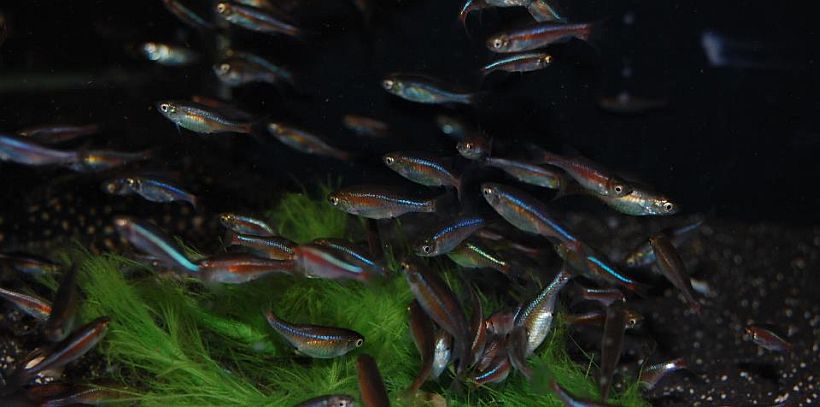
Microrasbora cf. rubescens 是缅甸掸邦的一种小型鲤科鱼,可能仍是未描述种。它比相近的 Microrasbora rubescens 大,体侧有绿至蓝色纵带,橙色范围较少;名称中的 cf. 表示身份仍需谨慎看待,不能直接省去。
分布与栖息地
确定采集背景与缅甸东部掸邦有关,曾与银河斑马鱼(Danio margaritatus)共同采到。银河斑马鱼的范围延伸到更广的萨尔温江相关水域,不代表本种也已确认拥有同样分布。
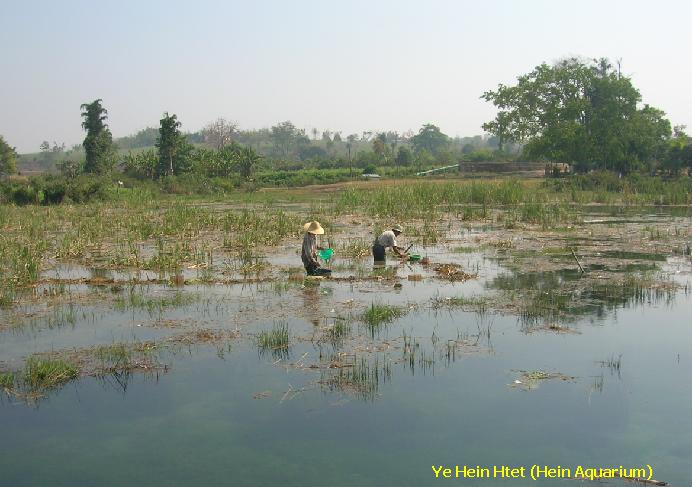
共同采集背景包括霍榜附近由泉水拦蓄形成的浅水湿草地,水清且水草密集。类似浅湿地可作为理解环境的线索,不能把相关鱼种的每处产地都当成本种确定地点。
饲养环境
缸底至少约 60 × 30 cm,适合密植布景。过滤温和,浮水植物和沉木根、枝条可让光线柔和,并形成遮蔽。
食性与喂食
野外可能吃微小无脊椎动物、藻类及其他浮游生物,但不能当作已确认的固定食性。
新进口个体常状态较差、适应困难,初期宜用细小活饵帮助恢复,安定后再逐步引入冷冻饵和干粮,不宜一开始就只用干粮考验转食。
习性与混养
较大或闹腾的鱼可能让它受惊并抢走食物。体形相近、在上层活动的小鱼似乎有助于减轻胆怯,但须按具体伙伴判断。
至少 8~10 条群养,能减少紧张并看到雄鱼求偶竞争的色彩与行为。不建议与 M. rubescens 混养,因为二者可能杂交。
雌雄区分
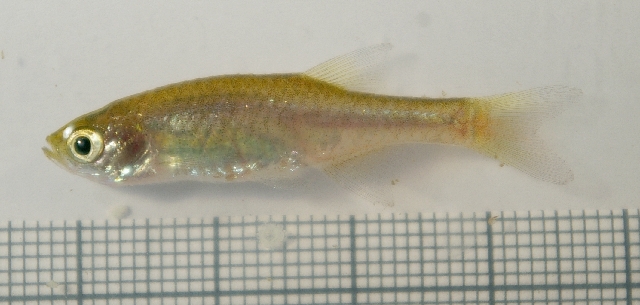
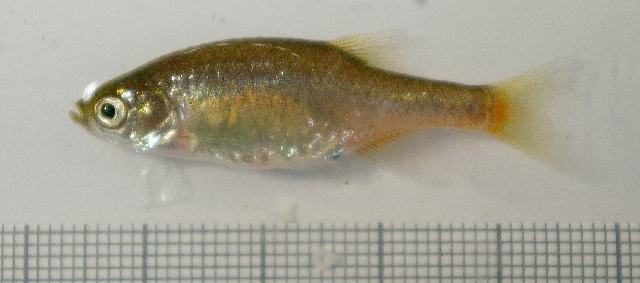
成熟雌鱼通常更高身、明显更大,雄鱼较紧凑且颜色鲜明。
繁殖
本鱼的繁殖可能尚无记录,以下只能作为近亲 M. rubescens 的参考。近亲在水草间散卵、不护卵,可在另备小容器中用放置稳定的水、细叶草或产卵拖把尝试;照明和过滤不是必需,也可用气动海绵过滤。
放入养壮的一对或小群,成鱼越多,吃卵风险越高,雄鱼之间也可能相互分散注意。近亲一次约产三十粒略黏卵,产后移出成鱼,约 72~96 小时孵化,随后 1~2 天自由游动。初食为 5~50 μm 级微饵,再随口径增加转丰年虾无节幼体、微虫等,不能把这些数值视为本鱼已验证的时间表。
补充说明
“亚洲红雀波鱼”“玫瑰蓝线”等商品名不等于正式种名。绿蓝色侧带、橙色范围较少和较大体形是与近亲区分的线索,其遗传关系也显示可能属于不同谱系,但不宜据此自行更改名称。
图片
图片来自 SeriouslyFish,版权归各摄影者所有。
English
Overview
Microrasbora cf. rubescens is a small Shan State cyprinid that may represent an undescribed species. Compared with Microrasbora rubescens, it grows larger, has a green-blue lateral stripe, and carries less orange coloration. The qualification cf. remains important rather than being an optional part of the name.
Distribution & habitat
Confirmed collection context is eastern Myanmar's Shan State, where it has been taken with the celestial pearl danio, Danio margaritatus. The latter's wider Salween-associated distribution does not establish an identical range for this fish.
The shared collection setting near Hopong includes shallow, permanently wet grassland created by impounding a spring, with clear water and dense aquatic vegetation. Comparable wetlands help explain the setting, but every locality of an associated species is not automatically a confirmed site for this one.
Aquarium setup
Provide a base of at least about 60 × 30 cm and abundant plants. Gentle filtration, floating vegetation, roots, and branches create cover and soften the light.
Diet & feeding
Small invertebrates, algae, and other plankton are proposed natural foods rather than a confirmed fixed diet.
Fresh imports often arrive in poor condition and can be difficult to settle. Begin with small live foods, introducing frozen and dry products after adjustment instead of relying entirely on dry food immediately.
Behaviour & compatibility
Larger or boisterous companions may intimidate it and outcompete it for food. Similarly sized fishes using upper water appear capable of reducing shyness, although each combination needs assessment.
Maintain at least eight to ten together to reduce nervousness and allow male color and courtship competition to develop. Avoid mixing with M. rubescens, since hybridization may be possible.
Sexual dimorphism
Mature females are generally deeper-bodied and noticeably larger. Males are more compact and vividly colored.
Breeding
Reproduction of this fish may be unrecorded, so the following remains a comparison with M. rubescens. That relative scatters eggs among plants and gives no care. Separate containers with settled water and fine plants or mops can be used; dedicated lighting and filtration are optional, with an air-driven sponge filter an alternative.
Introduce a conditioned pair or small group. More adults increase egg predation, and males can distract each other. A typical event in the relative produces about thirty slightly adhesive eggs. Remove adults afterward; reference timings are 72–96 hours to hatch and another one or two days to free swimming. Begin with 5–50 μm foods, progressing to brine shrimp nauplii or microworms as mouth size permits. These figures are not verified timings for the present fish.
Notes
Asian cardinal and rose-blue-line trade labels are not formal species names. The green-blue stripe, reduced orange, and larger size help distinguish it from its relative. Genetic evidence also suggests a separate lineage, but does not justify casually replacing its qualified name.
来源
- https://www.seriouslyfish.com/species/microrasbora-cf-rubescens(抓取于 2026-10-10)
microrasbora-cf-rubescens · 文件: data/species/microrasbora-cf-rubescens.md · 状态: 草稿