Microdevario nanus
概要
| 字段 | 值 |
|---|---|
| 类别 | 鱼 |
| 学名 | Microdevario nanus |
| 别名 | Microrasbora nana |
| 分类 | 鲤形目 Cypriniformes › 鲤科 Cyprinidae › Microdevario |
| 水体 | 淡水 |
| 原产地 | 缅甸 |
| 成体体长 | 1.6 cm |
| 饲养难度 | 入门 |
| 最小水体 | 41 L |
| 最小缸长 | 45 cm |
| 群居方式 | 群游 |
| 性情 | 温和 |
| 外部数据 | seriouslyfish microdevario-nanus;fishbase 61060 |
水质参数
| 参数 | 耐受范围 | 最适范围 | 单位 |
|---|---|---|---|
| 水温 | 20–27 | — | °C |
| pH | 6–7.5 | — | — |
| 总硬度 | 1–12 | — | dGH |
概述
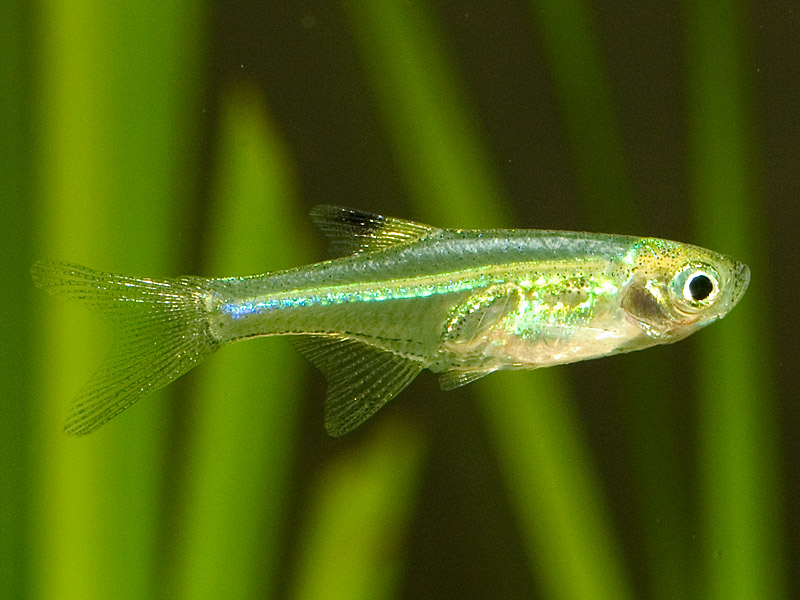
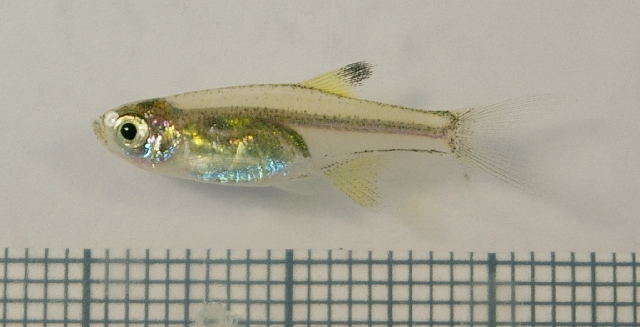
Microdevario nanus 是极小的群游鲤科鱼,背鳍尖黑斑与臀鳍尖灰斑有助于识别。它性情温和,适合密植、缓和的环境,至少 8~10 条一组,而不是零散一两条放进热闹混养缸。
分布与栖息地
已知来自缅甸锡唐河和勃固河下游。相关低地有受季节水位变化影响的河流、牛轭湖、沼泽和稻作区域;本种可能偏好静水或缓流且水草繁茂的淡水环境。
一个明确采集点为浅水牛轭湖,鱼在浮水植物和草丛间活动。区域下游存在半咸水红树林,不代表本种需要加盐饲养。
饲养环境
底面积至少约 45 × 30 cm,密植缸较合适。过滤水流应温和,可用浮水植物和沉木根、枝条分散光线,形成有遮蔽又能群游的空间。
食性与喂食
自然可能吃微小无脊椎动物、藻类及其他浮游生物,这一组成尚带推测性。可接受细小干粮,但应更多提供适口活饵或冷冻饵,如水蚤、丰年虾。
习性与混养
非常温和,单种饲养或与同样小、需求相符的鱼搭配更合适。至少 8~10 条同养可减少紧张,雄鱼在同伴间展示时颜色更鲜明。
雌雄区分
成熟雌鱼通常较高身、明显更大,雄鱼更紧凑、色彩更浓。
繁殖
本种是否已在缸内成功繁殖尚不明确,已有成功经验的是近亲 Microdevario kubotai。同属水草间散卵、不护卵的方式可以作为观察方向,但不能把近亲时间表当作本种已经验证的结果。
近亲的尝试方案是用放置稳定的水和细叶草、产卵拖把布置小容器,放入养壮的一对或小群,卵容易被亲鱼吞食,约 2~3 天后移出成鱼。其参考孵化时间约 72 小时,之后再过 3~4 天自由游动,初食用 5~50 μm 级微饵,长大后转丰年虾无节幼体或微虫。所有这些步骤与时间都应保留近亲参考的界限。
补充说明
背鳍尖的黑色和臀鳍尖的灰色标记比“绿色小波鱼”这类商品名更有辨识价值。旧名 Microrasbora nana 与本条记录对应,不应只凭词尾变化判断为另一种。
图片
图片来自 SeriouslyFish,版权归各摄影者所有。
English
Overview
Microdevario nanus is a minute schooling cyprinid marked by a black dorsal-fin tip and a gray anal-fin tip. Its peaceful nature suits a densely planted, gentle setting. A group of at least eight to ten is preferable to placing one or two in a busy community.
Distribution & habitat
Known records come from the lower Sittaung and Bago drainages in Myanmar. The surrounding lowlands include seasonally changing rivers, oxbows, marshes, and rice-growing areas. Still or sluggish freshwater with dense plants is considered likely habitat.
One confirmed collection came from a shallow oxbow among floating vegetation and grasses. Brackish mangroves farther downstream in the region do not establish a requirement for salt in this species' aquarium.
Aquarium setup
Allow a footprint of at least about 45 × 30 cm and plant densely. Keep filtration gentle. Floating plants, roots, and branches can soften incoming light while leaving space for the group to swim.
Diet & feeding
Suggested natural food includes tiny invertebrates, algae, and other plankton, but this remains tentative. Small dry preparations are accepted; suitably sized live or frozen foods such as Daphnia and brine shrimp should make up much of the offering.
Behaviour & compatibility
It is very peaceful, favoring a species aquarium or equally small companions with compatible needs. Eight to ten or more reduce nervousness and allow males to show stronger color during social displays.
Sexual dimorphism
Mature females tend to be deeper and noticeably larger, whereas males have a more compact build and stronger color.
Breeding
Successful aquarium reproduction of this species is uncertain; success is established for the related Microdevario kubotai. The genus's plant-associated egg scattering without care offers a direction for observation, not a proven schedule for this fish.
The related-species approach uses settled water, fine plants or mops, and a conditioned pair or small group in a separate container. Adults can eat the eggs and are removed after about two or three days. Reference timings are approximately 72 hours to hatch and another three or four days to free swimming. Microscopic food of 5–50 μm precedes larger brine shrimp nauplii or microworms. Both procedure and timings remain a comparison, not verified results for M. nanus.
Notes
The dark dorsal tip and gray anal tip are more useful than vague green-dwarf trade labels. The older name Microrasbora nana corresponds to this fish; a changed ending alone does not identify another species.
来源
- https://www.seriouslyfish.com/species/microdevario-nanus(抓取于 2026-10-10)
microdevario-nanus · 文件: data/species/microdevario-nanus.md · 状态: 草稿