Microdevario kubotai
概要
| 字段 | 值 |
|---|---|
| 类别 | 鱼 |
| 学名 | Microdevario kubotai |
| 别名 | Microrasbora kubotai |
| 分类 | 鲤形目 Cypriniformes › 鲤科 Cyprinidae › Microdevario |
| 水体 | 淡水 |
| 原产地 | 缅甸、泰国 |
| 成体体长 | 2 cm |
| 饲养难度 | 中等 |
| 最小水体 | 54 L |
| 最小缸长 | 60 cm |
| 群居方式 | 群游 |
| 性情 | 温和 |
| 外部数据 | seriouslyfish microdevario-kubotai;fishbase 58581 |
| 繁殖方式 | 散卵 |
水质参数
| 参数 | 耐受范围 | 最适范围 | 单位 |
|---|---|---|---|
| 水温 | 20–27 | — | °C |
| pH | 6–7 | — | — |
| 总硬度 | 1–10 | — | dGH |
概述
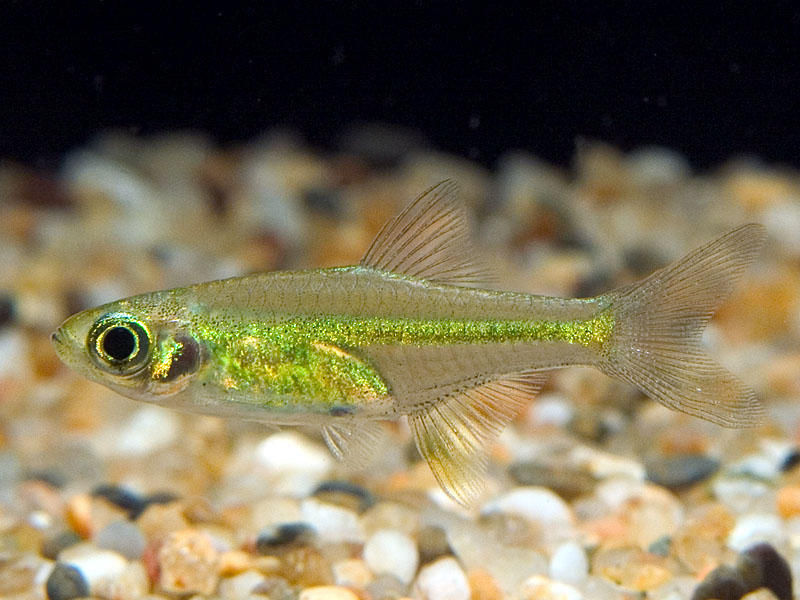
Microdevario kubotai是体形极小、性情温和的群游鱼,在深色底床和草缸中更显色。它需要成熟稳定的水体与细小食物,至少 8~10 条同养,不能把个体小理解成可以随意放进新开小缸。
分布与栖息地
原生记录来自泰国半岛西北侧及缅甸南部萨尔温江相关水系,包括阿塔兰河和苏里亚河等。泰国宋卡里亚河也有引入种群,不能将所有发现地点都当成原生分布。
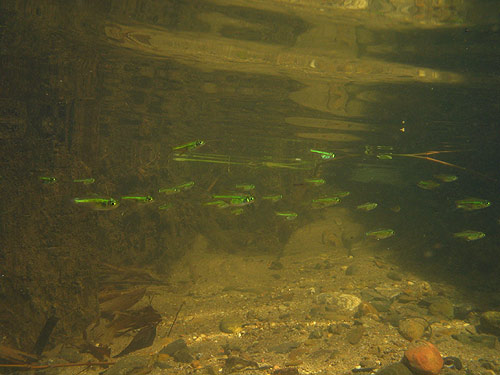
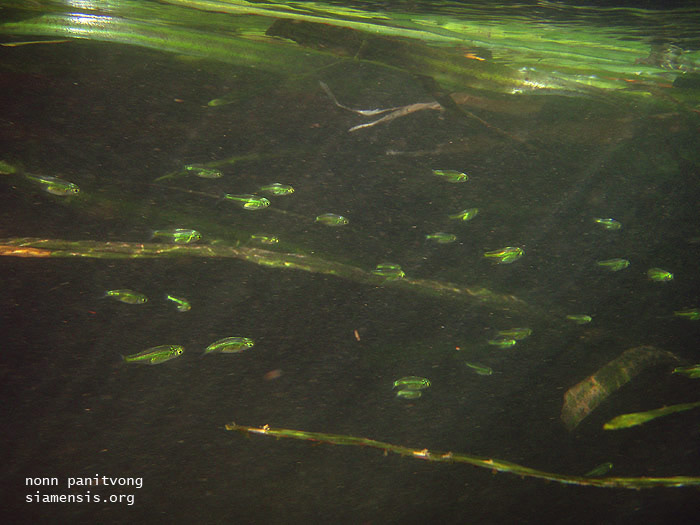
多见于富氧源头和小支流的静缓至中等水流区域,底质有砂、砾、石块与落叶,岸边根系、沉木和局部水草提供结构。不同地点水色可清澈或略浑浊。
饲养环境
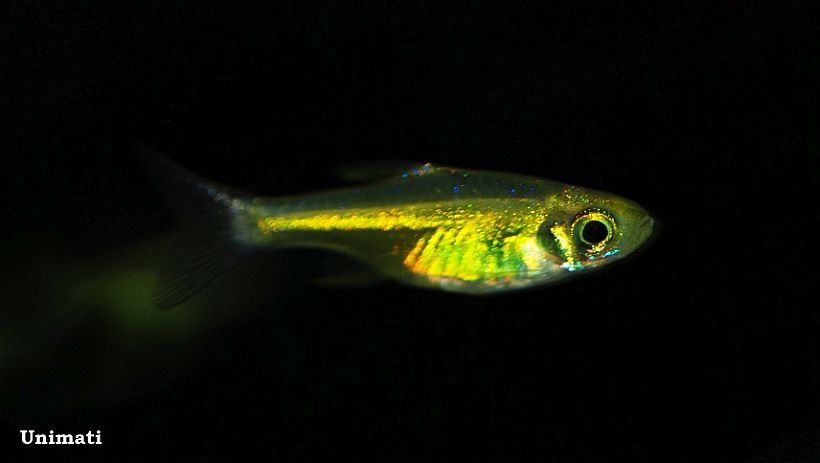
适合密植、深色底床的缸,过分空旷时体色容易显淡。也可用岩石、砾石、磨圆大石、沉木及附生水草模拟溪流,保留群体游动区。
只放入已经充分成熟的系统,保持稳定水质,每周换水约 30%~50%。换水是持续维护的一部分,不应用一个刚开、尚不稳定的缸来替代。
食性与喂食
自然食物可能包括微小无脊椎动物、藻类及其他浮游生物,不能把这一推测当成确定的专食类型。
缸内能接受大小合适的干粮,但宜以细小活饵和冷冻饵为主,如水蚤、丰年虾等,确认小嘴能实际吃到。
习性与混养
非常温和,单种群养或与体形相近、条件需求相同的小鱼搭配更合适。较大或过于活跃的伙伴不应仅凭不追咬就纳入。
野外常形成 20~50 条的群体,缸内至少 8~10 条可减少紧张;雄鱼竞争雌鱼注意时体色更鲜明。
雌雄区分
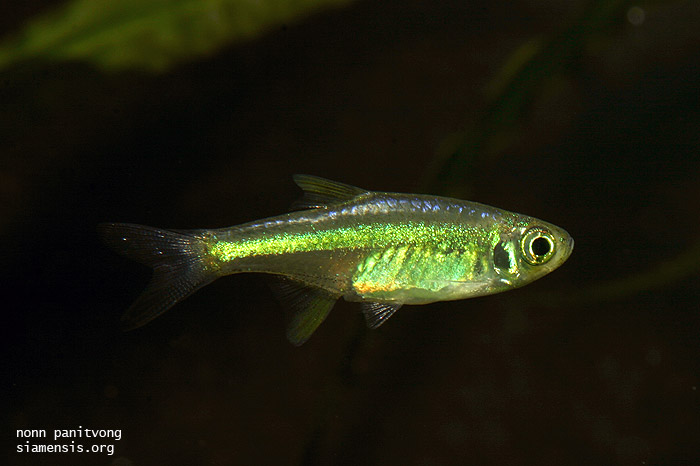
成熟雌鱼通常更高身、明显更大,雄鱼较紧凑,颜色更浓。
繁殖
已有缸内繁殖成功记录,同属典型方式是在水草间散卵而不护卵。状态良好的亲鱼可能频繁产卵,成熟草缸中有时能自然留下少量鱼苗。
提高成活数量时,可另备小容器,以放置稳定的水、细叶草或产卵拖把填充大部分空间,照明和过滤并非必须,也可使用小型气动海绵过滤。放入一对或小群养壮亲鱼,数量越多,卵被吃的机会也越高。
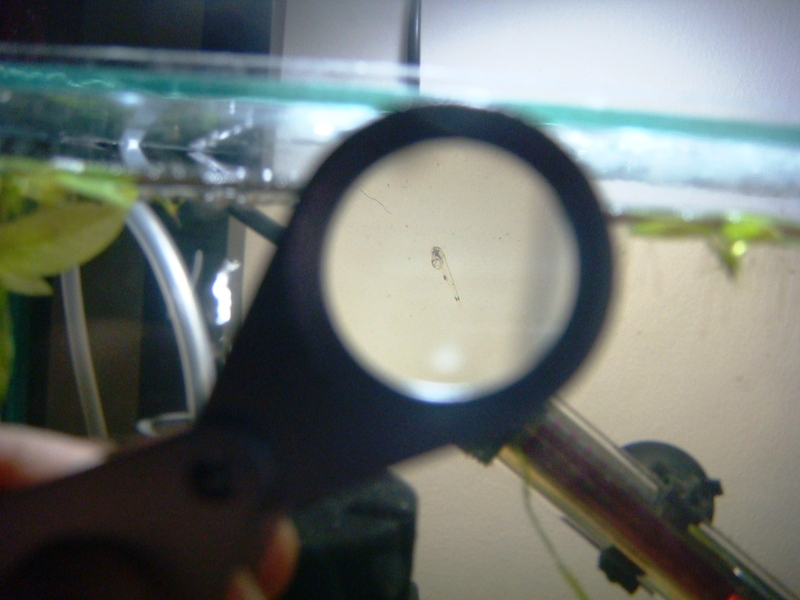
约 2~3 天后移出亲鱼。卵通常约 72 小时孵化,受温度影响,鱼苗再过 3~4 天自由游动。初食需约 5~50 μm 级微小饵料,长大能吞下后再转丰年虾无节幼体、微虫等。
补充说明
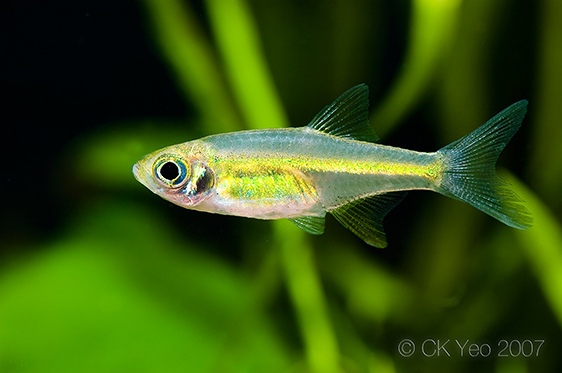
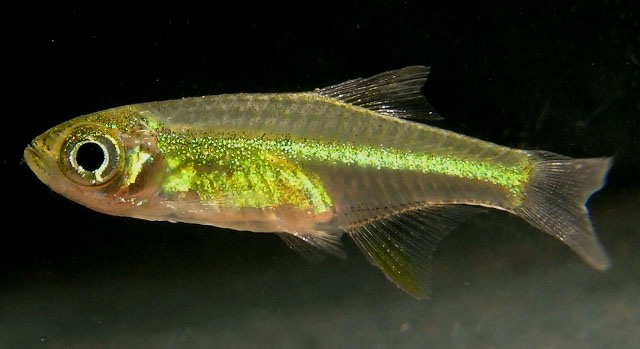
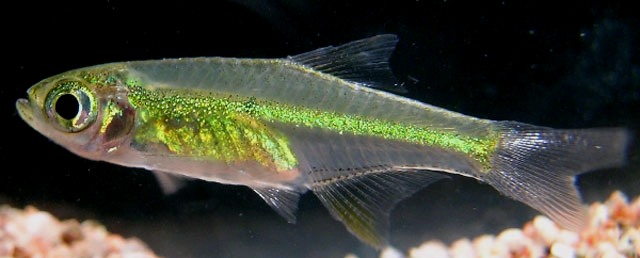
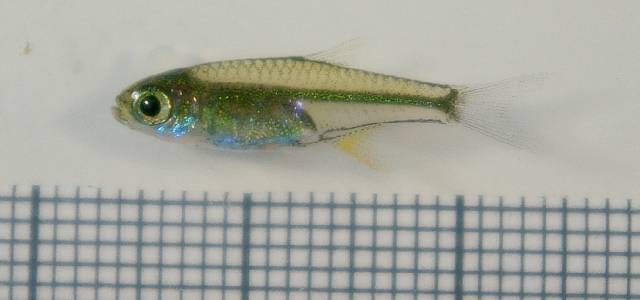
本种背鳍和臀鳍透明,与某些鳍端有暗斑的近亲不同。旧资料和别名可能使用 Microrasbora kubotai,应结合现用学名核对身份。
图片
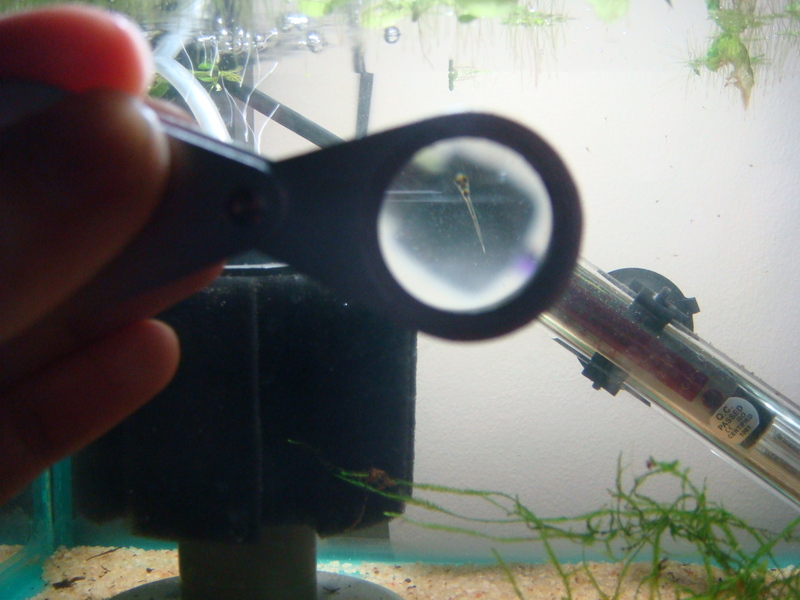
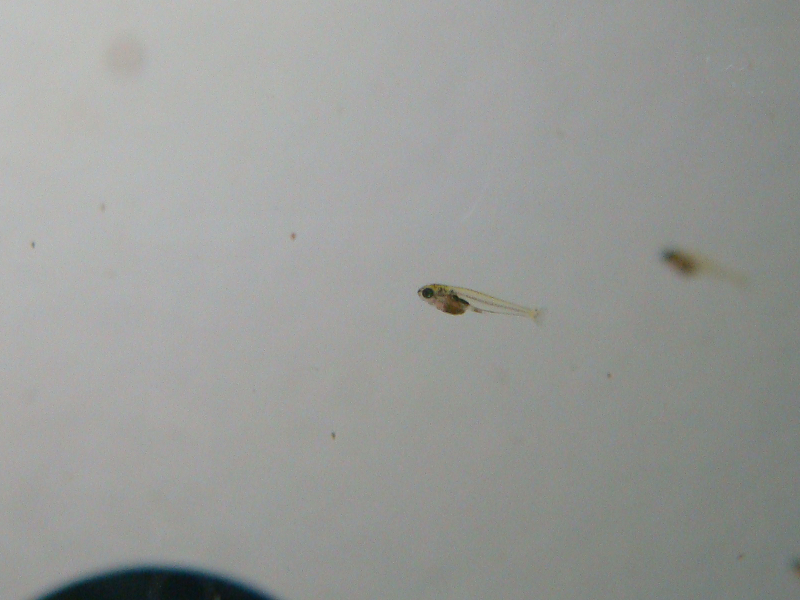
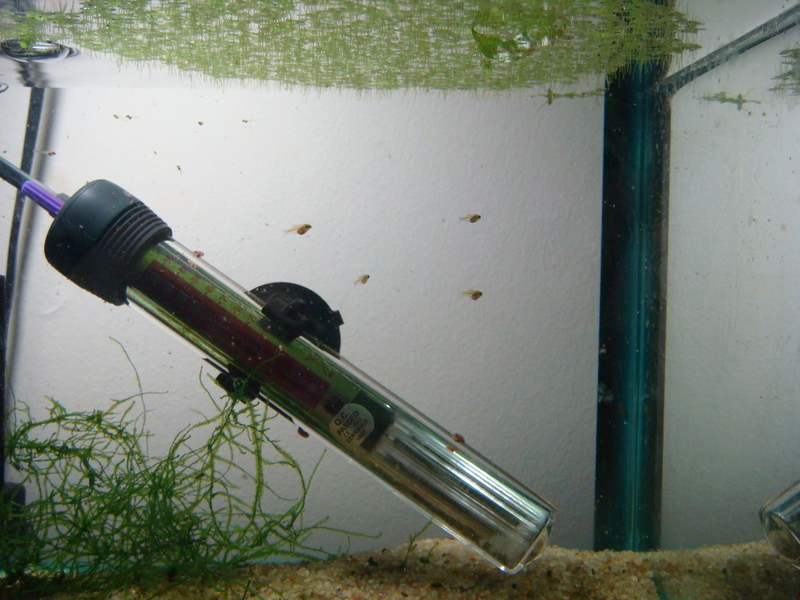
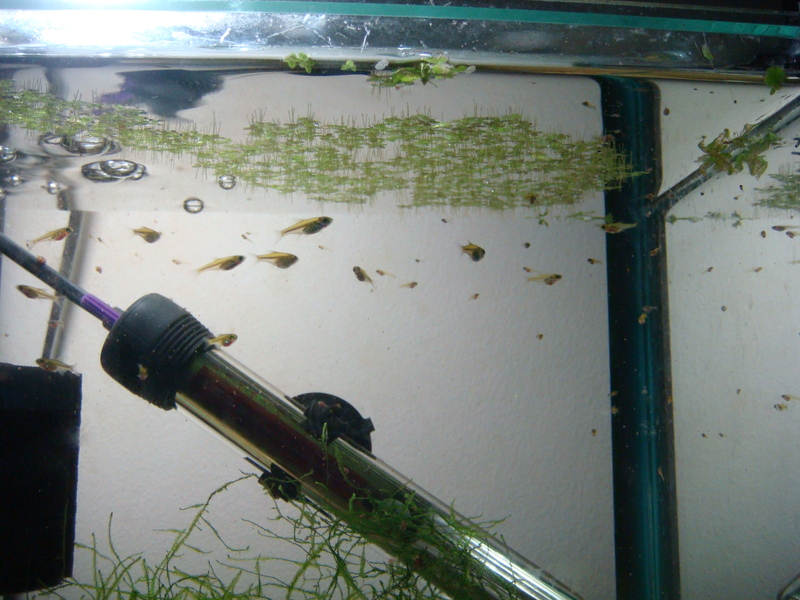
图片来自 SeriouslyFish,版权归各摄影者所有。
English
Overview
Microdevario kubotai is a tiny, peaceful schooling fish whose color shows well over a dark substrate among plants. Mature, stable water and suitably small food are central to care. Keep at least eight to ten; small individual size is not a reason to place it casually in a newly established tank.
Distribution & habitat
Native records include the northwestern side of peninsular Thailand and Salween-related systems in southern Myanmar, including the Ataran and Suriya drainages. A population in Thailand's Songgaria River is introduced, so occurrence there should not be confused with native range.
Typical sites are oxygen-rich headwaters and small tributaries with calm to moderate flow. Sand, gravel, stones, leaves, roots, wood, and patches of plants create varied structure. Water clarity differs between localities, from transparent to slightly turbid.
Aquarium setup
Dense planting and a dark bottom bring out its appearance, whereas sparse surroundings can leave it looking pale. A stream-style arrangement of stones, gravel, rounded boulders, branches, and attached plants is another option, provided the group retains swimming room.
Use only an established aquarium with stable conditions. Weekly changes of roughly 30–50% are part of continuing maintenance; a newly filled, unstable system is not an equivalent substitute.
Diet & feeding
Tiny invertebrates, algae, and other plankton are suggested natural foods rather than a confirmed specialized diet.
Appropriately sized dry preparations are accepted, but small live or frozen foods such as Daphnia and brine shrimp should form much of the menu. Check that the fish can actually capture the particles supplied.
Behaviour & compatibility
Its very peaceful nature favors a species group or similarly sized fishes sharing its requirements. Lack of direct aggression is not the only consideration when assessing larger, more vigorous companions.
Wild groups commonly contain 20–50 fish. Eight to ten or more in an aquarium reduce nervousness, and males show richer color while competing for female attention.
Sexual dimorphism
Mature females tend to be deeper-bodied and noticeably larger. Males are more compact and intensely colored.
Breeding
Aquarium breeding has succeeded. The group's typical pattern is scattering eggs among plants without subsequent care. Well-conditioned adults may spawn repeatedly, and a few young can survive unaided in mature planted tanks.
For greater yield, prepare separate small containers with settled water and plenty of fine plants or spawning mops. Dedicated light and filtration are optional; a small air-driven sponge filter can be used. Introduce a conditioned pair or small mixed group, remembering that additional adults increase egg predation.
Remove the parents after roughly two or three days. Incubation commonly takes about 72 hours, varying with temperature, followed by another three or four days before free swimming. Start with microscopic food around 5–50 μm, introducing brine shrimp nauplii or microworms only when the young are large enough.
Notes
Transparent dorsal and anal fins distinguish it from some dark-tipped relatives. Older records may use Microrasbora kubotai, which should be matched to the current name when checking identity.
来源
- https://www.seriouslyfish.com/species/microdevario-kubotai(抓取于 2026-10-10)
microdevario-kubotai · 文件: data/species/microdevario-kubotai.md · 状态: 草稿