Leptobarbus rubripinna · Red-finned Cigar Shark
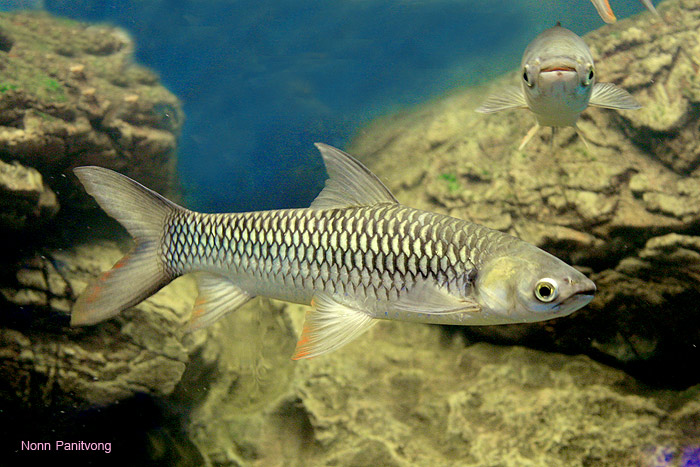
概要
| 字段 | 值 |
|---|---|
| 类别 | 鱼 |
| 学名 | Leptobarbus rubripinna |
| 别名 | Filirasbora rubripinna |
| 分类 | 鲤形目 Cypriniformes › 鲤科 Cyprinidae › Leptobarbus |
| 水体 | 淡水 |
| 原产地 | 柬埔寨、老挝、泰国、越南 |
| 成体体长 | 100 cm |
| 饲养难度 | 中等 |
| 群居方式 | 群游 |
| 性情 | 温和 |
| 水流偏好 | 高 |
| 特征 | 会跳缸: 是 |
| 外部数据 | seriouslyfish leptobarbus-rubripinna;fishbase 65235 |
| 食性 | 杂食 |
水质参数
| 参数 | 耐受范围 | 最适范围 | 单位 |
|---|---|---|---|
| 水温 | 20–26 | — | °C |
| pH | 6–8 | — | — |
| 总硬度 | 5–15 | — | dGH |
概述
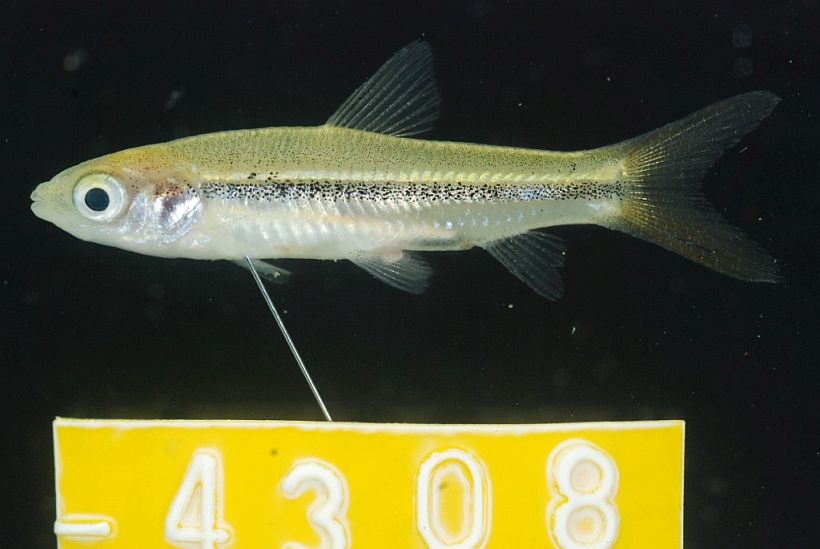
Leptobarbus rubripinna 是体形巨大的开水域鲤科鱼,幼鱼常以远小于成年尺寸的体形出售。只有公共展示设施或极少数巨型私人系统才可能长期容纳,普通家庭水族箱并不适合。
分布与栖息地
广布于老挝、泰国、柬埔寨和越南的湄公河中下游,以及泰国湄南河、湄功河。
主要生活在河流和大型溪流,也见于部分人工湖。成鱼常在深潭或较慢河段活动,有时到较急的水流处觅食。雨季会进入暂时淹没的洪泛地与森林,并在那里繁殖。
饲养环境
足够开阔的游动区与清洁水质比复杂造景更重要。有条件的巨型系统可用岩石、砾石、磨圆大石和沉木模仿河道,但不能让布景占去主要空间。
不耐有机废物累积,需要充足溶氧与适当水流。采用有足够能力的过滤和造流设施,缸盖则须厚重、紧密,防止受惊时强力跳跃。
食性与喂食
野外胃含物包括植物、浮游动物以及水生和陆生较大无脊椎动物,属于杂食。缸内通常容易喂养,可搭配红虫、水蚤、丰年虾等活或冷冻食物、优质干粮与充足植物性食物。
去壳豌豆、焯过的西葫芦、菠菜和切碎水果可加入菜单,大个体也能吃切碎蚯蚓、虾和贝肉,长期不宜只依赖一种饲料。
习性与混养
性情和平,但很小的鱼可能被吞食,不能将温和等同于所有尺寸的伙伴都安全。
雌雄区分
性成熟雌鱼比雄鱼更高身。
繁殖
普通水族箱内繁殖尚未成功,但泰国养殖场能通过激素催产进行大规模繁育。自然雨季迁入淹水地繁殖与商业催产,都不能直接当成家庭缸已验证的方法。
补充说明
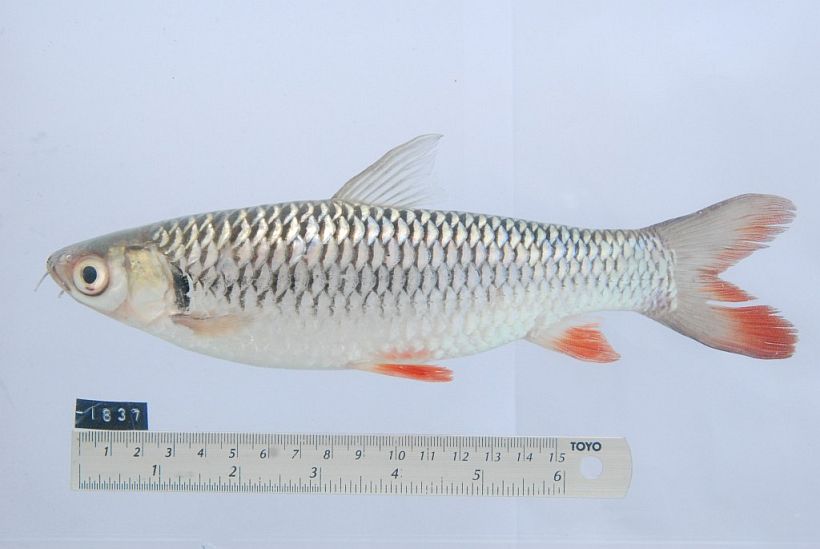
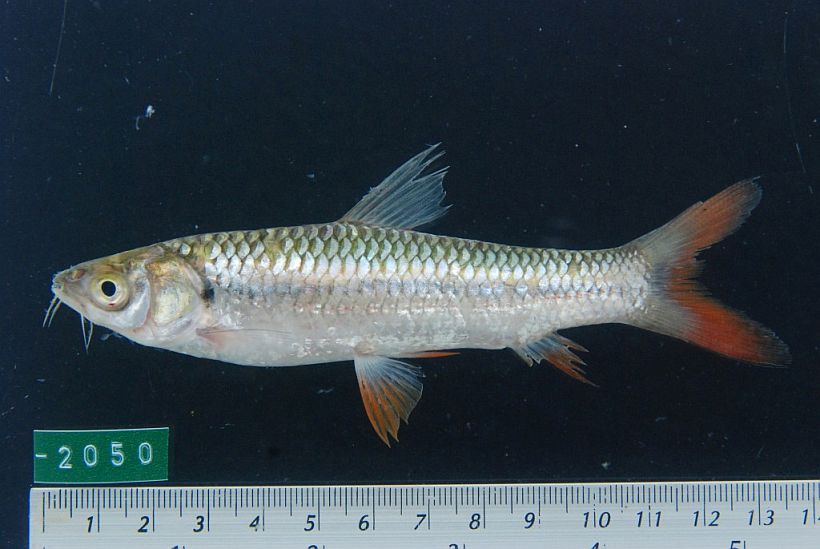
长期被误称为 Leptobarbus hoevenii,两种也会用相同商品名出售。本种有宽深色体侧纵带,腹鳍和臀鳍橙至红色,臀鳍和尾鳍叶较圆;近似种则缺少这一宽带,相关鳍更灰暗,鳍叶较尖。
核对学名和外形不能代替成年空间判断,容易买到幼鱼并不意味着容易终身饲养。
图片
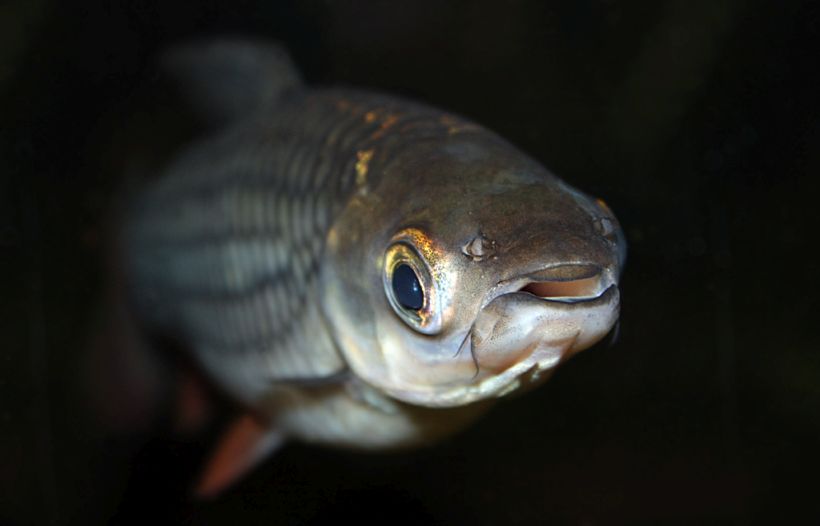
图片来自 SeriouslyFish,版权归各摄影者所有。
English
Overview
Leptobarbus rubripinna is a giant open-water cyprinid commonly sold well below its eventual adult size. Lifelong accommodation belongs in public installations or the exceptional private facility with genuinely enormous space. A conventional home aquarium is unsuitable.
Distribution & habitat
Its range spans the middle and lower Mekong in Laos, Thailand, Cambodia, and Vietnam, along with Thailand's Chao Phraya and Mae Klong systems.
Rivers and large streams are the main habitats, with some artificial lakes also occupied. Adults favor deeper pools or slower reaches and sometimes visit faster water to feed. Rainy-season movements take them into temporarily flooded plains and forests for reproduction.
Aquarium setup
Open swimming space and water quality outweigh elaborate decoration. An adequately scaled installation can use rock, gravel, rounded boulders, and branches to suggest a river without filling the available room.
Organic waste is poorly tolerated. Maintain strong oxygenation and appropriate circulation with filtration and pumps suited to the load. A heavy, tightly secured cover is necessary against powerful jumps when frightened.
Diet & feeding
Stomach records include vegetation, zooplankton, and larger aquatic and terrestrial invertebrates, demonstrating omnivory. Captive specimens feed readily. Combine live or frozen bloodworms, Daphnia, and brine shrimp with quality dry foods and plentiful plant material.
Shelled peas, blanched zucchini, spinach, and chopped fruit add variety. Larger individuals also accept chopped earthworm, prawn, and mussel. Easy feeding should not result in permanent reliance on one food.
Behaviour & compatibility
It is peaceful, although very small fishes are likely to be swallowed. A mild temperament does not guarantee safety for companions of every size.
Sexual dimorphism
Sexually mature females are deeper-bodied than males.
Breeding
Ordinary aquarium spawning has not been achieved, whereas hormone-assisted propagation is carried out on a large scale in Thailand. Natural rainy-season movements into flooded land and commercial induction are not established household breeding protocols.
Notes
It has long been confused with Leptobarbus hoevenii, and both can appear under the same trade name. This species has a broad dark flank stripe, orange-red pelvic and anal fins, and rounded anal and caudal-fin lobes. Its relative lacks that broad stripe, has grayer fins, and more pointed lobes.
Correct identification does not remove the adult space problem. The ready availability of juveniles should never be mistaken for easy lifelong care.
来源
- https://www.seriouslyfish.com/species/leptobarbus-rubripinna(抓取于 2026-10-10)
leptobarbus-rubripinna · 文件: data/species/leptobarbus-rubripinna.md · 状态: 草稿